Luke 1:41b-43, 44
Elizabeth was filled with the Holy Ghost
and cried out:
Blessed are you among women,
and blessed is the fruit of Your womb.
– And who am I
that the mother of my LORD should come to me.For when your greeting sounded in my ears,
the baby in my womb leaped for joy.
– And who am I
that the mother of my LORD should come to me?
Feast of The Visitation of the Blessed Virgin Mary
Queenship of the Blessed Virgin Mary (Traditional)
Whit Wednesday (Ember Wednesday After Pentecost) (Traditional)
Saint Petronilla, Virgin (Traditional)
Mary’s first instinct after the Annunciation was to attend to her older cousin, Elizabeth. But what makes a “visitation” different from a simple visit? A visitation carries with it a special meaning, a purpose of bestowing something exceptional. In the Visitation of the Blessed Virgin Mary, that meaning is not a message but rather the exceptional presence of the Son—the Saviour—she carries within her womb. We can be certain that the mystery of the Visitation is effective in our lives, too, for Mary continues to take the initiative to come to us, to introduce us to her Son.
THE QUEENSHIP OF THE BLESSED VIRGIN MARY
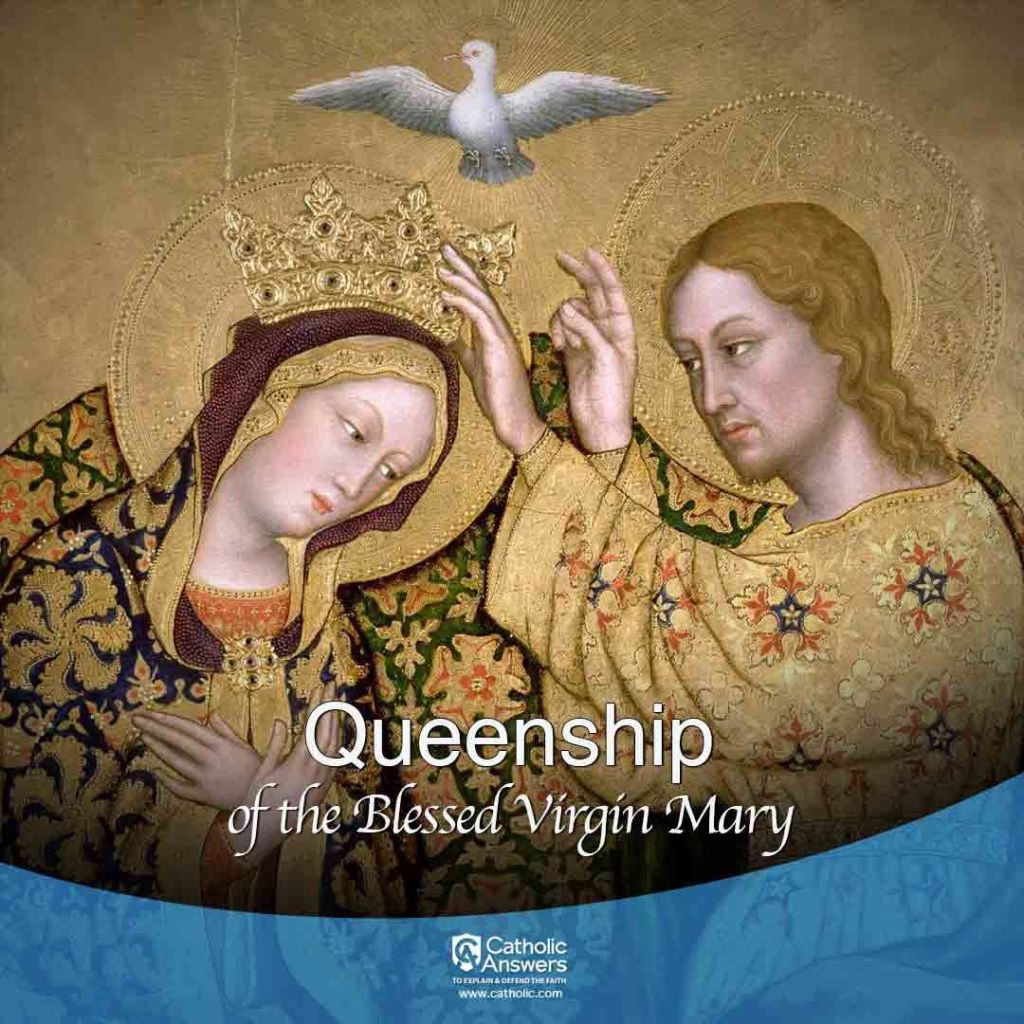
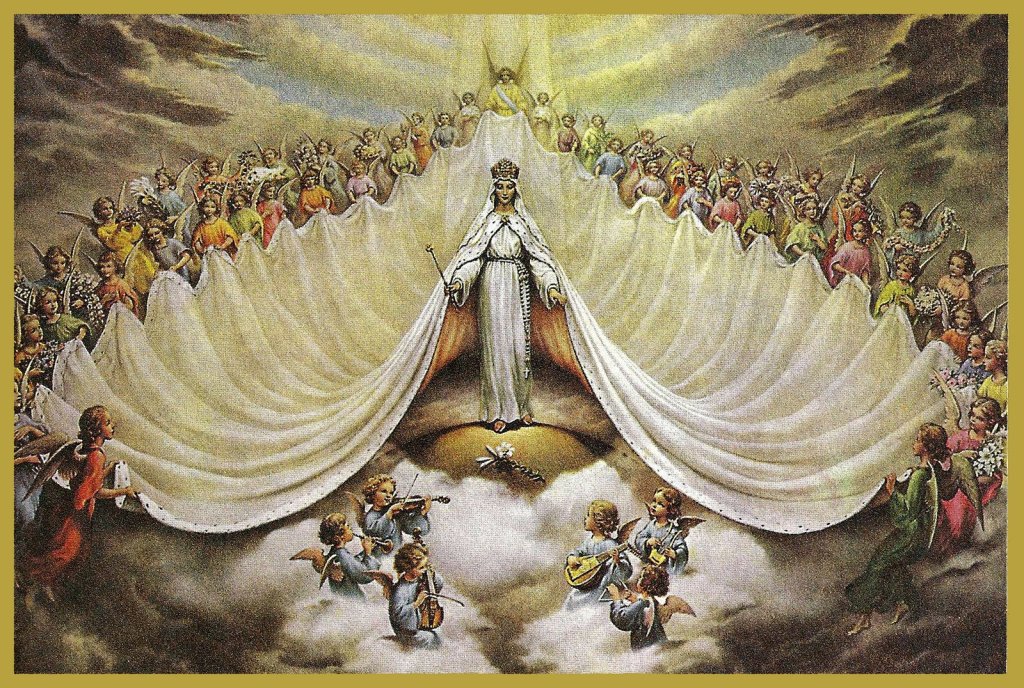
Pope Pius XII established this feast in 1954. But the Blessed Virgin Mary’s queenship has roots in Scripture. At the Annunciation, Gabriel announced that Mary’s Son would receive the throne of David and rule forever. At the Visitation, Elizabeth calls Mary “mother of my LORD.” As in all the mysteries of Mary’s life, she is closely associated with Jesus: Her queenship is a share in Jesus’ Kingship. We can also recall that in the Old Testament the mother of the king has great influence in court.
In the fourth century Saint Ephrem called Mary “Lady” and “Queen.” Later Church fathers and doctors continued to use the title. Hymns of the 11th to 13th centuries address Mary as queen: “Hail, Holy Queen,” “Hail, Queen of Heaven,” “Queen of Heaven.” The Dominican rosary and the Franciscan crown as well as numerous invocations in Mary’s litany celebrate her queenship.
The feast is a logical follow-up to the Assumption, and is now celebrated on the Octave day of that feast. In his 1954 encyclical To the Queen of Heaven, Pius XII points out that Mary deserves the title because she is Mother of God, because she is closely associated as the New Eve with Jesus’ redemptive work, because of her preeminent perfection, and because of her intercessory power.
VISITATION OF THE BLESSED VIRGIN MARY
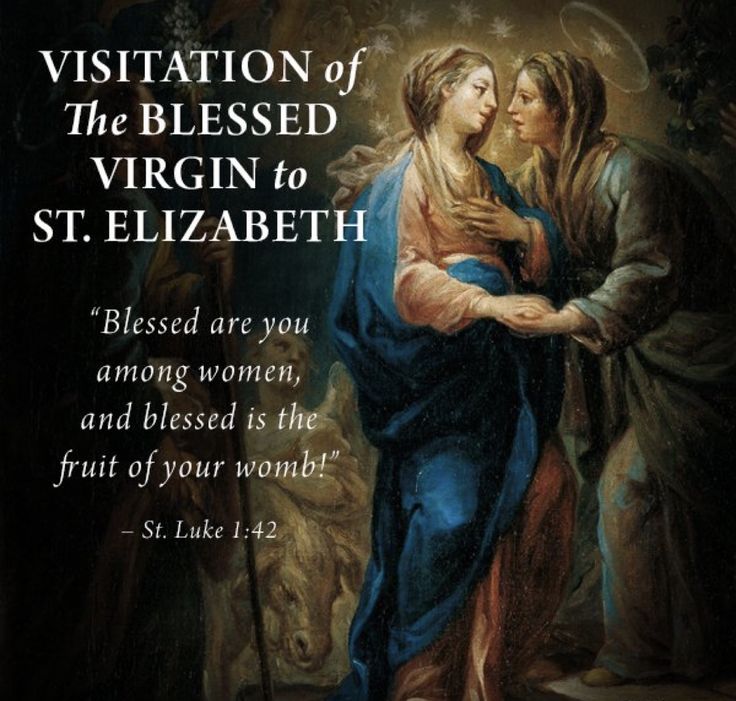
The feast of the Visitation recalls to us the following great truths and events: The visit of the Blessed Virgin Mary to her cousin Elizabeth shortly after the Annunciation; Elizabeth’s proclaiming of Mary—under the inspiration of the Holy Ghost —as Mother of God and “blessed among women;” Mary’s singing of the sublime hymn, Magnificat (“My soul proclaims the greatness of the LORD”) which has become a part of the daily official prayer of the Church. The Visitation is frequently depicted in art, and was the central mystery of Saint Francis de Sales’ devotions.
EMBER WEDNESDAY AFTER PENTECOST
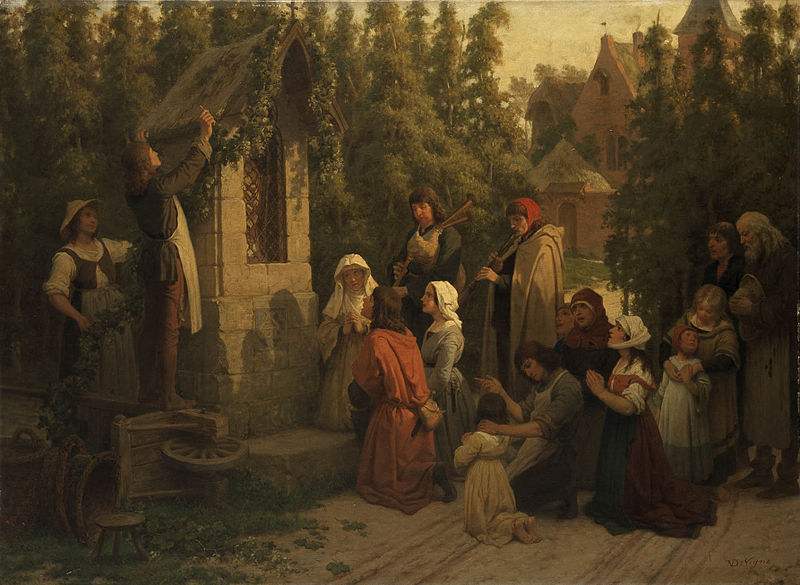
The station is at Saint Mary Major, as is the rule in Rome whenever the scrutinies of the candidates for Holy Orders are to take place. The Holy Mass bears a festival character; at one time the Ember fast was postponed for a few weeks. Gregory VII re-established the Ember Days in their proper place, but the festal tone of the Office was retained.
The contrast between today’s fast and the Gospel lesson (John 6: 44-52) in which Jesus offers Himself as the Bread of Eternal Life is very opportune. Man does not live by bread alone, but has an absolute need of the Word of God, without Whom this earthly existence is as a day without light, an empty pretence of life, a gloomy image of death.
SAINT PETRONILLA, VIRGIN
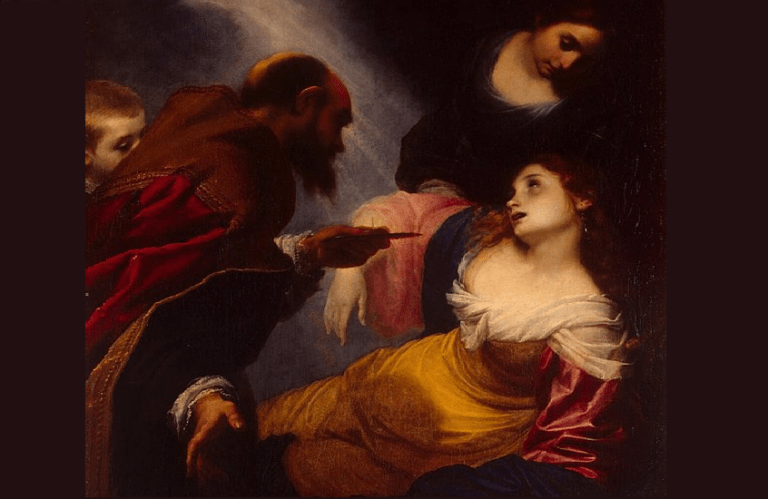
Aurelia Petronilla, specially honoured in France, was a disciple of St. Peter, the first Pope. She died in 60 A.D.
From a Homily by Saint Bede the Venerable, Priest
(Lib. 1, 4: CCL 122, 25-26. 30)
Mary proclaims the greatness of the LORD working in her
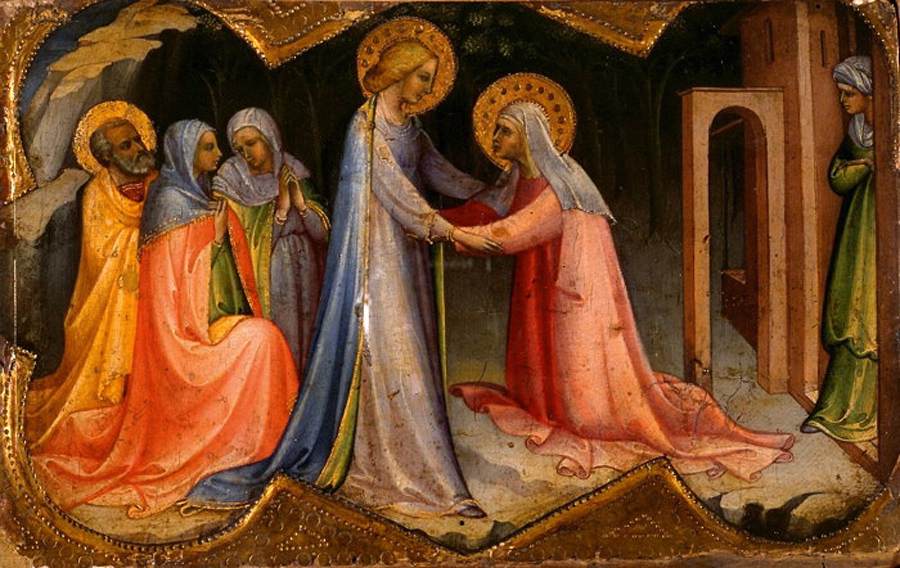
My soul proclaims the greatness of the LORD, and my spirit rejoices in God my Saviour. With these words Mary first acknowledges the special gifts she has been given. Then she recalls God’s universal favours, bestowed unceasingly on the human race.
When a man devotes all his thoughts to the praise and service of the LORD, he proclaims God’s greatness. His observance of God’s commands, moreover, shows that he has God’s power and greatness always at heart. His spirit rejoices in God his Saviour and delights in the mere recollection of his Creator who gives him Hope for Eternal Salvation.
These words are often for all God’s creations, but especially for the Mother of God. She alone was chosen, and she burned with spiritual love for the Son she so joyously conceived. Above all other saints, she alone could truly rejoice in Jesus, her Saviour, for she knew that He who was the Source of Eternal Salvation would be born in time in her body, in one person both her own Son and her LORD.
For the Almighty has done great things for me, and Holy is His name. Mary attributes nothing to her own merits. She refers all her greatness to the gift of the one whose essence is Power and whose nature is Greatness, for He fills with greatness and strength the small and the weak who believe in Him.
She did well to add: and Holy is His name, to warn those who heard, and indeed all who would receive His words, that they must believe and call upon His Name. For they too could share in Everlasting holiness and True Salvation according to the words of the prophet: and it will come to pass, that everyone who calls on the name of the LORD will be saved. This is the Name she spoke of earlier: and my spirit rejoices in God my Saviour.
Therefore it is an excellent and fruitful custom of holy Church that we should sing Mary’s hymn at the time of evening prayer. By meditating upon the Incarnation, our devotion is kindled, and by remembering the example of God’s Mother, we are encouraged to lead a life of Virtue. Such virtues are best achieved in the evening. We are weary after the day’s work and worn out by our distractions. The time for rest is near, and our minds are ready for contemplation.
Radiating Christ’s Love
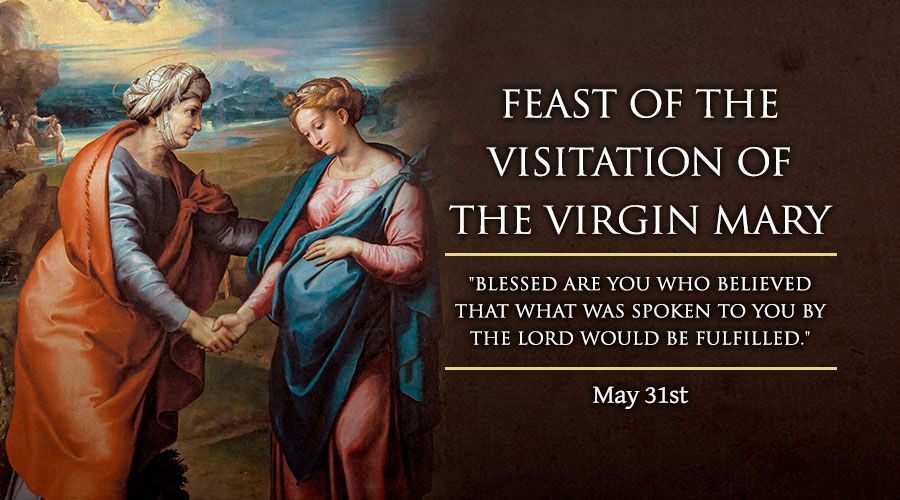
Mary had just conceived Christ within her and immediately sets out to help her cousin Elizabeth, who was miraculously pregnant after many childless years. Along the rigorous journey, she must have been continually lifted by the thought that the One who crafted the hillside was within her. How she must have praised Him for entering the creation she was beholding. Every ounce of her being was silently proclaiming what all creation longed for: God is here! At a time when Mary could have easily stayed at home to prepare herself for Jesus’ Birth, surmising it was better to avoid a long and dangerous journey, she looked to serve another. The experience of the humility of God so recently impressed upon her—Him descending and becoming man for our sake—impelled her towards this generous self-forgetfulness.
When Mary entered the house and greeted her cousin, Elizabeth knew Mary was not alone, as Elizabeth’s child leapt in her womb. She called Mary the Mother of my LORDwithout any prior knowledge or visible proof. Upon hearing that Jesus’ presence was recognised through her, Mary sang aloud the mystery: My soul proclaims the greatness of the LORD. Her life radiated His. For thousands of years, prophets went to mountaintops to encounter God, but here in this lowly setting, the mountaintop had come to them. Through Mary they were given a stunning view of the summit.
We hear Jesus say in Matthew’s Gospel, You are the salt of the earth. You are the light of the world. Your light must shine in the sight of men, so that, seeing your good works, they may give the praise to your Father in Heaven. Unlike Mary, who magnifies the LORDin a singular way, we may not be expecting these words or feel adequate to receive them. We don’t know who we are to Him. Yet Jesus sees something significant in us that we often doubt and rarely live true to. He longs to light our hearts on fire with His Presence. Every day we are called to carry Him within us and be His Light in this world. And every day we are called to be salt for the world, bringing the flavour of His love to a culture bland from disillusionment. Spending my daily life on plans that are merely focused on myself is putting a bushel basket over what Jesus wants others to see and witness: His love radiating uniquely through you.
Sister Faustina Maria Pia, s.v.
Sister Faustina is a member of the Sisters of Life, a congregation founded by in 1991 by Cardinal John O’Connor to promote the dignity of human life. [From Jesus I Trust in You: A 30-Day Personal Retreat with the Litany of Trust.
Lk 1:45, 45; Psalm 66:16
And blessed art thou that hast believed,
because those things shall be accomplished that were spoken to thee by the LORD.
– And Mary said: My soul doth magnify the LORD.Come, and listen,
and I will tell what great things God has accomplished for me.
– And Mary said: My soul doth magnify the LORD.
 Daily Reflections
Leave a comment