
Job 42:5-6; 40:5, 4
I have heard of you by word of mouth, O LORD,
but now that I have seen You for myself
I disown all that I have said,
– and I repent in dust and ashes.Though I have spoken once, I will not speak again;
though twice, I will do so no more.
I shall put my finger against my lips.
– And I repent in dust and ashes.
Friday of the Ninth Week in Ordinary Time
Friday of the Sacred Heart of Jesus
Saint Ephrem, Deacon and Doctor of the Church
Saints Primus and Felician, Martyrs
Feast of Saint Columba (England, Ireland and Scotland)
SAINT EPHREM, DEACON AND DOCTOR OF THE CHURCH
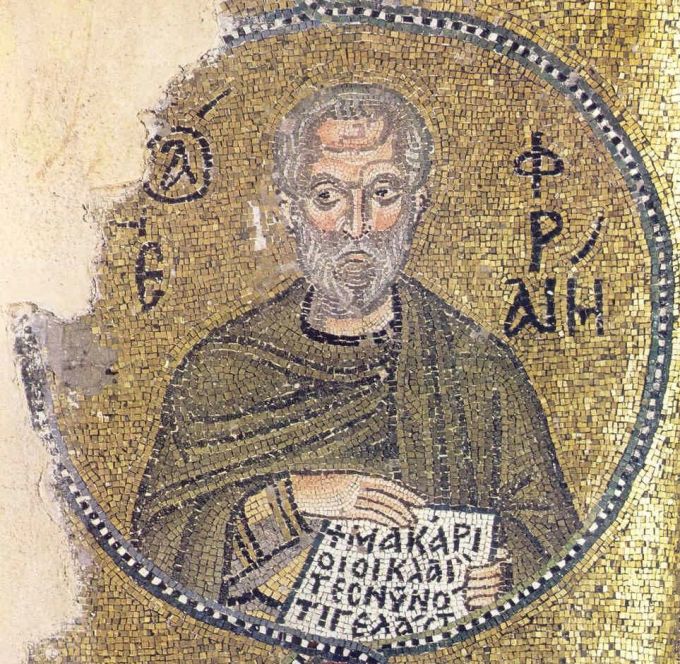
Saint Ephrem was born of a Christian family at Nisibis around the year 306. He was ordained a deacon who exercised his Office throughout the country, first in Nisibis, then in Edessa (present-day Turkey) where he founded a theological school . A gifted poet and theologian, and despite his ascetic life he did not relax his ministries of preaching and writing books. He refuted the Gnostic heresies of Bardesanes by composing doctrinally correct lyrics to the tunes of popular songs. His poetry also took shape in rich, symbolic hymns that are still sung in the Eastern liturgies. Among the Catholics of the East, he is known as the “Harp of the Holy Ghost”. Ephrem died in 373, after serving famine victims in Edessa. In 1920, Pope Benedict XV recognised Ephrem’s contributions by naming him a Doctor of the Church.
SAINTS PRIMUS AND FELICIAN, MARTYRS
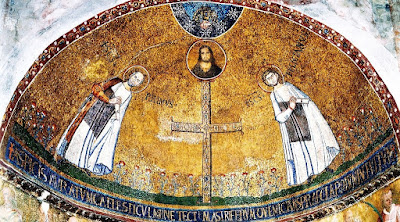
Primus and Felician were two brothers who gave their lives for the Faith, June 9, 286 A.D. under Diocletian. Hundreds of spectators who witnessed the cruel torments and beheading proclaimed themselves Christians and likewise suffered for the Faith. Their bodies were the first to be brought into Romefrom the cemeteries outside the walls are at present in the church of St. Stephen on the Coelian.
SAINT COLUMBA, PRIEST
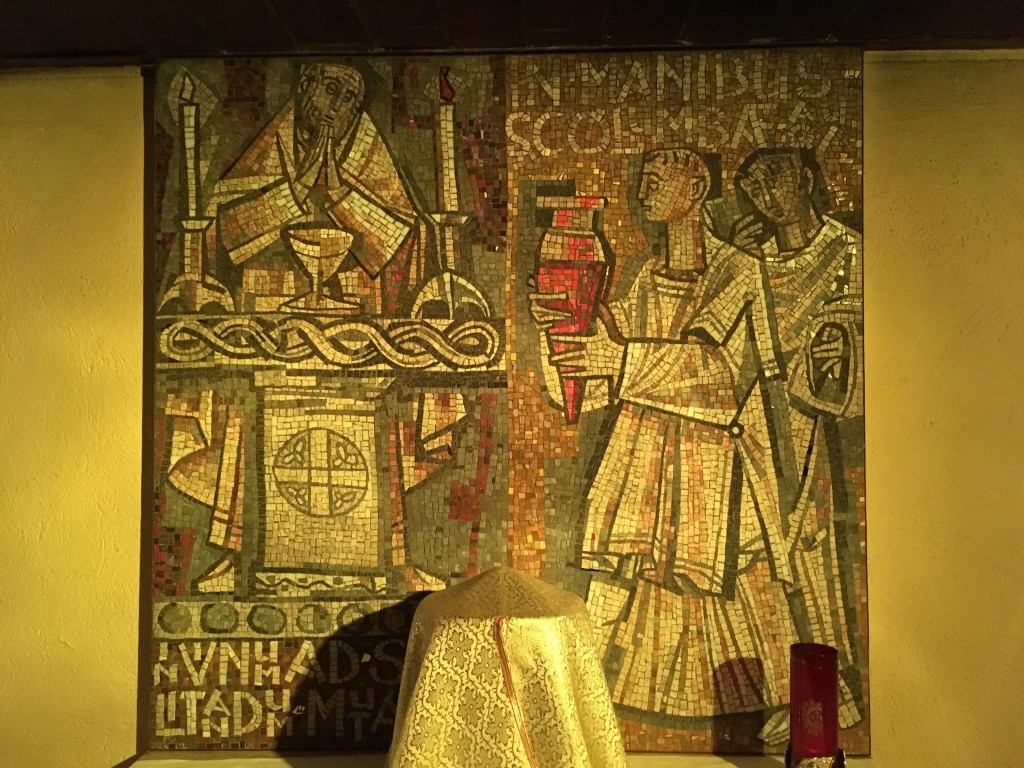
Saint Columba, also known as Colm Cille or Colum Cille, Columkill, was an Irish monk, missionary, and one of the most important figures in the spread of Christianity in Ireland during the 6th century. He is the patron saint of Derry and of the Scottish Highlands.
Columba was born in County Donegal, Ireland in 521 AD, and was educated at the monastic school of Movilla under Saint Finnian of Clonard and was brought up in the company of many saints at the school. He later founded several monasteries, including the famous Iona Abbey in Scotland, which became a major center of learning and missionary activity.
Being an ordained priest, and having founded many churches in Ireland, he went to Scotland with twelve companions, and there converted many of the northern Picts to the Faith of Christ. He founded the monastery of Iona which became the nursery of saints and apostles. He also evangelized and converted the Anglo-Saxons in Northern England. He is credited with spreading the use of the Celtic cross and the development of a distinctive Celtic Christian art.
Columba died on June 9th, 597 AD, on the island of Iona, Scotland. He was canonized as a saint by the Catholic Church in the 12th century. His feast day is celebrated on June 9th.
Saint Columba is credited with having written many works, including hymns, poems, and religious texts. He is also said to have had the ability to perform miracles, such as healing the sick and casting out demons. One of the most famous stories about Columba is his encounter with the Loch Ness Monster. According to legend, he saved a swimmer from the beast by making the sign of the cross and commanding the monster to leave the area.
In conclusion, Saint Columba was a significant figure in the spread of Christianity in Ireland and Scotland, and his missionary work and writings continue to be influential to this day.
From a treatise by Baldwin of Canterbury, Bishop
(Tract . 6: PL 204, 466-467)
The LORD sees our thoughts and the intentions of our hearts
The LORD knows the thoughts and intentions of our hearts. Without a doubt, every one of them is known to Him, while we know only those which He lets us read by the Grace of discernment. The spirit of man does not know all that is in man, nor all of the thoughts which he has, willingly or unwillingly. Man does not always perceive his thoughts as they really are. Having clouded vision, he does not discern them clearly with his mind’s eye.
Often under the guise of devotion a suggestion occurs to our mind—coming from our own thoughts or from another person or from the tempter—and in God’s eyes we do not deserve any reward for our virtue. For there are certain imitations of True Virtues as also of vices which play tricks with the heart and bedazzle the mind’s vision. As a result, the appearance of goodness often seems to be in something which is evil, and equally the appearance of evil seems to be in something good. This is part of our wretchedness and ignorance, causing us anguish and anxiety.
It has been written: There are paths which seem to man to be right, but which in the end lead him to hell. To avoid this peril, Saint John gives us these words of advice: Test the spirits to see if they are from God. Now no one can test the spirits to see if they are from God unless God has given him Discernment of Spirits to enable him to investigate spiritual thoughts, inclinations and intentions with honest and true judgment. Discernment is the mother of all the Virtues; everyone needs it either to guide the lives of others or to direct and reform his own life.
In the sphere of action, a right thought is one ruled by the Will of God, and intentions are Holy when directed single-mindedly toward Him. In a word, we could see clearly through any action of ours, or into our entire lives, if we had a simple eye. A simple eye is an eye, and it is simple. This means that we see by right thinkingwhat is to be done, and by our good intention we carry it out with simple honesty, because deceitful action is wrong. Right thinking does not permit mistakes; a good intention rules out pretence. This then is true discernment, a combination of right thinking and good intention.
Therefore, we must do all our actions in the light of discernment as if in God and in His presence.
Praising the Son Who Conquered Our Enemies
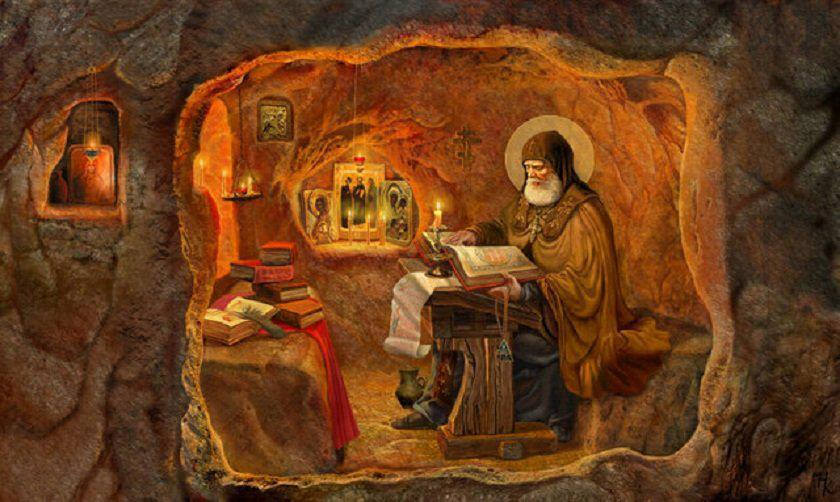
Be a disciple of all revealed things and without fear speak of beautiful things. Therefore, measure your words, blameless voices. Measure and sing songs undisputed…. Sing like David to the Son of David: Call Him “LORD” and “Son” like David (Ps 109:1, Ps 2:7)…. Send up to Him Glory—a tithe of your songs! Offer to Him a sheaf of words from your thought! Send up first an ‘alleluia’ from the songs your tongue has gathered!…
With the armour of a condemned fighter, Our LORD prevailed. He put on a body from Adam and from David, that with that body evil had condemned, in it, He would be abased, to overcome disgrace. To You, My LORD, a song from the peoples that have believed in You! Even Your Childhood is too great for the talkative: who will open his mouth against the One who nourishes all—who, at the meagre table of Joseph and Mary, has grown up? From a great womb—rich and all-enriching—in the meagre womb of Mary You were nurtured. You had a mortal father on earth, while You Yourself were living and giving Life to all. He mounted a despised foal and hid His Victory in its lowliness….
The Cross is the seal and mould of created things. By its length and breadth—by its shape—everything is sealed. The Cross that bears every bird on two wings, through its strength all stands. The LORDinclined and came down. To the servant He became a servant. He was like a companion, like an equal; He washed feet. My friends, let us investigate these things, if we are able, in accordance with Grace. The LORDof Heaven came down to earth and lived. He became a stranger, an inhabitant, and a sojourner, to bring us up to dwell in His Kingdom—in an Eternal Dwelling. With all mouths let us praise the LORDof all tongues. As much as we have wandered, so much more should we praise that Son of Life.
Saint Ephrem the Syrian
Saint Ephrem the Syrian († 373), a deacon, wrote hundreds of hymns in honour of the Blessed Trinity, the Incarnation, and the Blessed Virgin Mary. [From Saint Ephrem the Syrian: The Hymns on Faith, The Fathers of the Church.
DAILY MEDITATION
Our LORD and Saviour Jesus Christ has said so. “Take My yoke uponyou,” He says, “for it is easy and light” (Mt 11:29-30). However heavy this yoke may be in itself, God will lighten it for those who willingly take it up and consent to bear it for the love of Him. Love does not prevent us from suffering, but it makes us love our sufferings and prefer them to all pleasures.
In all contempt we may have to suffer, in all calumnies and humiliations, the thing that really hurts us and really makes them hard to bear is our own Pride. It is because we wish to be esteemed and considered and treated with a certain respect, and that we do not at all like the idea of being treated with ridicule and contempt by others.This is what really agitates us, and makes us indignant, and renders our life bitter and insupportable.
In the service of God, the cause of most of the trouble we experience is that we do not annihilate ourselves sufficiently in His Divine Presence. It is because we have a sort of life that we try to preserve in all our dealings with Him. It is because we allow a secret Pride to insinuate itself into our devotion. Hence it comes that we are not indifferent as we ought to be, as to whether we are in dryness or in consolation; that we are very unhappy when God seems to withdraw from us; that we exhaust ourselves in desires and efforts to call Him back to us and fall into the most wretched depression and desolation if His absence lasts a long time.
From this cause, too, proceeds all our false alarms about the state of our souls. We think God must be angry with us because He deprives us of the sweetness of sensible devotion. We think our Communions have been bad because we have made them without relish; the same with our spiritual reading, our prayer and all our practices of Piety.
Micah 6:8; Psalm 37:3
The LORD has told you, O man, what is good,
– and this is what the LORD expects of you:
to do what is right, to love goodness,
and to walk humbly with your God.Trust in the LORD and do good
and you shall possess the land.
– And this is what the LORD expects of you:
to do what is right, to love goodness,
and to walk humbly with your God.
“The refusal to take sides on great moral issues is itself a decision. It is a silent acquiescence to evil. The Tragedy of our time is that those who still believe in honesty lack fire and conviction, while those who believe in dishonesty are full of passionate conviction.”– Ven. Archbishop Fulton Sheen
 Daily Reflections
Leave a comment