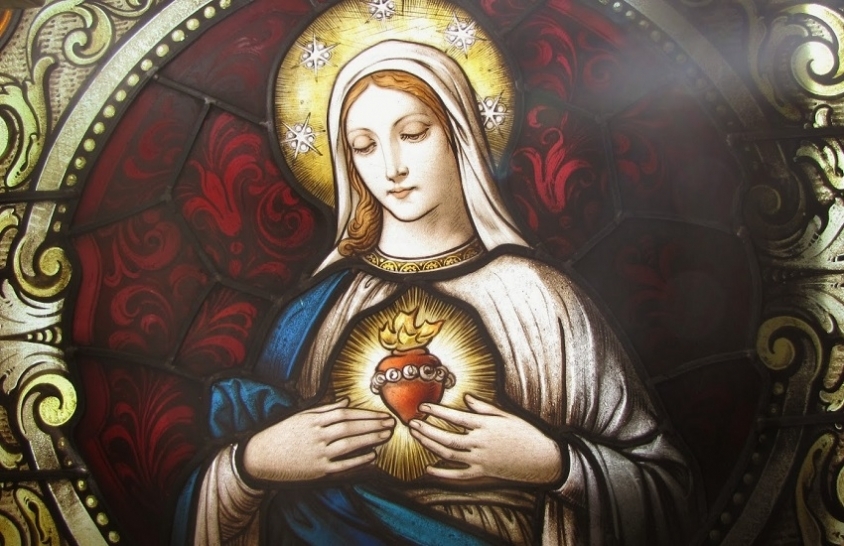
Blessed Feast of the Immaculate Heart of Mary! As we honour Her Immaculate Heart today, let us not lose sight of the thorns that, sadly, are still to be found there.
In 1925, Jesus said: “Have compassion on the Heart of your Most Holy Mother, covered with thorns, with which ungrateful men pierce it at every moment, and there is no one to make an act of reparation to remove them.”
Nearly 100 years later, that same precious Immaculate Heart remains “covered with thorns.”
Abortion. Pornography. Pedophilia. Transgender ideology. Loss of Innocence. Moral Chaos.
Each a thorn thrust deep into Her perfect and loving maternal Heart.
But what about the second part of Our LORD’s plea? Is there still “no one to make an act of reparation”?
Joshua 24:16, 24; 1 Corinthians 8:5-6
God forbid we should leave the LORD,
and serve strange gods.
– We will serve the LORD our God,
and we will be obedient to His Commandments.Even though there are so-called gods,
either in heaven or on earth,
for us there is but One God.
– We will serve the LORD our God,
and we will be obedient to His Commandments.
The Immaculate Heart of the Blessed Virgin Mary
Saint Gregory Barbarigo, Bishop, Confessor (Traditional)
- “The mysterium of the Heart of Jesus is projected onto and reverberates in the Heart of His Mother, who is also one of His followers and a disciple…. The memorial of the Immaculate Heart of Mary is a celebration of the complex visceral relationship of Mary with her Son’s Work of Salvation: from the Incarnation, to His Death and Resurrection, to the Gift of the Holy Ghost ” (Directory on Popular Piety and the Liturgy174).
- The attention of Christians was early attracted by the love and virtues of the Heart of Mary. The Gospel itself invited this attention with exquisite discretion and delicacy. What was first excited was compassion for the Virgin Mother. It was, so to speak, at the foot of the Cross that the Christian heart first made the acquaintance of the Heart of Mary. Simeon’s prophecy paved the way and furnished the devotion with one of its favourite formulae and most popular representations: the heart pierced with a sword. But Mary was not merely passive at the foot of the Cross; “she cooperated through Charity”, as Saint Augustine says, “in the work of our redemption.”
It is only in the twelfth, or towards the end of the eleventh century, that slight indications of a regular devotion are perceived in a sermon by Saint Bernard (De duodecim stellis).
Stronger evidences are discernible in the pious meditations on the Ave Maria and the Salve Regina, usually attributed either to Saint Anselm of Lucca (+ 1080) or Saint Bernard; and also in the large book De laudibus B. Mariae Virginis (Douai, 1625) by Richard de Saint-Laurent.
In Saint Mechtilde (+ 1298) and Saint Gertrude (+ 1302) the devotion had two earnest adherents. A little earlier it had been included by Saint Thomas Becket in the devotion to the joys and sorrows of Mary, by Blessed Hermann (+ 1245), one of the first spiritual children of Saint Dominic, in his other devotions to Mary, and somewhat later it appeared in Saint Bridget’s Book of Revelations.
Saint Ambrose perceived in her the model of a virginal soul. Saint Bernardine of Siena (+ 1444) was more absorbed in the contemplation of the virginal heart, and it is from him that the Church has borrowed the lessons of the Second Nocturn for the feast of the Heart of Mary. Saint Francis de Sales speaks of the perfections of this heart, the model of love for God, and dedicated to it his Theotimus.
In the second half of the sixteenth century and the first half of the seventeenth, ascetic authors dwelt upon this devotion at greater length. It was, however, reserved to Saint Jean Eudes (+ 1681) to propagate the devotion, to make it public, and to have a Feast celebrated in honour of the Heart of Mary, first at Autun in 1648 and afterwards in a number of French dioceses.
In 1799 Pius VI, then in captivity at Florence, granted the Bishop of Palermo the feast of the Most Pure Heart of Mary for some of the churches in his diocese. In 1805 Pius VII made a new concession, thanks to which the feast was soon widely observed. Such was the existing condition when a twofold movement, started in Paris, gave fresh impetus to the devotion. The two factors of this movement were first of all the revelation of the “Miraculous Medal” in 1830 and all the prodigies that followed, and then the establishment at Notre-Dame-des-Victoires of the Archconfraternity of the Immaculate Heart of Mary, Refuge of Sinners, which spread rapidly throughout the world and was the source of numberless graces. On 21 July 1855, the Congregation of Rites finally approved the Office and Mass of the Most Pure Heart of Mary without, however, imposing them upon the Universal Church.
SAINT GREGORY BARBARIGO, BISHOP, CONFESSOR
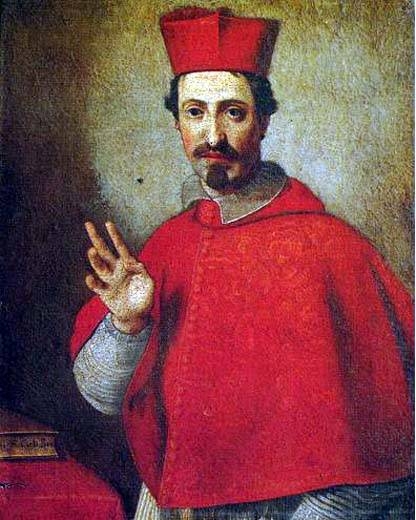
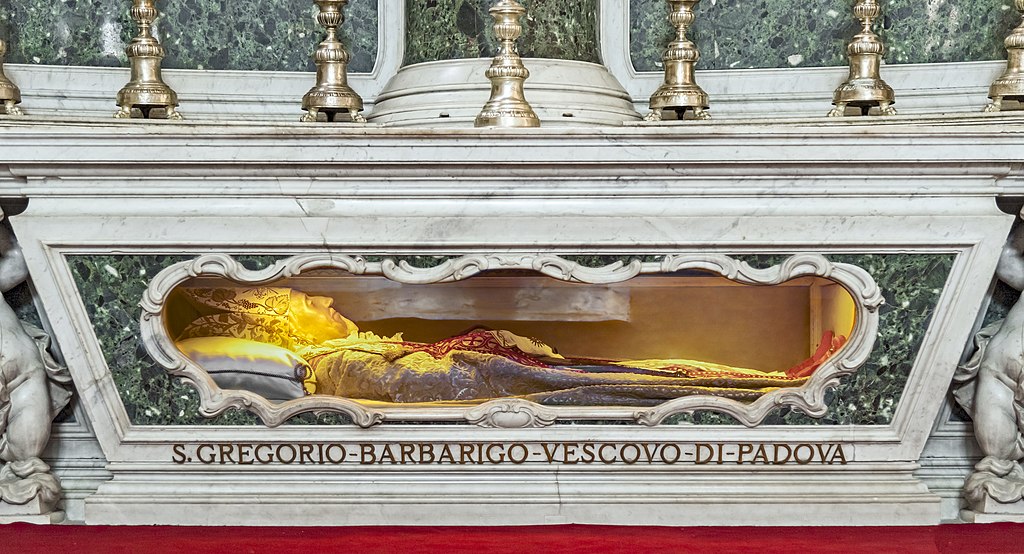
Gregory Barbarigo, cardinal, Archbishop of Padua, died in 1697 with the reputation of another Charles Borromeo, renowned like him for his wonderful zeal, in every kind of labour for the clergy and faithful, but especially the poor, of his diocese. He gave his household goods and his clothes for their comfort, and even sold his bed on one occasion to help them. Cardinal Barbarigo fostered catechetical instruction, and he travelled to each village in his diocese, in order to teach and to preach to his people. He died June 18, and was canonized by Pope John, XX111 in 1960.
From a sermon by Saint Laurence Justinian, Bishop
(Sermo 8, in festo Purificationis B.M.V.: Opera, 2, Venetiis 1751, 38-39)
Mary stored up all these things in her heart

While Mary contemplated all she had come to know through reading, listening and observing, she grew in Faith, increased in Merits, and was more illuminated by Wisdom and more consumed by the fire of Charity. The Heavenly Mysteries were opened to her, and she was filled with Joy; she became fruitful by the Spirit, was being directed toward God, and watched over protectively while on earth.
So remarkable are the Divine Graces that they elevate one from the lowest depths to the highest summit, and transform one to a greater holiness. How entirely blessed was the mind of the Virgin which, through the indwelling and guidance of the Spirit, was always and in every way open to the power of the Word of God. She was not led by her own senses, nor by her own will; thus she accomplished outwardly through her body what wisdom from within gave to her Faith.
It was fitting for Divine Wisdom, which created Itself a home in the Church, to use the intervention of the most blessed Mary in guarding the law, purifying the mind, giving an example of humility and providing a spiritual sacrifice.
Imitate her, O faithful soul. Enter into the deep recesses of your heart so that you may be purified spiritually and cleansed from your sins. God places more value on good will in all we do than on the works themselves.
Therefore, whether we give ourselves to God in the work of contemplation or whether we serve the needs of our neighbour by good works, we accomplish these things because the love of Christ urges us on. The acceptable offering of the spiritual purification is accomplished not in a man-made temple but in the recesses of the heart where the LORD Jesus freely enters.
Immaculate Mary: Close to God and Close to Us
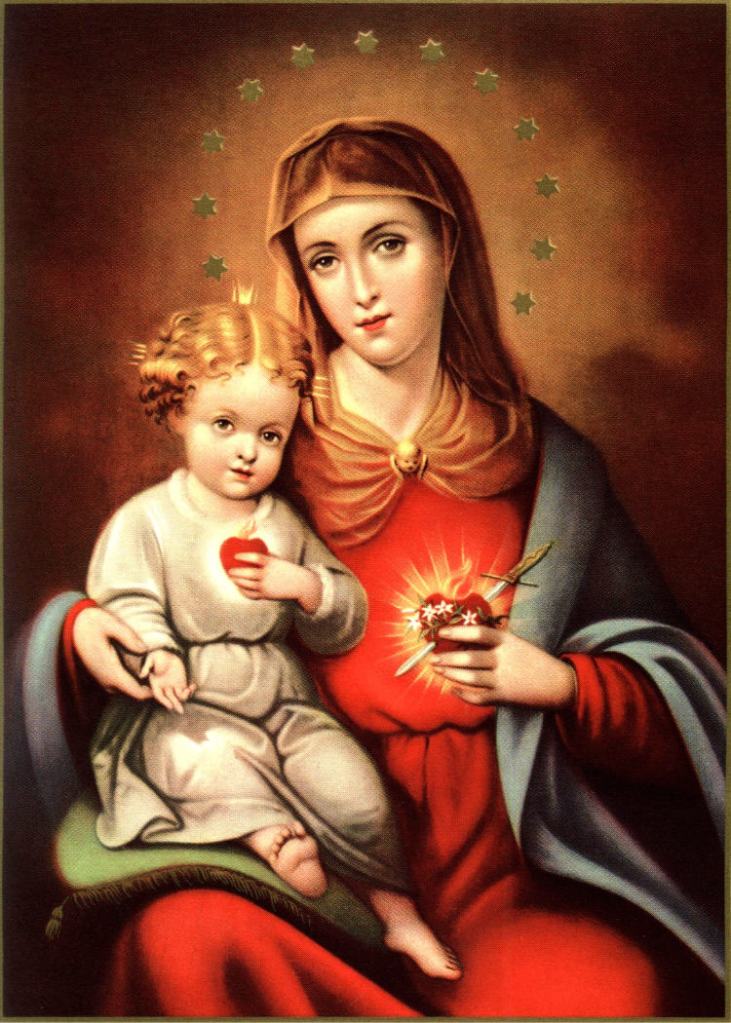
The person who entrusts himself totally to God finds True Freedom, the great, creative, immensity of the freedom of good. The person who turns to God does not become smaller but greater, for through God and with God he becomes great, he becomes divine, he becomes truly himself. The person who puts himself in God’s hands does not distance himself from others. On the contrary, it is only then that his heart truly awakens and he becomes a sensitive, benevolent, and open person.
The closer a person is to God, the closer he is to people. We see this in Mary. The fact that she is totally with God is the reason why she is so close to human beings. For this reason she can be the Mother of every consolation and every help, a Mother whom anyone can dare to address in any kind of need in weakness and in sin, for she has understanding for everything and is for everyone the open power of creative goodness. In her, God has impressed His own Image, the Image of the One who follows the lost sheep even up into the mountains and among the briars and thornbushes of the sins of this world, letting Himself be pierced by the Crown of Thorns of these sins in order to take the sheep on His shoulders and bring it home. As a merciful Mother, Mary is the anticipated figure and everlasting portrait of the Son. Thus we see that the image of the Sorrowful Virgin, of the Mother who shares her suffering and her love, is also a true image of the Immaculate Conception. Her heart was enlarged by being and feeling together with God. In her, God’s goodness came very close to us. Mary thus stands before us as a sign of comfort, encouragement, and hope. She turns to us, saying: “Have the courage to dare with God! Try it! Do not be afraid of Him! Have the courage to risk with Faith! Have the courage to risk with goodness! Have the courage to risk with a pure heart! Commit yourselves to God, then you will see that it is precisely by doing so that your life will become broad and light, not boring but filled with infinite surprises, for God’s Infinite Goodness is never depleted!”
On this feast day, let us thank the LORD for the great sign of His Goodness which He has given us in Mary, His Mother and the Mother of the Church. Let us pray to Him to put Mary on our path like a light that also helps us to become a light and to carry this light into the nights of history.
Pope Benedict XVI
Benedict XVI († 2022) was Pope from 2005 to 2013. [From Homily on Thursday, 8 December 2005.
RESPONSORY
O pure and holy Virgin,
how can I find words to praise your beauty?
– The highest heavens cannot contain God whom you carried in your womb.Blessed are you among women,
and blessed is the Fruit of your womb.
– The highest heavens cannot contain God whom you carried in your womb.
 Daily Reflections
Leave a comment