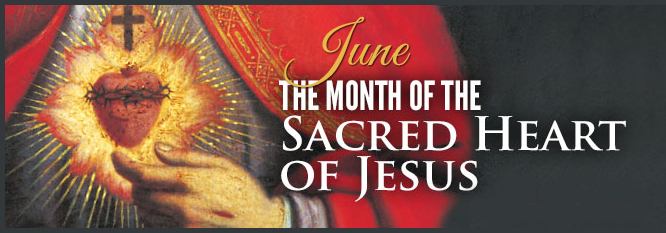
“Heart of Jesus, may Thy Kingdom come, despite Satan and the efforts of Thine enemies.” St. Margaret Mary Alacoque
1 Corinthians 1:27-29; Luke 1:52
To shame the strong God chose the weak.
He chose those whom the world considers common and contemptible,
those who were nothing at all,
to humble those who were everything,
– so that no one might boast in His Presence.
The LORD has cast down the mighty from their thrones,
and has lifted up the lowly.
– So that no one might boast in His Presence.
Wednesday of the Eleventh Week in Ordinary Time
St. Aloysius Gonzaga, Confessor
SAINT ALOYSIUS GONZAGA, CONFESSOR

Aloysius, the eldest son of Ferdinand I Gonzaga, Marquis of Castiglione, was born on March 9, 1568. The first words he pronounced were the holy names of Jesus and Mary. When he was nine years of age he made a vow of perpetual virginity, and by a special grace was ever exempted from temptations against purity. He received his First Communion at the hands of Saint Charles Borromeo. At an early age he resolved to leave the world, and in a vision was directed by our Blessed Lady to join the Society of Jesus. The Saint’s mother rejoiced on learning his determination to become a religious, but his father for three years refused his consent. At length Saint Aloysius obtained permission to enter the novitiate on November 25, 1585. He took his vows after two years, and went through the ordinary course of philosophy and theology. He was wont to say he doubted whether without penance Grace would continue to make headway against nature, which, when not afflicted and chastised, tends gradually to relapse into its old state, losing the habit of suffering acquired by the labour of years. “I am a crooked piece of iron,” he said, “and am come into religion to be made straight by the hammer of mortification and penance.” During his last year of theology a malignant fever broke out in Rome; the Saint offered himself for the service of the sick, and he was accepted for the dangerous duty. Several of the brothers caught the fever, and Aloysius was of the number. He was brought to the point of death, but recovered, only to fall, however, into slow fever, which carried him off after three months. We are going!”—to which a fellow Jesuit remarked, “He talks of going to Heaven as we talk of going to Frascati!” In 1591, Aloysius died at the age of twenty-three, holding a crucifix. He died, repeating the Holy Name, a little after midnight of June 21, 1591.
From a Treatise on the LORD’s Prayer by Saint Cyprian, Bishop and Martyr
(Nn. 13-15: CSEL 3, 275-278)
Your Kingdom come. Your Will be done
The prayer continues: Your Kingdom come. We pray that God’s Kingdom will become present for us in the same way that we ask for His name to be hallowed among us. For when does God not reign, when could there be in Him a beginning of what always was and what will never cease to be? What we pray for is that the Kingdom promised to us by God will come, the Kingdom won by Christ’s Blood and Passion. Then we who formerly were slaves in this world will reign from now on under the dominion of Christ, in accordance with His Promise: Come, O blessed of My Father, receive the Kingdom which was prepared for you from the foundation of the world.
However, my dear friends, it could also be that the Kingdom of God whose coming we daily wish for is Christ Himself, since it is His Coming that we long for. He is our Resurrection, since we rise again in Him; so too He can be thought of as the Kingdom of God because we are to reign in Him. And it is good that we pray for God’s Kingdom; for though it is a Heavenly Kingdom, it is also an earthly one. But those who have already renounced the world are made greater by holding positions of authority in that Kingdom.
After this we add: Your Will be done on earth as it is in Heaven; we pray not that God should do His Will, but that we may carry out His Will. How could anyone prevent the LORD from doing what He Wills? But in our prayer we ask that God’s Will be done in us, because the devil throws up obstacles to prevent our mind and our conduct from obeying God in all things. So if His Will is to be done in us we have need of His Will, that is, His help and protection. No one can be strong by his own strength or secure save by God’s mercy and forgiveness. Even the LORD, to show the weakness of the human nature which He bore, said: Father, if it be possible, let this Cup pass from Me, and then, by way of giving example to His disciples that they should do God’s Will and not their own, He added: Nevertheless, not as I Will, but as You Will.
All Christ did, all He taught, was the Will of God. Humility in our daily lives, an unwavering Faith, a moral sense of modesty in conversion, justice in acts, mercy in deed, discipline, refusal to harm others, a readiness to suffer harm, peaceableness with our brothers, a wholehearted love of the LORD, loving in Him what is of the Father, fearing Him because He is God, preferring nothing to Him Who preferred nothing to us, clinging tenaciously to His love, standing by His Cross with loyalty and courage whenever there is any conflict involving His honour and His Name, manifesting in our speech the constancy of our profession and under torture confidence for the fight, and in dying the endurance for which we will be crowned—this is what it means to wish to be a coheir with Christ, to keep God’s Command; this is what it means to do the Will of the Father.
Hoping to Be Repaid by the Father
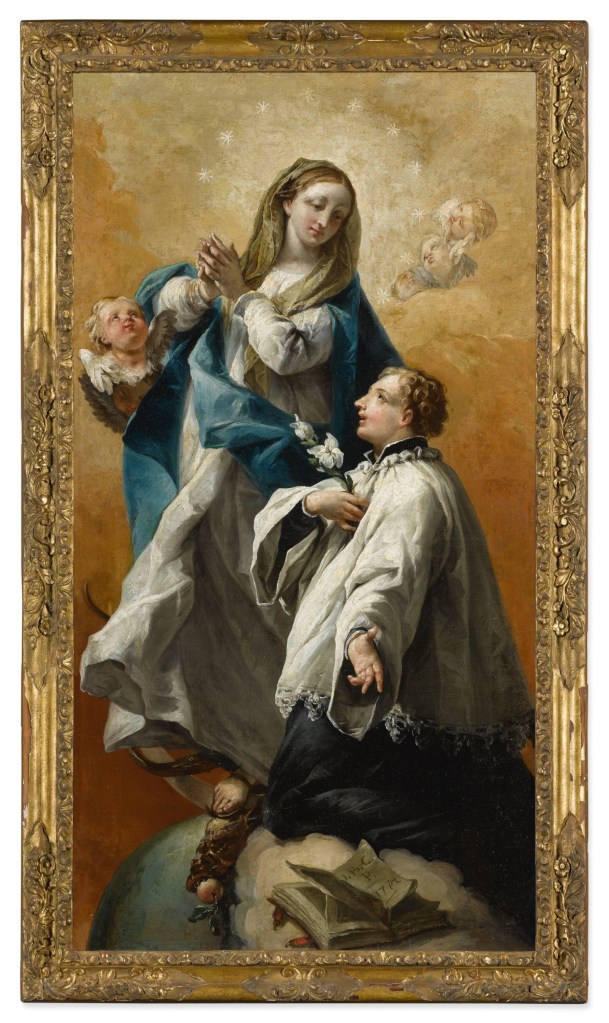
Most honoured lady and mother in Christ: May the grace and consolation of the Holy Ghost be with you always. Your letter found me still dwelling in these regions of death, but very soon to pass into the land of the Living, to praise God for ever. I thought to have made my last passage before now, but the violence of the fever, as I told you in my last letter, diminished somewhat, and so brought me to the glorious Feast of the Ascension. Since that time it has again increased, by reason of the inflammation in my chest, so that now I shall soon enjoy the embraces of my Heavenly Father, in whose bosom I hope to rest safely and for ever.
Now if Charity, as Saint Paul says, makes us weep with those who weep, and rejoice with those that rejoice, how great should be your joy at the Grace that God grants you in bringing me to true Joy and assuring me that I shall never lose it again. I confess to you that I am quite confused and overwhelmed by the thoroughness of the Divine Goodness, that boundless and fathomless ocean that calls me to an Eternal rest after such short and trivial labour, which invites and calls me to Heaven to that Sovereign Good that I sought so negligently, and that promises the fruit of those tears I sowed so sparingly. Beware, dearest mother, of wronging the Infinite Goodness, by weeping for one as dead, who is Living before God to help you with his prayers far more than he could while here below. This separation will not be for long, for we shall meet again, and enjoy each other’s society in the next life, never to be wearied of it, united together with our Redeemer, praising Him with all our strength and singing His mercies for ever. I do not doubt that you will put aside human considerations, and so will easily attain to that Faith, to that pure and simple obedience that we owe to God, offering Him freely and promptly that which is His own, and all the more willingly the dearer it is to you; knowing for certain that all He does is good, and that He only takes back again what He had before given to you, for no other reason than to put it in a place of safety, and to give it what we all desire for ourselves.
I have said all this merely in order that you and all my family may acknowledge my departure as being an extreme gift: and that you may follow and aid me with a mother’s blessing to pass this gulf and gain the shore of all my hopes. And I have done it more willingly because I have nothing else left to prove the filial love and reverence which I owe to you. Once more humbly desiring your blessing, I conclude. Your most obedient son in Christ.
Saint Aloysius Gonzaga
Saint Aloysius Gonzaga († 1591) was a Jesuit who died of the plague while ministering to its victims.
DAILY MEDITATION
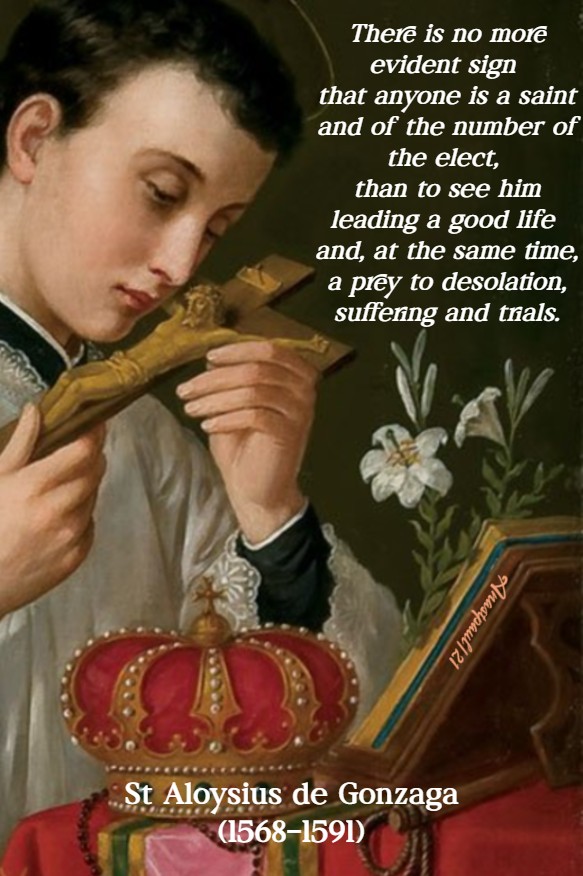
Consider that as the first preparation toward a devout and Christian life is a contrite heart, so the beginning of a dissolute life may be infallibly traced to a dissipated heart.
Such contrition in Saint Aloysius was perfectly wonderful, when the limited number of his faults is considered, which were only these two, and these so slight that it may be doubted whether they were sins. The first was this: being with the army commanded by his father, H. S. H. the Prince Ferdinand I of Gonzaga – Mantua, Sovereign Prince of Castiglione, when only four or five years of age, he took some gunpowder from some of the soldiers, to let off a large piece of artillery; and afterward he pronounced some improper words in the hearing of the same soldiers, but which he himself did not understand.
However, over these two sins, he wept bitterly all his life, saying of himself, that he was the greatest of sinners; and he called these years, the years of his wickedness. What cause of shame to many, who, when they have committed the most serious crimes, feel no compunction! Every crime appears to us, trifling, and we grieve little over it, because we reflect so little on a God, Whom we offend, on a Heaven, which we lose, and on the flames which we deserve. We act with regard to our sins as we do with regard to unpleasant food, which we avoid masticating with our teeth, in order that it may not embitter the palate. Os impiorum devorat iniquitatem. “The mouth of the impious devoureth iniquity“ [Proverbs 19:28“]. Examine with the greatest care the enormity of your sins, that it may not be difficult to excite in your heart bitter compunction, and the fear of offending a Just God.
Fr. Pasquale de Matteo (d. 1779) – Italian Jesuit missionary Priest and author.
 Daily Reflections
Leave a comment