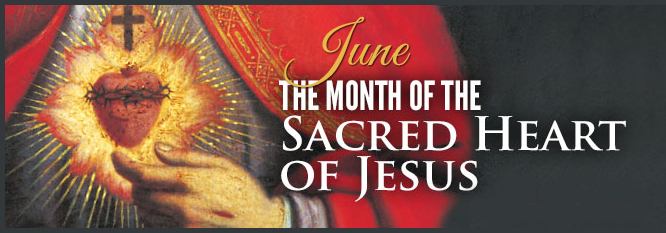
“Sacred Heart of Jesus, may sinners find in Thy Heart an Infinite ocean of mercy.” – St. Margaret Mary Alacoque.
Judges 8:23; Revelation 5:13
I will not rule you, nor shall My Son.
– The LORD will rule over you.
Praise and honour, Glory and Power to Him who sits on the Throne,
and to the Lamb for ever and ever.
– The LORD will rule over you.
Feast of Saints John Fisher, Bishop and Thomas More, Martyrs
(England)
St. Paulinus of Nola, Bishop
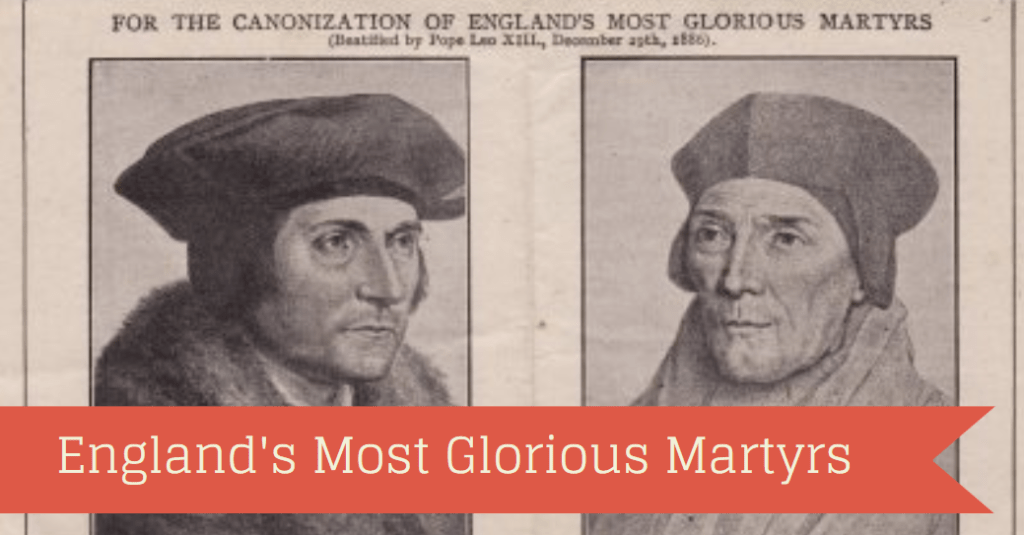
Bishop John Fisher and Thomas More were the first canonised of the English martyrs who perished under King Henry VIII. A lawyer and devoted father, More quickly rose to the highest political post—Chancellor of England. Fisher was a preacher and scholar who, as Bishop, gave himself unstintingly to his flock. Henry had both men publicly executed in the summer of 1535.
SAINT JOHN FISHER, BISHOP, MARTYR
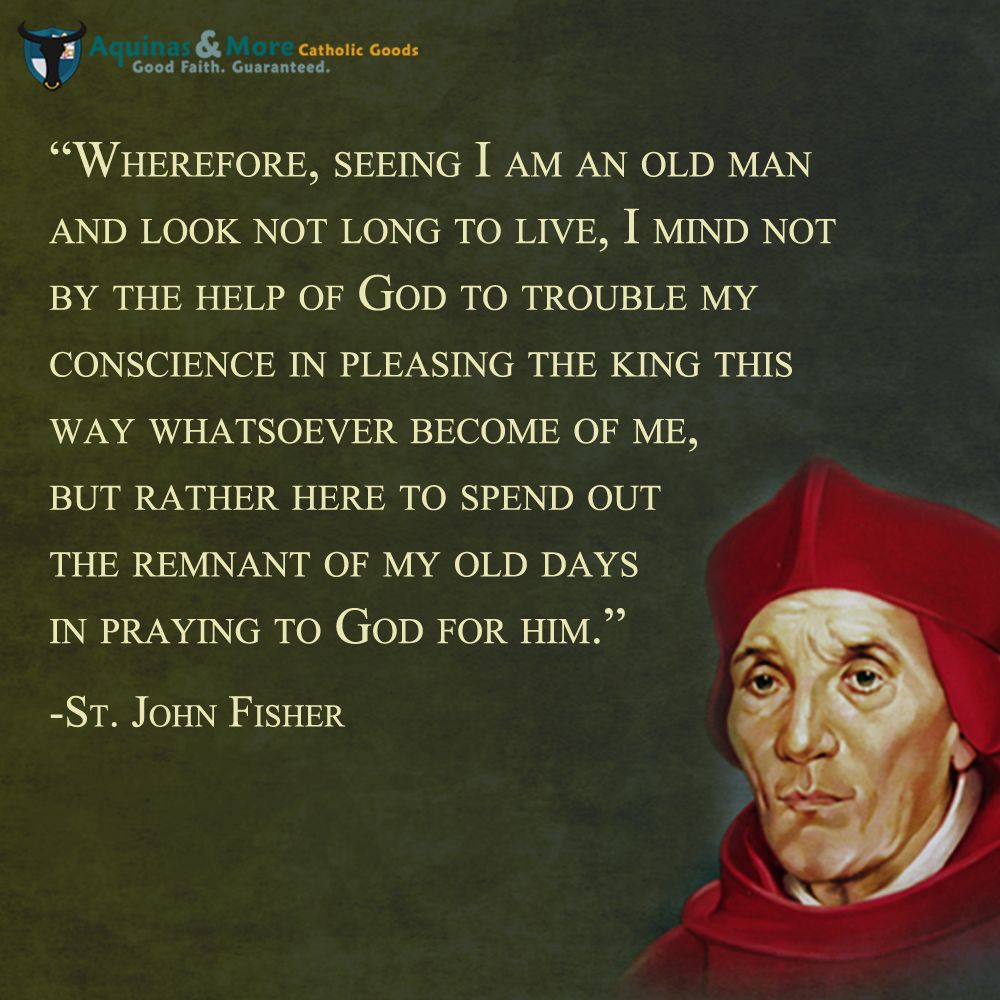
John Fisher was born in 1409 and studied Theology in Cambridge and became Bishop of Rochester. He led a most austere life and fulfilled his pastoral role by frequently visiting the faithful. He also composed works against the errors of the time. His friend, Thomas More, wrote of him, “I reckon in this realm no one man, in Wisdom, learning and long approved virtue together, meet to be matched and compared with Him
SAINT THOMAS MORE, MARTYR
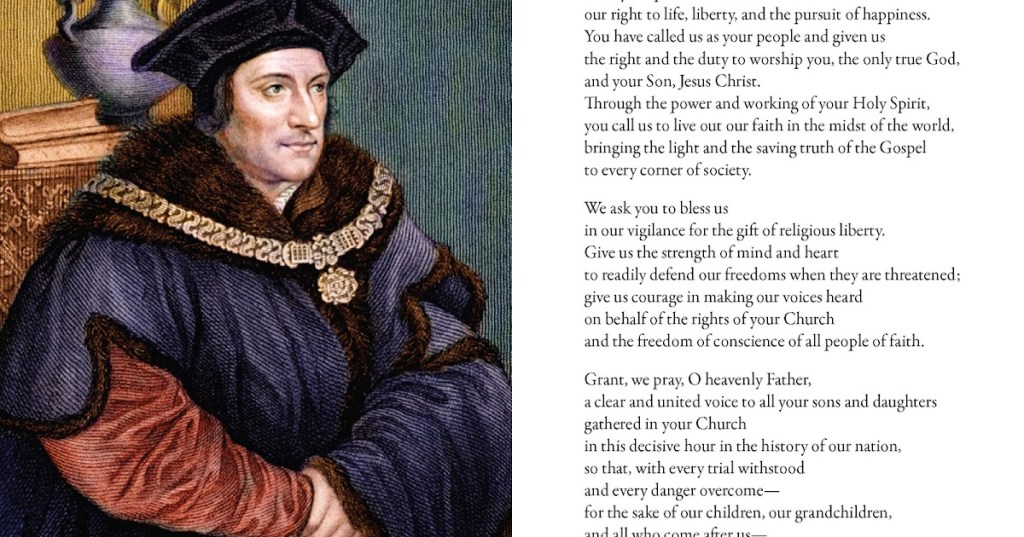
St. Thomas More was born in 1477 and was educated at Oxford. He married and had one son and three daughters. While Chancellor in the King’s court, he wrote works on the governance of the realm and in defense of the Faith.
Both were beheaded in 1535 by order of King Henry VIII, whom they had resisted in the matter of his divorce: John Fisher on June 22 and Thomas More on July 6. While detained in prison, Bishop Fisher was named to the College of Cardinals By Pope Paul III.
Before the axe fell, Thomas More declared himself “the king’s good servant, but God’s first”. In 2000, Pope John Paul II declared More the universal patron of statesmen and politicians, a witness to the Truth that “man cannot be sundered from God, nor politics from morality”.
SAINT PAULINUS OF NOLA, BISHOP
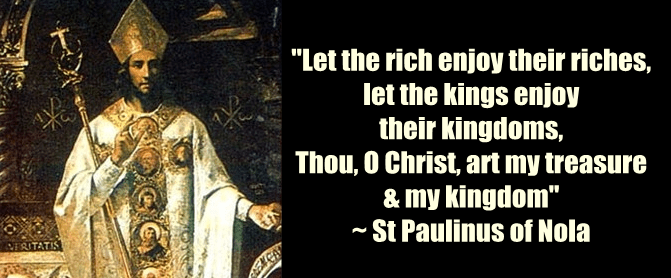
Though Paulinus kept himself secluded, it yet became known who he was, and whence he came, and not only in Nola, but all Italy was astonished, and so great and eminent a man had chosen for his walk through life, such a humble, and, in the eyes of the world, such despised path. The esteem in which he was then held by both clergy, and the laity was so great, that, on the death of the Bishop of Nola, they determined to raise him to the Episcopal chair. It was a long before the humble servant of God could be persuaded to accept the dignity, but having atlast consented, his love, his solicitude for his flock, the zeal he displayed, for the honour of God, made him beloved by men, and favoured by the Almighty. Soon after his election to the See, Campaniasuffered the fate of many other countries, and was the laid waste by the Goths, and many of its inhabitants were taken prisoners. The holy Bishop used all his income to feed the poor and ransom the captives. When all his resources were exhausted, Nola was plundered, and the great servant of the Almighty, with several others, was taken prisoner. God, however, so ordained that he was speedily released. Some years afterward, the Vandals crossed the ocean, and, again plundering the kingdom of Naples, took away many of the inhabitants as prisoners. Among these were several persons from Nola, and although St.Paulinus exerted himself to the utmost to redeem them from prison, he was unable to help at all. Saint Paulinus gave all he possessed to ransom prisoners, and when nothing was left him, he gave himself to redeem the son of a poor widow. He voluntarily became his slave to give liberty to another. This was surely an admirable example of charity as the world has ever witnessed. The contemplation of this love should record to you, the infinitely greater love what’s the son of God has manifested to us, by ransoming us from the much harder captivity of the evil spirit. “He loved me, and delivered hHimself for me, [Galatians 2:20]. And to what did He give Himself? Not only to a disgraceful captivity, to a painful Scourging and Crown of Thorns, but to the most ignominious and bitter death upon the Cross.And why? “For His exceeding Charity wherewith He loved us,“ answers Saint Paul. [Ephesians 2:4]. And what do you owe to your Saviour in consideration of such unbounded Love? If you had been the prisoner whom St. Paulinus ransomed with his own liberty, how would you have acted toward him? Oh! Then let the same spirit animate you toward Him who has paid so much higher a ransom to free your soul from captivity. “My soul, love Him, Who has so dearly loved thee,“ says Saint Augustine.
Fr. Francis Xavier Weninger (d. 1888) – Austrian Priest, professor and author; joined the Jesuits as missionary preacher to the United States.
Living as Children of the Father

Almighty God has shown to us Christian people the treasures of His great mercy, the secret mysteries of the Faith and the Sacraments of health, by which we may trust indeed to have forgiveness. Certainly, they were hidden before and unknown to us, but now in these latter times they are manifest and shown by His Only Begotten Son, Jesus Christ, as He Himself witnesses, saying to His Father: I bless You, Father, LORD of Heaven and of earth, for hiding these things from the learned and the clever and revealing them to mere children (Mt 11:25). Jesus Christ coming down from the Father in Heaven into this world made open and showed to His Church the hidden and secret mysteries of His Godhead. He Himself bears witness, saying, I have made known to you everything I have learnt from My Father (Jn 15:15). Also, at His Ascension He promised the Holy Ghost to come who would teach perfectly the knowledge of everything. So that now nothing can be more certain to us than what is taught by Holy Church. No way can be found so efficacious and ready to prove the certainty of anything concerning our Faith as that the Church has so affirmed and ordained. The Church of God can in no way be beguiled in those things that belong to our Faith and to the sure health of the soul. Who therefore among us Christian people may not rightly say to God what follows? “Good LORD, You have shown to me the mysteries of Your Infinite Wisdom, which were hidden before and unknown to us.”
But why has God shown us these secrets? What does it profit that his secret mysteries are shown and made open to us? What comfort shall we take by it? Truly, great comfort if we sincerely repent of our old, sinful life. Otherwise, we know them to our great harm. For as Saint Peter says, It would even have been better for him never to have learnt the way of holiness, than to know it and afterwards desert the holy rule that was entrusted to him (2 P 2:21). But if we turn to God and follow his commandments, forsaking our wretched life, having faith and trust in his sacraments, we shall undoubtedly obtain forgiveness and mercy by virtue of them.
Saint John Fisher
Saint John Fisher († 1535) was chancellor of Cambridge University, Bishop, and Cardinal. He was beheaded for the faith. [From Exposition of the Seven Penitential Psalms.
From a letter written in prison to his daughter Margaret by Saint Thomas More
(The English Works of Sir Thomas More, London, 1557, p. 1454)
With good Hope I shall commit myself wholly to God
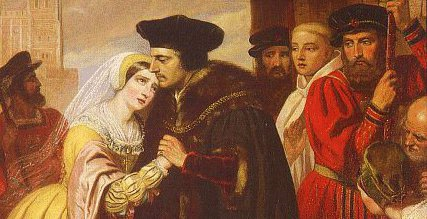
Although I know well, Margaret, that because of my past wickedness I deserve to be abandoned by God, I cannot but trust in His merciful goodness. His grace has strengthened me until now and made me content to lose goods, land, and life as well, rather than to swear against my conscience. God’s Grace has given the king a gracious frame of mind toward me, so that as yet he has taken from me nothing but my liberty. In doing this His Majesty has done me such great good with respect to spiritual profit that I trust that among all the great benefits He has heaped so abundantly upon me I count my imprisonment the very greatest. I cannot, therefore, mistrust the Grace of God. Either He shall keep the king in that gracious frame of mind to continue to do me no harm, or else, if it be His pleasure that for my other sins I suffer in this case as I shall not deserve, then His Grace shall give me the strength to bear it patiently, and perhaps even gladly.
By the merits of His bitter passion joined to mine and far surpassing in merit for me all that I can suffer myself, His bounteous goodness shall release me from the pains of Purgatory and shall increase my reward in Heaven besides.
I will not mistrust Him, Meg, though I shall feel myself weakening and on the verge of being overcome with fear. I shall remember how Saint Peter at a blast of wind began to sink because of his lack of Faith, and I shall do as he did: call upon Christ and pray to Him for help. And then I trust He shall place His Holy Hand on me and in the stormy seas hold me up from drowning.
And if He permits me to play Saint Peter further and to fall to the ground and to swear and forswear, may God Our LORD in His tender mercy keep me from this, and let me lose if it so happen, and never win thereby! Still, if this should happen, afterward I trust that in His goodness He will look on me with pity as He did upon Saint Peter, and make me stand up again and confess the Truth of my conscience afresh and endure here the shame and harm of my own fault.
And finally, Margaret, I know this well: that without my fault He will not let me be lost. I shall, therefore, with good Hope commit myself wholly to Him. And if He permits me to perish for my faults, then I shall serve as praise for His Justice. But in good Faith, Meg, I trust that His tender pity shall keep my poor soul safe and make me commend His mercy.
And, therefore, my own good daughter, do not let your mind be troubled over anything that shall happen to me in this world. Nothing can come but what God Wills. And I am very sure that whatever that be, however bad it may seem, it shall indeed be the best.
 Daily Reflections
Leave a comment