
Monday of the Twelfth Week in Ordinary Time
Saints John and Paul, Martyrs (Traditional)
Jesus warns us, “and with what measure you mete, it will be measured to you again.” (Mt 7:1-5). The only adequate way of approaching reality, of approaching our life, is through a gift that comes to us through the mercy of God. The LORD said to Abram, “Leave your country, your family and your father’s house, for the land I will show you.” (Book of Genesis 12:1-9) Because Abram obeyed and accepted this new measure for his life that came from God, the LORD made of him a great nation and made his name great.
SAINTS JOHN AND PAUL, MARTYRS
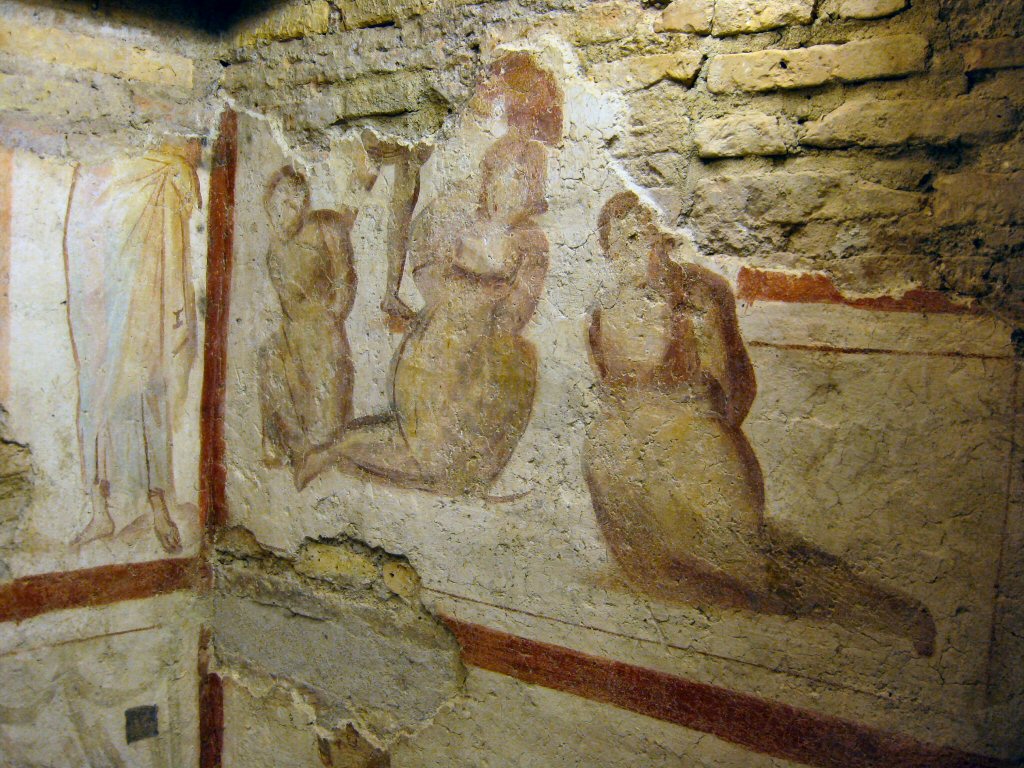
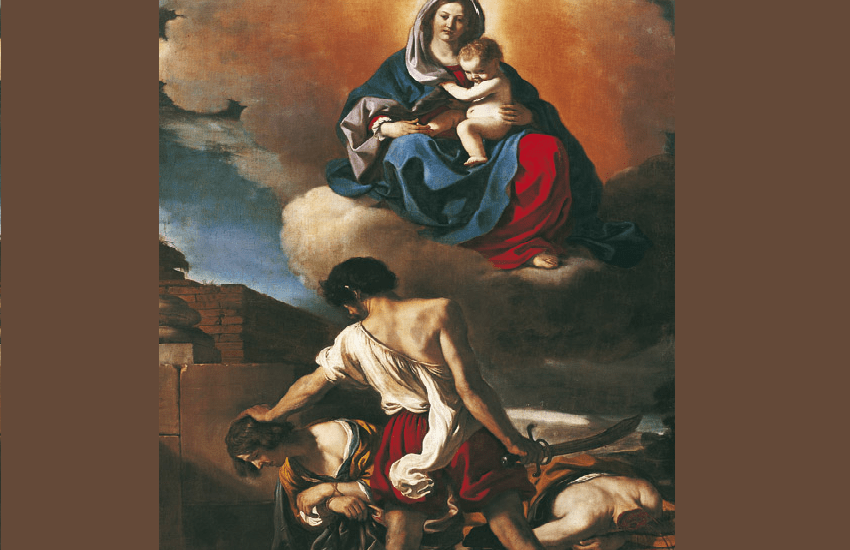
Saints John and Paul were both Christian officers in the army under Julian the Apostate. They suffered martyrdom in their own house, on the Crellon Hill. They spent the ten days allowed them to deliberate about renouncing their devotion to Christ, in distributing all the goods to the poor. The fact that, unlike other martyrs, who were burned outside the walls, they had their place of burial in the very heart of the Eternal City, was looked upon by the early Christians, as a special honour granted to them, and to Rome by Divine Providence. Archeological discoveries have fully confirmed the truth of the Acts of their martyrdom. Their dwelling-house, the place of their execution, the graves, and important paintings have been brought to light. The two brothers, when on earth possessed one home, and one Faith, and now in Heaven, possess the same immortal crown. John and Paul said unto Julian: We worship One God, who hath made heaven and earth.
From a treatise on Christian Perfection by Saint Gregory of Nyssa, Bishop
(PG 46, 254-255)
The Christian is another Christ
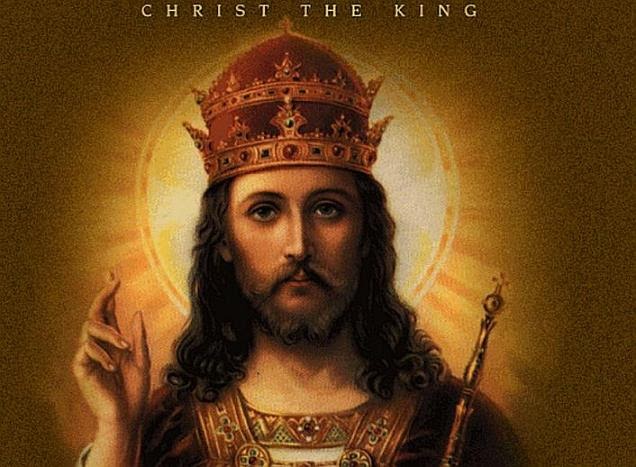
No one has known Christ better than Paul, nor surpassed him in the careful example he gave of what anyone should be who bears Christ’s name. So precisely did he mirror his Master that he became his very image. By a painstaking imitation, he was transformed into his model and it seemed to be no longer Paul who lived and spoke, but Christ Himself. He shows his keen awareness of this grace when he refers to the Corinthians’ desire for proof that Christ was speaking in him; as he says: It is no longer I who live: it is Christ who lives in me.
Paul teaches us the power of Christ’s name when he calls Him the Power and Wisdom of God, our peace, the unapproachable Light where God dwells, our expiation and redemption, our great High Priest, our Paschal Sacrifice, our propitiation; when he declares Him to be the radiance of God’s Glory, the very pattern of His nature, the Creator of all ages, our Spiritual Food and Drink, the Rock and the Water, the Bedrock of our Faith, the Cornerstone, the visible image of the Invisible God. He goes on to speak of Him as the Mighty God, the Head of His Body, the Church, the firstborn of the new creation, the first fruits of those who have fallen asleep, the firstborn of the dead, the eldest of many brothers; he tells us that Christ is the Mediator between God and man, the Only-begotten Son crowned with Glory and Honour, the LORD of Glory, the beginning of all things, the King of Justice and of Peace, the King of the whole universe, ruling a realm that has no limits.
Paul calls Christ by many other titles too numerous to recall here. Their cumulative force will give some conception of the marvellous content of the name “Christ,” revealing to us His inexpressible majesty, insofar as our minds and thought can comprehend it. Since, by the goodness of God, we who are called “Christians” have been granted the honour of sharing this name, the greatest, the highest, the most sublime of all names, it follows that each of the titles that express its meaning should be clearly reflected in us. If we are not to lie when we call ourselves “Christians,” we must bear witness to it by our way of living.
DAILY MEDITATION
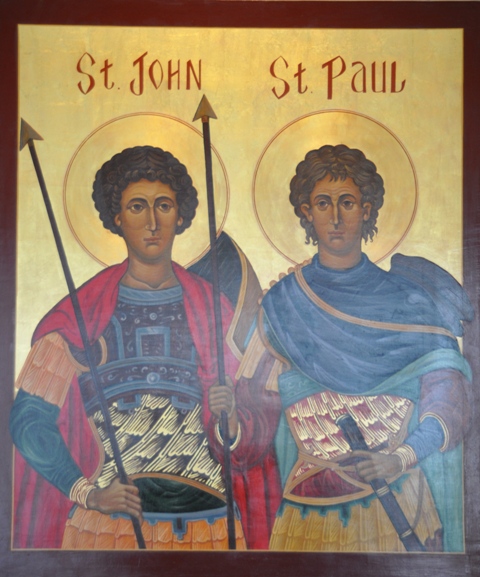

These two saints were both officers in the army under Julian, the Apostate, and received the crown of martyrdom, probably in 363. They glorified God by a double victory: they despised the honours of the world, and triumphed over its threats and torments. They saw many wicked man prosper in their impiety, but were not dazzled by their example. They considered that worldly prosperity which attends impunity in sin is the most dreadful of all judgments; and how false and short-lived was this glittering prosperity of Julian, who in a moment fell into the pit which he himself had dug! But the martyrs, by the momentary labour of their conflict, purchased an immense weight of never-fading glory; their torments were, by their heroic patience, and invincible virtue and infidelity, a spectacle worthy of God, who looked down upon them from the Throne of His Glory, and held His arms stretched out to strengthen them, and to put on their heads immortal crowns in the happy moment of their victory.
Reflection: the Saints always accounted that they had done nothing for Christ so long as they had not resisted to blood, and, by pouring forth the last drop, completed their sacrifice. Every action of our lives ought to spring from this fervent motive, and we should consecrate ourselves to the Divine service, with our whole strength; we must always bear in mind that we owe to God all that we are, and, after all we can do, are unprofitable servants, and do only what we are bound to do.
John Gilmary Shea (d.1892) – American author, and celebrated historian, regarded as the father of American Catholic history.
 Daily Reflections
Leave a comment