“Heart of Jesus, be our assured refuge in life and more especially at the hour of death” – St. Margaret Mary Alacoque
Proverbs 17:17; 1 John 4:7
A true friend loves you at all times,
– and a brother proves himself in adversity.
Everyone who loves is a child of God and knows God.
– And a brother proves himself in adversity.
Wednesday of the Twelfth Week in Ordinary Time
Vigil of the Apostles Sts. Peter and Paul (Traditional)
Saint Irenaenus, Bishop, Martyr and Doctor of the Church
VIGIL OF THE APOSTLES SS. PETER AND PAUL

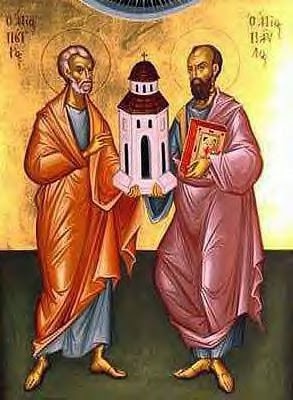
On this vigil in the Divine Office, the last Lesson with the homily on the Gospel was sung by the Pope himself. At one time, this vigil was kept with equal solemnity in the Basilicas of St. Peter and of St. Paul. Later the celebration at St. Paul’s became monastic; the peole attended the Mass at St. Peter’s. The Vigil Mass records the powers given by Jesus Christ to SS. Peter and Paul, the two foundation pillars of the Church (Acts 3:1-10 and John 21:15-19).
SAINT IRENAEUS, BISHOP, MARTYR AND DOCTOR OF THE CHURCH
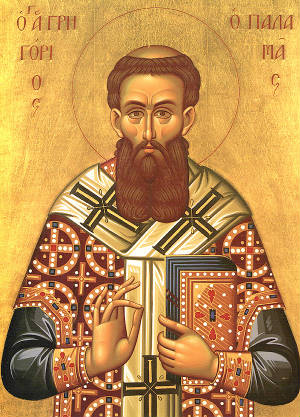
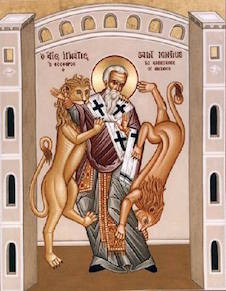
This Saint was born about the year 120 near Smyrna in Asia Minor (present day Izmir, Turkey). His parents, who were Christians, placed him under the care of the great Saint Polycarp, Bishop of Smyrna. It was in so holy a school that he learned that Sacred science which rendered him afterward a great ornament of the Church and the terror of Her enemies. Saint Polycarp cultivated his rising genius, and formed his mind to piety by precepts and example; and the zealous scholar was careful to reap all the advantages which were offered him by the happiness of such a master. Such was his veneration for his tutor’s sanctity that he observed every action and whatever he saw in that holy man, the better to copy his example and learn his spirit. He listened to his instructions with an insatiable ardor, and so deeply did he engrave them on his heart that the impressions remained most lively even to his old age. In order to confute the heresies of his age, this father made himself acquainted with the most absurd conceits of their philosophers, by which means he was qualified to trace every error to its sources and set it in its full light. Saint Polycarp sent Saint Irenaeus into Gaul, in company with some priests; he was himself ordained priest of the Church of Lyons by Saint Pothinus. Saint Pothinus having glorified God by his happy death, in the year 177, Iranaeus was chosen the second Bishop to Lugdunum in the Roman province of Gaul (Lyons). In Irenaeus’ time, the Gnostic heresy was widespread in Gaul. Many Christians were led astray by Gnosticism’s adherents, who claimed that Christ Himself was a Gnostic teacher. But at its heart, Gnosticism denied the central Christian Doctrines: creation, the Incarnation, and the Trinity. Irenaeus’ great work was the Adversus Haereses, a refutation of Gnostic theology, which spread rapidly in Latin translation. Irenaeus’ writings were a significant force in Gnosticism’s demise. By his preaching, he in a short time converted almost that whole country to the Faith. He wrote several works against heresy, and at last, with many others, suffered martyrdom about the year 202, under the Emperor Severus, at Lyons.
From the treatise Against Heresies by Saint Irenaeus, Bishop and Martyr
(Lib 4, 20, 5-7: SC 100, 640-642, 644-648)
Life in man is the Glory of God; the life of man is the Vision of God
The Glory of God gives Life; those who see God receive Life. For this reason God, who cannot be grasped, comprehended or seen, allows Himself to be seen, comprehended and grasped by men, that He may give Life to those who see and receive Him. It is impossible to live without life, and the actualization of life comes from participation in God, while participation in God is to see God and enjoy His goodness.
Men will therefore see God if they are to live; through the vision of God they become immortal and attain to God Himself. As I have said, this was shown in symbols by the prophets: God will be seen by men who hear His Spirit and are always waiting for His coming. As Moses said in the Book of Deuteronomy: On that day we shall see, for God will speak to man, and man will live.
God is the Source of all activity throughout creation. He cannot be seen or described in His own nature and in all His greatness by any of His creatures. Yet He is certainly not unknown. Through His Word the whole creation learns that there is One God and Father, Who holds all things together and gives them their being. As it is written in the Gospel: No man has ever seen God, except the Only-begotten Son, who is in the bosom of the Father; He has revealed Him.
From the Beginning the Son is the one who teaches us about the Father; He is with the Father from the Beginning. He was to reveal to the human race visions of prophecy, the diversity of spiritual gifts, His own ways of ministry, the glorification of the Father, all due order and harmony, at the appointed time and for our instruction. Where there is order, there is also correct timing; where there is correct timing, there is also advantage.
The Word became the Steward of the Father’s Grace for the advantage of men, for whose benefit He made such wonderful arrangements. He revealed God to men and presented men to God. He safeguarded the Invisibility of the Father to prevent men from treating God with contempt and to set before Him a constant goal toward which to make progress. On the other hand, He revealed God to men and made Him visible in many ways to prevent man from being totally separated from God and so cease to be. Life in man is the glory of God; the life of man is the vision of God. If the revelation of God through creation gives life to all who live upon the earth, much more does the manifestation of the Father through the Word give Life to those who see God.
How to Be True Prophets
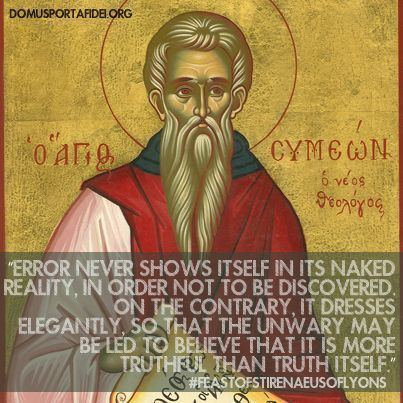
The sound and safe and religious and truth-loving mind will readily apply itself to the things of God placed within the power of men and granted to our knowledge. It will make progress in them because by daily exercise it will make easy for itself the acquisition of knowledge. These are the things that come under our eyes and are expressed in the Sacred Scriptures clearly and unambiguously…. Thus the body of Truth will continue entire, harmonious in its members and unshaken….
Therefore, the entire Scriptures, both the Prophets and the Gospels, clearly and unambiguously—so they can equally be heard by all, even though all do not believe that there is only One God to the exclusion of others—preach that through His own Word God made all things, whether visible or invisible, whether Heavenly or earthly, whether aquatic or subterranean creatures, as we have demonstrated from the very words of the Scriptures. Furthermore, since the very creation in which we are testifies to this same thing, namely, that there is One who made it and governs it, those persons will seem very dull who blind their eyes in the face of such clear manifestations and refuse to see the Light of the preaching. They put themselves in fetters, and each one of them thinks he has discovered his own god….
Since, then, we possess the rule of Truth itself and the manifest testimony about God, we ought not to cast out the solid and True knowledge about God by running from one solution to another. No, it is proper to direct the solution of difficulties towards that standard, and to discipline ourselves by investigating the mystery and economy of the existent God, and to grow in the love of Him who has done and does so much for our sakes. Never should we, however, give up the conviction that most clearly preaches that He alone is Truly God and Father who both made this world and fashioned humanity.
Saint Irenaeus of Lyons
Saint Irenaeus of Lyons († early 3rd century) was a pastor, missionary, martyr, and a heroic writer in defence of the Church. [From Saint Irenaeus of Lyons: Against the Heresies, Book 2. Dominic J. Unger, o.f.m. cap., Tr
DAILY MEDITATION
“You shall be witnesses unto Me in Jerusalem, and in all Judaea, and Samaria, and even to the uttermost part of the earth,” [Acts of the Apostles 1:8]. We know how faithfully the Apostles fulfilled this great and glorious mission. They made known their Master’s name in all the world, and caused Him to be adored, in spite of all the opposition of men and devils. They destroyed the idols, and overthrew the temple of the false gods of the heathen. They changed the whole world from pagan to Christian, and founded the Church of Jesus Christ, which eighteen centuries have neither changed, nor shaken.
Observe that they who worked all of these miracles were twelve poor fisherman, weak and ignorant persons. Why did the Son of God choose such instruments to lay the foundation of His Church? First, to prove by convincing evidence, that it is not a human, but a Divine Institution, claiming, therefore, our obedience and submission; secondly, that the thought of our own weakness and unworthiness, should not deter us from undertaking great things for the glory of God, and the salvation of souls.
Let us beg of God that He would fortify our courage by enabling us to see that we are capable of all things, when sustained by His Almighty power. When tempted to discouragement, I will reflect on the words of the apostle: Omnia possum in eo qui me confortat.“I can do all things in Him Who strengtheneth me“ [Phil 4:13].Father Bruno Vercruysse(d. 1880) – Belgian Jesuit priest, missionary retreat master, and author of the celebrated Practical Meditations.
Malachi 2:6; Psalm 89:22
True teaching was in his mouth;
no evil was never found on his lips.
– He walked with me in goodness and in peace and turned many away from iniquity.
My hand will be a steady help to him;
my arm will give him strength.
– He walked with me in goodness and in peace and turned many away from iniquity.
“The refusal to take sides on great moral issues is itself a decision. It is a silent acquiescence to evil. The tragedy of our time is that those who still believe in honesty lack fire and conviction, while those who believe in dishonesty are full of passionate conviction.” – Ven. Archbishop Fulton Sheen
 Daily Reflections
Leave a comment