John 15:15; Matthew 13:11, 16
I no longer call you servants, but My friends,
– for I have shared with you everything
I have heard from My Father.
The mysteries of the Kingdom of Heaven have been revealed to you;
blessed are your eyes because they see
and your ears because they hear.
– For I have shared with you everything
I have heard from My Father.
Feast of Saint Thomas, Apostle
Saint Irenaenus, Bishop, Martyr and Doctor of the Church
When the Apostles first met the resurrected LORD, Thomas was missing. “Unless I see the holes that the nails made in His hands and can put my finger into the holes they made, and unless I can put my hand into His side, I refuse to believe.” When Jesus next appeared, it was with a special invitation to Thomas: “Probe the marks of the nails, press your hands into My side”. Face to face with this fleshly testimony, Thomas exclaimed, “My LORD and My God!” “[God’s] clemency acted in this wonderful way so that through the doubting disciple touching the wounds in His Master’s Body, our own wounds of incredulity may be healed” (Saint Gregory the Great).
SAINT THOMAS, APOSTLE
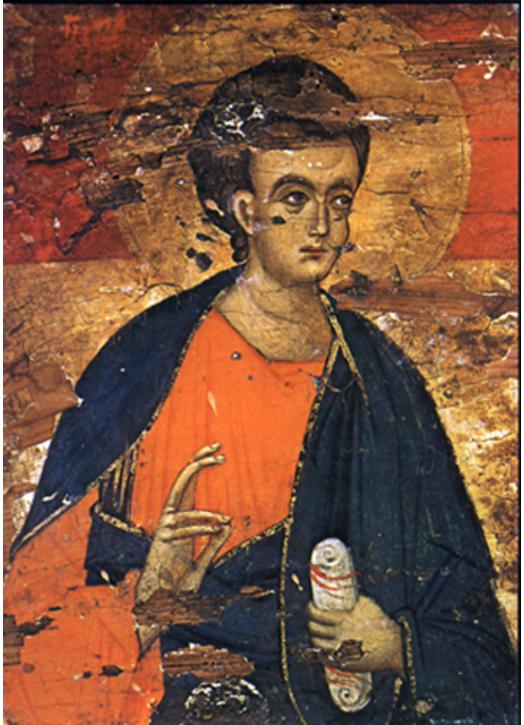
St. Thomas was one of the fishermen on the Sea of Galilee whom Our LORD called to be His Apostles. By nature slow to believe, too apt to see difficulties, and to look at the dark side of things, he had withal a most sympathetic, loving, and courageous heart. Once when Jesus spoke of the mansions in His Father’s house, Thomas, in his simplicity, asked: “Master, we do not know where you are going; how can we know the way?” When Jesus turned to go toward Bethany to the grave of Lazarus, the desponding apostle at once feared the worst for his beloved LORD, yet cried out bravely to the rest: “Let us also go and die with Him.” After the Resurrection, incredulity again prevailed, and while the wounds of the Crucifixion were imprinted vividly on his affectionate mind, he would not credit the report that Christ had indeed Risen. But at the actual sight of the pierced hands and side, and the gentle rebuke of His Saviour, unbelief was gone forever; and his faith and ours has ever triumphed in the joyous utterance into which he broke: “My LORD and my God!”
SAINT IRENAENUS, BISHOP, MARTYR
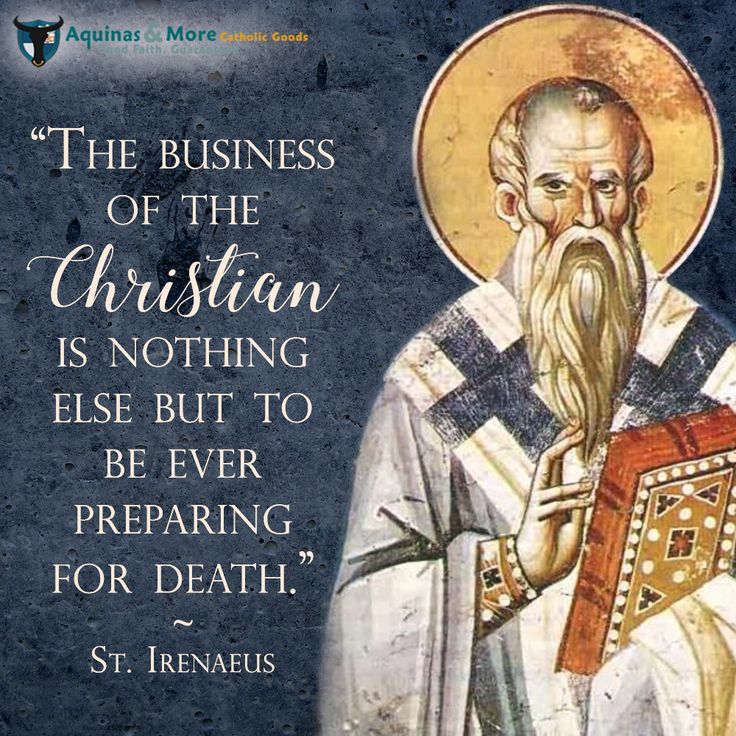
(See Wednesday 28 June blog for details on his life )
From a homily on the Gospels by Saint Gregory the Great, Pope
(Hom. 26, 7-9: PL 76, 1201-1202)
My LORD and my God
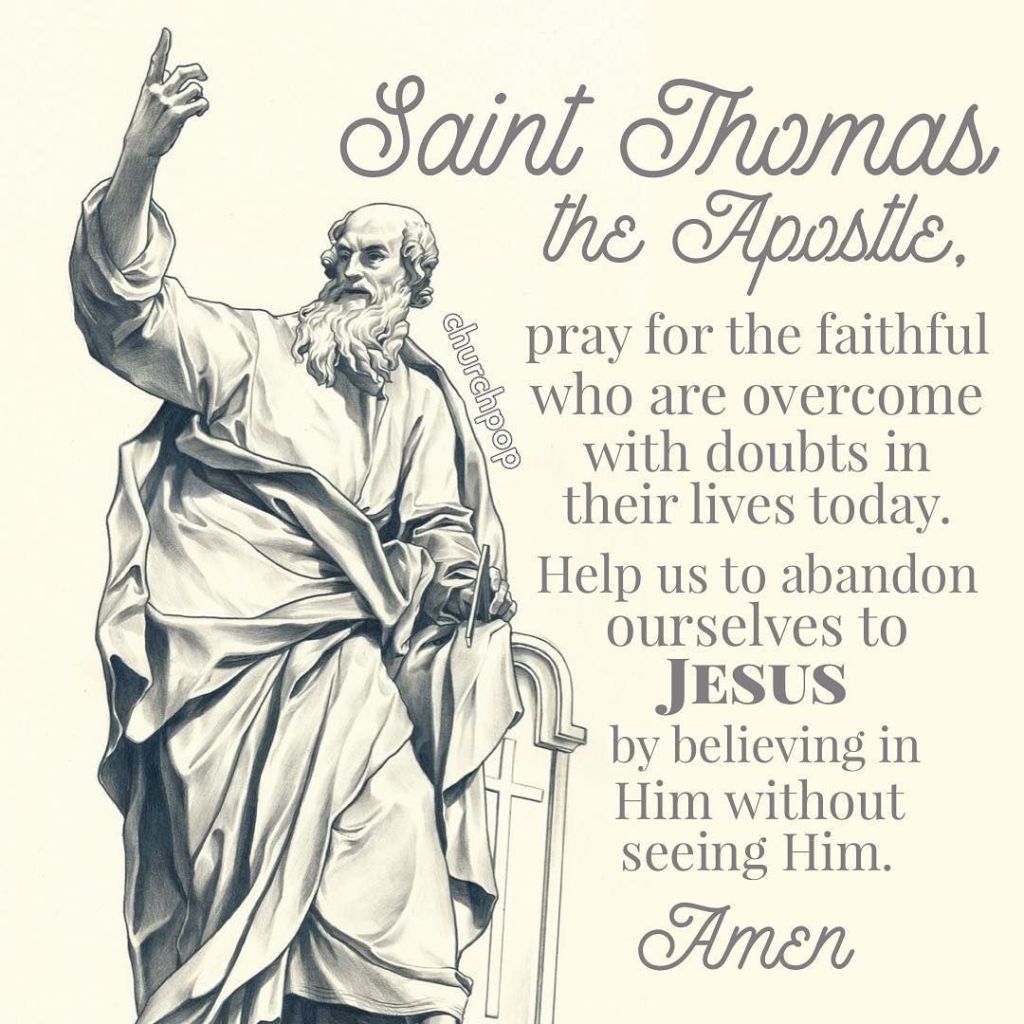
Thomas, one of the twelve, called the Twin, was not with them when Jesus came. He was the only disciple absent; on his return he heard what had happened but refused to believe it. The LORD came a second time; He offered His side for the disbelieving disciple to touch, held out His hands, and showing the scars of His wounds, healed the wound of his disbelief.
Dearly beloved, what do you see in these events? Do you really believe that it was by chance that this chosen disciple was absent, then came and heard, heard and doubted, doubted and touched, touched and believed? It was not by chance but in God’s Providence. In a marvellous way God’s mercy arranged that the disbelieving disciple, in touching the wounds of His Master’s Body, should heal our wounds of disbelief. The disbelief of Thomas has done more for our Faith than the Faith of the other disciples. As he touches Christ and is won over to belief, every doubt is cast aside and our Faith is strengthened. So the disciple who doubted, then felt Christ’s wounds, becomes a witness to the reality of the Resurrection.
Touching Christ, he cried out: My LORD and my God. Jesus said to him: Because you have seen me, Thomas, you have believed. Paul said: Faith is the guarantee of things hoped for, the evidence of things unseen. It is clear, then, that Faith is the proof of what can not be seen. What is seen gives knowledge, not Faith. When Thomas saw and touched, why was he told: You have believed because you have seen Me? Because what he saw and what he believed were different things. God cannot be seen by mortal man. Thomas saw a human being, whom he acknowledged to be God, and said: My LORD and my God. Seeing, he believed; looking at one who was true man, he cried out that this was God, the God he could not see.
What follows is reason for great joy: Blessed are those who have not seen and have believed. There is here a particular reference to ourselves; we hold in our hearts one we have not seen in the flesh. We are included in these words, but only if we follow up our Faith with good works. The true believer practices what he believes. But of those who pay only lip service to Faith, Paul has this to say: They profess to know God, but they deny Him in their works. Therefore James says: Faith without works is dead.
“Put your finger here”
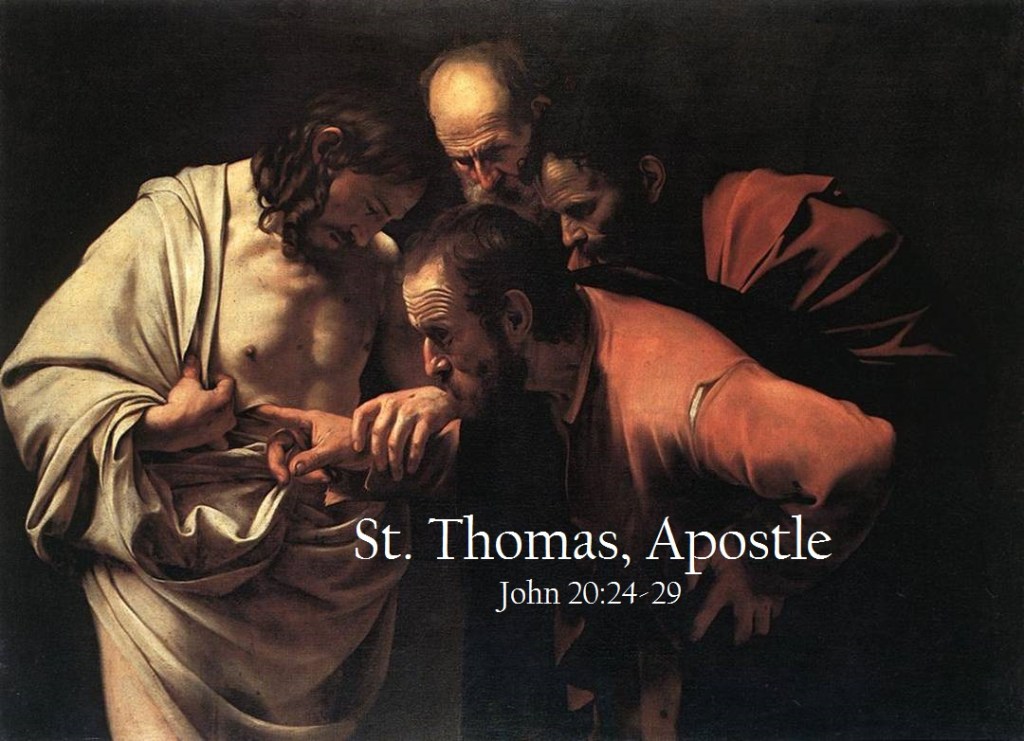
When we reflect back on a conversion, we may realize that it is to brush up against a secret in God, to sense a veil somewhat lifted, as though a quality of shyness in God is suddenly perceived that was never considered before. A taste of this exquisitely personal Truth in God takes place. He is not hiding in majestic distance; rather, He has become the LORD Jesus of flesh and blood whoseeyes respond to our own glance. We can sense His lingering gaze and His delight in returning our soul to His protection and care. The secret disclosure He offers us, which is only a taste at first, is the concealed wonder of His wounds.
The summons by Jesus to Saint Thomas the Apostle after the Resurrection to place his finger in the nail marks and his hand in his side is repeated again in conversions. Our LORD wants this probing, this sustained gaze and inquiry, a sifting by intimate desire of His own disguised hiddenness. The wounds remain in the body of Christ so that a wound of love may persist in the soul that gazes on them. It is as though Our LORD has been shy to let these wounds be seen until a conversion has taken place. And now, with our soul conquered by Him, He shares His secret. The wounds of Our LORD become for our soul a never fully fathomed reality in the mystery of relations with Him. They always invite further probing and contemplation that can seem endless as our life continues. “Look at My wounds and contemplate them in love”, He seems to say. The secrecy of God in this mystery of his wounded love opens itself more with each entry of our soul into the depth of His thirst for souls. The depth is limitless, and always, after a conversion, it is this Truth of His heart full of Infinite desire and wounded in love that awaits our discovery.
Father Donald Haggerty
Father Haggerty, a priest of the Archdiocese of New York, serves at Saint Patrick’s Cathedral in New York City. [From Conversion: Spiritual Insights into an Essential Encounter with God.
1 John 1:2, 1
This life was made visible;
we have seen it and we proclaim to you
– the Eternal Life which was with the Father
and has appeared to us.
We have seen it with our own eyes
and with our own hands we have touched the Word of Life;
what we have seen and heard we declare to you.
– The Eternal Life which was with the Father
and has appeared to us.
“The refusal to take sides on great moral issues is itself a decision. It is a silent acquiescence to evil. The tragedy of our time is that those who still believe in honesty lack fire and conviction, while those who believe in dishonesty are full of passionate conviction.” – Ven. Archbishop Fulton Sheen
 Daily Reflections
Leave a comment