Tuesday Devotion to the Holy Face of Jesus
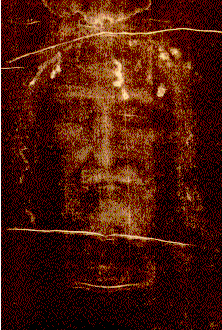
“Nothing whatsoever will be refused to us” through the Holy Face
Prayers to the Holy Face
O Jesus, Who in Thy cruel Passion didst become the “Reproach of men and the Man of Sorrows,” I worship Thy Divine Face. Once it shone with the beauty and sweetness of the Divinity: now for my sake it is become as the face of a leper. Yet in that disfigured Countenance I recognise Thy infinite Love, and I am consumed with the desire of loving Thee and of making Thee loved by all mankind. The tears that streamed in such abundance from Thine Eyes are to me as precious pearls which I delight to gather, that with their infinite worth I may ransom the souls of poor sinners.
O Jesus, Whose Face is the sole beauty that ravishes my heart, I may not behold here upon earth the sweetness of Thy Glance, nor feel the ineffable tenderness of Thy Kiss. I bow to Thy Will—but I pray Thee to imprint in me Thy Divine Likeness, and I implore Thee so to inflame me with Thy Love, that it may quickly consume me and I may soon reach the Vision of Thy glorious Face in Heaven. Amen.
Click on link below for Novena to the Holy Face of Jesus, etc. traditionalcatholicprayers.com/2019/11/15/devotions-to-the-holy-face-of-jesus/
Feast of Saint Benedict, Abbot (in Europe)
Saint Pius I, Pope, Martyr
SAINT BENEDICT, ABBOT
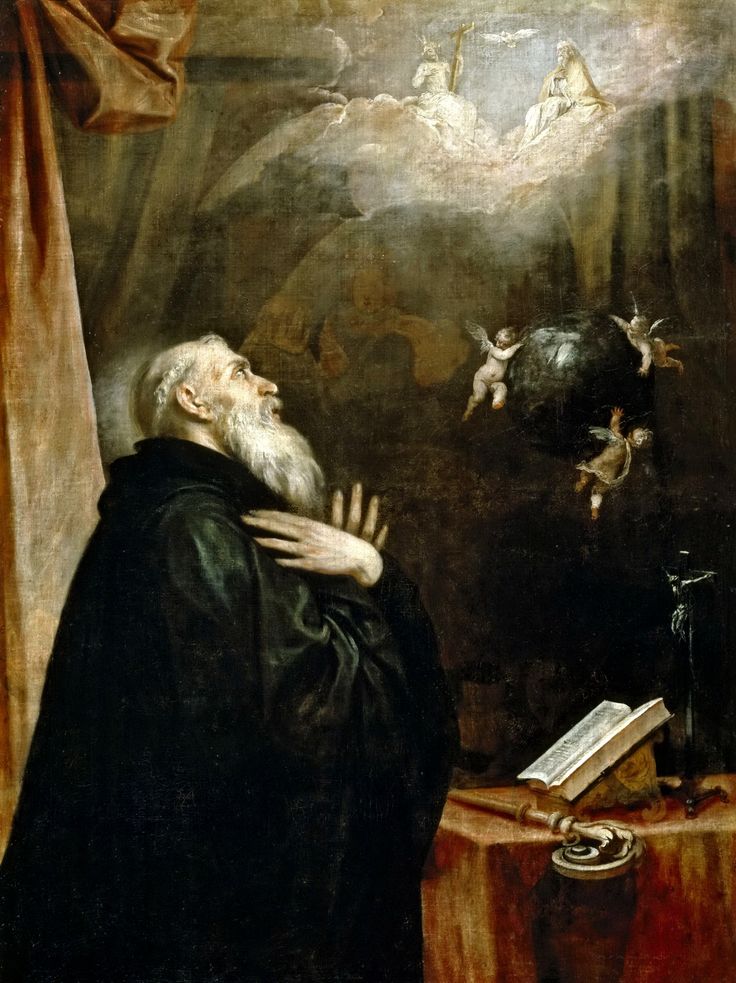
Benedict was born of a noble Italian family in Nursia, Italy, about 480. When a boy he was sent to Rome, and there placed in the public schools. Scared by the licentiousness of the Roman youth, he fled to the desert mountains of Subiaco, and was directed by the Holy Ghost into a cave, deep, craggy, and almost inaccessible. He lived there for three years, unknown to any one save the holy monk Romanus, who clothed him with the monastic habit and brought him food. But the fame of his sanctity soon gathered disciples round him.
The Rule provides a practical guide for monastic life, establishing the rhythms of prayer and work and right relations among the monks. The rigour of his rule, however, drew on him the hatred of some of the monks, and one of them mixed poison with the abbot’s drink; but when the Saint made the sign of the cross on the poisoned bowl, it broke and fell in pieces to the ground. After he had built twelve monasteries at Subiaco, he removed to Monte Casino, where he founded an abbey in which he wrote his rule to “establish a school for the LORD’s service” and lived until death. By prayer he did all things: wrought miracles, saw visions, and prophesied. A peasant, whose boy had just died, ran in anguish to Benedict, crying out, “Give me back my son!” The monks joined the poor man in his entreaties; but the Saint replied, “Such miracles are not for us to work, but for the blessed apostles. Why will you lay upon me a burden which my weakness cannot bear?” Moved at length by compassion he knelt down and, prostrating himself upon the body of the child, prayed earnestly. Then rising, he cried out, “Behold not, O LORD, my sins, but the Faith of this man, who desires the life of his son, and restore to the body that soul which you have taken away.” Hardly had he spoken when the child’s body began to tremble, and taking it by the hand he restored it alive to its father. Six days before his death he ordered his grave to be opened, and fell ill of a fever. On the sixth day he requested to be carried into the chapel, and, having received the Body and Blood of Christ, with hands uplifted, and leaning on one of his disciples, he calmly died in prayer on the 21st of March, 543.
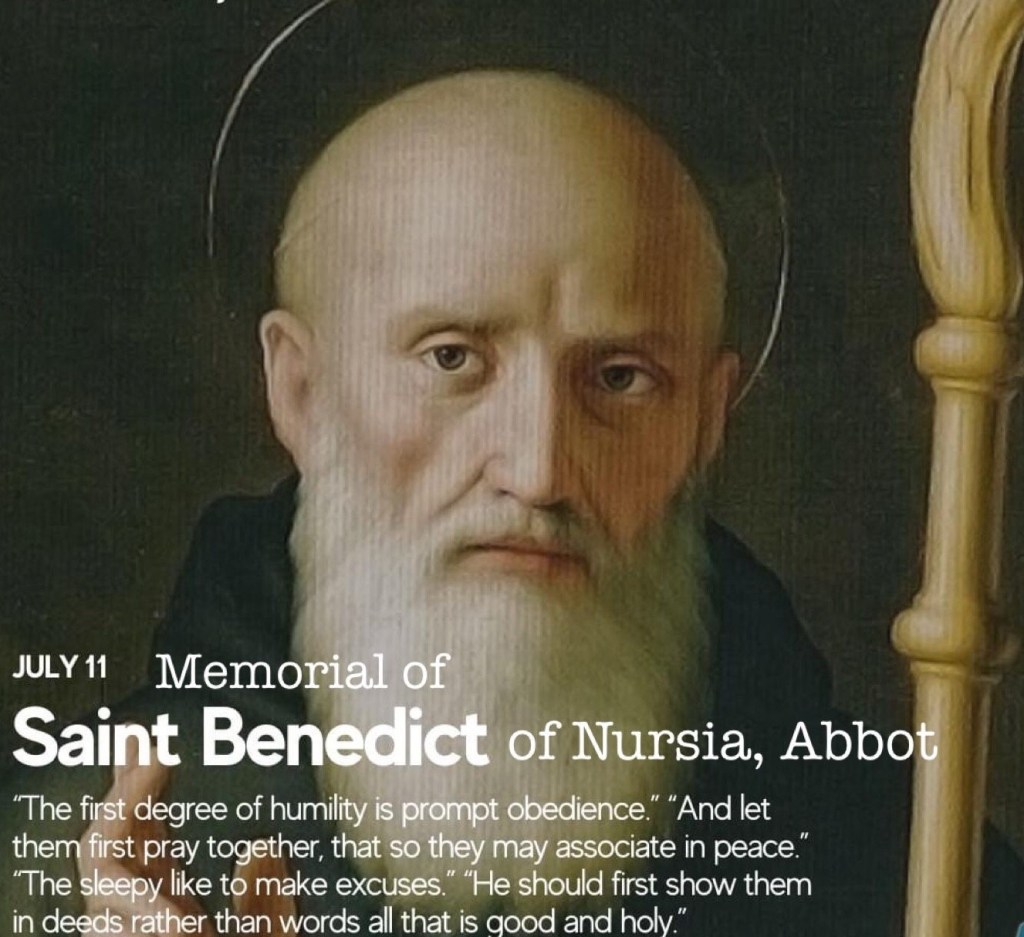
“For its moderation, humanity, and sober discernment between the essential and the secondary in Spiritual life, his rule has retained its illuminating power even to today” (Pope Benedict XVI). The communities founded by Benedict—including the Cistercian and Camaldolese offshoots—are found worldwide.
SAINT PIUS I, POPE MARTYR
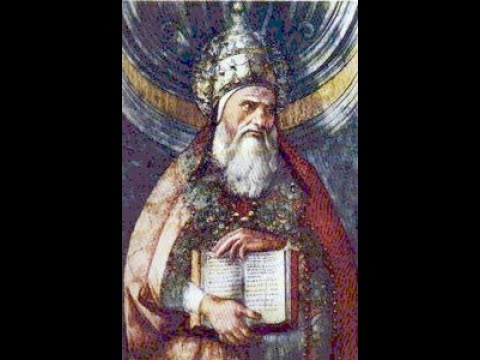
Saint Pius I, a great Pope of the Second Century, is said by tradition to have established a baptistry in the house of the Pudenti, or de Pastore. His brother is the author of the Shepherd of Hermas which has been styled “a vast examination of the conscience of the Roman Church at the end of the first half of the Second Century.” To Saint Pius is attributed the fixation of the feast of the Resurrection on Sunday, which then became the central Sunday of the year. He was martyred in 157 A.D. and is buried at the Vatican.
From the Rule of Saint Benedict, Abbot
(Prologus, 4-22; cap,72, 1-12; CSEL 75, 2-5, 162-163)
Put Christ before everything
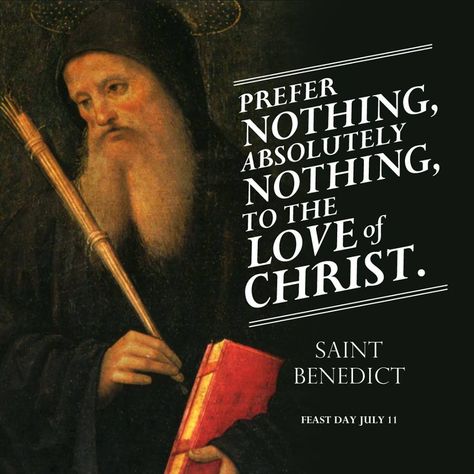
Whenever you begin any good work you should first of all make a most pressing appeal to Christ Our LORD to bring it to perfection; that He, who has honoured us by counting us among His children, may never be grieved by our evil deeds. For we must always serve Him with the good things He has given us in such a way that He may never—as an angry father disinherits his sons or even like a master who inspires fear—grow impatient with our sins and consign us to everlasting punishment, like wicked servants who would not follow Him to glory.
So we should at long last rouse ourselves, prompted by the words of Scripture: Now is the time for us to rise from sleep. Our eyes should be open to the God-given Light, and we should listen in wonderment to the message of the Divine Voice as it daily cries out: Today, if you shall hear His Voice, harden not your hearts; and again: If anyone has ears to hear, let him listen to what the Spirit is saying to the churches. And what does the Spirit say? Come My sons, listen to Me; I will teach you the fear of the LORD, Hurry, while you have the light of life, so that death’s darkness may not overtake you.
And the LORD as He seeks the one who will do His work among the throng of people to whom He makes that appeal, says again: Which of you wants to live to the full; who loves long life and the enjoyment of prosperity? And, if when you hear this you say, I do, God says to you: If you desire True and Everlasting Life, keep your tongue from evil and your lips from deceit, turn away from evil and do good; seek peace and pursue it. And when you have done these things My eyes will be upon you and before you call upon My name I shall say to you: Behold, I am here. What could be more delightful, dearest brothers, than the Voice of Our LORD’s invitation to us? In His loving kindness He reveals to us the Way of life.
And so, girded with Faith and the performance of good works, let us follow in His paths by the guidance of the Gospel; then we shall deserve to see Him who has called us into His Kingdom. If we wish to attain a dwelling-place in His Kingdom we shall not reach it unless we hasten there by our good deeds.
Just as there exists an evil fervour, a bitter spirit, which divides us from God and leads us to hell, so there is a good fervour which sets us apart from evil inclinations and leads us toward God and Eternal Life. Monks should put this fervour into practice with an overflowing love: that is, they should surpass each other in mutual esteem, accept their weaknesses, either of body or of behaviour, with the utmost patience; and vie with each other in acceding to requests. No one should follow what he considers to be good for himself, but rather what seems good for another. They should display brotherly love in a chaste manner; fear God in a spirit of love; revere their abbot with a genuine and submissive affection. Let them put Christ before all else; and may He lead us all to Everlasting Life.
DAILY MEDITATION

According to the earliest list of the popes, given by Irenaenus, Pius I was the ninth successor of Saint Peter.… the only chronological datum we possess is supplied by the year of Saint Polycarp of Smyrna‘s death, which may be referred with great certainty to 155–156 A.D. On his visit to Rome in the year before his death, Polycarp found Anicetus, the successor of Pius I, bishop there; consequently, the death of Pius must have occurred about 154 A.D.
During the pontificate of Pius I, the Roman Church was visited by various heretics, who sought to propagate their false doctrine among the faithful of the capital. The the Gnostic Valentinus, who had made his appearance, under Pope Hyginus, continued to sow his heresy, apparently not without success. The gnostic, Cerdon, was also active in Rome at this period, during which Marcion arrived in the capital. Excluded from Holy Communion by Pius I, the latter founded his heretical body. But Catholic teachers also visited the Roman Church, the most important, being Saint Justin, who expounded the Christian readings during the pontificate of Pius I, and that of his successor. A great activity thus marks the Christian community in Rome, which stands clearly conspicuous as the centre of the Church.
Catholic encyclopedia [1912] – classic multi-volume reference on “the constitution, doctrine, discipline, and history of the Catholic Church.”
Relying on the Pity of Christ

It sometimes happens, when we groan beneath the weight of our weaknesses, our miseries, and our sins, that we say with the Apostle, Unhappy man that I am! I feel in me two laws: the law of concupiscence which draws me towards evil, and the law of God which urges me towards good; who will deliver me from this struggle, who will give me victory? (cf. Rm 7:20-24). Listen to Saint Paul’s reply: Thanks be to God through Jesus Christ Our LORD!—the Grace of God, merited for us and given us by Jesus Christ Our LORD. We find in Christ Jesus everything we need to be victorious here below while we await the final triumph in glory.
Would that we could have a deep conviction that we are powerless without Christ, and that in Him we have everything! How has the Father not with Him, Christ, given us all things (Rm 8:102)? Of ourselves, we are weak, very weak. In the world of souls there are failures of every kind, but that is no reason for us to be discouraged: these miseries, when they are not willed, are rather things that give us title to Christ’s mercy. Look at those unfortunates who wish to excite the pity of people from whom they are begging alms. Far from hiding their poverty, they display their rags, they show their sores; these are their title to the compassion and charity of passers-by. For us too, as for the sick who were brought to Him when He lived in Judea, it is our misery—recognised, avowed, displayed to the eyes of Christ, that draws to us His mercy. Saint Paul tells us that Christ Jesus willed to experience our infirmities—sin excepted—so as to learn to feel compassion for us, and in point of fact we read several times in the Gospels that Jesus was moved with pity at the sight of the sufferings He witnessed. Saint Paul expressly adds that Christ in His Glory retains this feeling of compassion; and He immediately concludes from that: Let us be confident, then, in approaching the Throne of Grace—the Throne of Him who is the Source of Grace—for, if we do so with these dispositions, we shall have mercy (Her 4:16).
Besides, to act in this way is to glorify God, it is to render to Him a very pleasing homage. Why so? Because the Divine thought is that we should find everything in Christ; and when we humbly acknowledge our weakness and lean on the strength of Christ, the Father looks upon us with benevolence, with joy, because by so doing we declare that His Son Jesus is the One Mediator He has willed to give to the world.
Blessed Columba Marmion, o.s.b.
Blessed Columba († 1923) was abbot of the Benedictine abbey of Maredsous, Belgium. [From Christ, the Life of the Soul, Alan Bancroft, Tr.
“The refusal to take sides on great moral issues is itself a decision. It is a silent acquiescence to evil. The tragedy of our time is that those who still believe in honesty lack fire and conviction, while those who believe in dishonesty are full of passionate conviction.”- Ven. Archbishop Fulton Sheen
 Daily Reflections
Leave a comment