1 Chronicles 21:15; 2 Samuel 24:17
Remember, O LORD, Your covenant
and say to the destroying angel:
Enough! Now hold back your hand,
– lest You ravage the land and destroy all the people.
It was I who sinned;
I who did wrong;
but these sheep what have they done?
LORD, I beg You to turn Your anger away from Your people.
– Lest You ravage the land and destroy all the people.
Wednesday of the Fourteenth Week in Ordinary Time
Saint Gualbert, Abbot (Traditional)
Saints Nabor and Felix, Martyrs (Traditional)
Saint John Jones (Wales)
In the grip of famine, Pharaoh invests Joseph with the authority to feed the people of Egypt from the stores of grain, and Joseph’s own brothers from the land of Canaan come to him for bread. The brother they had condemned has become their saviour. The humanity of Jesus is invested with divine authority and continues to be for us the Bread of Life. The one who bore condemnation for the world is the Saviour of the world. We continue to meet the Saviour through “the twelve”— the Church (Matthew 10:1-7).
TRADITIONAL MASS READINGS: GOSPEL MT. 5:42-48; 6:1-4
The spirit of interior sacrifice shows iself in works of mercy made out of consideration for our neighhout, without distinction of friend or enemy, and with the sole intention of pleasing God. Let us ask for the spirit of sacrifice or self-denial.
SAINT JOHN GAULBERT, ABBOT
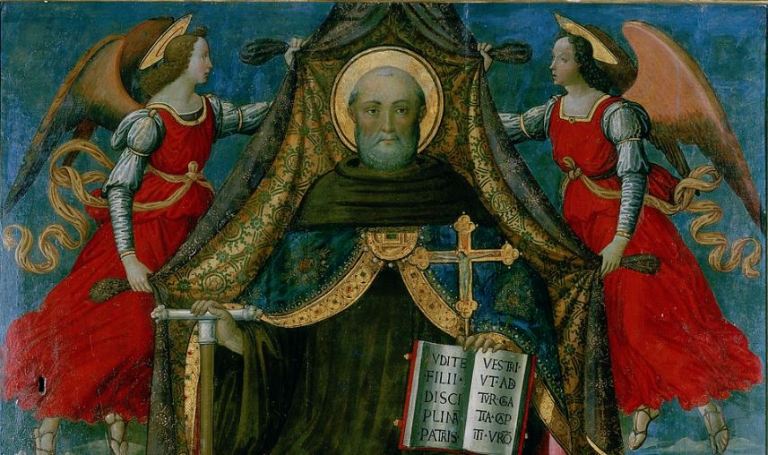
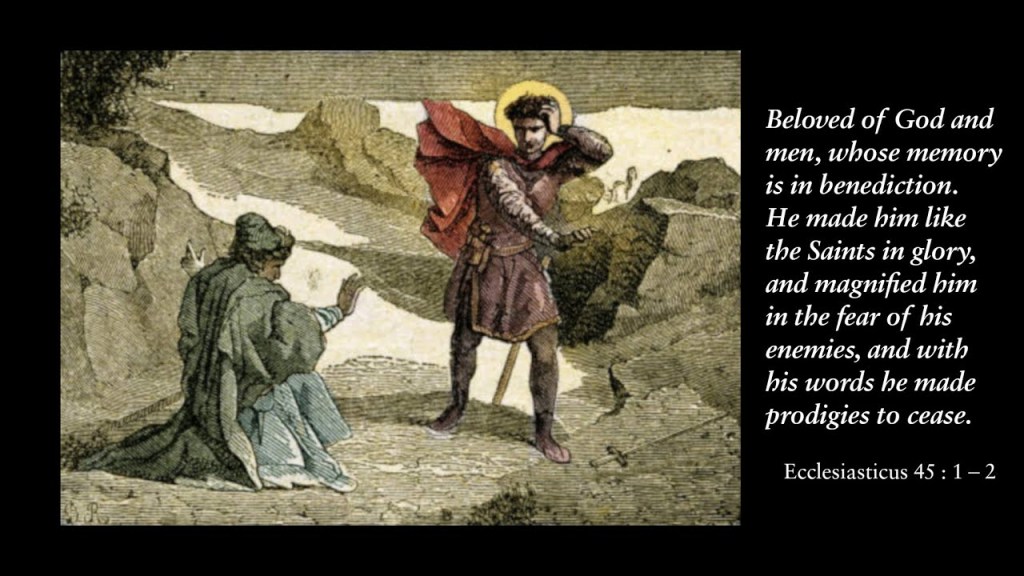
Born at Florence, Italy, at the end of the Tenth Century, John Gualbert, a noble military knight, met the murderer of his brother Hugh, on a Good Friday. He was about to slay him, when the assassin begged his pardon for the sake of Christ Crucified. Changed by God’s Grace, he embraced him as a brother in Christ. Gaulbert became a monk and founded the congregation of Valombrosa, affiliated to the order of Saint Benedict. Raised to the papacy, he exalted that office and position of the hierarchy, which had been degraded by the imperial power. He stamped out simony and brought back order and peace to the land of Tuscany. At Valombrosa he founded a monastery, whence came many saints and which still flourishes. He died on July 12, 1073, and was canonized in 1193.
SAINTS NABOR AND FELIX, MARTYRS
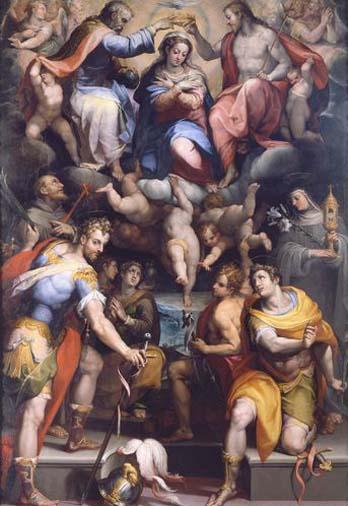
Saints Nabor and Felix were famous martyrs of Millan under Diocletian in 303 A.D. In 1258 their relics were moved to the church of Saint Francis of Assisi that was erected in place of the Basilica Naboriana. On 14-16 April 1798, shortly before the demolition of the church of Saint Francis of Assisi, their relics were translated in the Basilica of Sant’Ambrogio. Their relics are placed today in an ancient sarcophagus in the right nave of Sant’Ambrogio Basilica along with the relics of Saint Maternus and of Saint Valeria.
The Roman Catholic Church recognizes Nabor and Felix as martyr saints, inserting them, under the date of 12 July, in the Roman Martyrology, its official list of saints. They were also included in the General Roman Calendar from before the 12th century with a feast day that was reduced to a commemoration when Saint John Gualbert was added to the calendar in 1595. The 1969 revision removed mention of Nabor and Felix from the General Roman Calendar, but the rules in the Roman Missal published in the same year authorizes celebration of their Mass on their feast day everywhere, unless in some locality an obligatory celebration is assigned to that day.
SAINT JOHN JONES, PRIEST, MARTYR
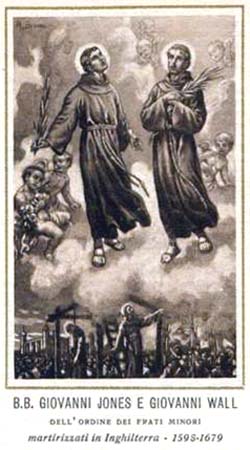
John Jones was born at Clynnog Fawr, Caernarfonshire (Gwynedd), Wales. He came from a recusant Welsh family, who had remained faithful Roman Catholics throughout the Protestant Reformation. He was ordained a diocesan priest and was imprisoned in the Marshalsea under the name Robert Buckley from 1582 to about 1585 for administering the sacraments. By summer 1586 he was out on bond, but in 1587 confined at Wisbech Castle.
He left England, either escaped or exiled, in 1590 and at the age of sixty joined the Conventual Franciscans at Pontoise. Afterwards he went to Rome, where he lived among the Observant Friars of the Ara Coeli. After a time he was sent back by his superiors to the English mission; and before leaving Rome he had an audience of Pope Clement VIII who embraced him and gave him his blessing.
Jones reached London about the end of 1592, and stayed temporarily at the house which John Gerard, had provided for missionary priests, which house was managed by Anne Line. Jones ministered to Catholics in the English countryside until his arrest in 1596.
In 1596 the ‘priest catcher’ Richard Topcliffe was informed by a spy that Jones had visited two Catholics and had said Mass in their home. It was later shown that the two Catholics were actually in prison when the alleged offense took place. Regardless, Jones was arrested, severely tortured and scourged. Topcliffe then took Jones to his house where he was further tortured, “To him (Topcliffe) was granted the privilege, unique in the laws of England, or, perhaps, of any country, of maintaining a private rack in his own home for the more convenient examination of prisoners.”
Following his torture, Jones was imprisoned for nearly two years. During this time Jones helped sustain John Rigby in his Faith, who later also became one of the Forty Martyrs of England and Wales. His own leg injury was healed by Jane Wiseman, who was also a prisoner, in December 1595. On 3 July 1598 Jones was tried on the charge of “going over the seas in the first year of Her majesty’s reign (1558) and there being made a priest by the authority from Rome and then returning to England contrary to statute”. He was convicted of high treason and sentenced to be hanged, drawn and quartered.
A not entirely unsympathetic account of the executions of John Bodey and John Slade in 1583 was written by someone with the initials “R.B.”. Historian John Hungerford Pollen suggests that it was written by a Catholic and further suggests that “R.B” could be Robert Barnes, who was convicted and hung fifteen years later for harboring John Jones. Also arrested for allegedly sheltering priests was Mrs. Jane Wiseman, who had two sons who were Jesuits. Like Margaret Clitherow, Wiseman refused to enter a plea and was therefore condemned to the peine forte et dure, although she was eventually pardoned.
Execution
As by this time the people had grown tired of these butcheries, the execution was arranged for an early hour in the morning. The place was St. Thomas’s Watering, a small bridge over the Neckinger crossing the Old Kent Road, at the site of the junction of the old Roman road to London with the main line of Watling Street. This marked the boundary of the City of London’s authority; it was also a place of gibbets. The execution was delayed by about an hour because the hangman forgot to bring a rope. Jones used the time to preach to the people and answer their questions. When the time came to draw away the cart, the hangman whipped the horses; but they were held back by three or four fellows till Jones had finished what he was saying.
John Jones’ dismembered remains were fixed atop poles on roads leading to Newington and Lambeth (now represented by Tabard Street and Lambeth Road respectively). His remains were later reputedly removed by at least two Catholic Englishmen, one of whom suffered a long imprisonment for this offense. One of the relics eventually reached Pontoise, where Jones had taken his religious vows.
Veneration
John Jones was named Venerable by Pope Leo XIII and beatified in 1929 by Pope Pius XI with a feast day of 12 July. He was canonized on 25 October 1970 by Pope Paul VI as one of the Forty Martyrs of England and Wales, who are commemorated on that date.
From the ancient document entitled “The Teaching of the Twelve Apostles”
(Nn. 9, 1-10,6:14, 1-3: Funk 2, 19-22, 26)
The Eucharist
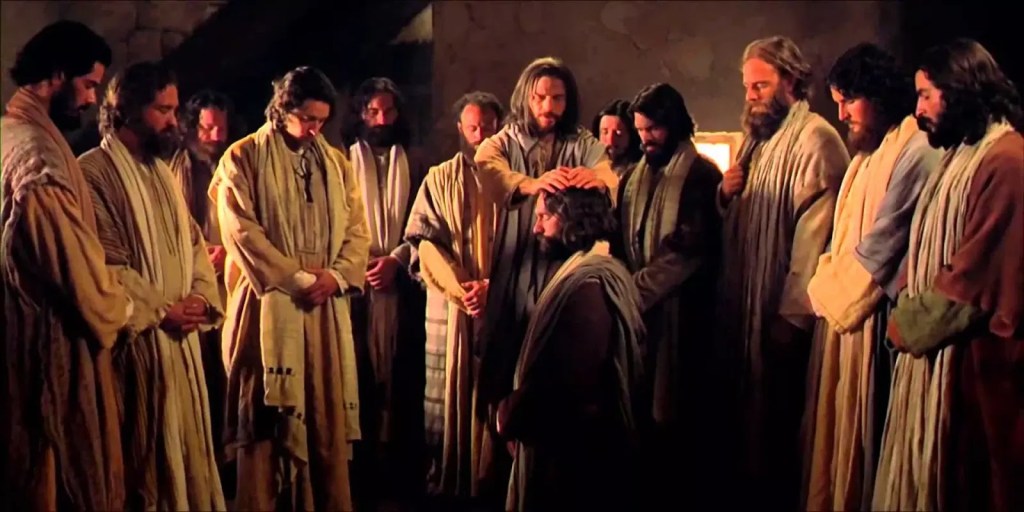
Celebrate the Eucharist as follows: Say over the Cup: “We give You thanks, Father, for the holy vine of David, Your servant, which You made known to us through Jesus Your Servant. To You be Glory for ever.”
Over the broken bread say: “We give You thanks, Father, for the Life and the Knowledge which You have revealed to us through Jesus Your Servant. To You be Glory for ever. As this broken bread scattered on the mountains was gathered and became one, so too, may Your Church be gathered together from the ends of the earth into Your Kingdom. For Glory and Power are yours through Jesus Christ for ever.”
Do not let anyone eat or drink of your eucharist except those who have been baptized in the name of the LORD. For the statement of the LORD applies here also: Do not give to dogs what is holy.
When you finish the Meal, offer thanks in this manner: “We thank You, Holy Father, for Your name which You enshrined in our hearts. We thank You for the Knowledge and Faith and Immortality which You revealed to us through Your Servant Jesus. To You be Glory for ever. Almighty Ruler, You created all things for the sake of Your name; You gave men food and drink to enjoy so that they might give you thanks. Now you have favoured us through Jesus Your Servant with Spiritual Food and Drink as well as with Eternal Life. Above all we thank you because you are mighty. To you be glory for ever.“
“Remember, LORD Your Church and deliver Her from all evil. Perfect Her in Your Love; and, once She has been sanctified, gather Her together from the four winds into the Kingdom which You have prepared for Her. For Power and Glory are Yours for ever.
“May Grace come and this world pass away! Hosanna to the God of David. If anyone is holy, let him come. If anyone is not, let him repent. Maranatha. Amen.”
On the LORD’s day, when you have been gathered together, break Bread and celebrate the Eucharist. But first confess your sins so that your offering may be pure. If anyone has a quarrel with his neighbour, that person should not join you until he has been reconciled. Your sacrifice must not be defiled (1 Cor 11: 27-29). In this regard, the LORD has said: In every place and time offer Me a pure sacrifice. I am a Great King, says the LORD and My name is great among the nations.
DAILY MEDITATION
We fancy ourselves to be perfect, because we do not perceive our defects. Everyone knows our weak point; we alone are not aware of it, whether it is that, seeing it too near at hand, the eye confounds itself with the object, or whether, looking far beyond ourselves, we escape from our own ken; whether it is, lastly, the excessive love we bear ourselves which prevents us from seeing ourselves such as we are. Even when, knowing ourselves better, we allow that what is good in us comes from God, we nevertheless enjoy it, and we contemplate ourselves in our own merit, like a vain woman looking at herself in her mirror; we are pleased that we rather than another should be the person on whom heavenly gifts flow down; and, without saying so to ourselves, we appropriate to ourselves the most beautiful of these gifts. We recount to ourselves our acts of humility, of patience, of disinterestedness; we make use of them as of so many aids for enabling us to confide in ourselves and for rendering us a good testimony of our own righteousness.
Lastly, we have a high opinion of ourselves because of our imagining that we have conquered self-esteem. After having raised ourselves above vulgar sentiments, we fall back upon ourselves, and we take pleasure in receiving from our own hands the incense we refuse from the hand of another, and to feed within ourselves upon a certain hidden and interior vainglory, which is all the more exquisite in that, putting everyone else under ourselves, we suffice for ourselves, and have no need of any extraneous aid. What a heap of misery! what a subject for confusion! Here indeed is the poor proud man, whom the LORD detests [Ecclus 25:3–4]. We ought to be very humble at wishing to be so highly esteemed, when we deserve it so little.
Fr. Andre Jean M. Hamon (d. 1874) – French Sulpician professor of dogmatics and author of several spiritual and historical works.
1 Corinthians 10:16-17
The Chalice of benediction, which we bless,
Is it not the communion of the Blood of Christ?– And the bread that we break,
is it not the partaking of the Body of the LORD?For we, being many, are one bread, One Body, all that partake of One Bread.
– And the Bread that we break,
is it not the partaking of the Body of the LORD?
“The refusal to take sides on great moral issues is itself a decision. It is a silent acquiescence to evil. The tragedy of our time is that those who still believe in honesty lack fire and conviction, while those who believe in dishonesty are full of passionate conviction.”– Ven. Archbishop Fulton Sheen
 Daily Reflections
Leave a comment