May Thy Blood, O Lord, be my salvation.
Eternal Father! I offer Thee the Precious Blood of Jesus in satisfaction for my sins, and in supplication for the holy souls in purgatory and for the wants of holy Church.
(Pre-1968 Indulgence of 500 days)
FRIDAY OF THE MOST SACRED HEART OF JESUS
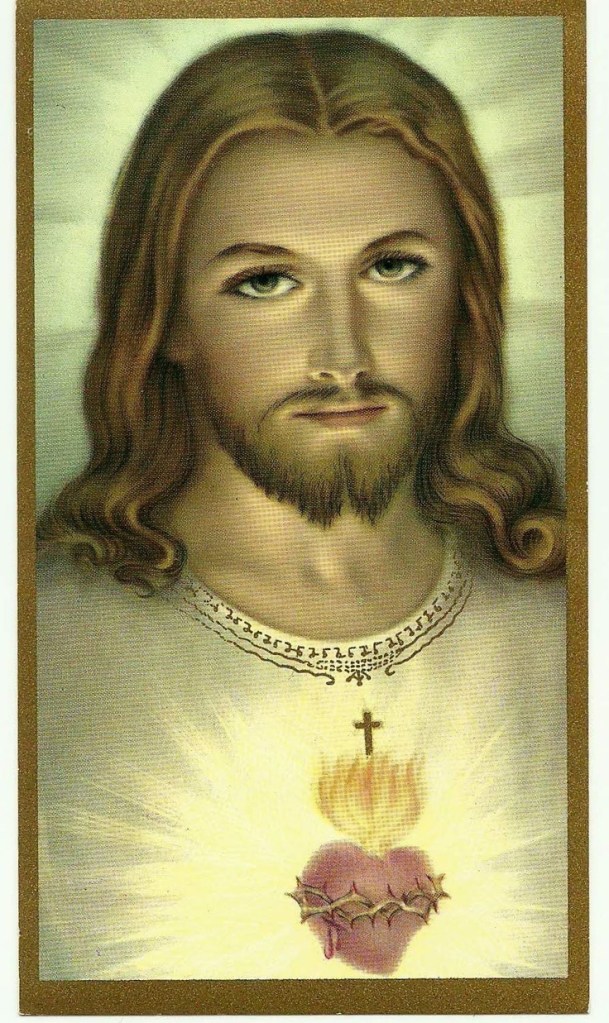
Litany of the Sacred Heart
Lord, have mercy on us.
Christ, have mercy on us.
Lord, have mercy on us.
Christ, hear us.
Christ, graciously hear us.God, the Father of Heaven, (* have mercy on us)
God, the Son, Redeemer of the World, (*)
God, the Holy Ghost, (*)
Holy Trinity, one God, (*)Heart of Jesus, Son of the Eternal Father, (*)
Heart of Jesus, formed in the womb of the Virgin Mother by the Holy Ghost, (*)
Heart of Jesus, united substantially with the word of God, (*)
Heart of Jesus, of infinite majesty, (*)
Heart of Jesus, holy temple of God, (*)
Heart of Jesus, tabernacle of the Most High, (*)
Heart of Jesus, house of God and gate of heaven, (*)
Heart of Jesus, glowing furnace of charity, (*)
Heart of Jesus, vessel of justice and love, (*)
Heart of Jesus, full of goodness and love, (*)
Heart of Jesus, abyss of all virtues, (*)
Heart of Jesus, most worthy of all praise, (*)
Heart of Jesus, king and centre of all hearts, (*)
Heart of Jesus, in Whom are all the treasures of wisdom and knowledge, (*)
Heart of Jesus, in Whom dwelleth all the fullness of the Divinity, (*)
Heart of Jesus, in Whom the Father is well pleased, (*)
Heart of Jesus, of Whose fullness we have all received, (*)
Heart of Jesus, desire of the everlasting hills, (*)
Heart of Jesus, patient and rich in mercy, (*)
Heart of Jesus, rich to all who invoke Thee, (*)
Heart of Jesus, fount of life and holiness, (*)
Heart of Jesus, propitiation for our sins, (*)
Heart of Jesus, saturated with revilings, (*)
Heart of Jesus, crushed for our iniquities, (*)
Heart of Jesus, made obedient unto death, (*)
Heart of Jesus, pierced with a lance, (*)
Heart of Jesus, source of all consolation, (*)
Heart of Jesus, our life and resurrection, (*)
Heart of Jesus, our peace and reconciliation, (*)
Heart of Jesus, victim for our sins, (*)
Heart of Jesus, salvation of those who hope in Thee, (*)
Heart of Jesus, hope of those who die in Thee, (*)
Heart of Jesus, delight of all saints, (*)Lamb of God, who takest away the sins of the world, (spare us, O Lord.)
Lamb of God, who takest away the sins of the world, (graciously hear us, O Lord.)
Lamb of God who takest away the sins of the world, (have mercy on us.)Jesus, meek and humble of Heart. (Make our hearts like unto Thine.)
Let us pray.
Almighty and everlasting God, look upon the Heart of Thy well-beloved Son and upon the acts of praise and satisfaction which He renders unto Thee in the name of sinners; and do Thou, in Thy great goodness, grant pardon to them who seek Thy mercy, in the name of the same Thy Son, Jesus Christ, Who liveth and reigneth with Thee, world without end. Amen.(Partial Indulgence, 1968;
Song of Songs 3:11; Psalm 72:1, 2
Daughters of Jerusalem, come forth and see King Solomon,
wearing the crown with which his mother crowned him
– on his day of joy, his wedding day.
Endow the king with Your justice, O God;
may he govern the poor with justice.
– On his day of joy, his wedding day.
Friday of the Fourteenth Week in Ordinary Time
Friday of the Most Sacred Heart of Jesus
Saint Bonaventure, Bishop, Confessor, Doctor of the Church (Traditional)
Saint Camillus de Lellis, Confessor
Saint Kateri Tekawitha, Virgin (USA)
SAINT BONAVENTURE, BISHOP, CONFESSOR, DOCTOR OF THE CHURCH
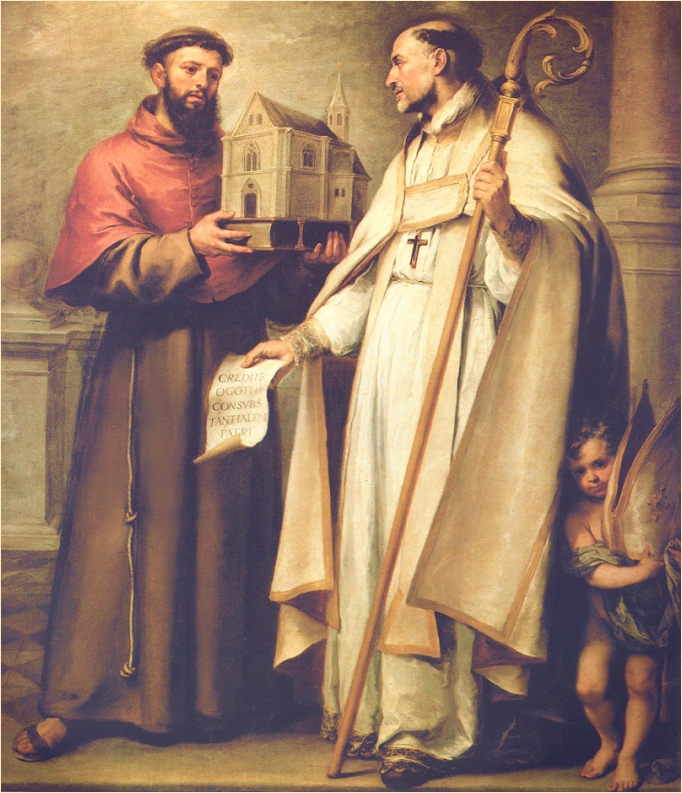
Born in Tuscany, in 1221, Giovanni Fidenza, in consequence of a miraculous cure, entered the Franciscan order. While still young, he became minister general; guided by his wise and prudent spirit, the Franciscan order was saved from the schism, which was about to do find the rigourous from the mild. He was closely united to Saint Thomas Aquinas; both taught at the University of Paris at the same time. Saint Bonaventure was created Cardinal and Bishop at Albano in 1273 by Pope Gregory X; he died on July 15 of the following year at Lyons, while the Ecumenical Council was being held in that city. Is the pope, and the entire Council took part in his funeral; every priest in the world said mass for his soul.
Send Bonaventure is a true example of the ascetic Franciscan school, which has spread among the people of fervent devotion, to the most sacred human nature of the Redeemer. When he writes on the Passion of Our LORD, or speaks in praise of the Blessed Virgin, his language grows eloquent, and a seraphic ardour glows in his words. Pope Sixtus one V, when he canonized saint Bonaventure in 1482, ordered that the celebration of his feast in the Basilica of the holy apostles should be considered as a Solemnity of the sacred Apostolic Palace. In later years a church and a monastery were dedicated to this saint on the Palatine.
SAINT CAMILLUS DE LELLIS, CONFESSOR

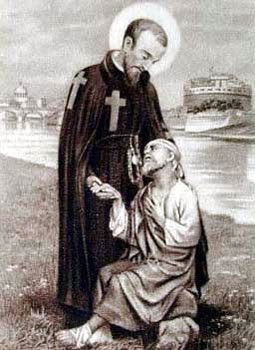
Born in 1550 of the noble family of Lellis of the Abruzzi region of Italy, Camillus had a troubled adolescence. Having lost all his possessions to gambling, he found work with the Capuchins in Manfredonia, where he was moved to repentance. He applied to the hospital of San Giacomo and began studies for the priesthood consecrating his life to the service of the sick, even those stricken with the plague In 1582 he organised a group of men to give their lives to the care of the sick and the dying. Camillus promoted proper nutrition and the quarantine of infectious patients—advanced ideas for his time. He founded the Order of the Servants of the Sick (Order of Hospitallers) and is a patron of nurses.
He died in Rome a victim of his charity in 1614.
SAINT KATERI TEKAKWITHA, VIRGIN

Saint Kateri Tekakwitha was born in Ossernon (Auriesville, New York) in 1656, the daughter of a Christian Algonquin mother and a non-Christian Mohawk chief. Having lost her parents in a smallpox epidemic at the age of fourteen, she was raised among the Mohawks in the home of an uncle. There she first encountered Christian missionaries. In 1675 she was instructed in the faith by the missionary Jacques de Lamberville, who baptized her on Easter Sunday, 5 April 1676, at which time she took the name Kateri (Katherine). Because of her conversion and Baptism, her exemplary life, and her desire to remain a virgin, Kateri suffered harassment and persecution. She fled to a Christian village on the Saint Lawrence River. At Sault Saint Louis, on Christmas Day, 1677, she received her First Holy Communion. Under the guidance of Father Pierre Cholonec and an older Iroquois woman, Anastasia Tegonhatsihongo, Kateri led a life of great virtue and charity, making a private vow of virginity on 25 March 1679. Kateri died at the age of 24 on 17 April 1680 in Caughnawaga, Canada. Devotion to Kateri, known as the Lily of the Mohawks, spread throughout the United States and Canada. On 22 June 1980 Kateri Tekakwitha was declared blessed by Pope Saint John Paul II and later canonized by Benedict XVI on 21 October 2012.
From the treatise On the Mysteries by Saint Ambrose, Bishop
(Nn. 29-30, 34-35, 37, 42: SC 25 bis, 172-178)
Instruction on the Postbaptismal Rites
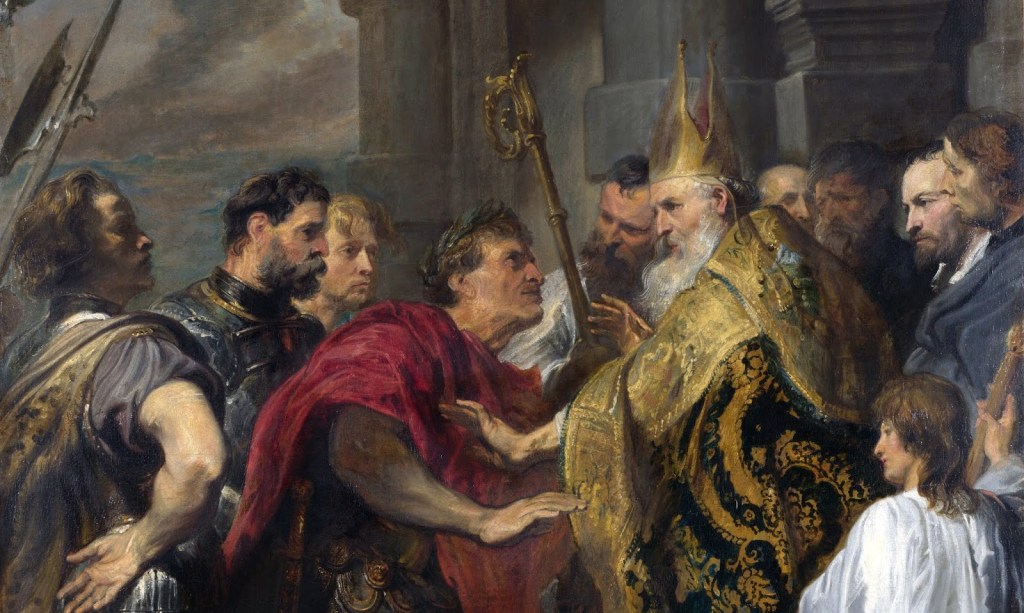
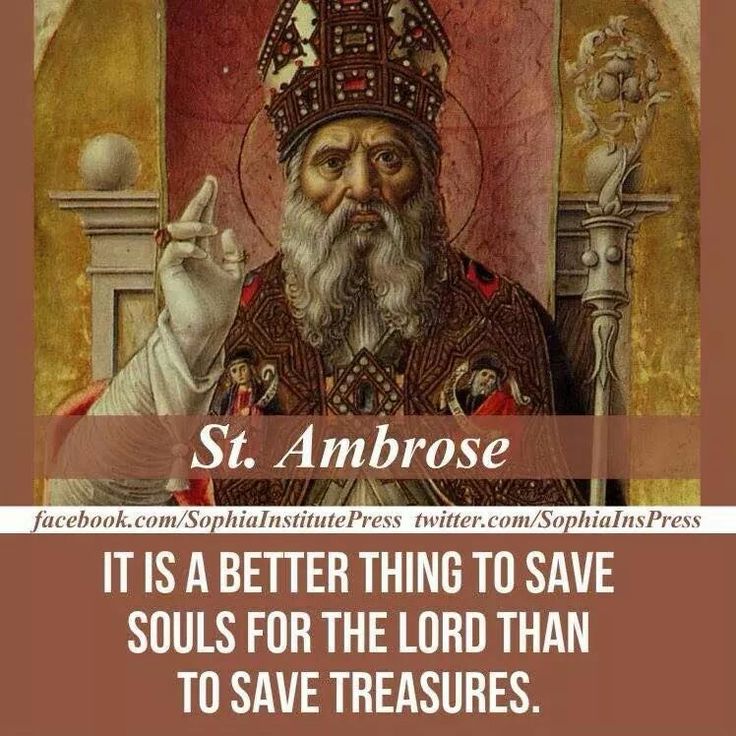
After this you went up to the priest. Consider what followed. Was it not what David spoke of when he said: Like oil on the head, running down on the beard, the beard of Aaron? This is the oil spoken of also by Solomon: Your name is oil poured out, so that the maidens loved you and attracted you. How many souls, reborn today, have loved You, LORD Jesus, and have said: Draw us after You; we shall make haste to follow You, in the fragrance of Your garments, to breathe the fragrance of Resurrection.
Understand why this is done: Because the eyes of the wise man are in his head. The oil flows down on the beard, that is, on the grace of youth; it flows on Aaron’s beard, in order to make you a chosen race, a race of priests, bought at a great price. We are all anointed with Spiritual grace to share in God’s Kingdom and in Priesthood.
Then you received white garments as a sign that you had cast off the clothing of sin and put on the chaste covering of innocence, as the Psalmist prophesied: You will sprinkle me with hyssop and I shall be cleansed, you will wash me and I shall be made whiter than snow. One who is baptized is seen to be made clean in terms of the law and of the Gospel. In terms of the law, because Moses used a bunch of hyssop to sprinkle the blood of the lamb; in terms of the Gospel, because Christ’s garments were white as snow when in the Gospel he revealed the Glory of His Resurrection. The sinner who is forgiven is made whiter than snow. The LORD promised the same through Isaiah: If your sins are as scarlet, I will make them white as snow.
Wearing the garments given her in the rebirth by water, the Church says, in the words of the song of Songs: I am black but beautiful, daughters of Jerusalem. Black because of the frailty of humanity, beautiful through Grace; black because She is made up of sinners, beautiful through the Sacrament of Faith. When they see these garments the daughters of Jerusalem cry out in wonder: Who is this who comes up, all in white? She was black, how is she suddenly made white?
When Christ sees His Church clothed in white—for Her sake He Himself had put on filthy clothing, as you may read in the prophecy of Zacharias—when he sees the soul washed clean by the Waters of Rebirth, he cries out: How beautiful you are, my beloved, how beautiful you are; your eyes are like the eyes of a dove, for it was in the likeness of a dove that the Holy Ghost came down from Heaven.
Remember, then, that you received a Spiritual Seal, the Spirit of Wisdom and Understanding, the Spirit of Holy Fear. Keep safe what you received. God the Father sealed you, Christ the LORD strengthened you and sent the Spirit into your hearts as the pledge of what is to come, as you learned in the reading from the Apostle.
DAILY MEDITATION
Bonaventure enjoyed a special veneration even during his lifetime, because of his stainless character, and of the miracles attributed to him. It was Alexander of Hales, who said that Bonaventure seemed to have escaped the curse of Adam’s sin. And the story of Saint Thomas visiting Bonaventure’s cell while the latter was writing the life of Saint Francis and finding him in an ecstasy is well-known. “Let us leave a saint to work for a saint,” said the Angelic Doctor as he withdrew.
When, in 1434, Bonaventure’s remains were translated to the new church erected at Lyons in honour of Saint Francis, his head was found in a perfect state of preservation, the tongue being as red as in life. This miracle not only moved the people of Lyons to choose Bonaventure as their special patron, but also gave a great impetus to the process of his canonization. Dante, writing long before, had given expression to the popular mind by placing Bonaventure among the saints in his Paradiso, and no canonization was ever more ardently or universally desired than that of Bonaventure. That it’s inception, was so long delayed was mainly due to the deplorable dissensions within the [Franciscan] order after Bonaventure‘s death. Finally, on 14 April 1482, Bonaventure was enrolled in the catalogue of the saints by Sixtus IV. In 1562, Bonaventure‘s shrine was plundered by the Huguenots and the urn containing his body was burned in the public square. His head was preserved through the heroism of the superior, who had it at the cost of his life, but it disappeared during the French revolution, and every effort to discover it has been in vain. Bonaventure was inscribed among the principal Doctors of the Church by Sixtus V, 14 March 1557.
Catholic Encyclopedia [1912] – classic multi–volume reference on “the constitution, doctrine, discipline, and history of the Catholic Church.
Ephesians 1:13-14; 2 Corinthians 1:21-22
You have believed the Word of Truth (the Gospel of your salvation)
and have been sealed according to the Promise with the Holy Spirit.
He is the Pledge of our inheritance.
– The Promise of freedom for those whom God has won for Himself,
to the praise of His Glory.
God has anointed us and sealed us as His own;
and as a pledge of what is to come,
He has given us the Spirit that dwells in our hearts.
– The Promise of freedom for those whom God has won for Himself,
to the praise of His Glory.
“The refusal to take sides on great moral issues is itself a decision. It is a silent acquiescence to evil. The tragedy of our time is that those who still believe in honesty lack fire and conviction, while those who believe in dishonesty are full of passionate conviction.” – Ven. Archbishop Fulton Sheen
 Daily Reflections
Leave a comment