Exodus 33:22, 20; John 1:18
The LORD said to Moses:
When My Glory passes,
I will put you in the hollow of the rock
and cover you with My hand until I pass by.
– For no one sees Me and lives.
No one has ever seen God;
the only Son of God, nearest to the Father’s Heart,
has made Him known.
– For no one sees Me and lives.
Tuesday of the Fifteenth Week in Ordinary Time
Saint Camillus de Lellis, Confessor (Traditional)
Commemoration of St. Symphorosa and her Seven Sons, Martyrs (Traditional)
Our souls sometimes hang by a thread. We forget the great mercy God has shown us, and we carry on as if we did not need it. “Did you want to be exalted as high as heaven? You shall be thrown down to hell.” (Mt 11:20–24) As a baby, Moses’ life was saved, yet when he grows up, he takes the life of another. We need to remember that we are far from perfect, and thus always in need of God’s grace. He gives us many chances to remember how He acts. “As for me in my poverty and pain: let your help, O God, lift me up.” (Ps 68:14)
TRADITIONAL
Holy Mass is the continual manifestation of the love of God for us, since it reminds us that Jesus gave His life to save us. (1 J. 3:13-18)
(Jn 15:12-16) – A continuance of Christ’s discourse to His Apostles: “Love your neighbour as I have loved you”.
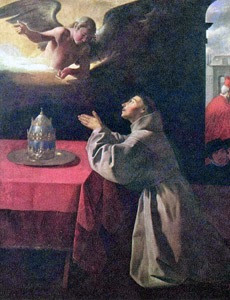
SAINT CAMILLUS, CONFESSOR
(Friday 14 July blog for more on his life)
SAINT SYMPHOROSA AND HER SEVEN SONS, MARTYRS
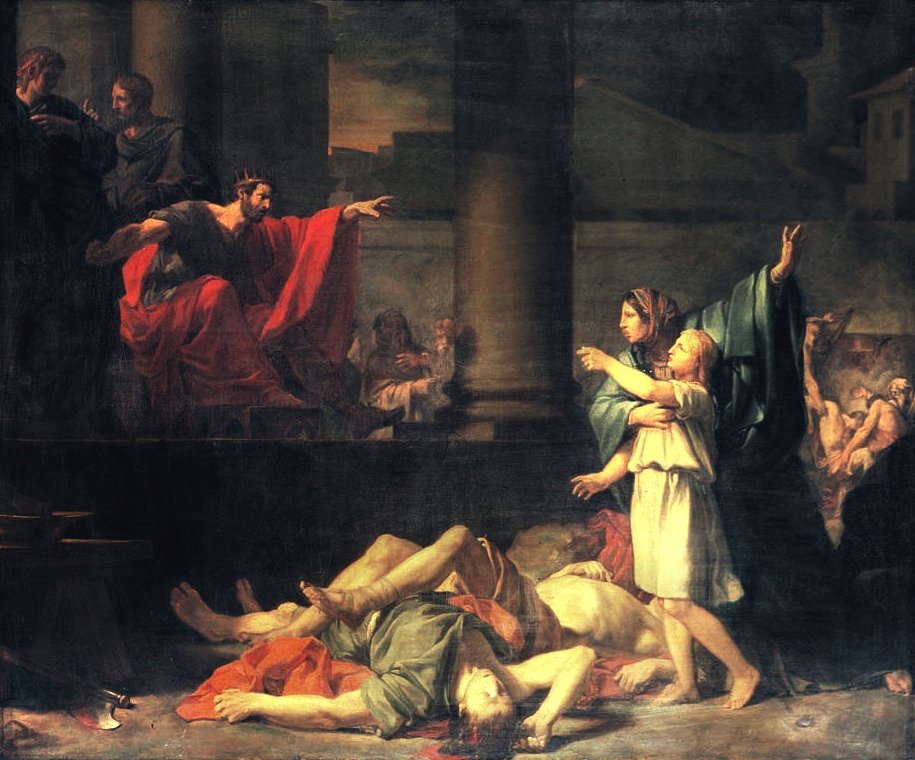
They were martyred at Tivoli, near Rome, by the order of the emperor Adrian in 180 A.D.
From the life of Saint Camillus by his companion
(S. Cicarelli, Vita del P. Camillo de Lellis, Viterbo, 1615)
Serving the LORD in the brethren
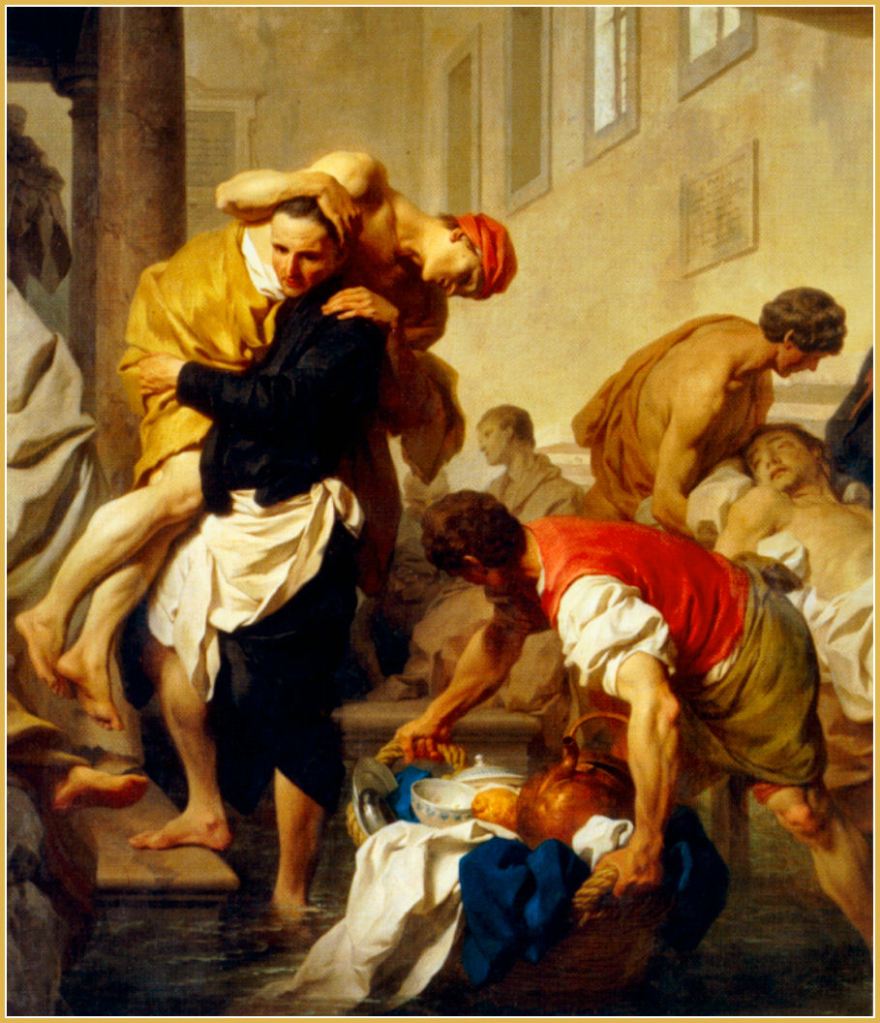
Let me begin with holy Charity. It is the root of all the Virtues and Camillus’ most characteristic trait. I can attest that he was on fire with this holy virtue—not only toward God, but also toward his fellowmen, and especially toward the sick. The mere sight of the sick was enough to soften and melt his heart and make him utterly forget all the pleasures, enticements and interests of this world. When he was taking care of his patients, he seemed to spend and exhaust himself completely, so great was his devotion and compassion. He would have loved to take upon himself all their illness, their every affliction, could he but ease their pain and relieve their weakness.
In the sick he saw the person of Christ. His imagination was so vivid that, while feeding them, he perceived his patients as other Christs. He would even beg of them the gift of forgiveness for his sins. His reverence in their presence was as great as if he were really and truly in the presence of his LORD. In his conversations he talked of nothing more often or with greater feeling than of holy Charity. He would have liked to plant this virtue in every human heart.
To enkindle the enthusiasm of his religious brothers for this all-important virtue, he used to impress upon them the consoling words of Jesus Christ: I was sick and you visited me (Mt 25:36). He seemed to have these words truly graven on his heart, so often did he say them over and over again.
Great and all-embracing was Camillus’ Charity. Not only the sick and dying, but every other needy or suffering human being found shelter in his deep and kind concern. Indeed, his heartfelt concern for the poor led him to say often: “If there were no poor people in the world, we should have to go below the earth to look for them and rescue them, to show them compassion and do them good!”
DAILY MEDITATION
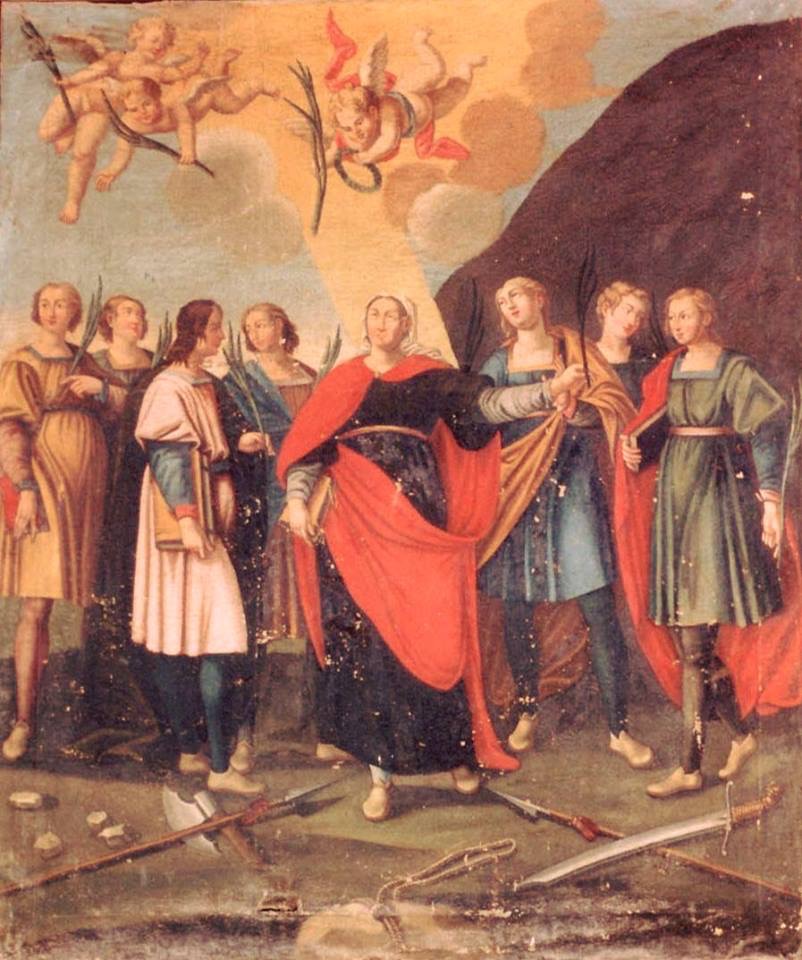
When in the reign of the emperor, Adrian, a cruel persecution of Christians arose [Symphorosa] went with Getulius [her husband] and Amantius, her brother-in-law, and her seven sons to Tivoli, to strengthen the Christians in the true Fath, and to prepare herself for the approaching struggle. The emperor, informed of this, dispatched Cerealis , one of his officers, to Tivoli, to take Getulius and Amantius, and bring them prisoners to Rome. Cerealis, still a heathen, came to execute the imperial command; but convinced by Getulius , and Amantius of the truth of the Christian Faith, he embraced it; and hence, all three were beheaded by command of the enraged emperor, after having suffered a long imprisonment, and many cruel tortures.
Saint Symphorosa had every reason to believe that she and her children would not long remain unmolested…. Not long after, her anticipations were realized. Adrian had her and her children apprehended and brought before him, and commanded them immediately to sacrifice to the gods, or to prepare themselves for a most cruel death. The fearless heroine replied: “There is no need of further preparations, of further consideration. My resolution is taken; I will not sacrifice to idols, and I have only one wish, to give my life for Him Who has given His for me.“… The tyrant, who would no longer listen to Symphorosa’s exultations, ordered her to be cast into the river, with a great stone fastened around her neck. In this manner, and did her glorious Martyrdom.
On the following day, her seven sons were brought before the emperor, who represented to them that, as they had neither father nor mother, he would adopt them as his own children and provide for them most bountifully, if they would obey him and sacrifice to the gods. Should they, however, prove as obstinate as their parents had been, they had nothing to expect but torments and death. “This is what we desire,“ answered Crescentius, “that we, like our parents, may die for the sake of Christ. Neither promises, nor threats, nor torments can make us faithless to Christ.“…. Thus gloriously died the seven sons of Saint Symphorosa, reminding us of the illustrious martyrdom of the several Machabees, in the reign of the wicked king Antiochus.
You no doubt admire the fortitude, with which Saint Symphorosa and her sons suffered cruel pains and even death, rather than offend God by forsaking the true Faith. You also believe that in this they acted rightly, and that they could not act otherwise, if they wished to obtain salvation. Why then are you so easily tempted by Satan and wicked people to offend the majesty of the Most High? ….. if they could resist and conquer, why can you not do the same?
Father Francis Xavier Weninger [d. 1888] – Austrian priest, professor, and author; joined the Jesuits as missionary preacher to the United States.
Moved by the LORD’s Mighty Deeds
Not only did Jesus show His care for me by suffering, but He went further still and gave me the best love of His Heart. In his redemption on the Cross He saved me from hell. Now He would lift me up to His own Divine Heart and feed me with His Body and Blood, Soul and Divinity. He actually accomplished this wonderful Charity.
The night before He died He thought of me; He must leave me, but His Heart drew Him to stay with me. He wanted to remain with me and He wished to be my Food. So He took bread into His hands and said, This is My Body. He wishes to come to my heart in Holy Communion. May I live the life of Communion! Our best friend is an ardent lover. He wants our whole heart for Himself. So He says, Behold I stand at the gate and knock. This means that He knocks on the door of our heart that He may gain admission to rule in that kingdom of love.
When I know God loved Me so much as to make Me for Himself and to give His only Son to save me from hell, and that He gives me daily the Eucharistic Christ, my heart wants to make a return. In what way shall I render my thanks to God? It would not be too much if I gave Him my whole self. How can I do this? I can offer Him every morning my daily work, and also my best love while doing my duty.
My work will not be prayer unless I make it such, and I may really give soul to every action if I keep my heart aflame with love of God. I must resolve, then, to think of God’s great love for me so that I may give Him back all the love of my heart in loving service.
Servant of God Mary Teresa Tallon
Mother Mary Teresa Tallon († 1954) was an American religious sister who founded the Parish Visitors of Mary Immaculate in New York. Her cause for canonisation began in 2013. [From Family Meditations on Great Catholic Truths.
“The refusal to take sides on great moral issues is itself a decision. It is a silent acquiescence to evil. The tragedy of our time is that those who still believe in honesty lack fire and conviction, while those who believe in dishonesty are full of passionate conviction.”– Ven. Archbishop Fulton Sheen
 Daily Reflections
Leave a comment