Friday of the Fifteenth Week in Ordinary Time
Friday of the Sacred Heart of Jesus
Saint Lawrence of Brindisi, Confessor, Doctor of the Church
Saint Praxedes, Virgin (Traditional)
SAINT LAWRENCE OF BRINDISI, CONFESSOR, DOCTOR OF THE CHURCH
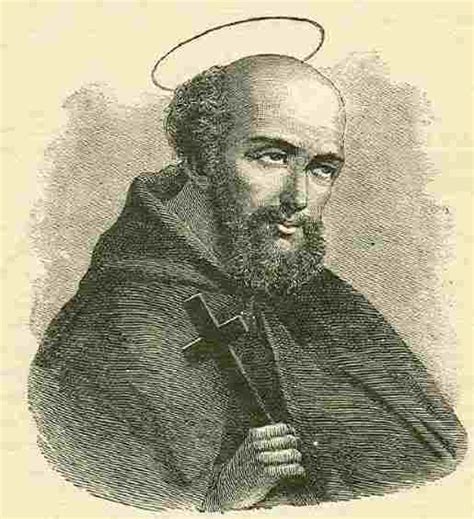
Born Giulio, Cesare Russo, Lawrence was a priest and theologian as well as a member of the order of Friars Minor Capuchin. An accomplished linguist in addition to his native Italian, Lawrence could read and speak Latin, Hebrew, Greek, German, bohemian, Spanish, and French fluently. In 1602, he was elected Vicar General of the Capuchin Friars, at that time, the highest office in the Order. Because he spoke Hebrew, Pope Clement VIII asked him to preach to the Jews of Rome, and he did so with great love and respect. As part of the Catholic Counter-Reformation, Lawrence established Capuchin friaries in Germany and Austria, which brought back many Protestants to the Catholic Faith.
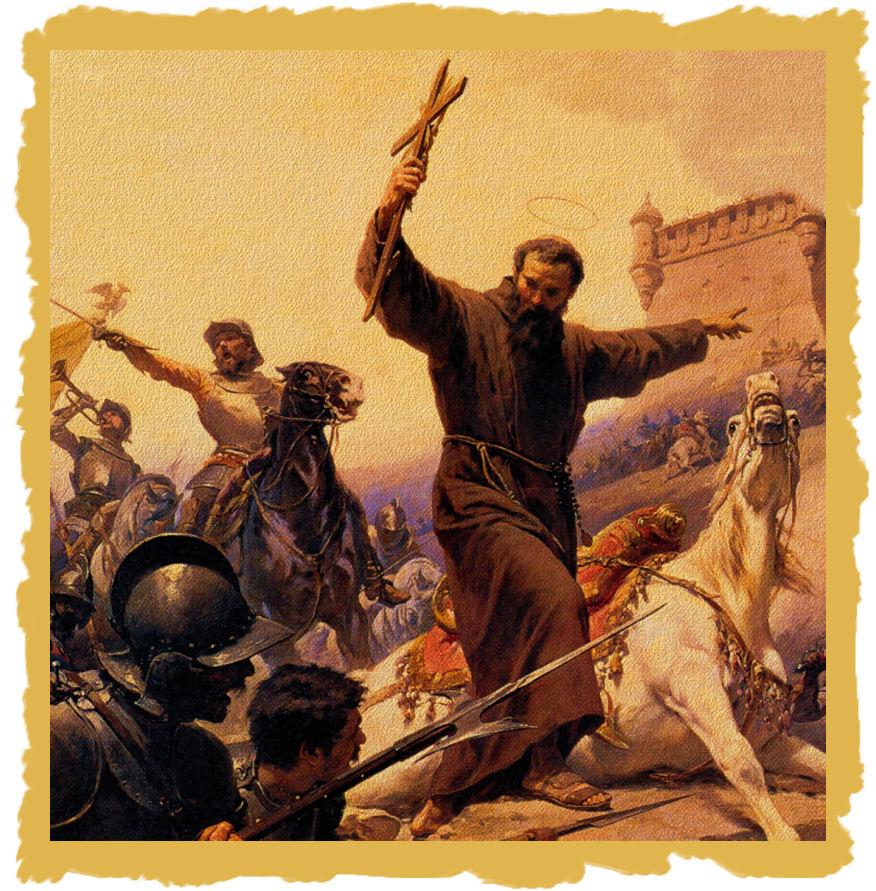
Some today may this this inappropriate, but Lawrence, having established a friary in Prague, became the chaplain for the army of Rudolf II, the Holy Roman Emperor. In that capacity, holding a high crucifix for all the soldiers (18,000 united Christian armies) to see, Lawrence led the army to victory overs the Muslim Turkish(80,000) siege of Székesfenhérvár in Hungary. At that battle, the Cross, and not the Crescent, won the day. He was elected again in 1605, but refused the office.
He died in Lisbon in 1611. He was beatified on June 1, 1783, and was canonized as a saint on December 8, 1881. He was named a Doctor of the Church in 1959. Saint Lawrence of Brindisi Complete Works were published in 15 volumes, in a critical edition, between 1926 and 1956.
SAINT PRAXEDES, VIRGIN
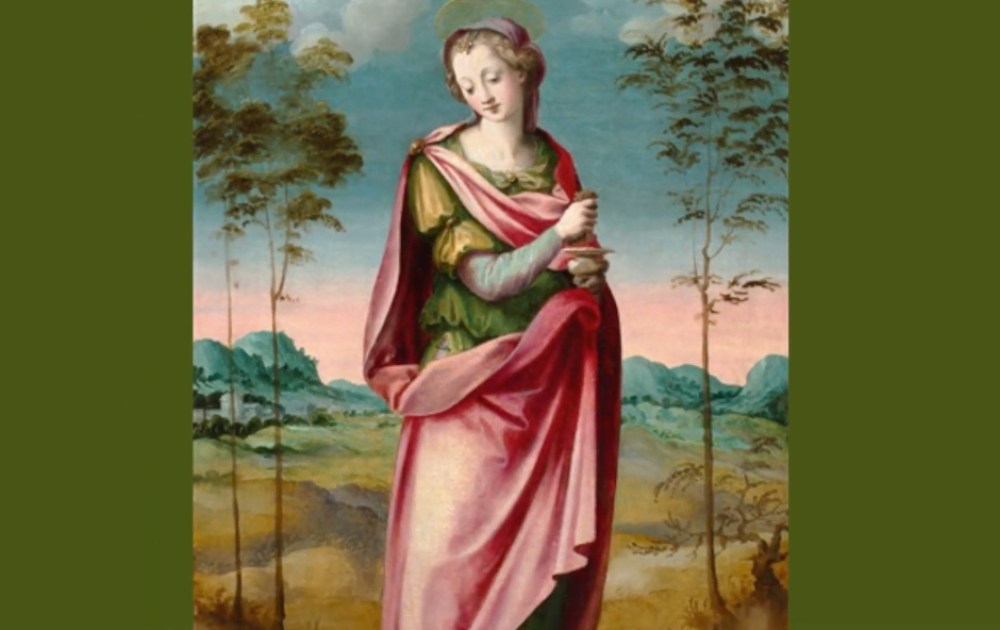
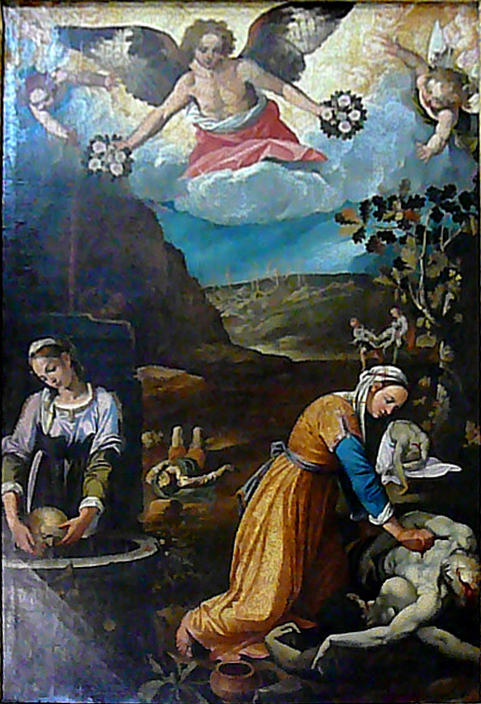
St. Praxedes was the daughter of the Roman Senator Pudens, and a sister of St. Prudentiana, whose feast is celebrated on May 19. After consecrating her virginity to God, she gave up all her wealth to the poor. She died in 164 A.D.
From a sermon by Saint Lawrence of Brindisi, Priest and Doctor of the Church
(Sermo Quadragesimalis 2, Opera omnia 5, 1, nn. 48, 50, 52)
Preaching is an Apostolic duty
There is a spiritual life that we share with the angels of heaven and with the divine spirits, for like them we have been formed in the image and likeness of God. The bread that is necessary for living this life is the Grace of the Holy Ghost and the love of God. But grace and love are nothing without Faith, since without Faith it is impossible to please God. And Faith is not conceived unless the Word of God is preached. Faith comes through hearing, and what is heard is the Word of Christ. The preaching of the Word of God, then, is necessary for the spiritual life, just as the planting of seed is necessary for bodily life.
Christ says: The sower went out to sow his seed. The sower goes out as a herald of justice. On some occasions we read that the Herald was God, for example, when with a Living Voice from Heaven He gave the law of justice to a whole people in the desert.
On other occasions, the herald was an angel of the LORD, as when He accused the people of transgressing the Divine law at Bochim, in the place of weeping. At this all the sons of Israel, when they heard the angel’s address, became sorrowful in their hearts, lifted up their voices, and wept bitterly. Then again, Moses preached the Law of the LORD to the whole people on the plains of Moab, as we read in Deuteronomy. Finally, Christ came as God and man to preach the Word of the LORD, and for the same purpose He sent the Apostles, just as He had sent the prophets before them.
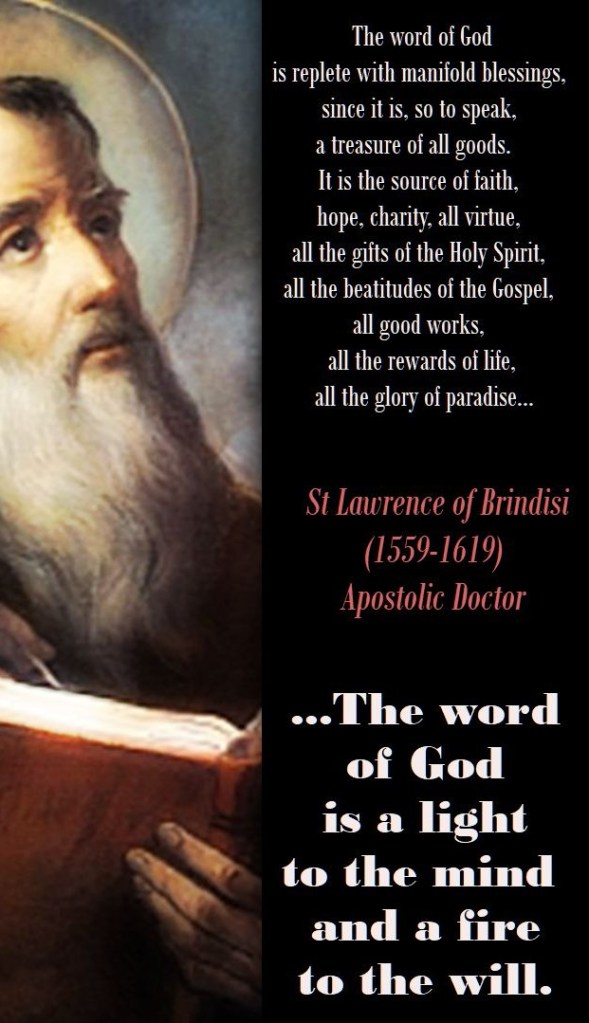
Preaching therefore, is a duty that is Apostolic, angelic, Christian, Divine. The Word of God is replete with manifold blessings, since it is, so to speak, a treasure of all goods. It is the source of Faith, Hope, Charity, all Virtues, all the gifts of the Holy Ghost, all the Beatitudes of the Gospel, all good works, all the rewards of life, all the Glory of Paradise: Welcome the Word that has taken root in you, with its power to save you.
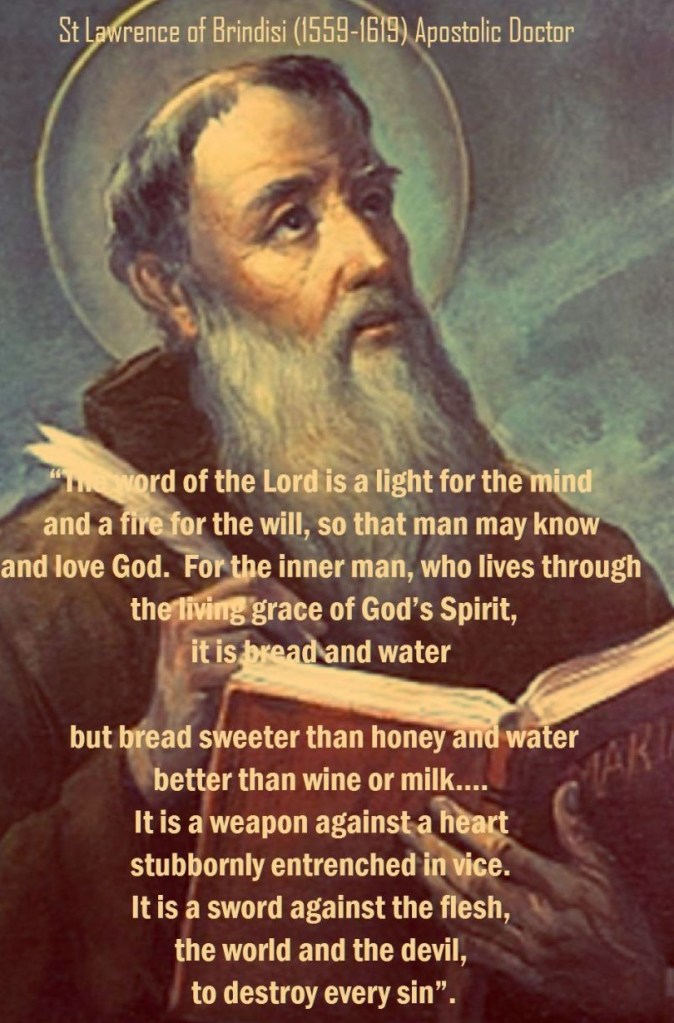
For the Word of God is a Light to the mind and a Fire to the will. It enables man to know God and to love Him. And for the interior man who lives by the Spirit of God, through Grace, it is bread and water, but a bread sweeter than honey and the honeycomb, a water better than wine and milk. For the soul it is a spiritual treasure of merits yielding an abundance of gold and precious stones. Against the hardness of a heart that persists in wrongdoing, it acts as a hammer. Against the world, the flesh and the devil it serves as a Sword that destroys all sin.
Hungering for the Love of the LORD of All

The greatest longing in the spirit of man is the hunger for love. A wife looks for love from her husband, a child from its father, a servant from his master, the poor from the rich. All people hope for the favour and love of the great ones of this world and the whole world rejoices and delights in their good will. And so every spirit must rejoice and every heart exult and be immersed in infinite joy when we hear: God loved the world so much that He gave His only Son. If we desire the love of important people and take delight in their good graces, God is the Supreme Lord of all, the King of kings and LORD of lords, the King of Infinite Power, Wisdom, Goodness, and Generosity. Christ, moreover, the Infallible Truth, assures us that this Supreme LORD loves us with a Love so great that it cannot be put into words.
The cherubim of glory in the Holy of Holies in God’s Temple gaze as if lost in wonder. It is a sign that, even to the minds of angels, the Divine nature is worthy of admiration. God is an astounding substance, for He is not dependent on anything else for existence, and is Eternal and Infinite; and as God’s Essence is, so also is His every attribute: Power, Wisdom, Goodness. God’s Power, Wisdom, and Goodness are truly remarkable and beyond comprehension. But it seems to me the most incomprehensible of all God’s attributes is His Love: God loved the world so much that He gave His only Son.
It comes as no surprise that God Loves. For God, love is a necessity, so that it is impossible for God not to love, as impossible as it is for Him not to Be, for God is Love. As impossible as it would be for the sun not to be filled with light and for fire not to be hot, so impossible it would be for God to be without Love. God is Light, and a consuming fire, the light of intelligence and the fire of love. It is as necessary to find love in God as it is to find power, wisdom, and goodness. In the most brilliant sun we discover every degree of light and in the hottest fire every degree of heat. So in God, most perfect by nature, is found every degree of perfection that can be found here and there in creatures. Love, moreover, is the most desirable perfection and, consequently, all things aspire to love and hunger for love.
Saint Lawrence of Brindisi
Saint Lawrence of Brindisi († 1619) was minister general of the Capuchin Franciscans and preached throughout Europe. He is a Doctor of the Church. [From Sunday Sermons: Volume I, Vernon Wagner, o.f.m. cap., Tr., pp. 85-86.
DAILY MEDITATION
Sent by the pope to evangelize Germany, [Laurence] confirmed the Faith of the Catholics, brought back a great number to the practice of virtue, and converted many heretics. In controversies, his vast learning always gave him the advantage, and, once he had won the minds of his hearers, his saintliness and numerous miracles completed their conversions. To protect the Faith more efficaciously in their states, the Catholic princes of Germany formed an alliance, called the “Catholic League”. Emperor Rudolf sent Lorenzo to Philip III of Spain to persuade him to join the League. Having discharged this mission successfully, the saintly ambassador received a double mandate by virtue of which he was to represent the interests of the pope and of Madrid at the court of Maximilian of Bavaria, head of the league.
Amid so many various undertakings, Lorenzo found time for the practices of personal sanctification. And it is perhaps the greatest marvel of his life to have combined with duties so manifold an unusually intense inner life. In the practice of the religious virtues, Saint Lorenzo equals the greatest saints. He had to a high degree the gift of contemplation, and very rarely celebrated Holy Mass without falling into ecstasies. After the Holy Sacrifice, his great devotion was the Rosary and the Office of the Blessed Virgin Mary. As in the case of Saint Francis of Assisi, there was something poetical about his piety, which often burst forth into Canticles to the Blessed Virgin. It was in Mary’s name that he worked his miracles, and his favourite blessing was: Nos cum prole pia benedicat Virgo Maria.
Catholic Encyclopedia [1912] – classic multi-volume reference on “the constitution, Doctrine, discipline, and history of the Catholic Church.
Isaiah 40:9; Luke 9:59, 60
You who preach the Good News to Zion,
climb up to the top of a high mountain
– and proclaim to the cities of Judah:
Here is your God.
Follow Me; go and preach the Kingdom of God.
– And proclaim to the cities of Judah:
Here is your God.
“The refusal to take sides on great moral issues is itself a decision. It is a silent acquiescence to evil. The tragedy of our time is that those who still believe in honesty lack fire and conviction, while those who believe in dishonesty are full of passionate conviction.” – Ven. Archbishop Fulton Sheen
 Daily Reflections
Leave a comment