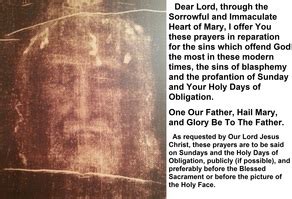
Luke 6:38; 2 Corinthians 9:7
Give to others and you will receive;
good measure, pressed down, shaken together, and running over,
will be poured into your lap.
– For whatever measure you give to others
will be the measure you receive.
Each person should give according to what he has inwardly decided,
not grudgingly or under compulsion.
– For whatever measure you give to others
will be the measure you receive.
Tuesday of the Seventeenth Week in Ordinary Time
Holy Machabees, Martyrs (Traditional)
St. Peter in Chains (Traditional)
Saint Alphonsus Mary Liguori, Bishop, Doctor of the Church
ST. PETER IN CHAINS
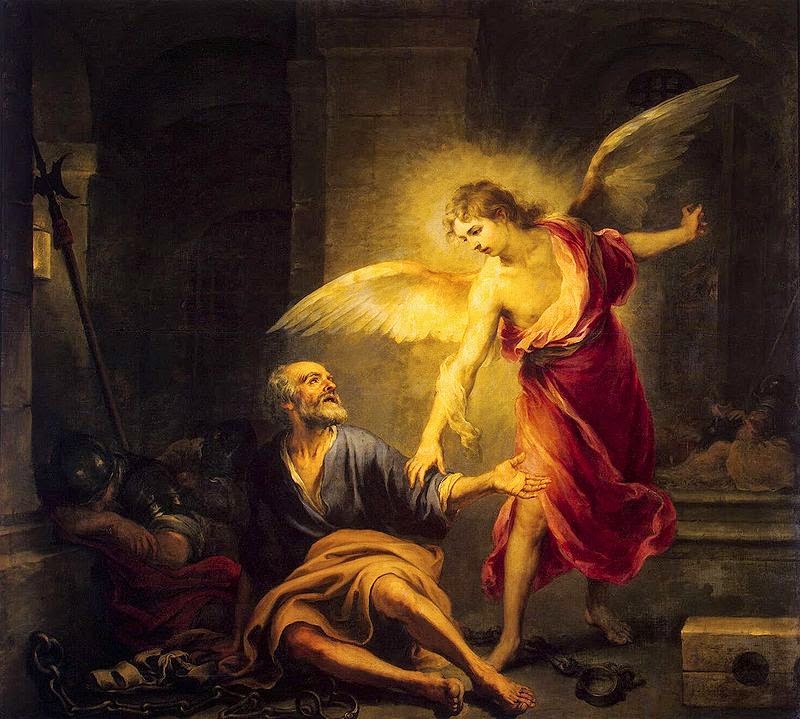
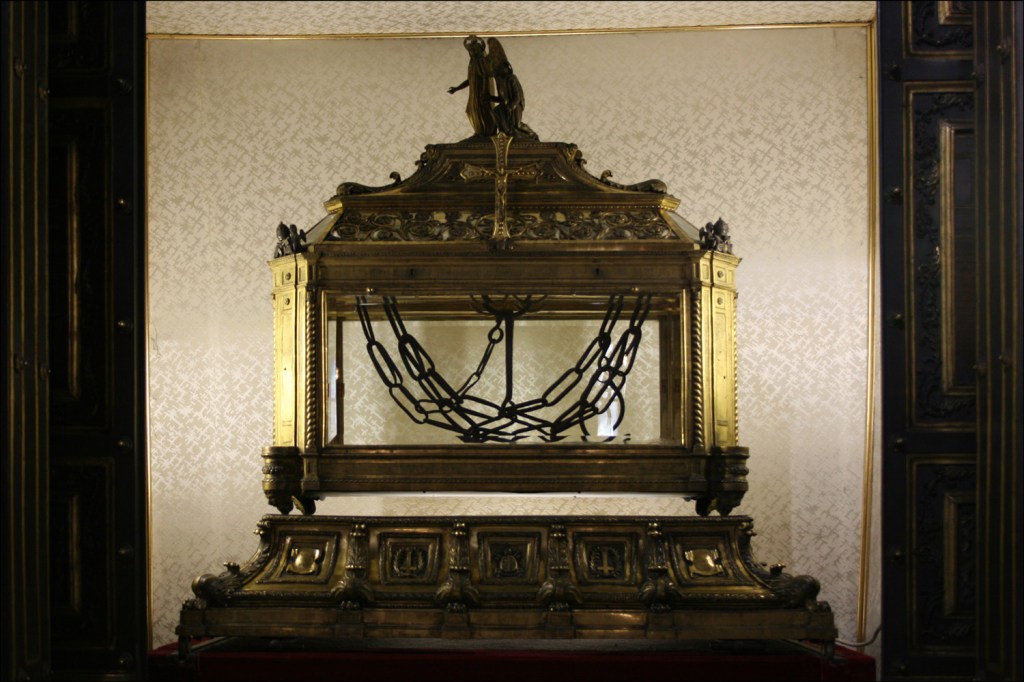
The chains with which Saint Peter the Apostle was fettered from time to time have always been the object of veneration among the faithful. They are preserved in a basilica in Rome, which is called Saint Peter ad Vincula [in chains]. The anniversary of the dedication of this church falls on August 1. The chains of the Apostle Paul are preserved in the Basilica of Saint Paul.
The reverence shown to the chains of the two apostles must have been very widely spread in olden times from the moment when Justinian I asked the Pope for “a portion of the chains of the holy apostles, if it were possible” and St. Gregory the Great relates that in his day the faithful were eagerly desirous of the favour of possessing at least a small quantity of the filings of Saint Paul’s chains.The chains of Saint Peter are in two portions, one having eleven links, shaped so as to hold the hand, and the other twenty-three links, at the end of which are two half circles to hold the neck. Only four links are preserved in the chains which bound Saint Paul.
ST. ALPHONSUS MARY LIGOURI, BISHOP, DOCTOR OF THE CHURCH
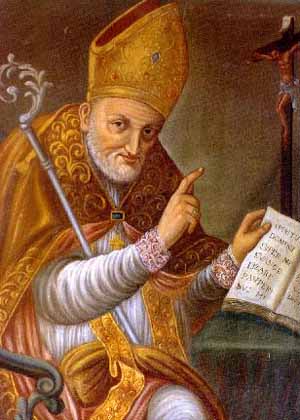
ALPHONSUS was born of noble and devout parents, near Naples, in 1696. His spiritual training was entrusted to the Fathers of the Oratory in that city, and from his boyhood Alphonsus was known as a most devout Brother of the Little Oratory. At the early age of sixteen he was made doctor in civil and canon law, and he threw himself into this career with ardour and success. A mistake, by which he lost an important cause, showed him the vanity of human fame, and driven to prayer, he heard the LORD’s voice: “Leave the world and give yourself to Me,” which determined him to labour only for the glory of God. He entered the priesthood, devoting himself to the most neglected marginalized souls; and to carry on this work he founded later the missionary Congregation of the Most Holy Redeemer (the Redemptorists). His keen legal mind and finely tuned pastoral sensibilities made him a sought-after confessor and beloved Bishop. At the age of sixty-six he became Bishop of St. Agatha, and undertook the reform of his diocese with the zeal of a saint. He made a vow never to lose time, and, though his life was spent in prayer and work, he composed a vast number of books, filled with such science, unction, and wisdom that he has been declared one of the Doctors of the Church (in 1871). Saint Alphonsus wrote his first book at the age of forty-nine, and in his eighty-third year had published about sixty volumes, when his director forbade him to write more. Very many of these books were written in the half-hours snatched from his labours as missionary, religious superior, and Bishop, or in the midst of continual bodily and mental sufferings. With his left hand he would hold a piece of marble against his aching head while his right hand wrote. Yet he counted no time wasted which was spent in charity. He did not refuse to hold a long correspondence with a simple soldier who asked his advice, or to play the harpsichord while he taught his novices to sing spiritual canticles. He lived in evil times, and met with many persecutions and disappointments. For his last seven years he was prevented by constant sickness from offering the Adorable Sacrifice; but he received Holy Communion daily, and his love for Jesus Christ and his trust in Mary’s prayers sustained him to the end. He died in 1787, in his ninety-first year.
From a sermon by Saint Alphonsus Liguori, Bishop and Doctor of the Church
(Tract. de praxi amandi Iesum Christum edit. latina. Romæ, 1909, pp. 9-14)
On the love of Christ
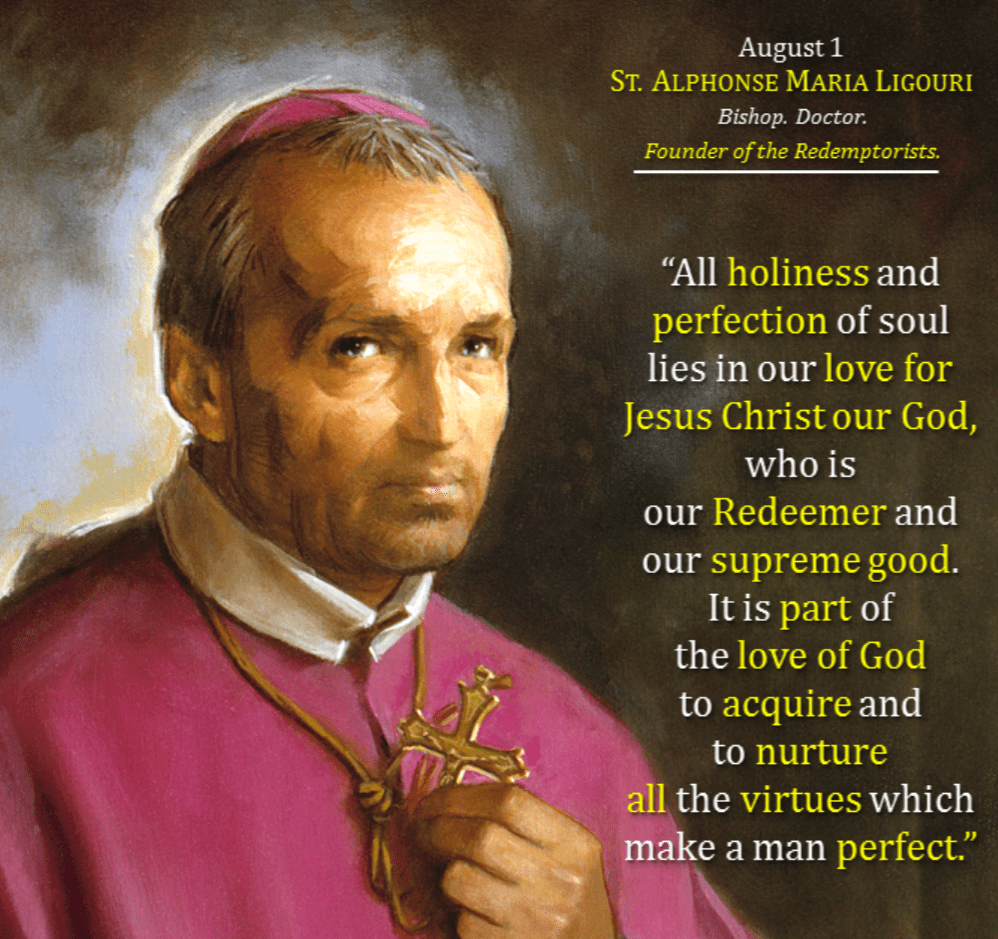
All holiness and perfection of soul lies in our love for Jesus Christ our God, who is our Redeemer and our Supreme Good. It is part of the love of God to acquire and to nurture all the virtues which make a man perfect.
Has not God in fact won for Himself a claim on all our love? From All Eternity He has loved us. And it is in this vein that He speaks to us: “O man, consider carefully that I first loved you. You had not yet appeared in the light of day, nor did the world yet exist, but already I loved you. From All Eternity I have loved you.”
Since God knew that man is enticed by favours, He wished to bind him to His love by means of His gifts: “I want to catch men with the snares, those chains of love in which they allow themselves to be entrapped, so that they will love Me.” And all the gifts which He bestowed on man were given to this end. He gave him a soul, made in His likeness, and endowed with memory, intellect and will; He gave him a body equipped with the senses; it was for him that He created Heaven and earth and such an abundance of things. He made all these things out of love for man, so that all creation might serve man, and man in turn might love God out of gratitude for so many gifts.
But He did not wish to give us only beautiful creatures; the Truth is that to win for Himself our love, He went so far as to bestow upon us the fullness of Himself. The Eternal Father went so far as to give us His only Son. When He saw that we were all dead through sin and deprived of His grace, what did He do? Compelled, as the Apostle says, by the superabundance of His love for us, He sent His Beloved Son to make reparation for us and to call us back to a sinless life.
By giving us His Son, Whom He did not spare precisely so that He might spare us, He bestowed on us at once every good: grace, Love and Heaven; for all these goods are certainly inferior to the Son: He who did not spare His own Son, but handed Him over for all of us: how could He fail to give us along with His Son all good things?
Ready to Enter the Father’s Kingdom
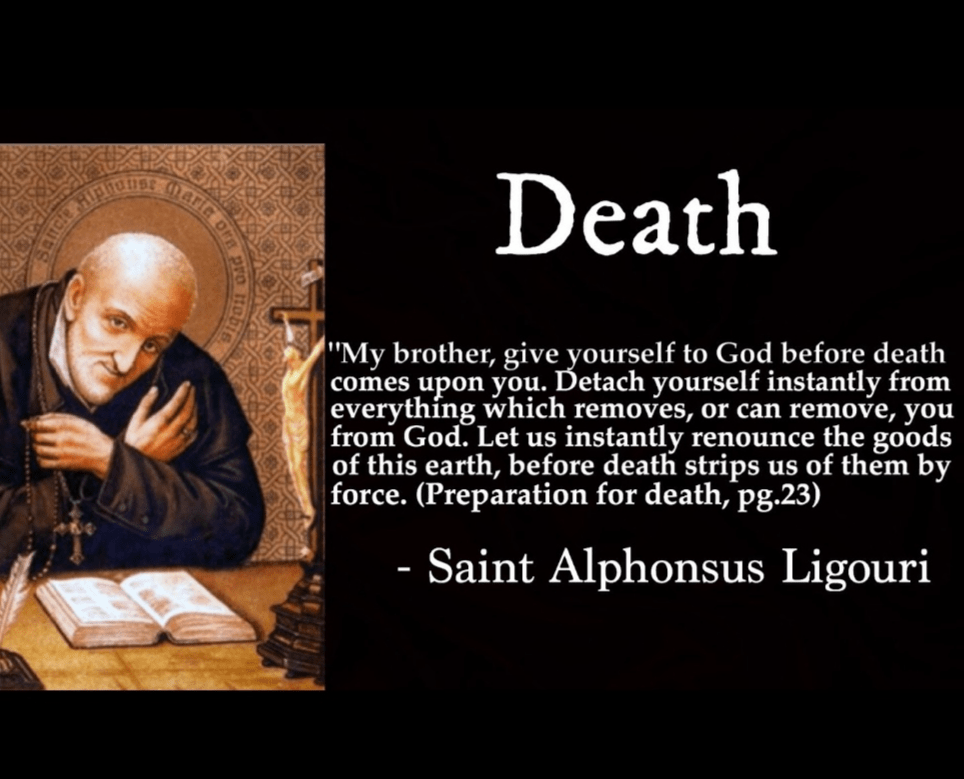
Saint Bernard wrote: “Death is precious insofar as it marks the end of the struggle; it is victory attained, it is the gate to Eternal Life.”… In the Scriptures, God calls those who die in His grace happy. Then I heard a voice from Heaven say to me, ‘Write down: Blessed are those who die in the LORD! Blessed indeed, the Spirit says; now they can rest for ever after their work, since their good deeds go with them.’ (Rv 14:13). And in the Book of Wisdom (3:1) we read: But the souls of the just are in the hands of God, and the torment of death shall not touch them.
The call to leave this world, which is so full of terror for those who love it, does not alarm good people. Those who love God are not afflicted at the thought of having to leave riches, possessions, wealth, or this world’s goods. They have never been attached to these so-called attractions. Neither do they fear giving up worldly honours or fame, for they have always avoided them, or considered them to be what they truly are, vanity and smoke…. And at the same time, as they await their merited crown in Heaven, they foresee that in Heaven they will be able to assist their loved ones more than while still on earth. Thus, good people are able to die in peace and happiness, saying with the Psalmist: I will lie down in peace and sleep comes at once for You alone, LORD, make me dwell in safety. In a word, those who during life have constantly said “My God and my All” will continue to repeat this prayer with greater consolation and tenderness at the hour of death….
O my God, I ask only to love You and hope always to ask to love You until, dying in Your love, I reach the Kingdom of love where, without the need to ask it anymore, I shall be full of love for All Eternity. Mary, my Mother, obtain for me the grace to love God ardently in this life, that I may love Him ardently for ever in the next.
Saint Alphonsus Liguori
Saint Alphonsus Liguori († 1787) was a Bishop and the founder of the Redemptorists. He is a Doctor of the Church and the patron saint of moral theologians. [From Preparation for Death: Prayers and Consolations for the Final Journey].
DAILY MEDITATION
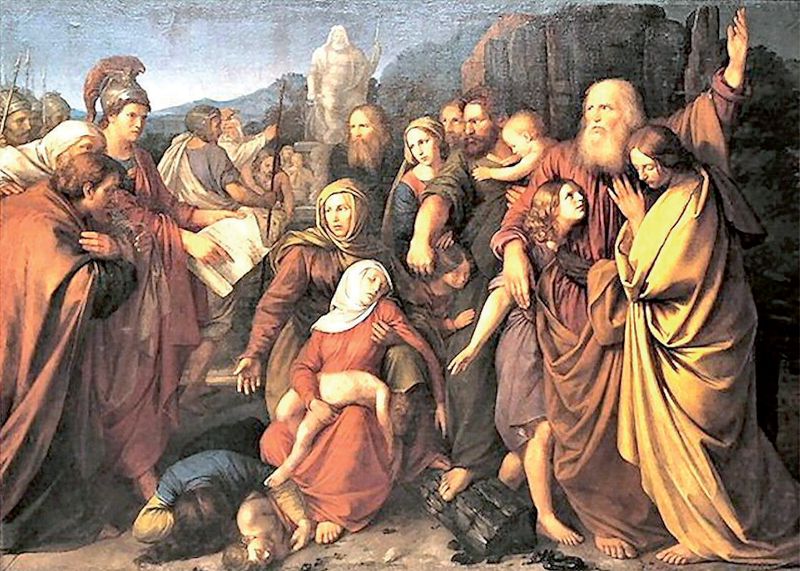
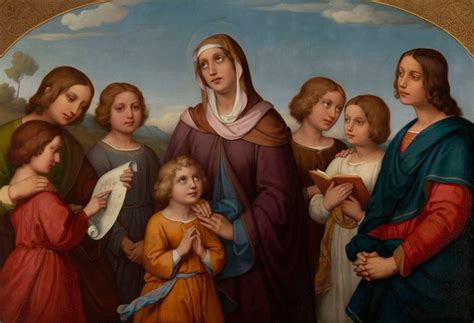
The history of the seven Machabees and their heroic mother is one of the most beautiful and instructive ever written, and is well worth reading more than once. Parents are taught by it, how to instill into the hearts of their children obedience, to God and avoidance of sin; and children, how to live according to their parent’s precepts; while Christians, in general, are instructed by it how to keep the laws of God.
The seven holy martyrs rather suffered, the most terrible torments and cruel death, than touch the meats which God had forbidden them to use. This same God forbids you, on certain days, the use of certain food. Woe to you, if you allow yourself to be persuaded to partake of it through the bad example of others, or by their taunts and mockery, or from other frivolous excuses. The holy martyrs, sustained themselves by the hope of the resurrection and of the recompense, which they would one day receive in Heaven. Your body will also rise again. You will receive again all your limbs, either for eternal reward, or eternal punishment, as you have used them in the service or to the displeasure of the Almighty. Woe to your tongue, your lips, your eyes, your hands and feet, if you do not use them better than you have done until now. Lastly, all should learn what their conduct should be, when they are tempted to sin. We must fight and say: “No, I will not do it. I obey, not him who tempts me, but the LORD, my God. I am ready to die, rather than transgress the laws of God.“ And let those who tempt others to sin consider well what one of the martyrs said to Antiochus: Thou shalt not escape the hand of the LORD”; and another: “Wait, patiently, and thou shalt recognize, in thy punishment, the power of the Almighty.”
Father Francis Xavier Weninger [d. 1888] – Austrian priest, professor, and author: joined the Jesuits as missionary preacher to the United States
“The refusal to take sides on great moral issues is itself a decision. It is a silent acquiescence to evil. The tragedy of our time is that those who still believe in honesty lack fire and conviction, while those who believe in dishonesty are full of passionate conviction.” – Ven. Archbishop Fulton Sheen
 Daily Reflections
Leave a comment