
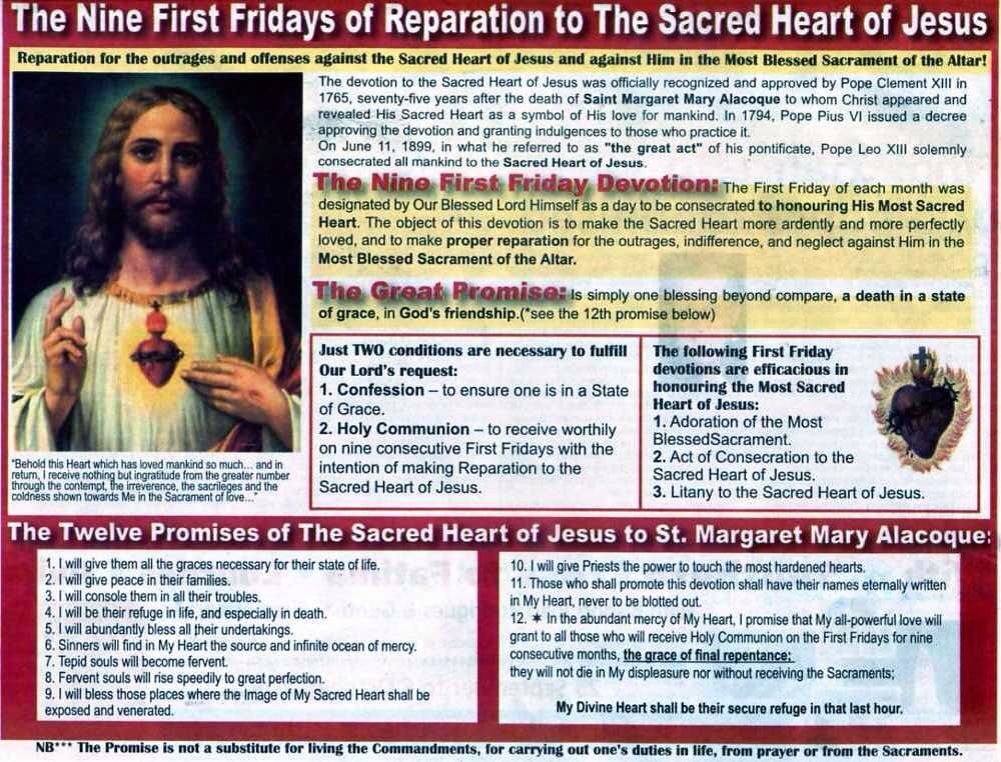
First Friday of the Month
Saint John Mary Vianney, Confessor
Saint Dominic, Confessor (Traditional)
SAINT JEAN MARY VIANNEY, CONFESSOR

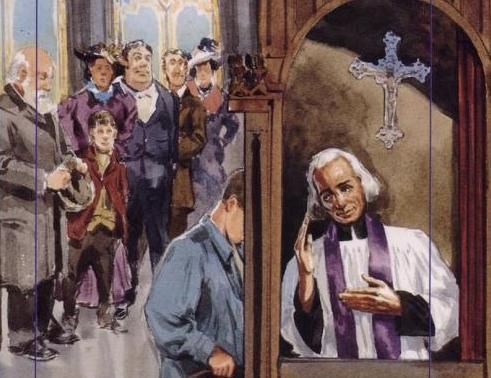
Saint Jean Marie Vianney, patron of priests, known as the “Curé of Ars”. was born of peasant stock in Dardilly, France, during the days of the French Revolution, John desired from a young age to be a priest and after years of difficult study in the seminary, was ordained a priest in 1815. Three years later he was made parish priest of Ars, a remote French hamlet near Lyons, He brought Christ to his parishioners through the fervent celebration of the Eucharist, assistance to the poor, and, above all, the Sacrament of Penance where his reputation as a confessor and director of souls made him known throughout the Christian world. His life was one of extreme mortification.
Accustomed to the most severe austerities, beleaguered by swarms of penitents, and besieged by the devil, this great mystic manifested imperturbable patience. He was a wonderworker loved by the crowds, but he retained a childlike simplicity, and he remains to this day the living image of the priest after the Heart of Christ.
He heard confessions of people from all over the world for the sixteen hours each day. Hundreds of pilgrims availed themselves of his aid every week. His life was filled with works of charity and love. It is recorded that even the staunchest of sinners were converted at his mere word. The Curé was still hearing confessions from his bed a few days before his death on August 4, 1859. He was canonized May 31, 1925.
SAINT DOMINIC, CONFESSOR
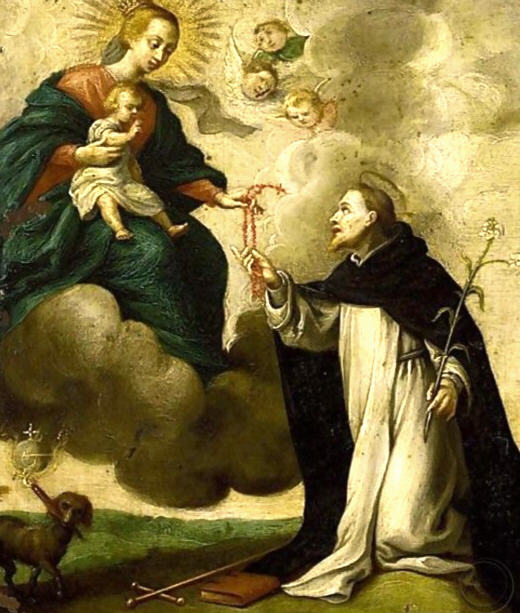
Saint Dominic, the founder of the order of Friars Preachers, was born in Spain in 1170, and died at Bologna, Italy, in 1221. In 1208, while the saint was at prayer, Our Lady appeared to him, gave him the Rosary, and bade him go forth and preach. Beads in hand, he led the Catholic troops against the Albigensians and crushed that heresy. Countless souls were brought to grace by his words. His parents attributed his birth to the prayers of the holy Benedictine Abbott, Dominic of Silos; his mother saw in a vision her child in the shape of a little dog, holding a torch in his mouth. He became the great defender of Catholic Doctrine, and the opponent of heresies.
From the Catechetical Instructions by Saint John Mary Vianney, Priest
(Catechisme sur la prière: A. Monnin, Esprit du Curé d’Ars, Parish 1899, pp. 87-89)
The glorious duty of man: to pray and to love
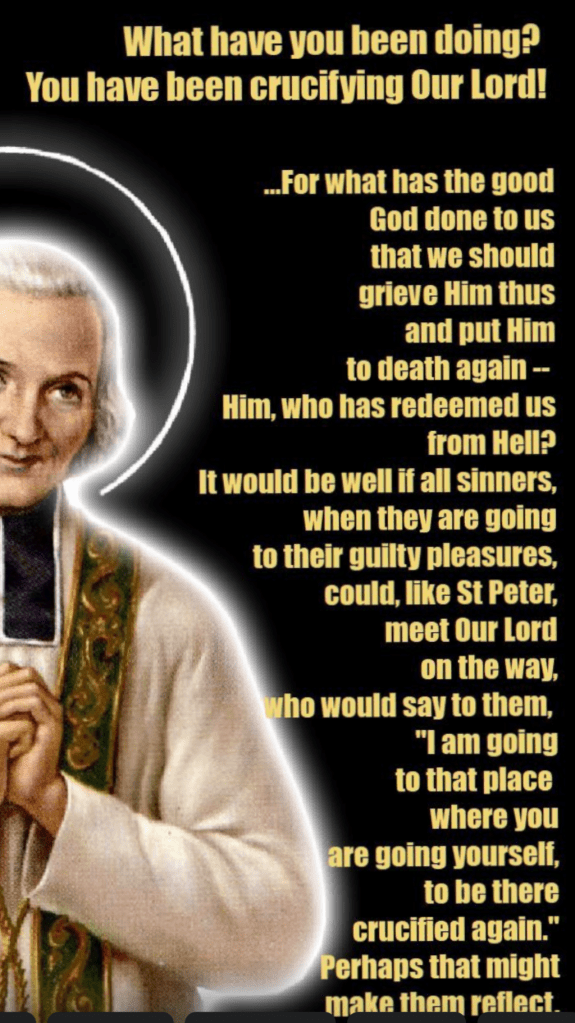
My little children, reflect on these words: the Christian’s treasure is not on earth but in Heaven. Our thoughts, then ought to be directed to where our treasure is. This is the glorious duty of man: to pray and to love. If you pray and love, that is where a man’s happiness lies.
Prayer is nothing else but union with God. When one has a heart that is pure and united with God, he is given a kind of serenity and sweetness that makes him ecstatic, a light that surrounds him with marvellous brightness. In this intimate union, God and the soul are fused together like two bits of wax that no one can ever pull apart. This union of God with a tiny creature is a lovely thing. It is a happiness beyond understanding.
We had become unworthy to pray, but God in His goodness allowed us to speak with Him. Our prayer is incense that gives Him the greatest pleasure.
My little children, your hearts are small, but prayer stretches them and makes them capable of loving God. Through prayer we receive a foretaste of Heaven and something of paradise comes down upon us. Prayer never leaves us without sweetness. It is honey that flows into the soul and makes all things sweet. When we pray properly, sorrows disappear like snow before the sun.
Prayer also makes time pass very quickly and with such great delight that one does not notice its length. Listen: Once when I was a purveyor in Bresse and most of my companions were ill, I had to make a long journey. I prayed to the good God, and believe me, the time did not seem long.
Some men immerse themselves as deeply in prayer as fish in water, because they give themselves totally to God. There is not division in their hearts. O, how I love these noble souls! Saint Francis of Assisi and Saint Colette used to see Our LORD and talk to Him just as we talk to one another.
How unlike them we are! How often we come to church with no idea of what to do or what to ask for. And yet, whenever we go to any human being, we know well enough why we go. And still worse, there are some who seem to speak to the good God like this: “I will only say a couple of things to You, and then I will be rid of You.” I often think that when we come to adore the LORD, we would receive everything we ask for, if we would ask with Living Faith and with a pure heart.
Is not His mother the woman called Mary?”
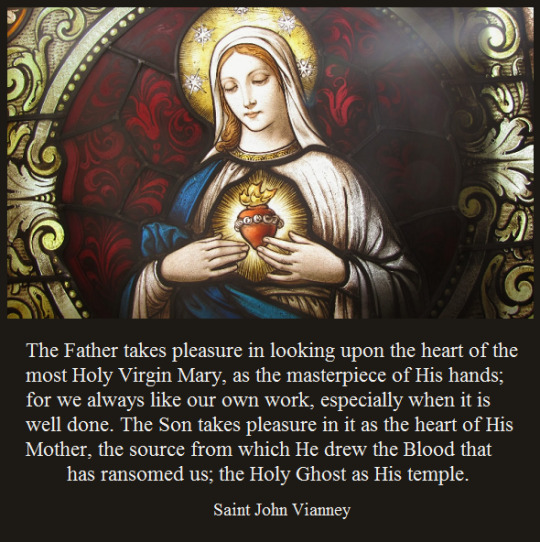
The heart of Mary is so tender towards us that those of all the mothers in the world put together are like a piece of ice in comparison to hers. See how good the Holy Virgin is! Her great servant Saint Bernard used often to say to her, “I salute thee, Mary.” One day this good Mother answered him, “I salute thee, my son Bernard.”
The Ave Maria is a prayer that is never wearisome. The devotion to the Holy Virgin is delicious, sweet, nourishing. When we talk on earthly subjects or politics, we grow weary; but when we talk of the Holy Virgin, it is always new. All the saints have a great devotion to our Lady; no grace comes from Heaven without passing through her hands. We cannot go into a house without speaking to the porter; well, the Holy Virgin is the portress of Heaven.
When we have to offer anything to a great personage, we get it presented by the person he likes best, in order that the homage may be agreeable to him. So our prayers have quite a different sort of merit when they are presented by the Blessed Virgin, because she is the only creature who has never offended God. The Blessed Virgin alone has fulfilled the First Commandment—to adore God only, and love Him perfectly. She fulfilled it completely. All that the Son asks of the Father is granted Him. All that the Mother asks of the Son is in like manner granted to her. When we have handled something fragrant, our hands perfume whatever they touch: let our prayers pass through the hands of the Holy Virgin; she will perfume them…. The Holy Virgin is like a mother who has a great many children—she is continually occupied in going from one to the other.
Saint John Vianney
Saint John Vianney, the Curé of Ars († 1859), is the patron of priests. [From The Little Catechism of the Curé of Ars
DAILY MEDITATION
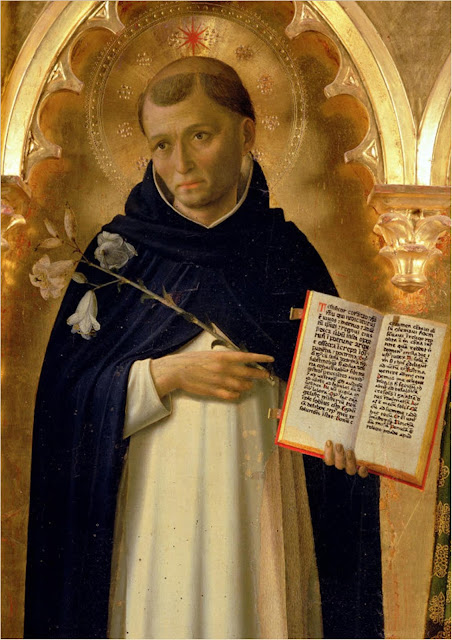
The life of Saint Dominic was one of tireless effort in the service of God. While he journeyed from place to place, he prayed and preached almost uninterruptedly. His penances were of such a nature as to cause the brethren, who accidentally discovered them, to fear the effect upon his life. While his charity was boundless, he never permitted it to interfere with the stern sense of duty that guided every action of his life. If he abominated heresy and laboured untiringly for its extirpation, it was because he loved truth and loved the souls of those among whom he laboured. He never failed to distinguish between sin and the sinner. It is not to be wondered at, therefore, if this athlete of Christ, who had conquered himself before attempting the reformation of others, was more than once chosen to show forth the power of God. The failure of the fire at Fanjeaux to consume the dissertation he had employed against the heretics, and which was thrice thrown into the flames, the raising to life of Napoleon, Orsini; the appearance of the annals in the refectory of St. Sixtus in response to his prayers, are but a few of the supernatural happenings, by which God was pleased to attest the eminent holiness of His servant. We are not surprised, therefore, that after signing the bowl of canonization on 13 July 1234, pope Gregory one X declared that he no more doubted the same thing us to Saint Dominic then he did that of Saint peter and Saint Paul.
Catholic Encyclopedia [1912] – classic multi-volume reference on “the constitution, doctrine, discipline, and history of the Catholic Church.
2 Corinthians 4:17; 1 Corinthians 2:9
For that which is at present momentary,
and light of our tribulation, worketh for us
above measure exceedingly an Eternal weight of Glory
– which far exceeds the burden of our suffering.Eye hath not seen, nor ear heard,
neither hath it entered into the heart of man,
what things God hath prepared for them that love Him.
– Which far exceeds the burden of our suffering.
“The refusal to take sides on great moral issues is itself a decision. It is a silent acquiescence to evil. The tragedy of our time is that those who still believe in honesty lack fire and conviction, while those who believe in dishonesty are full of passionate conviction.”
– Ven. Archbishop Fulton Sheen
 Daily Reflections
Leave a comment