
FIRST SATURDAYS DEVOTION
Our Lady appeared to St. Lucia in 1925, promising her gracious assistance unto salvation to all those who practised devotion to her immaculate heart through the five first Saturdays.
FIVE SATURDAYS IN PREPARATION FOR:
- Blasphemy against her Immaculate Conception.
- Blasphemy against her perpetual virginity.
- Blasphemy against her divine eternity, and refusal to accept her as the mother of all men.
- Instilling indifference, scorn, and even hatred towards this immaculate mother in the hearts of children.
- Direct insults against her sacred images.
HOW TO COMPLETE THE FIVE FIRST SATURDAYS:
On the first Saturday of five consecutive months, go to Confession, receive Holy Communion, and keep Our Lady company by saying five decades of the Rosary, with fifteen minutes of meditation, with the intention of making reparation for the offenses listed above.
First Saturday of the Month
The Dedication of the Basilica
of Saint Mary Major
The Dedication of the Church of St. Mary of the Snow (Traditional)
DEDICATION OF THE CHURCH OF ST. MARY OF THE SNOW
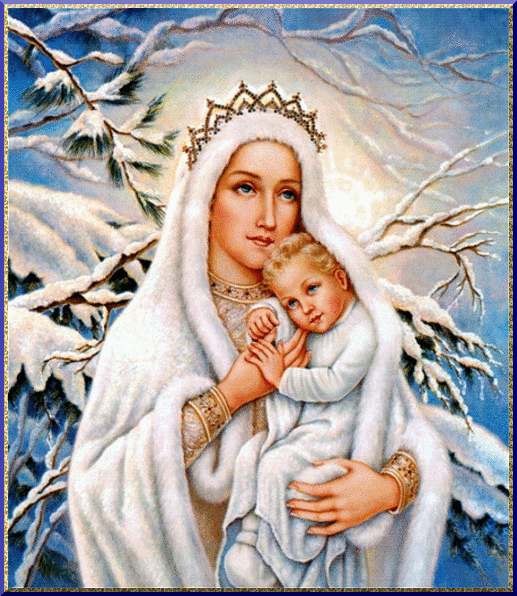
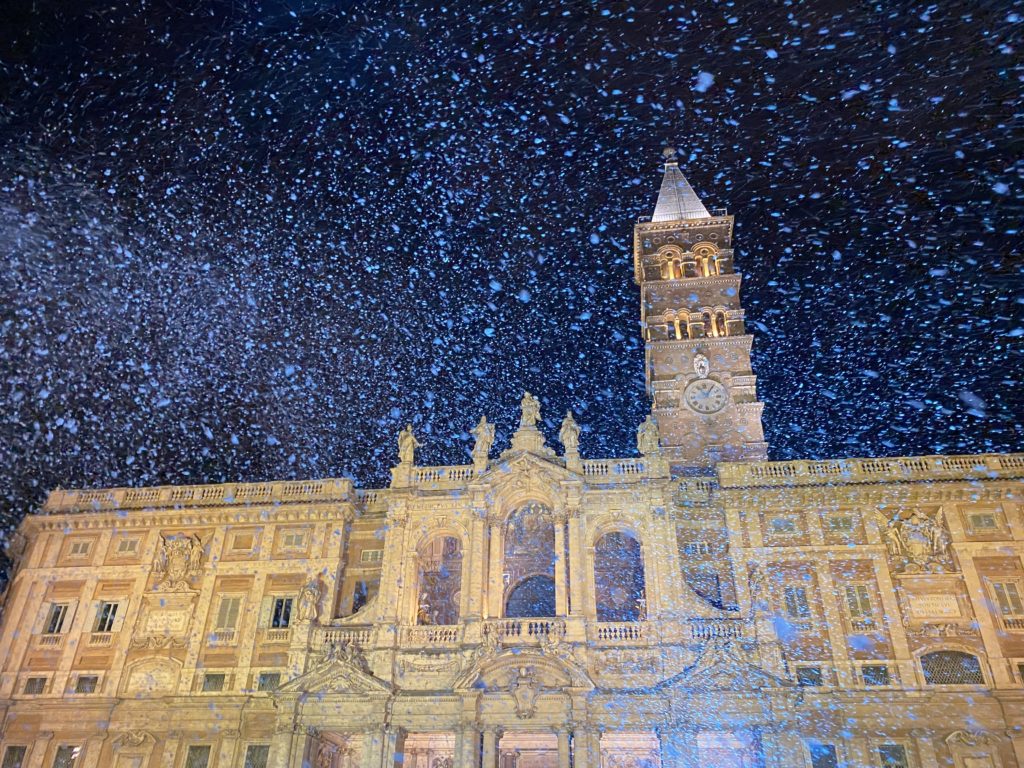
This date marks the dedication of Rome’s first Marian basilica by Pope Sixtus III around the year 435 to honour the Our Lady,after the Council of Ephesus in 431, in which the mother of Jesus was acclaimed as Mother of God. The original structure of Saint Mary Major was built in the 3RD century under Pope Liberius on the Esquiline at Rome. It is said that Mary signalled her choice of the church’s site with a miraculous snowfall in the heat of August. This was the sign she gave to John, a devout and wealthy patrician, commanding that a church be built. For this reason that basilica is known as Saint-Mary-of-the-Snow, and the name is also given to the feast of its dedication. After the basilica’s construction, a miraculous shower of white rose petals fell upon the gathered faithful. The basilica is still known as Maria ad Nives, “Mary of the Snows”.The stations for Christmas are held in this church, because some relics of the Crib of Bethlehem preserved there. The Pope was also accustomed to officiate there on the first Sunday in advent, at the beginning of the ecclesiastical year.
From a homily delivered at the Council of Ephesus by Saint Cyril of Alexandria, Bishop
(Hom. 4: PG 77, 991, 995-996)
In praise of Mary, Mother of God
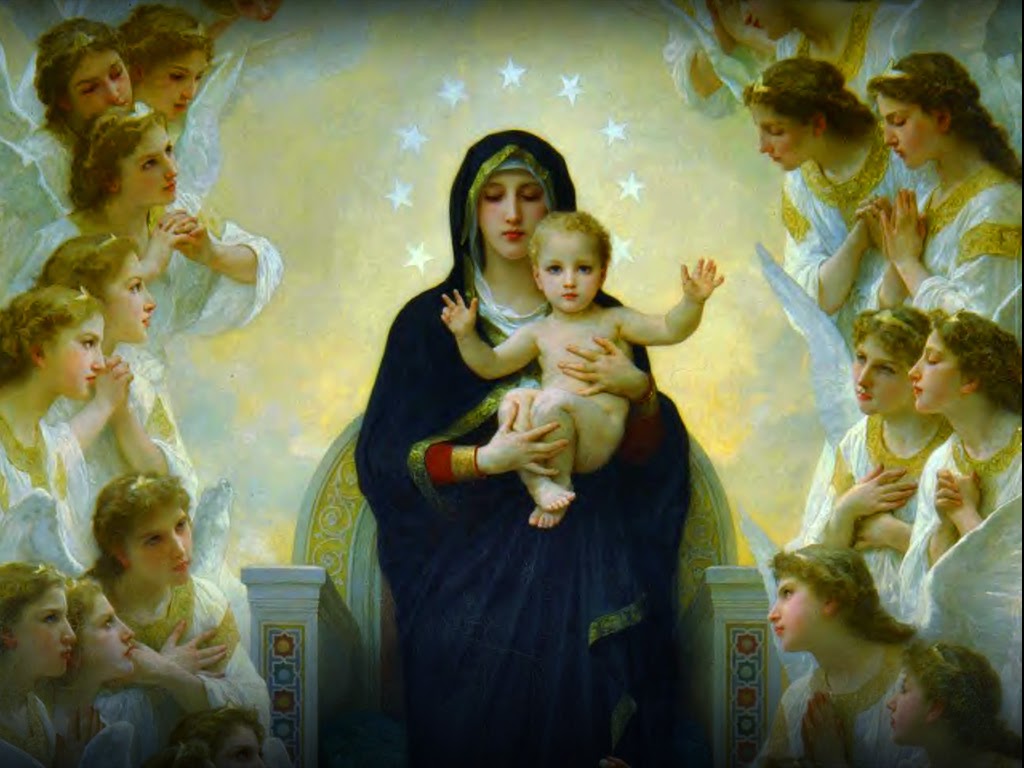
I see here a joyful company of Christian men met together in ready response to the call of Mary, the holy and ever-virgin Mother of God. The great grief that weighed upon me is changed into joy by your presence, venerable Fathers. Now the beautiful saying of David the Psalmist: How good and pleasant it is for brothers to live together in unity has come true for us.
Therefore, Holy and Incomprehensible Trinity, we salute you at whose summons we have come together to this church of Mary, the Mother of God.
Mary, Mother of God, we salute you. Precious vessel, worthy of the whole world’s reverence, you are an evershining light, the crown of virginity, the symbol of orthodoxy, an indestructible temple, the place that held Him Whom who [no] place can contain, mother and virgin. Because of you the holy Gospels could say: Blessed is He who comes in the name of the LORD.
We salute you, for in your holy womb He, who is beyond all limitation, was confined. Because of you the Holy Trinity is glorified and adored; the Cross is called precious and is venerated throughout the world; the heavens exult; the angels and archangels make merry; demons are put to flight; the devil that tempter, is thrust down from Heaven; the fallen race of man is taken up on high; all creatures possessed by the madness of idolatry have attained knowledge of the Truth; believers receive holy Baptism; the oil of gladness is poured out; the Church is established throughout the world; pagans are brought to repentance.
What more is there to say? Because of you the Light of the Only-begotten Son of God has shone upon those who sat in darkness and in the shadow of death; prophets pronounced the Word of God; the Apostles preached salvation to the Gentiles; the dead are raised to life, and kings rule by the power of the Holy Trinity.
Who can put Mary’s high honour into words? She is both mother and virgin. I am overwhelmed by the wonder of this miracle. Of course no one could be prevented from living in the house He had built for Himself, yet who would invite mockery by asking His own servant to become His mother?
Behold then the joy of the whole universe. Let the union of God and man in the Son of the Virgin Mary fill us with awe and adoration. Let us fear and worship the undivided Trinity as we sing the praise of the ever-virgin Mary, the holy temple of God, and of God Himself, her Son and spotless Bridegroom. To Him be Glory for ever and ever. Amen.
DAILY MEDITATION
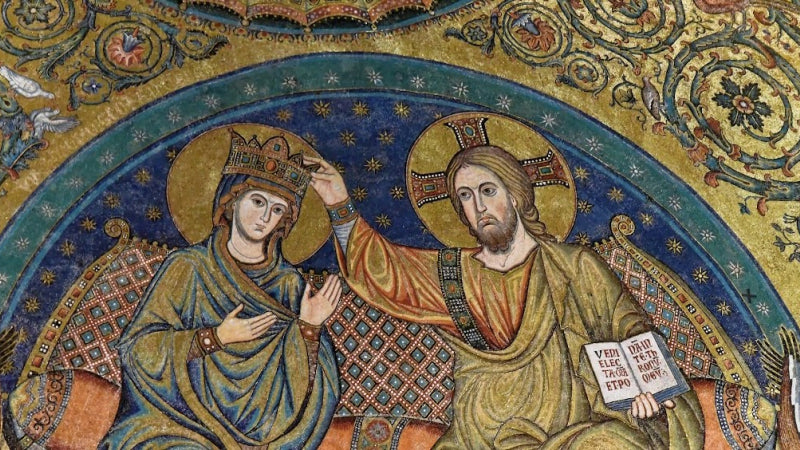
When God created this world, and beheld all the things that He had made, He saw that they were good, and was pleased in the manifestation of His own divine perfections which they presented. In Mary, He beheld a spotless creature, who, according to the Scripture expression, “Although black was beautiful“ [Canticle 1:4] – that is, who, also belonging to a sinful race, was unsullied by the stain of sin, having been exempted, through the future merits of her Divine Son, from contracting the guilt, and suffering the consequences of Adam’s prevarication. Hence, Richard of Saint Lawrence writes: “The Blessed Virgin was lovely, even in the eyes of God.“
We cannot doubt but that our first parents before their fall possessed natural advantages, which we no longer enjoy. Mary, through the Divine Mercy, was not only placed in the same condition, as if Adam had never fallen, but was, moreover, endowed with gifts, both of the natural and supernatural order, and in some measure proportioned to the greatness of her destiny. Hence, in the Canticle of Canticles, the spouse, by whom the holy Fathers understand the Blessed Virgin to be signified, is called “the fairest among women“ [1:7], and the daughters of Jerusalem are represented as struck with admiration at her beauty, and exclaiming: “return, return, Sulamitess; return, return, that we may behold, thee” [6:12].
If we admire the wisdom of God, exhibited in the beauty of the firmament, or in variety of wonders which the earth presents to our contemplation, how much more justly are we called on to admire the manifestation of the same divine perfections in this singularly favoured creature. “Who can refuse to love thee, Mary,“ says Saint Bonaventure; “thou art more beautiful than the sun; thou art sweeter than honey; to all thou art amiable, to all thou art gracious.” Mary was amiable beyond all other creatures, because, beyond all of the creatures, she reflected the divine perfections in the moral qualities of her nature. All that we can conceive of suavity of disposition, gentleness of nature, and kindliness of manner, were found in her in a degree for surpassing our conceptions.
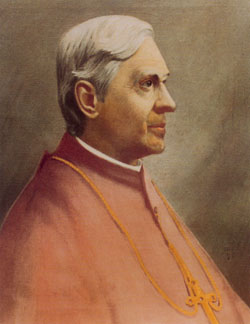
Bishop Charles H Colton [d 1915] – American, 4th Bishop of Buffalo, New York, and ardent devotee of Our Lady.
RESPONSORY
Rejoice with me, all you who love the LORD,
for in my lowliness I have pleased the Most High.
– From my womb I have given birth to a Son who is both God and man.
From this day all generations will call me Blessed,
for the LORD has looked with favour on His lowly servant.
– From my womb I have given birth to a Son who is both God and man.
“The refusal to take sides on great moral issues is itself a decision. It is a silent acquiescence to evil. The tragedy of our time is that those who still believe in honesty lack fire and conviction, while those who believe in dishonesty are full of passionate conviction.” – Ven. Archbishop Fulton Sheen
 Daily Reflections
Leave a comment