Wednesday of the Twentieth Week in Ordinary Time
Saint Philip Benizi, Confessor (Traditional)
Saint Rose of Lima, Virgin
Saint Eugene, Bihop (Ireland)
SAINT ROSE, VIRGIN

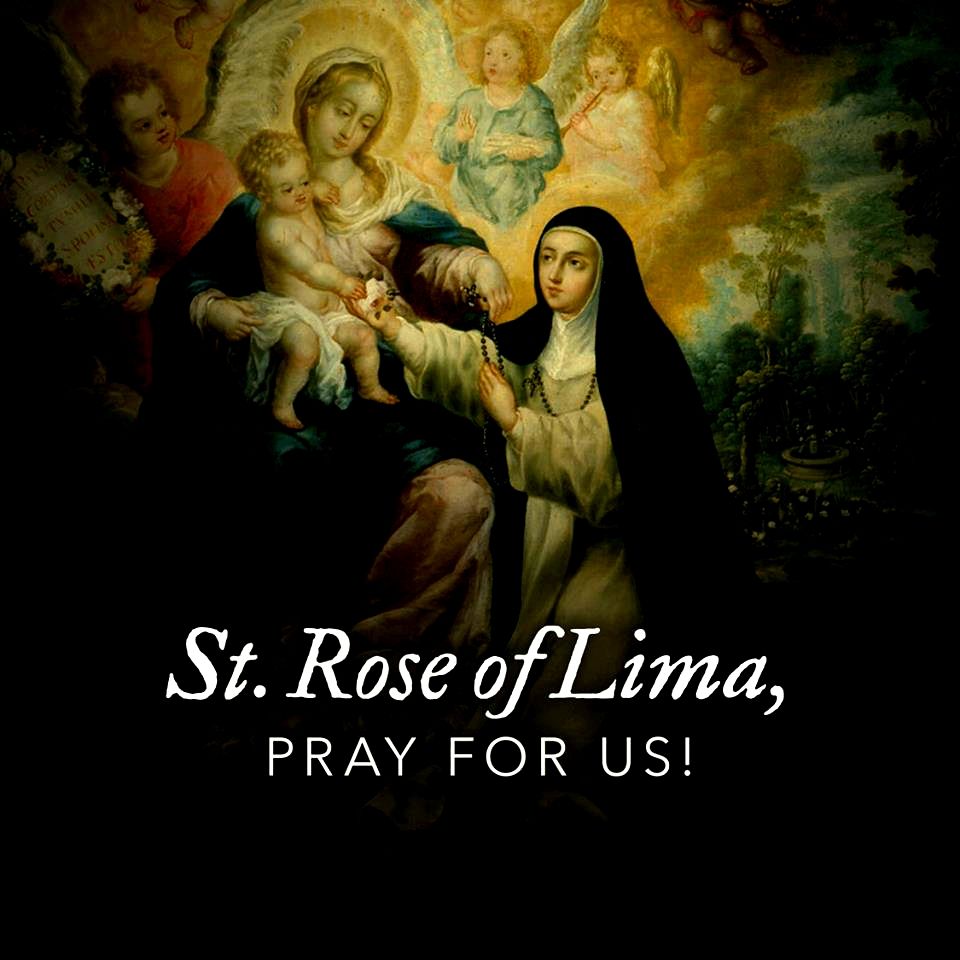
Saint Rose, the first canonized saint of the New World, was born at Lima, Peru in 1586. She received the name of Isabella in Baptism, but one day her mother saw a beautiful rose drooping over the baby’s cradle, and ever afterwards called her Rose. She was an obedient child; her mortifications were most severe. Rose felt chosen by God. She resorted to disfiguring her face by rubbing it with pepper to ward off would-be suitors. She led a virtuous life at home and, after receiving the habit of the Third Order of Saint Dominic, she made great progress in a life of penance and contemplation. She prayed, worked, and wept for the conversion of sinners; she excelled in her love for holy purity. She lived a life of simplicity, and prayed in a small hut in a corner of her father’s garden; the birds would visit her and sing with her the praises of God. She cared tenderly for the poor in a room of her parents’ house. She was frequently criticised by her neighbours, but also frequently consoled by profound experiences of Christ’s presence. Her devotion to the Passion of Our LORD, was remarkable as were her own sufferings. Her bed was strewn with glass shards, with nails and thorns; she wore chafing hair-cloth; her head was crowned with painful thorns skilfully concealed by roses. She died August 26, 1617. Her office was written by the eminent Cardinal Bona.
SAINT PHIILIP BENIZI, CONFESSOR

Saint Philip Venezia was born in Florence on the feast of the assumption and 1233. He was one of the first to profess the religious life as a surveyed, and in time he became general of the order. With his brethren and he preached in many countries of Europe, and journeyed even into Western Asia to spread the Christian Faith. In his humility he refused honors, and even the papacy, which was offered him by the Cardinals assembled inconclusive. He entered into the glory of heaven in the year of 1285. Is it said that when he was dying he repeatedly asked for his book, and when the infirmarian did not understand his meaning the saint made signs that he wanted his crucifix, which was the book in which he was accustomed to meditate.
SAINT EUGENE, BISHOP
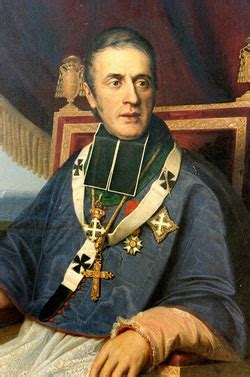
Irish missionary to England who became the first Bishop of Ardstraw, in Tyrone, Ireland, now Derry. He is also listed as Eoghan, Enny, and Owen. He was born in Leinster, Ireland, and was a relative of St. Kevin of Glendalough. Kidnapped as a child, he spent years as a slave before returning to Ireland. There he helped St. Tigernach found Clones Monastery in 576 .
From the writings of Saint Rose of Lima, Virgin
(Ad medicum Castillo: edit. L. Getino, La Patrona de America, Madrid 1928, pp. 54-55)
Let us know the love of Christ which surpasses all understanding
Our LORD and Saviour lifted up His voice and said with incomparable majesty: “Let all men know that grace comes after tribulation. Let them know that without the burden of afflictions it is impossible to reach the height of grace. Let them know that the gifts of grace increase as the struggles increase. Let men take care not to stray and be deceived. This is the only true stairway to paradise, and without the cross they can find no road to climb to Heaven.”
When I heard these words, a strong force came upon me and seemed to place me in the middle of a street, so that I might say in a loud voice to people of every age, sex and status: “Hear, O people; hear, O nations. I am warning you about the Commandment of Christ by using words that came from His own lips: We cannot obtain grace unless we suffer afflictions. We must heap trouble upon trouble to attain a deep participation in the divine nature, the glory of the sons of God and perfect happiness of soul.”
That same Force strongly urged me to proclaim the beauty of divine grace. It pressed me so that my breath came slow and forced me to sweat and pant. I felt as if my soul could no longer be kept in the prison of the body, but that it had burst its chains and was free and alone and was going very swiftly through the whole world saying:
“If only mortals would learn how great it is to possess divine grace, how beautiful, how noble, how precious. How many riches it hides within itself, how many joys and delights! Without doubt they would devote all their care and concern to winning for themselves pains and afflictions. All men throughout the world would seek trouble, infirmities and torments, instead of good fortune, in order to attain the unfathomable treasure of grace. This is the reward and the final gain of patience. No one would complain about his cross or about troubles that may happen to him, if he would come to know the scales on which they are weighed when they are distributed to men.”
DAILY MEDITATION
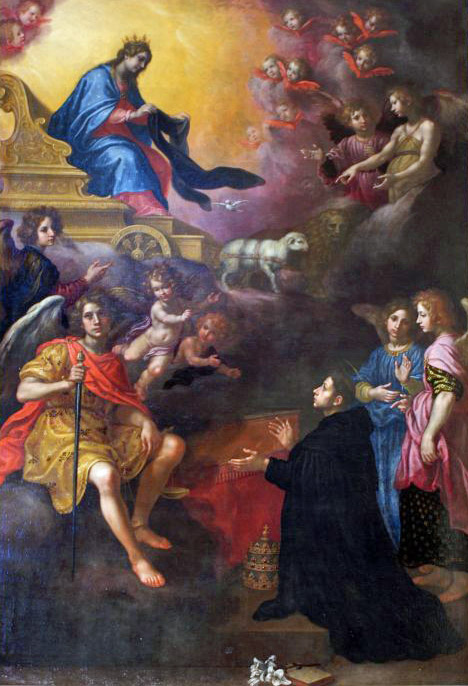
Having finished his studies, [Saint Philip] was one day thinking about his vocation, and it being the Thursday after Easter, he went into the Chapel of the Servites, which stood on the outskirts of Florence, to attend Holy Mass. At the Epistle were read the words of the Holy Ghost to Saint Philip: “Draw near, and join thyself to the chariot” [Acts 8:29]. Having heard these words, he went into an ecstasy, and it seem to him that he was alone in a vast wilderness, where nothing was to be seen but sterile mountains, steep rocks and cliffs, or marshes, overgrown with thorns, swarming with poisonous reptiles, and full of snares. He screamed with fear, and looking around how to save himself, he saw, high in the air, the Blessed Virgin in a chariot, surrounded by angels and saints, and holding in her hand, the habit of the Servites. At the same time, he heard from the lips of Mary the words which had just been read in the Epistle: “Draw near, and join thyself to the chariot.“ After this revelation, Philip no longer doubted that he was called to enter the Order of the Servites, and going, the following day, to the dwelling of the seven founders of this order, he desired to be received as a lay-brother. He was readily accepted, but after having served in that capacity a few years, his talent, knowledge, and holiness were so manifest, that he was made priest: after which he was raised from one dignity to another, until he was at last major general of the entire Order… The biography of this saint contains many miracles, which he performed during his life, and many more which took place, by his intercession, after his happy death…. [However,] he was tried before his end by a great struggle. Satan reproached him with his sins, although they had been small, and had been long since repented of, thus endeavouring to drive him to despair. If this happened to the green wood, what will be done with that which is dry? What combat will be in store for sinners, who, during their lives, unheedingly committed iniquities, not troubling themselves about penance? …. Be careful, oh sinner!
Father Francis Xavier Weninger [died 1888] – Austrian priest, professor, and author; joined the Jesuits as missionary preacher to the United States.
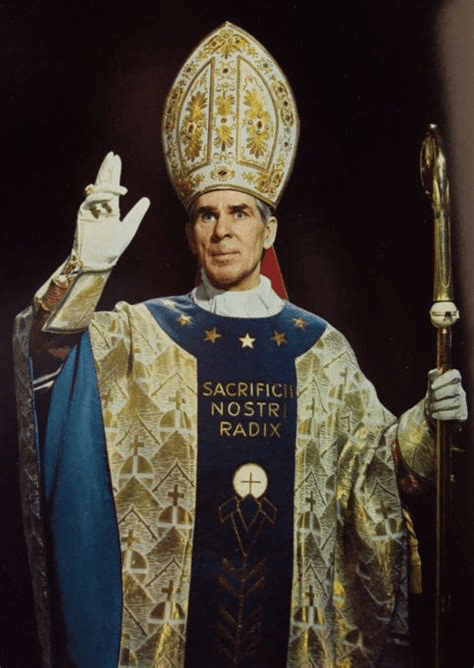
“The refusal to take sides on great moral issues is itself a decision. It is a silent acquiescence to evil. The tragedy of our time is that those who still believe in honesty lack fire and conviction, while those who believe in dishonesty are full of passionate conviction.”– Ven. Archbishop Fulton Sheen
 Daily Reflections
Leave a comment