John 15:15; Matthew 13:11, 16
I no longer call you servants, but my friends,
– for I have shared with you everything I have heard from My Father.
The mysteries of the Kingdom of Heaven have been revealed to you;
blessed are your eyes because they see
and your ears because they hear.
– For I have shared with you everything I have heard from My Father.
Feast of Saint Bartholomew, Apostle
SAINT BARTHOLOMEW, APOSTLE
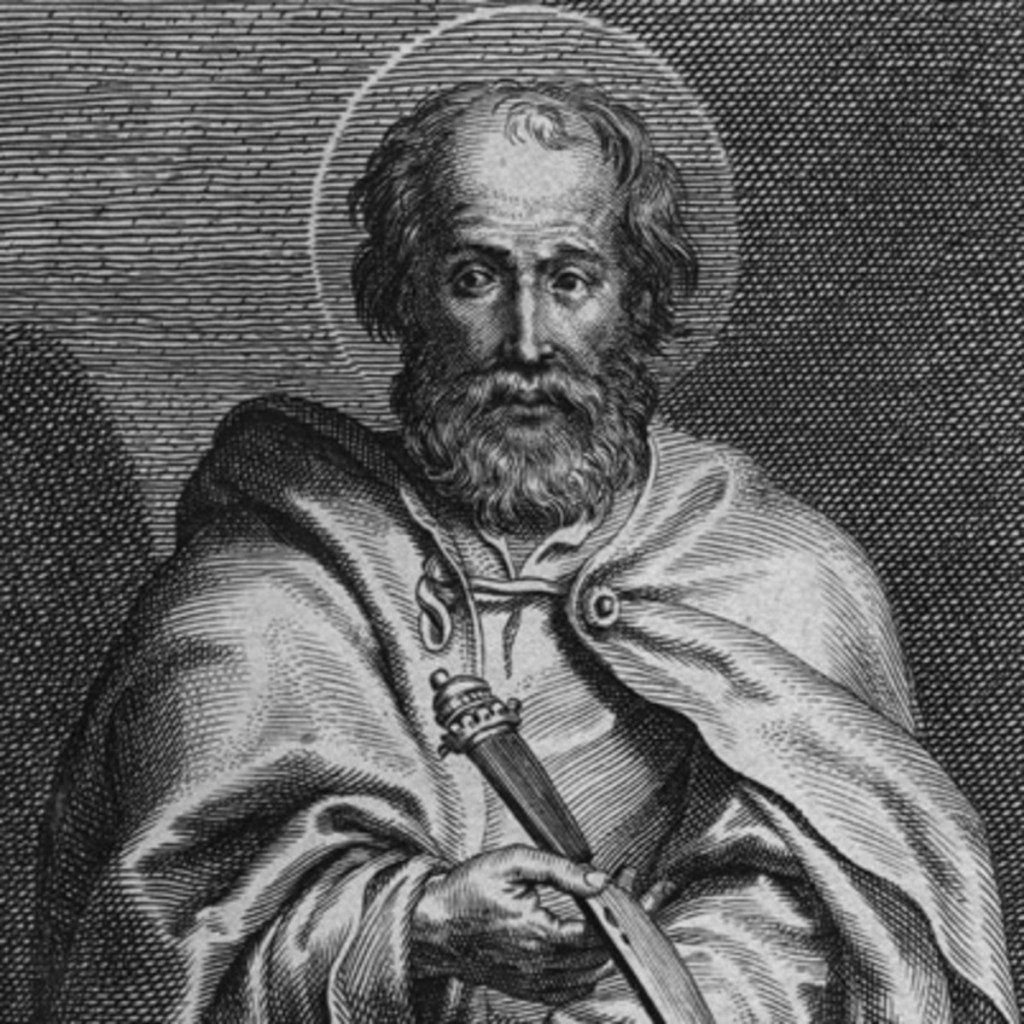
Bartholomew, one of the Twelve, is traditionally identified with Nathanael of today’s Gospel. To Nathanael, Philip issues the invitation: “Come and see.” Nathanael, a native of Cana, in Galilee, a doctor in the Jewish law, and one of the seventy-two disciples of Christ, to whom he was conducted by Saint Philip, and whose innocence and simplicity of heart deserved to be celebrated by the mouth of our Redeemer himself. Coming to Jesus, Nathanael not only sees, but “is seen”. Jesus tells him, “Before Philip called you, I saw you under the fig tree.” This revelation moves Nathanael to confess: “Rabbi, You are the Son of God; You are the King of Israel.” The feast of Saint Bartholomew moves us to believe in the LORD’s loving attention to us at all times, even when it is not sensibly felt, and to look forward to the day when we will see Him in glory.
In the Gospel of Saint John, Bartholomew whose name means Tholomy, is not mentioned among the Apostles, but it is stated that Philip and Nathanael came to Jesus, and that Jesus said to Nathanael, “the Israelite, in whom was no guile.” In the list of the apostles in the other Gospels, Nathanael is not mentioned, but after Philip is placed Bartholomew. The Redeemer chose all the apostles at once, and formed them from the beginning into a hierarchical group, with Saint Peter at their head, in order to show us that the rightful priesthood instituted by Christ is that which is derived in unbroken succession from the twelve apostles, chosen by Our Saviour, and being in communion with the See of Peter, is also in communion with the entire Catholic episcopate. Bartholomew is said to have preached the Faith over a great part of Asia, and suffered martyrdom in Armenia, where he was flayed alive and beheaded. His body was transferred many times, and is now believed to repose in the Church of Saint, Bartholomew on an island in the Tiber.
From a homily on the first letter to the Corinthians by Saint John Chrysostom, Bishop
(Hom. 4, 3. 4: PG 61, 34-36)
The Weakness of God is stronger than men
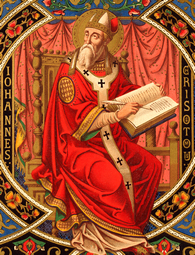
It was clear through unlearned men that the Cross was persuasive, in fact, it persuaded the whole world. Their discourse was not of unimportant matters but of God and True religion, of the Gospel way of life and future judgment, yet it turned plain, uneducated men into philosophers. How the foolishness of God is wiser than men, and His weakness stronger than men!
In what way is it stronger? It made its way throughout the world and overcame all men; countless men sought to eradicate the very name of the Crucified, but that name flourished and grew ever mightier. Its enemies lost out and perished; the living who waged a war on a dead man proved helpless. Therefore, when a Greek tells me I am dead, he shows only that he is foolish indeed, for I, whom he thinks a fool, turn out to be wiser than those reputed wise. So too, in calling me weak, he but shows that he is weaker still. For the good deeds which tax-collectors and fishermen were able to accomplish by God’s Grace, the philosophers, the rulers, the countless multitudes cannot even imagine.
Paul had this in mind when he said: The weakness of God is stronger than men. That the preaching of these men was indeed Divine is brought home to us in the same way. For how otherwise could twelve uneducated men, who lived on lakes and rivers and wastelands, get the idea for such an immense enterprise? How could men who perhaps had never been in a city or a public square think of setting out to do battle with the whole world? That they were fearful, timid men, the evangelist makes clear; he did not reject the fact or try to hide their weaknesses. Indeed he turned these into a proof of the Truth. What did he say of them? That when Christ was arrested, the others fled, despite all the miracles they had seen, while he who was leader of the others denied him!
How then account for the fact that these men, who in Christ’s lifetime did not stand up to the attacks by the Jews, set forth to do battle with the whole world once Christ was dead—if, as you claim, Christ did not rise and speak to them and rouse their courage? Did they perhaps say to themselves: “What is this? He could not save Himself but He will protect us? He did not help Himself when He was alive, but now that He is dead He will extend a helping hand to us? In His lifetime He brought no nation under His banner, but by uttering His name we will win over the whole world?” Would it not be wholly irrational even to think such thoughts, much less to act upon them?
It is evident, then, that if they had not seen Him Risen and had proof of His power, they would not have risked so much
DAILY MEDITATION

The Gospel gives no other account of Saint Bartholomew, than that he was joined by Our Saviour to those men whom He called as Apostles, and chose to convert mankind. Hence, with the others, he followed the divine Teacher, and learned from Him the Doctrine which he afterward preached to the nations. The life of this saint, after the Ascension of Christ, is described by authentic writers as follows. When the holy apostles, after the Holy Ghost had descended upon them, dispersed to preach the Gospel to the whole world, St. Bartholomew was sent into East India and the neighbouring countries. He repaired thither, not without great hardship, and wandering through cities and villages, he everywhere converted great numbers of the heathen….
… Bartholomew, the holy apostle, threw himself on his knees, a hundred times during the day, and as often at night to pray to the Almighty. An apostle found leisure for this, so overburdened with work, and assured of divine aid in all his undertakings. you have not so much work, neither are you assured of divine aid, and yet you seldom take refuge in prayer to the Almighty what is the reason for this, you are, perhaps, one of those negligent persons who do not even think of their morning and evening prayers, but, like dumb brutes, rise and lie down again…. Do you call that, I will not say, a Christian, but even a rational life? Will you go on in this manner? I do not require of you to bend your knees a hundred times during the day and night, but I advise you to pray more frequently and more devoutly than you have done heretofore. Before all things, do not omit to turn your thoughts to Heaven, morning and evening, if only for one short prayer. If ever you omit to do this, let it be on those days when you need no benefits from the Almighty. But when will such a day dawn? Surely, never as long as you live; for there is no day in which neither your soul nor your body may be exposed to such dangers as require the assistance of the Most High. Hence it is no more than your duty to pray in the morning most fervently for this divine assistance. And as no day passes on which the Almighty bestows no grace on you either in soul or body, it is therefore no less your duty at the close of the day to offer him your grateful thanks.
Father Francis Xavier Weninger [d. 1888] – Austrian priest, Professor and author; joined the Jesuits as missionary preacher to the United States.
Attachment to Jesus
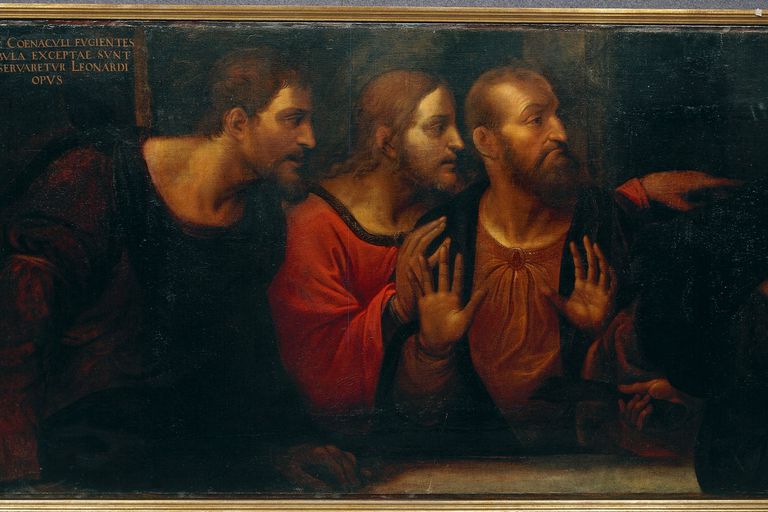
[Today’s saint] has traditionally been identified with Nathanael: a name that means “God has given”. It is likely that the identification of the two figures stems from the fact that Nathanael is placed in the scene of his calling next to Philip, in other words, the place that Bartholomew occupies in the lists of the apostles mentioned in the other Gospels. As we know, Nathanael’s retort [to Philip] was rather strongly prejudiced: Can anything good come from that place? In its own way, this form of protestation is important for us [and] highlights God’s freedom, which baffles our expectations by causing Him to be found in the very place where we least expect Him…. In our relationship with Jesus we must not be satisfied with words alone. In his answer, Philip offers Nathanael a meaningful invitation: Come and see. Our knowledge of Jesus needs above all a firsthand experience: someone else’s testimony is of course important, for normally the whole of our Christian life begins with the proclamation handed down to us by one or more witnesses. However, we ourselves must then be personally involved in a close and deep relationship with Jesus.
When Jesus sees Nathanael approaching, He exclaims: There is an Israelite who deserves the name, incapable of deceit. [This] provokes the curiosity of Nathanael, who answers in amazement: How do you know me? His heart is moved by Jesus’ words, he feels understood and he understands: “This man knows everything about me, He knows and is familiar with the road of life; I can truly trust this man.” And so he answers with a clear and beautiful confession of faith. In this confession is conveyed a first important step in the journey of attachment to Jesus.
In later tradition, the account of his death by flaying became very popular. Only think of the famous scene of the Last Judgement in the Sistine Chapel in which Michelangelo painted Bartholomew, who is holding his own skin in his left hand, on which the artist left his self-portrait….
To conclude, we can say that despite the scarcity of information about him, Saint Bartholomew stands before us to tell us that attachment to Jesus can also be lived and witnessed to without performing sensational deeds. Jesus Himself, to Whom each one of us is called to dedicate his or her own life and death, is and remains extraordinary.
Pope Benedict XVI
Pope Benedict XVI was pope from 2005 until 2013. [From the General Audience of Wednesday, 4 October 2006, Saint Peter’s Square. Used with permission of the Libreria Editrice Vaticana]
1 Corinthians 1:23-24; 2 Corinthians 4:8; Romans 8:37
We preach Christ Crucified,
a stumbling block to Jews
and an absurdity to Gentiles,
but to those who have heard His call,
– Christ is the Power of God and the Wisdom of God.
We are afflicted in every way possible,
but in all of these trials the victory is ours,
because of Christ who loves us.
– Christ is the Power of God and the Wisdom of God.

“The refusal to take sides on great moral issues is itself a decision. It is a silent acquiescence to evil. The tragedy of our time is that those who still believe in honesty lack fire and conviction, while those who believe in dishonesty are full of passionate conviction.”– Ven. Archbishop Fulton Sheen
 Daily Reflections
Leave a comment