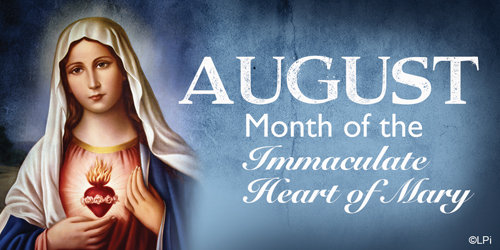
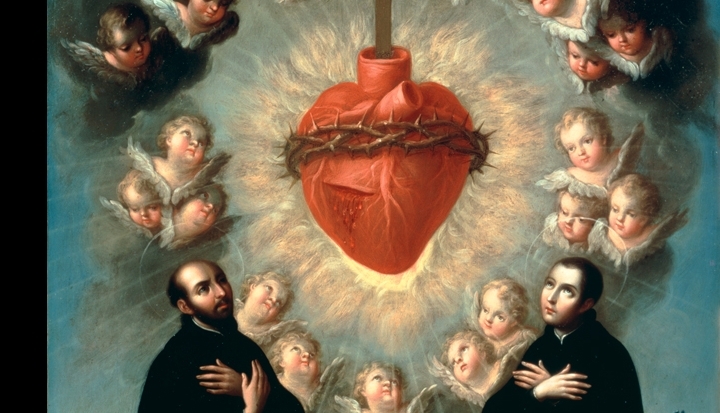
Why do Catholics venerate the Sacred Heart of Jesus?
It’s time to reconsider this devotion, which represents mystic union with the very source of love itself.
Across time and cultures the heart has symbolized a variety of traits: love, awareness, the will, along with numerous other prime movers of humanity. From Cro-Magnon Man to the Aztecs, the Egyptians, Chinese medicine, Judaism, and Islam; from Eros aiming his arrow at Psyche’s heart to Valentine’s Day cards, heart tattoos, and the endless trove of pop songs about hearts in various stages of being won, lost, or broken, so overarching is the symbol’s power that it seems to spring from something existential and primal.
In utero our mother’s heartbeat is the white noise of our existence, the ever-present thrum of life and love. The memory of that heartbeat carries us through life, and its echo informs all our relationships: to friends, loved ones, and God. It’s what inspires prayer to the Sacred Heart of Jesus, but here the memory and the echo go deeper to the very source of life and love itself. (See complete article by Jeffrey Essmann at): https://uscatholic.org/articles/201906/why-do-catholics-venerate-the-sacred-heart-of-jesus/
Isaiah 30:15, 18
If you return and be quiet, you shall be saved:
– in silence and in Hope shall your strength be.
The LORD is waiting to show you His favour.
Blessed are all they that wait for Him.
– in silence and in Hope shall your strength be.
Friday of the Twentieth Week in Ordinary Time
Saint Louis IX, King, Confessor
Saint Joseph Calasanz, Confessor
SAINT JOSEPH CALASANCTIUS (CALASANZ), CONFESSOR
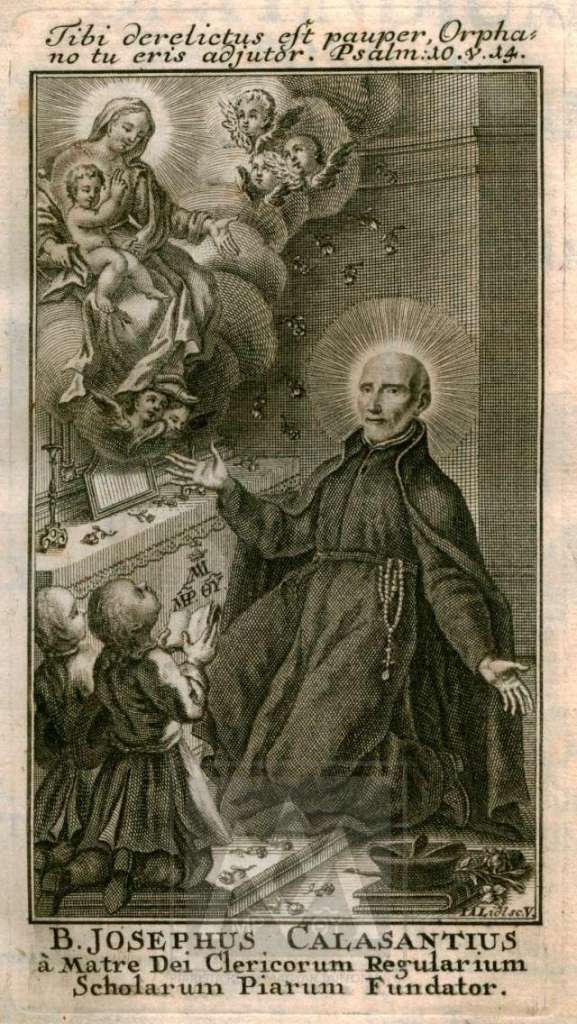
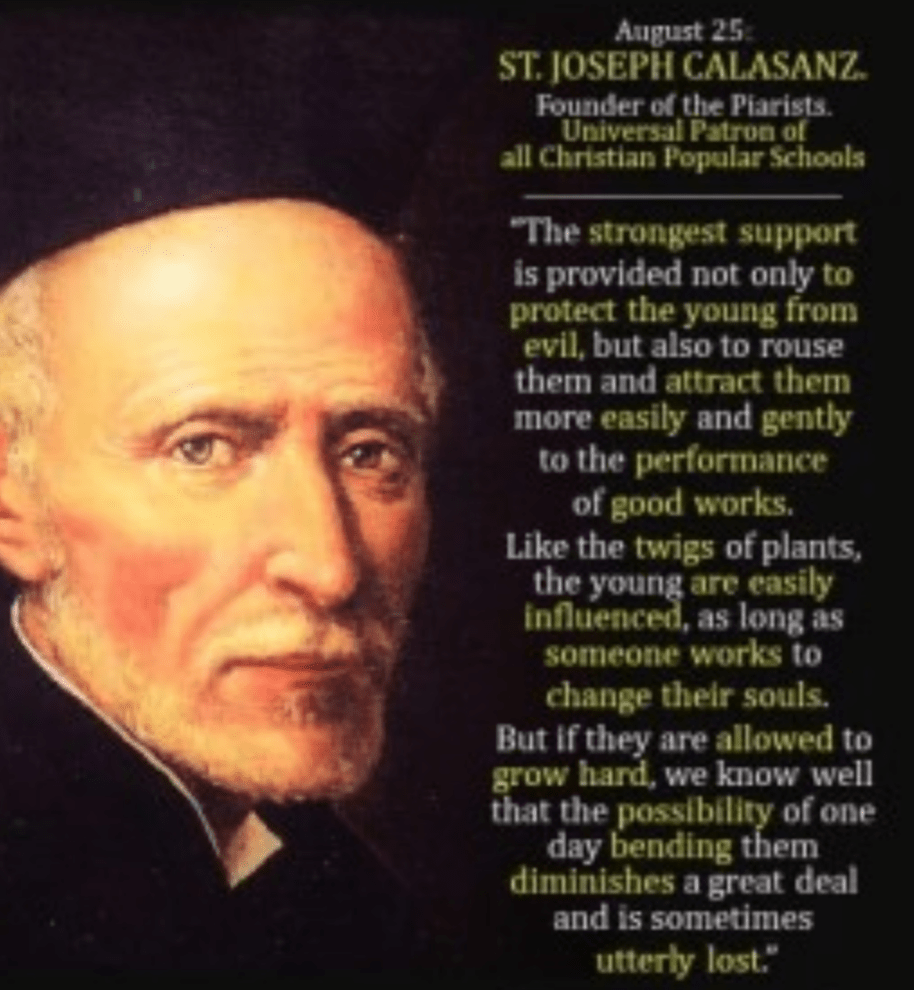
Joseph was born in Aragon, Spain, of noble parents. He received an education in theology and law and was eventually ordained a diocesan priest. In 1592 he went to Rome, where he cared for plague victims alongside Saint Camillus de Lellis. In 1597 he opened the first free public school in Rome. In homeless and abandoned children he saw another Christ: “In so far as you did this to one of the least of these brothers of Mine, you did it to Me” (Mt 25:40). Other men joined Joseph in his care for children, which led to the beginning of the Piarist Order or, the Order of Clerks Regular of the poor schools of the Mother of God for the education of youth. He endured many trials, especially the calumnies of those who were jealous of his success. He died in 1648 at the age of 92 and is the patron of Catholic schools.
SAINT LOUIS IX, KING, CONFESSOR
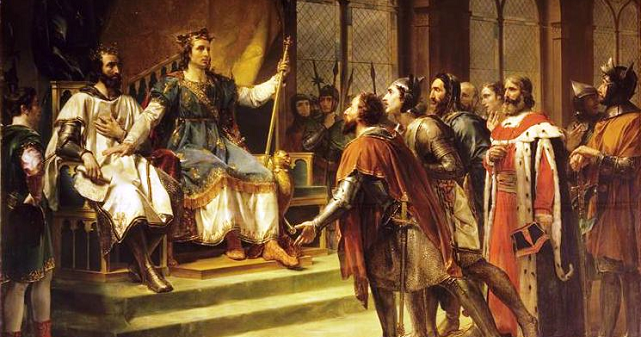
Today we commemorate a king, born in 1214, who was a faithful disciple of Christ Crucified, and whose life bears witness to the truth that virtue is not always rewarded in this world.The pious queen of France, Blanche, educated her son, Louis 1X to be a model for all kings in his faith, courage, and love of justice. He undertook two crusades to reconquer the Holy Land. He married and became the father of eleven children who received from him careful instruction for a Christian life. He excelled in penance and prayer and in his love for the poor. While ruling his kingdom he had regard not only for peace among peoples and for the temporal good of his subjects, but also for their spiritual welfare.
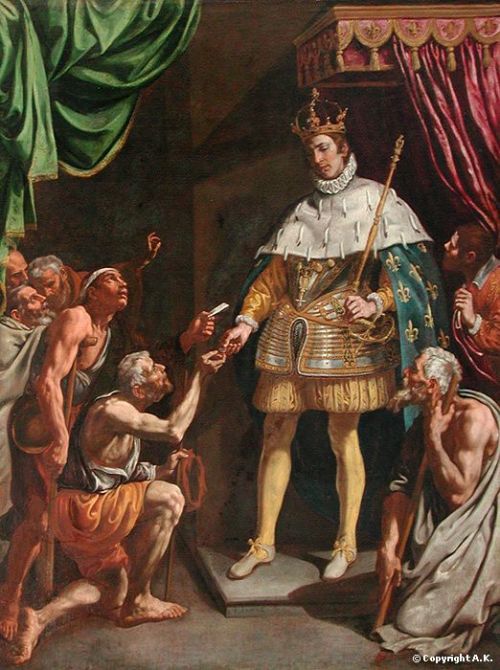
Louis was inspired by his zeal for the Faith to attempt the reconquest of the Holy Places sanctified by the Blood of the Redeemer; but, instead of triumph and victory, he only met with defeat and captivity; yet, when he was at last ransomed by his people, he brought back to Paris as a symbolic trophy of his campaigns, the Crown of Thorns once worn by Our Saviour. The plague, which decimated his army in Africa, struck him down, and he died under the walls of Tunis near Carthage, to which city he was about to lay siege, on August 25. Christian Rome, dedicated a celebrated church to him, not far from the stadium Domitiani. This most Christian king reigned from 1226 to 1270.
The customs of genuflecting at the words in the Credo, “et homo factual est”, and also of making a profound reference at the passage in the Gospels recording the death of Jesus, were introduced by this pious king in his own chapel. They are now part of the universal liturgy.
From The Writings of Saint Joseph Calasanz, Priest
(Memoriale al Card. M. A.Tonti, 1621: Ephem. Calas. 36, 9-10: Romae 1967, pp.473-474; L.Picanyol, Epistolario di S. Giuseppe Calasanzio. 9 vol., ediz. Calas., Romae 1951-1956, passim)
Let us try to cling to Christ and please Him alone
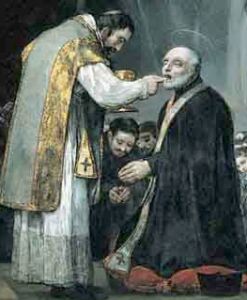
Everyone knows the great merit and dignity attached to that holy ministry in which young boys, especially the poor, receive instruction for the purpose of attaining Eternal Life. This ministry is directed to the well-being of body and soul; at the same time that it shapes behaviour it also fosters devotion and Christian Doctrine. In doing this it performs for the young boys the very same service as their guardian angels.
Moreover the strongest support is provided not only to protect the young from evil, but also to rouse them and attract them more easily and gently to the performance of good works. Whatever the type of condition, it is well known that when the young are given this help the change for the better is so great that it becomes impossible to distinguish those who are educated from those who are not. Like the twigs of plants the young are easily influenced, as long as someone works to change their souls. But if they are allowed to grow hard, we know well that the possibility of one day bending them diminishes a great deal and is sometimes utterly lost.
All who belong to the society of men, and especially all Christians, praise those who increase the human dignity of young boys, especially poor boys by giving them a proper education. Above all, parents are happy that their children are led through straight paths. Civil leaders rejoice to gain upright subjects and good citizens. The Church is especially joyful that others who love Christ and proclaim the Gospel are added to its following.
All who undertake to teach must be endowed with deep love, the greatest patience, and, most of all, profound humility. They must perform their work with earnest zeal. Then, through their humble prayers, the LORD will find them worthy to become fellow workers with Him in the cause of Truth. He will console them in the fulfillment of this most noble duty, and, finally, will enrich them with the gift of Heaven.
As Scripture says: Those who instruct many in justice will shine as stars for all Eternity. They will attain this more easily if they make a covenant of perpetual obedience and strive to cling to Christ and please Him alone, because, in His words: What you did to one of the least of My brethren, you did for Me.
DAILY MEDITATION
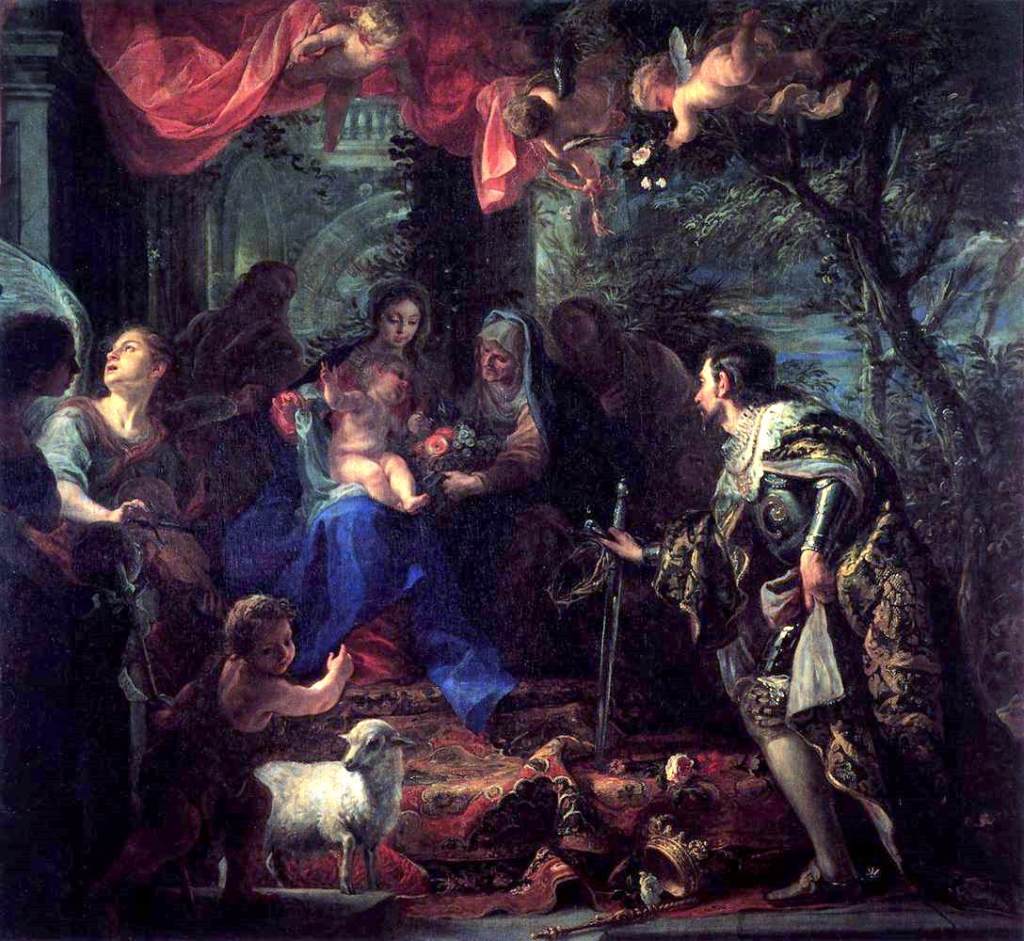
The mother of Saint Louis told him she would rather see him die, then commit a mortal sin, and he never forgot her words. King of France, at the age of 12, he made the defence of God‘s honour the aim of his life. Before two years, he had crushed the Albigensian heretics, and forced them by stringent penalties to respect the Catholic Faith. Amidst the cares of government, he daily recited the Divine Office, and heard two Masses, and the most glorious churches in France are still monuments of his piety. When his courtiers remonstrated with Louis for his law that blasphemers should be branded on the lips, he replied: “I would willingly have my own lips branded to root out blasphemy from my kingdom.” The fearless protector of the weak and oppressed, he was chosen to arbitrate in all the great feuds of his age, between the Pope and the emperor, between Henry III and the English barons.
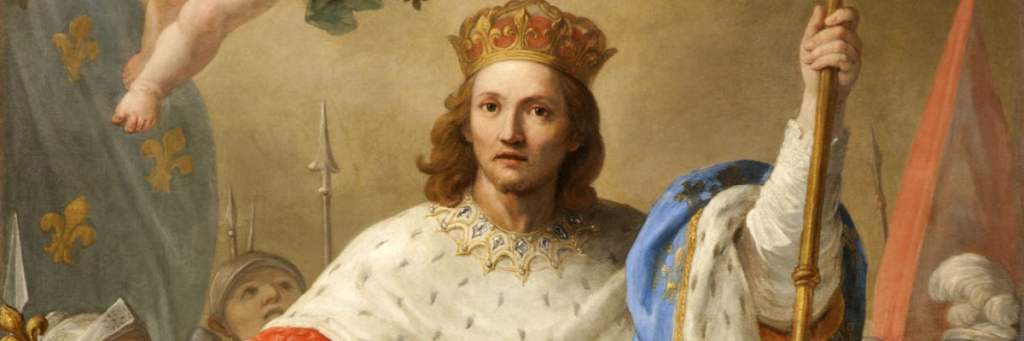
And 1248, to rescue the land which Christ had trod, he gather round him the chivalry of France, and embarked for the East. There, before the infidel, in victory or defeat, on the bed of sickness or a captive in chains, Louis showed himself ever the same: the first, the best, and the bravest of Christian knights. When a captive at Damietta, an emir rushed into his tent, brandishing a dagger red with the blood of the sultan, and threatened to stab him also unless he would make him a knight, as the Emperor Frederick had Facardin. Louis calmly replied that no unbeliever could perform the duties of a Christian knight. In the same captivity, he was offered his liberty on terms lawful in themselves, but enforced by an oath which implied a blasphemy, and, though the infidels held their swords’ points at his throat, and threatened a massacre of the Christians, Louis inflexibly refused. The death of his mother recalled him to France; but, when order was reestablished, he again set forth on a second Crusade. In August, 1270, his army landed at Tunis, and, though victorious over the enemy, succumbed to a malignant fever. Louis was one of the victims, he received the Viaticum kneeling by his camp bed, and gave up his life with the same joy that he had given all else for the honour of God.
Reflection: if we cannot imitate St. Louis in dying for the honour of God, we can at least resemble him in resenting the blasphemies offered against God by the infidel, the heretic, and the scoffer.
John Gilmary Shea [d.1892] – American author and celebrated historian, regarded as the father of American Catholic history.
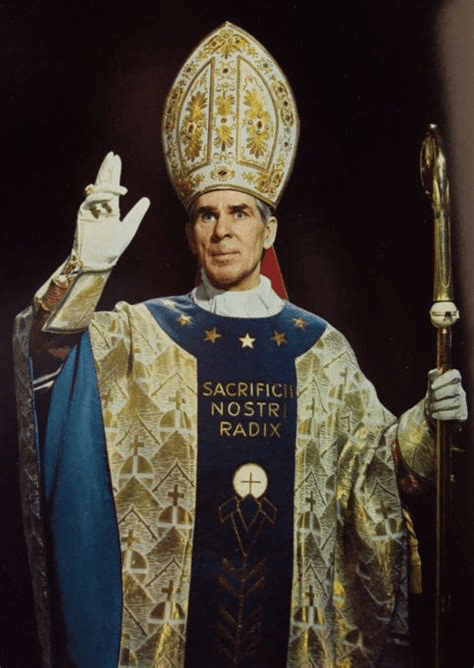
“The refusal to take sides on great moral issues is itself a decision. It is a silent acquiescence to evil. The tragedy of our time is that those who still believe in honesty lack fire and conviction, while those who believe in dishonesty are full of passionate conviction.” – Ven. Archbishop Fulton Sheen
 Daily Reflections
Leave a comment