Monday of the Twenty-First Week in Ordinary Time
Saint Augustine, Bishop, Confessor, Doctor of the Church
Saint Hermes, Martyr (Traditional)
SAINT AUGUSTINE, BISHOP, CONFESSOR, DOCTOR OF THE CHURCH
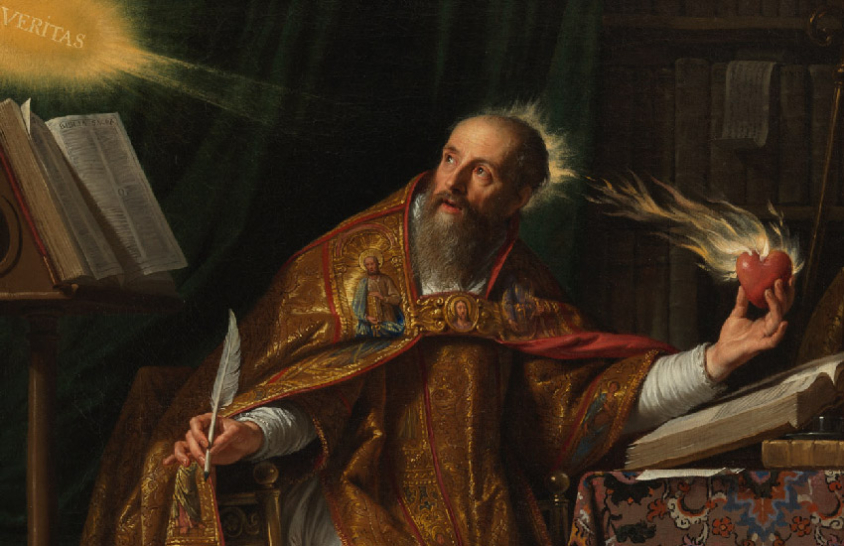
Saint Augustine, born in 354 at Tagaste in North Africa was the son of Saint Monica, and of a pagan father, Patricius. He was brought up in the Christian Faith, but without receiving Baptism. An ambitious schoolboy of brilliant talents and violent passions, he early lost both his faith and his innocence. He persisted in his irregular life until he was thirty-two. Being then at Milan as a professor of rhetoric, he tells us that the faith of his childhood had regained possession of his intellect, but that he could not as yet resolve to break the chains of evil habit. One day, however, stung to the heart by the account of some sudden conversions, be cried out, “The unlearned rise and storm heaven, and we, with all our learning, for lack of heart lie wallowing here.” He then withdrew into a garden, when a long and terrible conflict ensued. Suddenly a young fresh voice (he knows not whose) breaks in upon his strife with the words, “Take and read,” and he lights upon the passage beginning, “Walk honestly as in the day.” The battle was won. After his baptism by Saint Ambrose in 387, he was ordained and then in 395 elected Bishop of Hippo. His over 1,700 writings include sermons, treatises, scriptural commentaries, the spiritual classic Confessions, and the magisterial City of God. His biographer Possidius wondered how anyone could have produced such a volume of work. received Baptism, returned home, and gave all to the poor. At Hippo, where he settled, he was consecrated bishop in 395. For thirty-five years he was the centre of ecclesiastical life in Africa, and the Church’s mightiest champion against heresy; his writings have been accepted everywhere as one of the principal sources of devotional thought and theological speculation. At the end of his life, Augustine requested that the seven penitential Psalms, copied in large print, be hung in his room. He recited them for the ten days leading up to his death on 28 August, 430.
SAINT HERMES, MARTYR
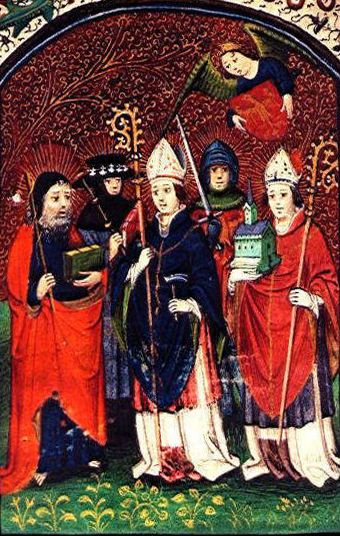
Saint Hermes, a Roman martyr, was beheaded by order of the judge Aurelian under the Emperor Hadrian in 133.
From the Confessions of Saint Augustine, Bishop and Doctor of the Church
(Lib. 7, 10, 18; 10, 27: CSEL 33, 157-163, 255)
O Eternal Truth, True Love, and Beloved Eternity
Urged to reflect upon myself, I entered under Your guidance into the inmost depth of my soul. I was able to do so because You were my helper. On entering into myself I saw, as it were with the eye of the soul, what was beyond the eye of the soul, beyond my spirit: Your Immutable Light. It was not the ordinary light perceptible to all flesh, nor was it merely something of greater magnitude but still essentially akin, shining more clearly and diffusing itself everywhere by its intensity. No it was something entirely distinct, something altogether different from all these things: and it did not rest above my mind as oil on the surface of water, nor was it above me as Heaven is above the Earth. This light was above me because it has made me; I was below it because I was created by it. He who has come to know the Truth knows this light.
O Eternal Truth, True Love and Beloved Eternity. You are my God. To You do I sigh day and night. When I first came to know You, You drew me to Yourself so that I might see that there were things for me to see, but that I myself was not yet ready to see them. Meanwhile You overcame the weakness of my vision, sending forth most strongly the beams of your light, and I trembled at once with love and dread. I learned that I was in a region unlike Yours and far distant from You, and I thought I heard Your voice from on High: “I am the Food of grown men; grow then, and you will feed on Me. Nor will you change Me into yourself like bodily food, but you will be changed into Me.”
I sought a way to gain the strength which I needed to enjoy You. But I did not find it until I embraced the Mediator between God and men, the man Christ Jesus, who is above all, God blessed for ever. He was calling me and saying: I am the way of Truth, I am the Life. He was offering the food which I lacked the strength to take, the food He had mingled with our flesh. For the Word became Flesh, that Your wisdom, by which You created all things, might provide milk for us children.
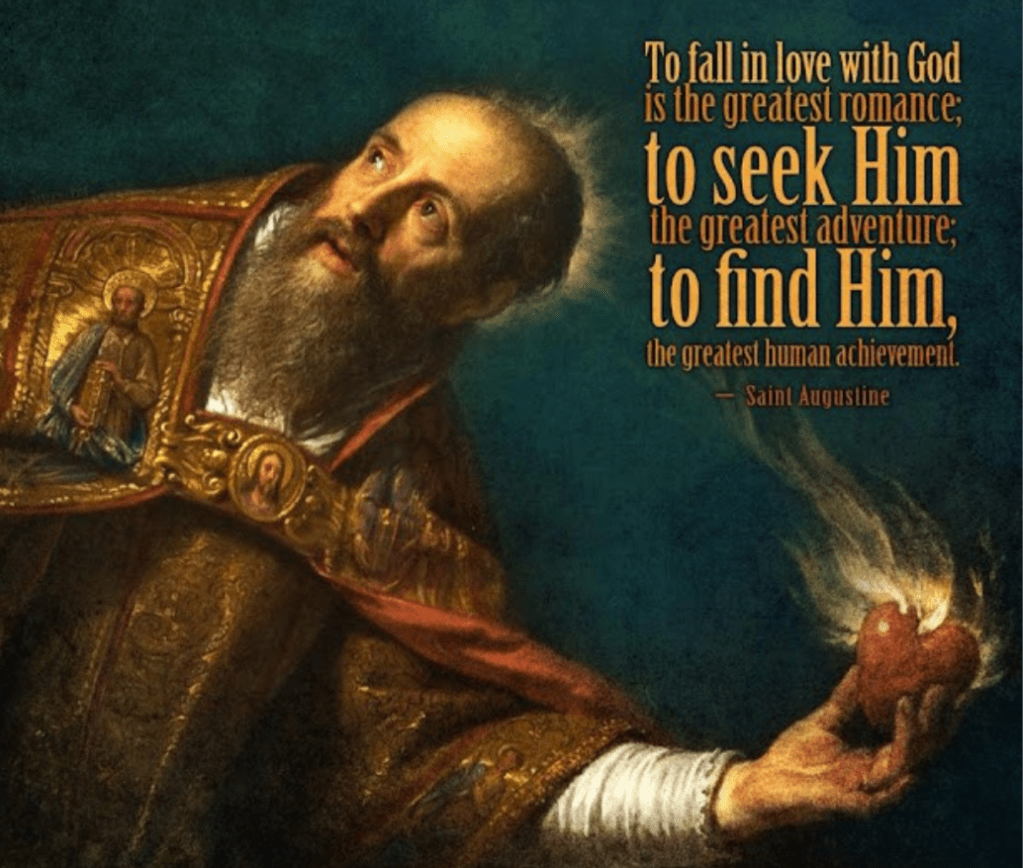
Late have I loved You, O Beauty ever ancient, ever new, late have I loved You! You were within me, but I was outside, and it was there that I searched for you. In my unloveliness I plunged into the lovely things which You created. You were with me, but I was not with You. Created things kept me from You; yet if they had not been in You they would not have been at all. You called, You shouted, and you broke through my deafness. You flashed, You shone, and You dispelled my blindness. You breathed Your fragrance on me; I drew in breath and now I pant for You. I have tasted You, now I hunger and thirst for more. You touched me, and I burned for Your peace.
DAILY MEDITATION
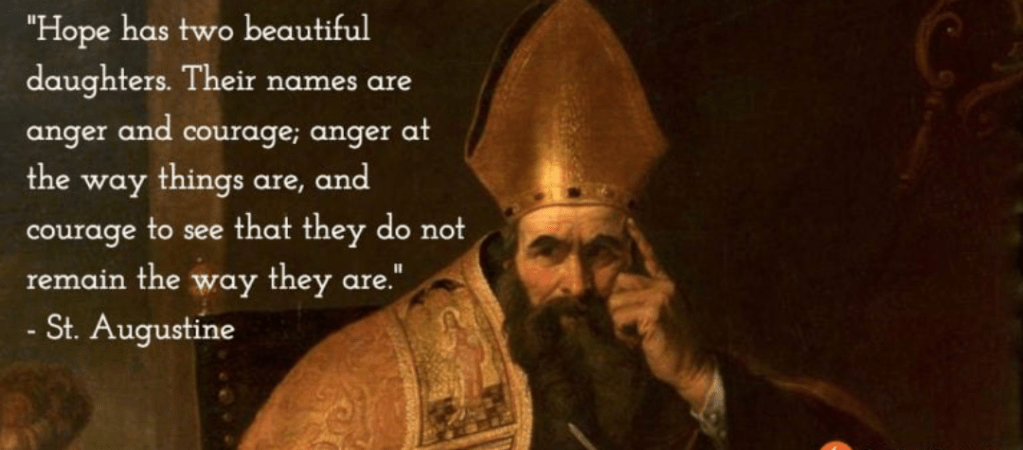
Where then did I find Thee, that I might learn Thee? For in my memory Thou wert not, before I learned Thee. Where then did I they find Thee, that I might learn Thee, but in Thee above me? Place there is none; we go backward and forward, and there is no place. Everywhere, O Truth, dost Thou keep watch over all that consult Thee, and at once respond, though they consult Thee concerning diverse matters. Clearly dost Thou answer, though all do not clearly hear. All consult Thee on what they will, though they hear not always what they will. He is Thy best servant, who does not so much look to hear from Thee what accords with his will, but rather to will what he hath heard from Thee.
Too late I loved Thee, Beauty, so old and yet so new, too late, I loved Thee! And behold, Thou wert within, and I without, and there I sought Thee; and in my deformity rushed amidst those beauteous forms which Thou hast made. Thou wert with me, but I was not with Thee. Things held me far from Thee, which, unless they had their being in Thee, had no being.
Thou didst call, and cry aloud, and break through my deafness. Thou didst blaze forth, and shine, and scatter my blindness. Thou wert fragrant, and I drew my breathe, and pant for Thee. I tasted, and I hunger and thirst. Thou didst touch me, and I burned for Thy peace.
Saint Augustine [+ 420] – convert, philosopher, theologian, prolific author, and one of the Four Great Doctors of the West.
Living as Children of Heaven
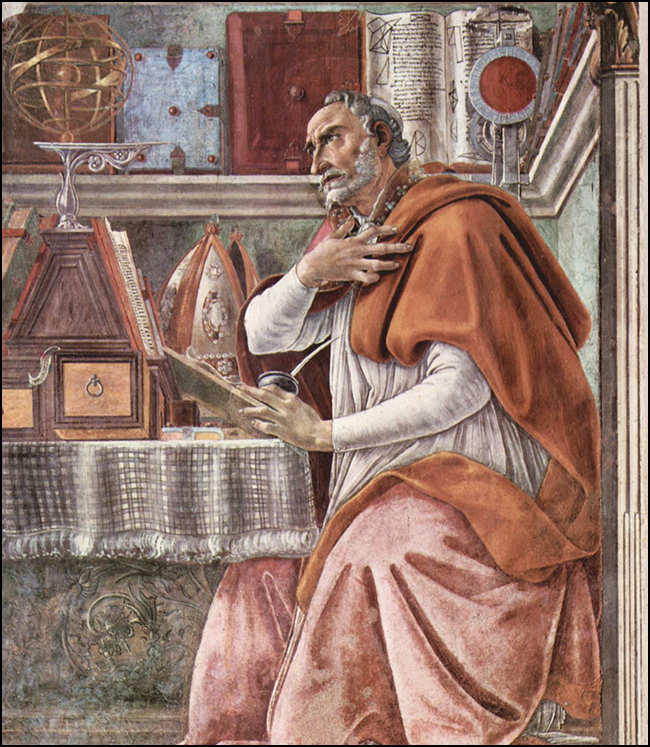
Love is a sweet word but a sweeter deed. We can’t always speak of it, for we have many things to do, and our different activities distract us, so that there is no opportunity for our tongue always to be speaking of love. But one can always keep what one cannot always speak about…. He who praises God with his tongue cannot always do so. He who praises God with his behaviour can always do so. The works of mercy, the warmth of charity, the holiness of devotion, the incorruption of chastity, the modesty of sobriety: these things must always be kept whether we are in public or at home or in the presence of others or in our room or speaking or being silent or doing something or doing nothing. These things must always be kept, because all these virtues which I have named are within. Who is sufficient to name them all? They are like the army of a general who occupies his seat within your mind. For, just as a general does through his army whatever pleases him, so the LORD Jesus Christ, when He begins to dwell in our inner man, uses these virtues as His ministers…..
Be careful not to parade your good deeds before men to attract their notice. Does this mean that, whatever good we do, we should conceal it from the eyes of men and fear that it be seen? If you are afraid that people will see you, you will have no imitators; therefore you should be seen. But that isn’t why you should allow yourself to be seen. The goal of your joy mustn’t be there, nor the end of your gladness, that you should think that you have acquired the whole fruit of your good work when you have been seen and praised. That is nothing. Disdain yourself when you are praised. Let Him who works through you be praised in you. Don’t accomplish whatever good you do for your own praise, then, but for the praise of Him from whom you have the means to do good…. If we ought to conceal our good works lest they be seen by men, where are those words of the LORD in that sermon that He gave on the mount? When He said this, this is what He said there shortly before: your light must shine in the sight of men (Mt 5:16). And He didn’t stop there, He didn’t conclude there, but added: so that, seeing your good works, they may give the praise to your Father in Heaven.
Saint Augustine
Saint Augustine († 430) is called the Doctor of Grace and is one of the most important theologians in the history of the Church. [From The Works of Saint Augustine: A Translation for the 21st Century, Homilies on the First Epistle of John, Boniface Ramsey, o.p., Tr.
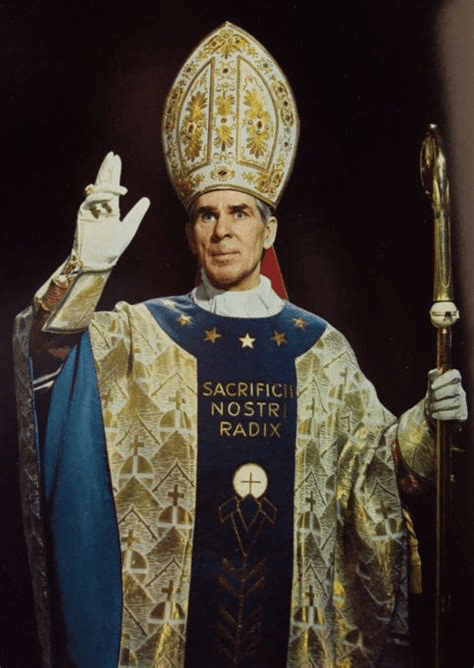
“The refusal to take sides on great moral issues is itself a decision. It is a silent acquiescence to evil. The tragedy of our time is that those who still believe in honesty lack fire and conviction, while those who believe in dishonesty are full of passionate conviction.” – Ven. Archbishop Fulton Sheen
 Daily Reflections
Leave a comment