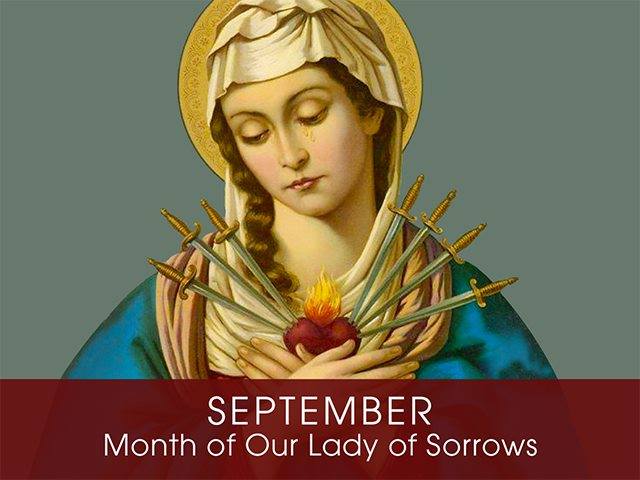
First Friday of the Sacred Heart
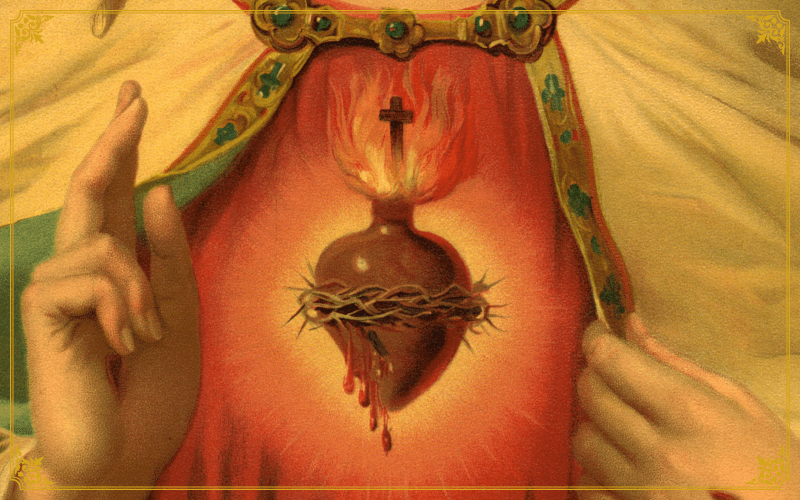
Jeremiah 4:24-26; 8:18; Psalm 85:5
O God, before your blazing anger the whole earth shook with fear.
Have mercy on us, O LORD;
– do not destroy us.
Restore us again, O God, with your saving power,
and do not be angry with us.
– Do not destroy us.
Friday of the Twenty-First Week in Ordinary Time
First Friday of the Month
Friday of the Sacred Heart of Jesus
Saint Giles, Abbot (Traditional)
Twelve Holy Brothers, Martyrs (Traditional)
Why didn’t the wise virgins just share their oil? The parable reveals that God wants each of us, personally and individually, to be transformed by His love (Matthew 25:1-13). As Saint Paul says: “What God wants is for you all to be holy” (1Thess 4:1-8). What the foolish virgins asked was impossible, for a relationship with Jesus cannot be handed over like a product. The depth of their foolishness is shown when they go off to buy oil after hearing that the bridegroom had come. Had they stayed put they could have said: “LORD, LORD, it is late and we have not prepared. But we can still see You, however dimly. Have mercy on us.” The bridegroom Himself would be their Light.
ST. GILES, ABBOT
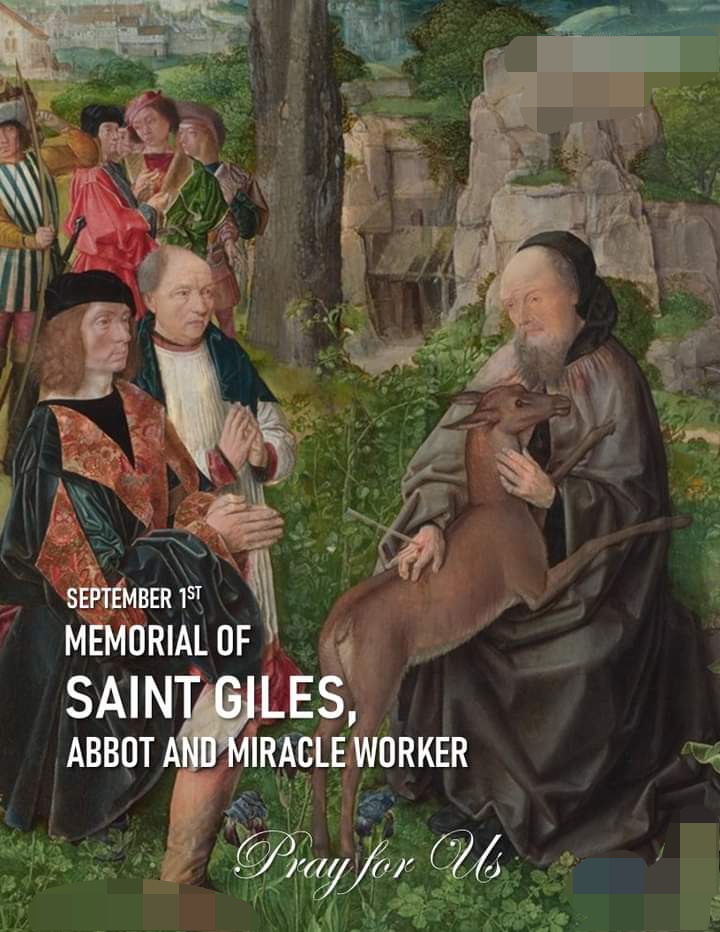
Saint Giles, an Athenian, lived probably in the second half of the Seventh Century. He fled to the south of France, where he lived as a hermit in a vast forest and founded a celebrated monastery in the diocese of Nimes. Saint Urban (Pope) made his feast common to the Universal Church. His feast was kept at Rome with great solemnity with fireworks, music, races through the streets, etc. He invoked for the cure of epilepsy and other diseases. He was so famous on account of his miracles, that a great number of churches were dedicated to him.The Abbey erected in his honour was a magnificent structure and centre of pilgrimage during the Middle Ages.
TWELVE HOLY BROTHERS, MARTYRS
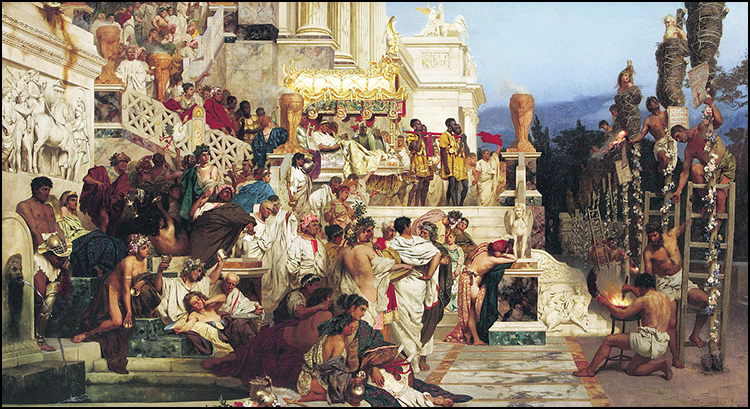
The Twelve Holy Brothers, natives of Africa, suffered at Beneventum in southern Italy, under emperor Valerian, A. D. 258.
From a commentary on Joel by Saint Jerome, Priest and Doctor of the Church
(Lib. 7, 10, 18; 10, 27: CSEL 33, 157-163. 255)
Return to Me
Return to Me with all your heart and show a spirit of repentance with fasting, weeping and mourning; so that while you fast now, later you may be satisfied, while you weep now, later you may laugh, while you mourn now, you may some day enjoy consolation. It is customary for those in sorrow or adversity to tear their garments. The Gospel records that the high priest did this to exaggerate the charge against Our LORD and Saviour; and we read that Paul and Barnabas did so when they heard words of blasphemy. I bid you not to tear your garments but rather to rend your hearts which are laden with sin. Like wine skins, unless they have been cut open, they will burst of their own accord. After you have done this, return to the LORD your God, from Whom you had been alienated by your sins. Do not despair of His mercy, no matter how great your sins, for great mercy will take away great sins.
For the LORD is gracious and merciful and prefers the conversion of a sinner rather than his death. Patient and generous in His mercy, He does not give in to human impatience but is willing to wait a long time for our repentance. So extraordinary is the LORD’s mercy in the face of evil, that if we do penance for our sins, He regrets His own threat and does not carry out against us the sanctions He had threatened. So by the changing of our attitude, He Himself is changed. But in this passage we should interpret “evil” to mean, not the opposite of virtue, but affliction, as we read in another place: Sufficient for the day are its own evils. And, again: If there is evil in the city, God did not create it.
In like manner, given all that we have said above—that God is kind and merciful, patient, generous with His forgiveness, and extraordinary in His mercy toward evil—lest the magnitude of His clemency make us lax and negligent, He adds this word through His prophet: Who knows whether He will not turn and repent and leave behind Him a blessing? In other words, he says: “I exhort you to repentance, because it is my duty, and I know that God is inexhaustibly merciful, as David says: Have mercy on me, God, according to Your great mercy, and in the depths of Your compassion, blot out all my iniquities. But since we cannot know the depth of the riches and of the Wisdom and Knowledge of God, I will temper my statement, expressing a wish rather than taking anything for granted, and I will say: Who knows whether He will not turn and repent?” Since he says, Who, it must be understood that it is impossible or difficult to know for sure.
To these words the prophet adds: Offerings and libations for the LORD our God. What he is saying to us in other words is that, God having blessed us and forgiven us our sins, we will then be able to offer sacrifice to God.
Aflame with the Bridegroom’s Love
Everything can be borne between two Masses. If every morning we eat the Bread of saints, we will be able to face any kind of day. We will plunge into the sea of fire and come out burning, ready to go forth and light fires of love. You are an empty chalice. Every morning you have to be filled. Every morning you offer yourself, your day, your being, and consecrate yourself as a sacrifice to make up what is wanting in the Passion of Christ (cf. Col 1:24). I eat Christ in the morning, and I am eaten up myself through the day.
Communion is the union of man’s soul with God. The source of all strength, our Communions could change the world if the fire of the Holy Spirit were really allowed to fall on the earth, and to renew it through you and me.
Our Faith centres around the Truth that God loved us first, and all we have to do to be fiery apostolic Catholics is to love Him back. If we meditate deeply on the Eucharist, we will distinctly hear the loving, powerful, immense heartbeats of God. We would hear more—we would hear that Heart speaking to us. We would hear our hearts beating in unison with His; we would be united with our LORD and our God.
We take Communion, and we communicate with God. At the same time, it is more than communication—it is an invasion by God. To be invaded by God is Joy. We plunge into the mystery of Love, a reality more real than the air we breathe, than the life we live throughout the day. Let Him kiss me with the kisses of His mouth, begins the Song of Songs. In Holy Communion my LORD and Creator kisses me! No words can describe the Oneness of a soul with God in the Sacrament of the Eucharist. The great miracle at the Marriage Feast at Cana, the changing of water into wine, was a prefiguration of the Holy Eucharist. At each Communion, the LORD invites us to His Wedding Feast. If only we understood and lived by His Love, every day would be a honeymoon with God!
When I receive Our LORD, I experience the nuptial mystery of man and God. Because we are human and simple and ordinary, He chose the image of marriage. “I am the Bridegroom”, says God. I am His, and He is mine. Here begins the Kingdom of God. Through the Holy Eucharist, you will fall in love with God. The more you love God, the more you receive God. The deeper your love becomes, the more your heart opens. You and the Trinity are one.
Servant of God Catherine de Hueck Doherty
Catherine de Hueck Doherty († 1985), born in Russia, established the Friendship House in Harlem, New York, in 1938, and later the Madonna House in Combermere, Canada. [From The People of the Towel and the Water: Restoring the World through Christ in Everyday Life. © 2010, Madonna House Publications, Combermere, Ontario, Canada. Used with permission].
Psalm 24:4; 2 Corinthians 6:6; Colossians 2:14; Joel 2:13
Let everyone turn back to God, pure in heart and mind,
and love Him without deceit,
– that the record of your sins may be blotted out.
Rend your hearts, not your garments,
and return to the LORD your God.
– That the record of your sins may be blotted out.
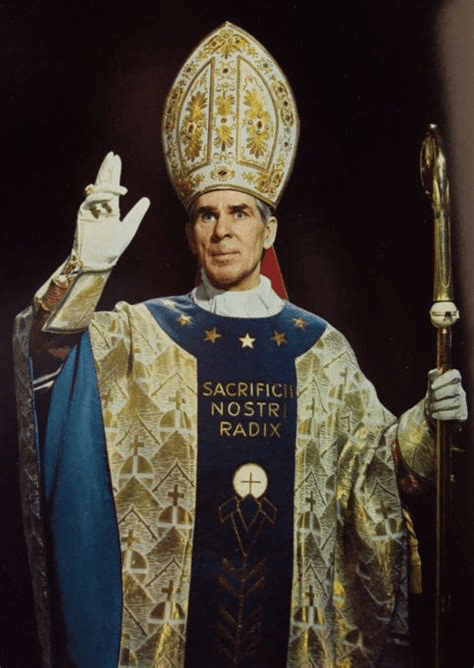
“The refusal to take sides on great moral issues is itself a decision. It is a silent acquiescence to evil. The tragedy of our time is that those who still believe in honesty lack fire and conviction, while those who believe in dishonesty are full of passionate conviction.” – Ven. Archbishop Fulton Sheen
 Daily Reflections
Leave a comment