MEANS TO OBTAIN TRUE
DEVOTION TO OUR LADY
- To make mental prayer on the mysteries of her life, and in her relationship to us.
- To read books written in her praise, and to spread them among others, or to distribute her images or beads.
- To recite her Little Office, Rosary, or any chaplets in her honour.
- To invoke her daily at the Angelus, and by frequent ejaculations, but especially by the Hail Mary.
- To wear one or more of her scapulars, or an image or medal of her.
- To visit her altar, and to pay special reverence to her images.
- To offer Holy Mass or Communion in her honour, or to give alms for a Mass to be said for the same purpose.
- To keep with great devotion her principle feasts, their novenas and octaves.
- To gain indulgences for the souls in purgatory most devoted to her in life.
- To practice some mortification in her honour, especially on Saturday.
- Above all, to imitate her virtues, without which true devotion to her is impossible.
Fr. Francis Xavier Lasance
Reprinted from the September 2023 Issue of Benedictus, the Traditional Catholic Companion.
Hebrews 10:37-38, 39
For yet a little and a very little while,
and He that is to come, will come,
and will not delay.
– But my just man liveth by faith;
But we are not the children of withdrawing unto perdition,
but of faith to the saving of the soul.
– But my just man liveth by faith.
Tuesday of the Twenty-Third Week in Ordinary Time
The Most Holy Name of Mary
Saint Ailbe, Bishop (Ireland)
THE MOST HOLY NAME OF MARY
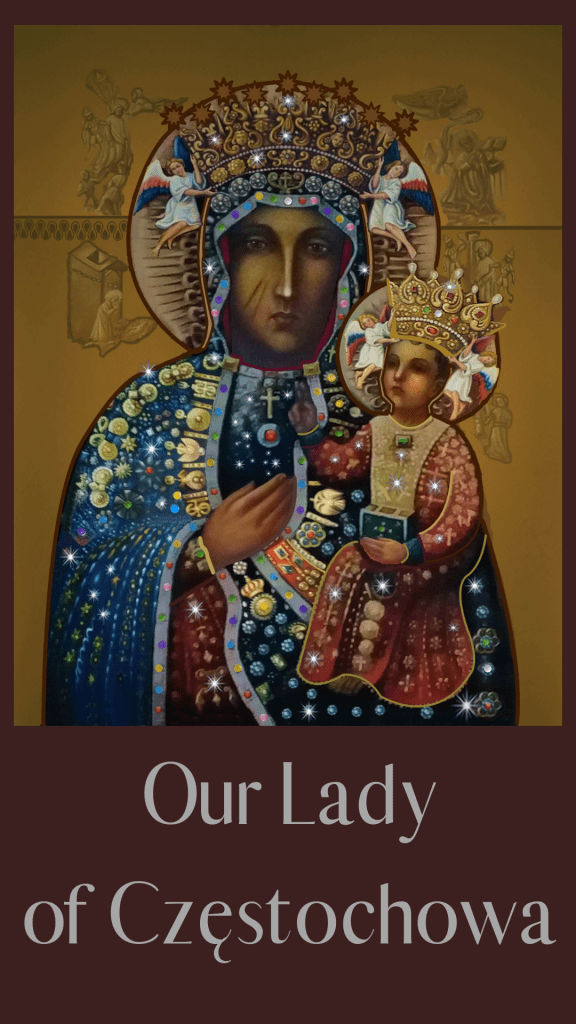
The feast of the Most Holy Name of Mary celebrates the great privileges given to Mary and all the graces we receive through her intercession. To say her name is to utter a word of Hope. This word of Hope proclaims our salvation, for Mary was created to be the Mother of our Saviour. She invites us to call upon her name frequently and persistently, for she delights to hear and answer our prayers. This feast was added to the calendar by Blessed Innocent XI in thanksgiving for the deliverance of Vienna from the Ottoman siege on 12 September 1683. The victorious Christian commander at Vienna, Polish King Jan Sobieski, had previously entrusted his army to Mary’s protection before the image of Our Lady of Częstochowa.
The great victory which the king gained against the Turks under the walls of Vienna, caused the Pope to make this feast obligatory throughout the whole Western Church, for the yearly act of Thanksgiving for the deliverance of Christian Europe.
SAINT AILBE, BISHOP

Bishop and preacher, one of the saints whose life has been woven into the myths and legends of Ireland. He was a known disciple of St. Patrick, and is called Albeus in some records. What is known about Ailbhe is that he was a missionary in Ireland, perhaps sponsored by King Aengus of Munster. He was also the first Bishop of Emily in Munster, Ireland. Legends and traditions abound about his life. One claims that he was left in the woods as an infant and suckled by a wolf. This legend is prompted in part by Ailbhe’s later life. An old she-wolf came to Ailbhe for protection from a hunting party, resting her head upon his breast. He is supposed to have been baptized by a priest in Northern Ireland, possibly in a British settlement. The so called Acts of Ailbhe are filled with traditions that are not reliable. Ailbhe was noted for his charity and kindness, as well as his eloquent sermons. He is beloved in Ireland. Patron of wolves, he died in 528 A.D.
From a treatise on John by Saint Augustine, Bishop and Doctor of the Church
(Tract. 65, 1-3: CCL 36, 490-492)
The New Commandment
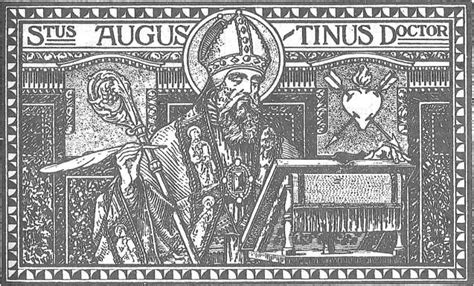
A new commandment I give you, that you love one another. This commandment that He is giving them is a new one, the LORD Jesus tells His disciples. Yet was it not contained in the Old Law, where it is written: You shall love your neighbour as yourself? Why does the LORD call it new when it is clearly so old? Or is the commandment new because it divests us of our former selves and clothes us with the new man? Love does indeed renew the man who hears, or rather obeys its command; but only that love which Jesus distinguished from a natural love by the qualification: As I have loved you.
This is the kind of love that renews us. When we love as He loved us we become new men, heirs of the New Covenant and singers of the new song. My brothers, this was the love that even in bygone days renewed the holy men, the patriarchs and prophets of old. In later times it renewed the blessed apostles, and now it is the turn of the Gentiles. From the entire human race throughout the world this love gathers together into one body a new people, to be the bride of God’s only Son. She is the bride of whom it is asked in the Song of Songs: Who is this who comes clothed in white? White indeed are her garments, for she has been made new; and the source of her renewal is none other than this new commandment.
And so all her members make each other’s welfare their common care. When one member suffers, all the members suffer with him, and if one member is glorified all the rest rejoice. They hear and obey the Lord’s words: A new commandment I give you, that you love one another; not as men love one another for their own selfish ends, nor merely on account of their common humanity, but because they are all gods and sons of the Most High. They love one another as God loves them so that they may be brothers of His Only Son. He will lead them to the goal that alone will satisfy them, where all their desires will be fulfilled. For when God is all in all, there will be nothing left to desire.
This love is the gift of the LORD who said: As I have loved you, you also must love one another. His object in loving us, then, was to enable us to love each other. By loving us Himself, our Mighty Head has linked us all together as members of His own Body, bound to one another by the tender bond of love.
DAILY MEDITATION
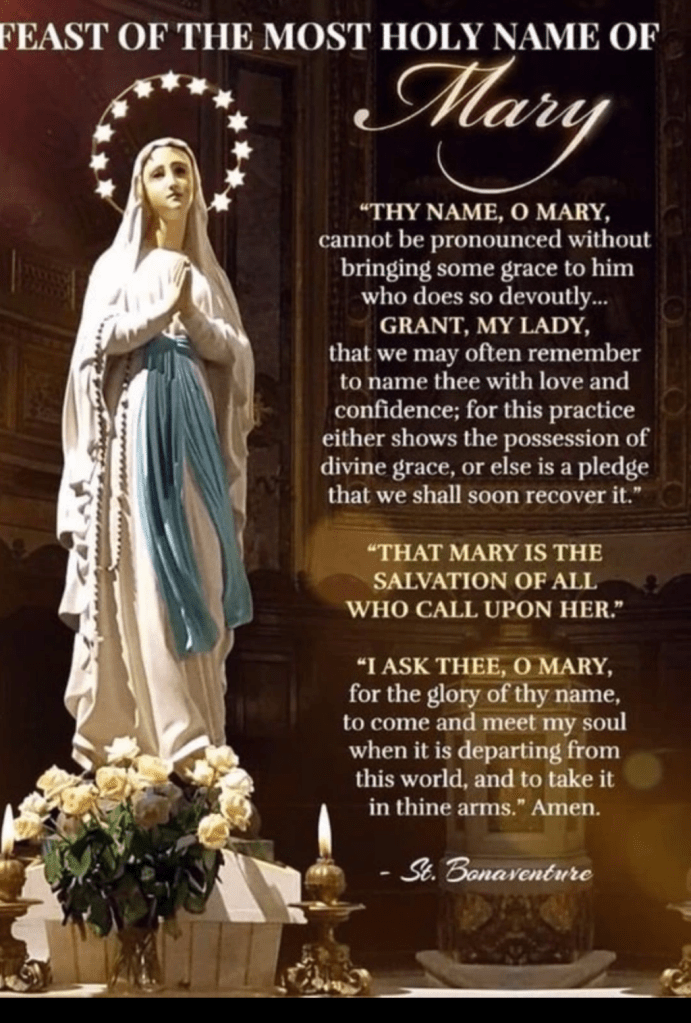
Mary, a name that has been blessed by all generations, has been uttered countless millions of times in prayer. New day passes that the devout and faithful children of the Blessed Virgin do not cry out their innumerable petitions to her. If only we had the reverence of an angel, the fervour of a saint, or the zeal of persevering attention, when we address her! A prayer from the heart is quick to reach her Heart. At all times, then, let us devoutly say the following prayer:
Remember, O most gracious Virgin Mary, that never was it known, that anyone who fled to thy protection, implored thy help, and sought thy intercession, was left unaided. Inspired by this confidence, I fly unto thee, O Virgin of virgins, my Mother! To thee do I come; before thee I stand, sinful and sorrowful. O Mother of the Word Incarnate! Despise not my petitions, but in thy mercy, hear and answer me. Amen.
Resolution: To have a deep respect for all holy names.
Father James McElbone [d. 1963] – American Holy Cross priest, seminary professor, author and editor of several theological and devotional Works.
The Powerful Prayers of the Woman Named Mary
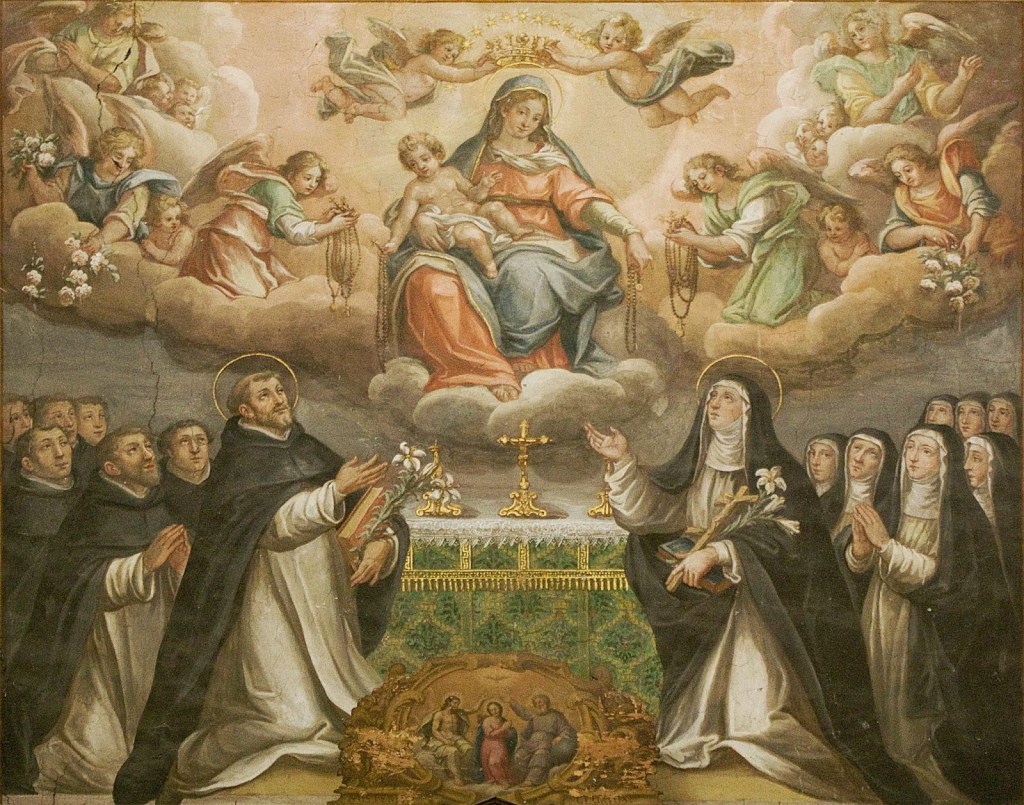
The happiness of the blessed in Heaven would not be complete if they did not know what happens on earth to the extent to which it concerns them by reason of their office, their role, or their relations with men. Such knowledge is the object of a legitimate desire which must find its satisfaction in beatitude, and with all the more reason when the knowledge they desire is of men’s spiritual needs and is therefore desired in Charity: it is in charity that the saints desire men’s salvation so that they may glorify God with them for all Eternity and share thus in their happiness. Fathers and mothers, for example, know from Heaven the needs of their children, especially those which bear on their salvation. The same may be said of the founders of religious institutes. With all the more reason may the same be said of our Lady, who has the highest degree of glory after her Son: as Mother of all men she must know everything which bears directly or indirectly on the supernatural life which she has been commissioned to give us and to nourish in us. This universal knowledge, certain and detailed, of all that concerns our destiny—our thoughts, desires, the dangers in which we are, the graces we need, temporal affairs which have some connection with our salvation—is a prerogative which belongs to Mary because of her Motherhood of God and her spiritual motherhood of men.
Knowing our spiritual needs and even the temporal needs which are connected with our salvation Mary is obviously impelled by her great charity to intercede for us. If a mother but suspects that her child needs her help she flies to its side….
Bossuet brings out the underlying principles very well in his sermon on the Compassion of Our Lady, when he recalls the two texts: God loved the world so much that He gave His only Son (Jn 3:16) and Since God did not spare His own Son, but gave Him up to benefit us all, we may be certain, after such a gift, that He will not refuse anything He can give (Rm 8:32). Mary in her turn has loved God and souls to the extent of delivering up her Son, Jesus, on Calvary. She is in consequence all-powerful with God the Father and with Jesus to obtain all that is necessary for the salvation of those who turn to her mediation. One paragraph of the sermon deserves to be quoted: “Intercede for us, O Blessed Virgin Mary: you have in your hands, if I may so speak, the key that opens the treasury of the divine blessings. That key is your Son: He closes and no one can open: He opens and no one can close: it is His innocent blood which makes us to be inundated with heavenly graces. And to whom will He give the right to that Blood, if not to her from whom He drew all His blood…. For the rest, you live in such perfect union of love with Him that it is impossible that your prayer should not be heard.”
Father Reginald Garrigou-Lagrange, o.p.
Father Garrigou-Lagrange († 1964) was a prolific Dominican theologian and spiritual writer. He was the theology doctoral advisor of the future Saint John Paul II. [From The Mother of the Saviour and Our Interior Life.Translation by Fr. Bernard J. Kelly © Baronius Press. Original French edition, La mère du Sauveur et notre vie intérieure. © The Dominican Province of France. Used with permission.]
John 4:21; Matthew 22:40
God has given us this Commandment:
– whoever loves God must also love his brother, alleluia.
On these two Commandments rest the whole law and the prophets,
– Whoever loves God must also love his brother, alleluia.
“The refusal to take sides on great moral issues is itself a decision. It is a silent acquiescence to evil. The tragedy of our time is that those who still believe in honesty lack fire and conviction, while those who believe in dishonesty are full of passionate conviction.”– Ven. Archbishop Fulton Sheen
 Daily Reflections
Leave a comment