
Antiphon: Behold, the Cross of the LORD! Fly, ye ranks of the adversary! The Lion of the tribe of Judah, the Root of David, hath prevailed. Alleluia.
Galatians 6:14; Hebrews 2:9
But God forbid that I should glory, save in the Cross of Our LORD Jesus Christ;
by Whom the world is crucified to me and I to the world. – that, through the grace of God, He might taste death for all.for the suffering of death, crowned with glory and honour.
– that, through the grace of God, He might taste death for all.
Feast of the Exaltation of the Holy Cross
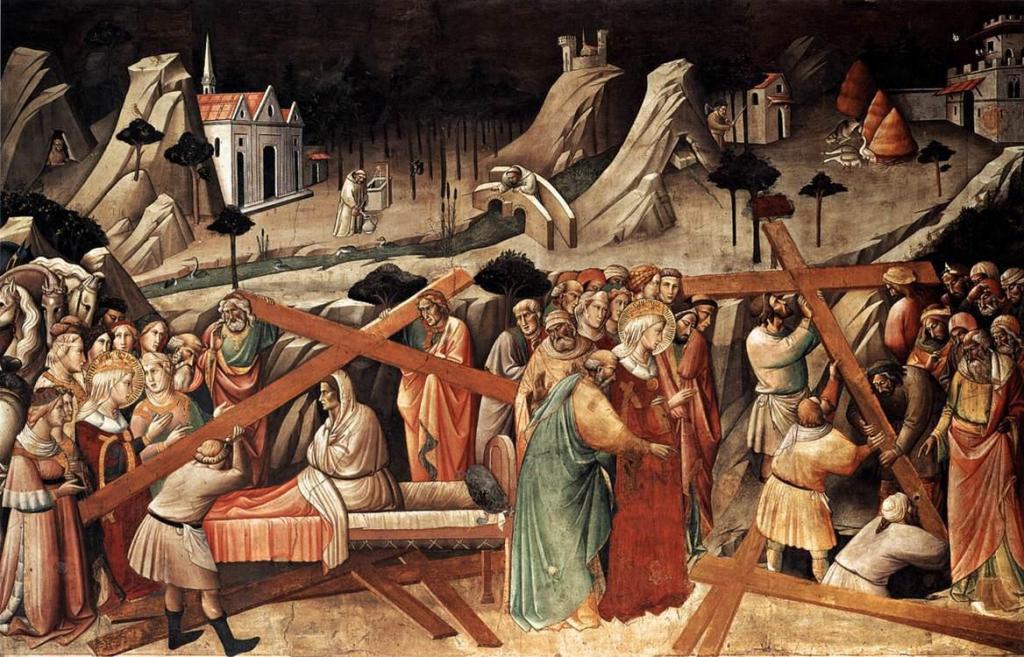
The Exaltation of the Cross proclaims that “the event of the Cross and Resurrection abides and draws everything towards life” (CCC 1085). We exalt Christ’s Cross whenever we freely take up our own cross, filled with the certainty that the ultimate meaning and fulfillment we crave in life comes to us through the Cross. “With the Cross we are freed from the restraint of the enemy, and we clutch on to the strength of salvation” (Saint Theodore the Studite). For salvation means that death itself has died and that we have been freed from sin. “We cannot produce or give any other fruit”, writes Saint Catherine of Siena, “but the fruit we have taken from the Tree of Life.” No wonder that “the Sign of the Cross makes kings of all those reborn in Christ” (Saint Leo the Great).
In ancient times, under the name of “the Exaltation,“ the finding of the Holy Cross was celebrated on September 14th in the West, as is still done in the East. But when, in the eighth century, the feast of May 4 was instituted, that of September 14 was retained as one of Thanksgiving for the recovery, a hundred years earlier (629 A.D.), by the great Emperor Heraclius, of the inestimable relic, from the infidel Chosroes, King of Persia, who had possessed himself of the holy relic, when pillaging the city and churches of Jerusalem. In the East, the finding of the Holy Cross by Helena, the mother of Constantine, was celebrated with great splendour. Particles of the true Cross, were, in time, brought from Jerusalem, to many other churches in the East and in the West. These churches sought to imitate the solemn ceremonies in use at Jerusalem, in order to do homage to the Holy Cross, the triumphant standard of our salvation.
From a discourse by Saint Andrew of Crete, Bishop
(Oratio 10 in Exaltatione sanctae crucis: PG 97, 1018-1019, 1022-1023)
The Cross is Christ’s Glory and Triumph
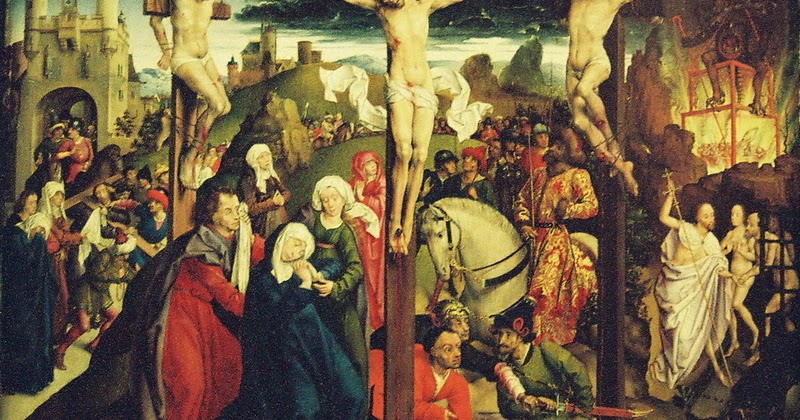
We are celebrating the feast of the Cross which drove away darkness and brought in the light. As we keep this feast, we are lifted up with the crucified Christ, leaving behind us earth and sin so that we may gain the things above. So great and outstanding a possession is the Cross that he who wins it has won a treasure. Rightly could I call this treasure the fairest of all fair things and the costliest, in fact as well as in name, for on it and through it and for its sake the riches of salvation that had been lost were restored to us.
Had there been no Cross, Christ could not have been crucified. Had there been no Cross, Life itself could not have been nailed to the tree. And if life had not been nailed to it, there would be no streams of Immortality pouring from Christ’s side, Blood and Water for the world’s cleansing. The legal bond of our sin would not be canceled, we should not have attained our freedom, we should not have enjoyed the fruit of the Tree of Life and the Gates of Paradise would not stand open. Had there been no Cross, death would not have been trodden underfoot, nor hell despoiled.
Therefore, the Cross is something wonderfully great and honourable. It is great because through the Cross the many noble acts of Christ found their consummation—very many indeed, for both His miracles and His sufferings were fully rewarded with victory. The Cross is honourable because it is both the sign of God’s suffering and the trophy of His victory. It stands for His suffering because on it He freely suffered unto death. But it is also His trophy because it was the means by which the devil was wounded and death conquered; the barred gates of hell were smashed, and the Cross became the one common salvation of the whole world.
The Cross is called Christ’s glory; it is saluted as His triumph. We recognize it as the Cup He longed to drink and the climax of the sufferings He endured for our sake. As to the Cross being Christ’s glory, listen to His words: Now is the Son of Man glorified, and in Him God is glorified, and God will glorify Him at once. And again: Father, glorify Me with the glory I had with You before the world came to be. And once more: Father, glorify Your name. Then a Voice came from heaven: I have glorified it and I will glorify it again. Here He speaks of the Glory that would accrue to Him through the Cross. And if you would understand that the Cross is Christ’s triumph, hear what He Himself also said: When I am lifted up, then I will draw all men to Myself. Now you can see that the Cross is Christ’s Glory and Triumph.
The Inheritance of the Cross
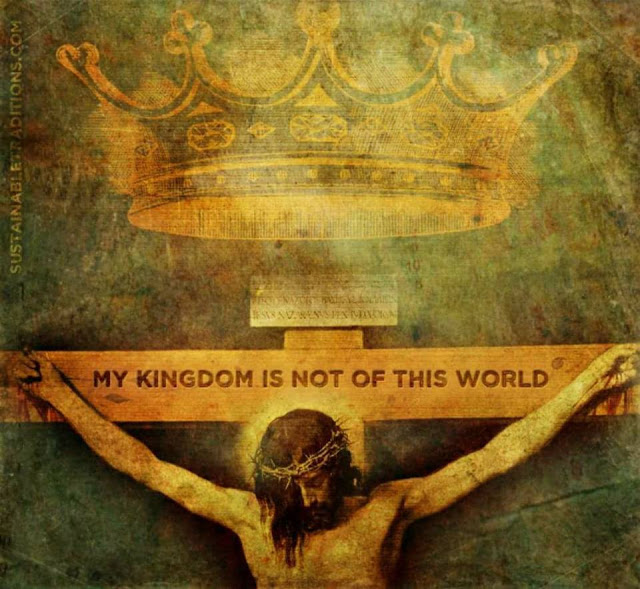
In the Prætorium, Jesus Christ embraced the Cross; on the road to Calvary, He carried it lovingly upon His shoulders; on the sacred summit, He espoused it in an Eternal and Indissoluble manner. Sweet nails which fastened the Beloved for ever upon His Cross! Neither anything nor anyone will ever separate that which eternal love has joined together. Ever since the bloody and fruitful nuptials of Calvary, one who seeks love must be nailed upon the cross; one who loves suffering must unite himself with Christ; and one who desires spiritual fruitfulness must be transformed lovingly into Jesus and offer himself with Jesus for immense suffering. Jesus Christ Crucified is love enthroned, suffering that darts victorious to Heaven, fruitfulness which, by attracting all souls upward, pours into them the Life of Heaven.
Everything is consummated on Calvary: the Truth to which Jesus came to give testimony, the Fire which He came to bring to the earth, the Life for which souls await hopefully. Who could guess that light would shine in the shadows of pain, that life would rise from death, and that the fire of love would burn among the ashes of sorrow and in the ice of death? Rightly did Saint Paul say that he wanted to know nothing else than Jesus Christ and Him Crucified. Is there, in fact, anything worthy of knowledge and love outside of Christ? Can one attain proficiency in this science and art without climbing to the top of Calvary?…
[When] Mary holds the lifeless body in her arms, in her heart she keeps the immense sorrow of her Son, which He left her as a precious bequest. The chain of love and suffering which formed His mortal life will continue upon earth. The final link of His soul will intertwine itself mysteriously with that first link which is the Immaculate Heart of Mary. Upon leaving her as a bequest to John, He left her the sorrow of His soul. At the foot of the blood-stained, solitary Cross, around the Sacred, despoiled body that Mary holds in her maternal arms, while the faithful few contemplate the Holy Victim, the cross-bearers are born. They will be perpetuated in the world by preserving the divine inheritance of suffering and of love.
Servant of God Luis M. Martinez
Archbishop Martínez († 1956) was a spiritual author and the first official Primate of Mexico. He is the author of the recently translated work Am I Not Your Mother?: Reflections on Our Lady of Guadalupe, published by Magnificat. [From Only Jesus, Sister Mary St. Daniel, b.v.m., Tr. ©
DAILY MEDITATION
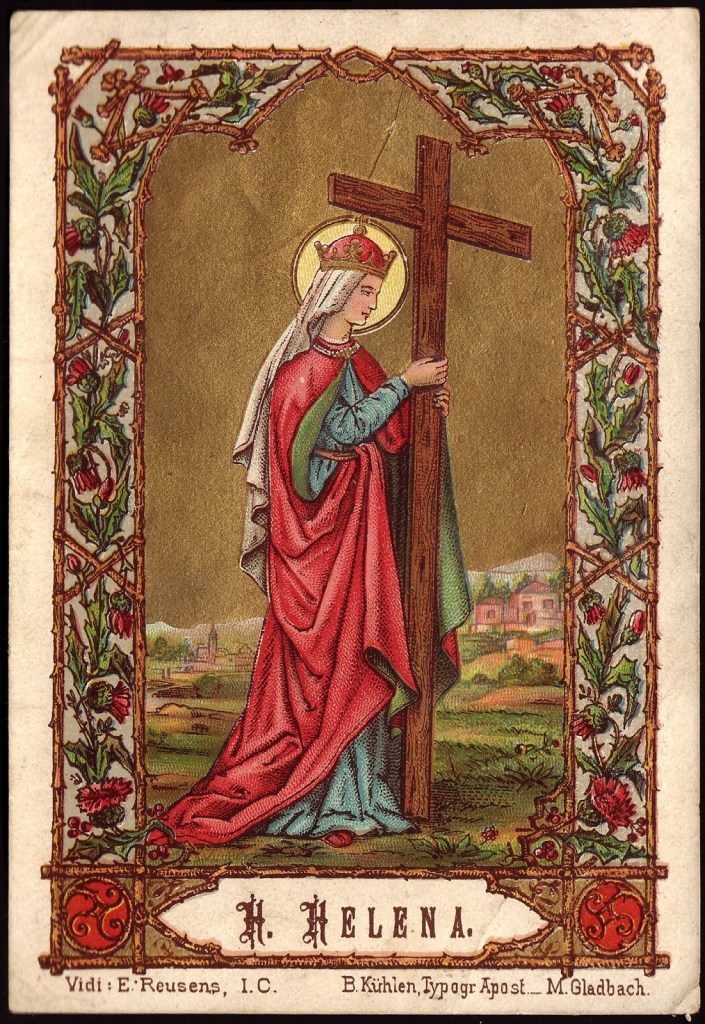
Lactantius related that some Christian servants were attending their masters at a pagan sacrifice made the Sign of the Cross and thus chased off the demons so that the soothsaying could not take place. When the pagan priests understood what it happened, they caused the masters to become angry with the Christian religion and to cause countless injuries to the Church. Lactantius concluded his account with this argument against paganism: “The pagans said that their gods did not flee from the Cross because of fear, but because of hatred. Yes,” replied Lactantius, “as if someone can hate another for any reason other than that the other can hurt him. If these gods had any majesty at all, they would torment and afflict those they hated rather than flee them. Yet as they cannot approach those on whom they see the heavenly mark, nor injure those whom the immortal standard guards like in unassailable rampart, they are troubled and make their attack by means of the hands of others. Since they confess the truth of this fact, we are indeed victors.“…
The Cross has great power against the enemy for two reasons: the one is that it represents the death of the Saviour Who abased and subjugated him, which this proud being hates and fears in the extreme; the other is that the Cross is a brief and powerful invocation of the Redeemer which can be employed in every occasion suitable for prayer.
St. Francis de Sales [+1622] – The great French bishop of Geneva and Apostle to the Calvinists, declared a Doctor of the Church in 1877.
“The refusal to take sides on great moral issues is itself a decision. It is a silent acquiescence to evil. The tragedy of our time is that those who still believe in honesty lack fire and conviction, while those who believe in dishonesty are full of passionate conviction.” – Ven. Archbishop Fulton Sheen
 Daily Reflections
Leave a comment