Ezekiel 1:26, 3:12; Apocalypse 5:13
And above the firmament, was the likeness of a throne,
and upon it was seated one as of the appearance of a man above it;
and I heard behind me the voice of a great commotion, saying:
– Blessed be the glory of the LORD, from His place.
To Him that sitteth on the throne, and to the Lamb,
benediction, and honour, and glory and power for ever and ever.
– Blessed be the glory of the LORD, from His place.
Twenty-Fourth Sunday in Ordinary Time
Sixteenth Sunday After Pentecost (Traditional)
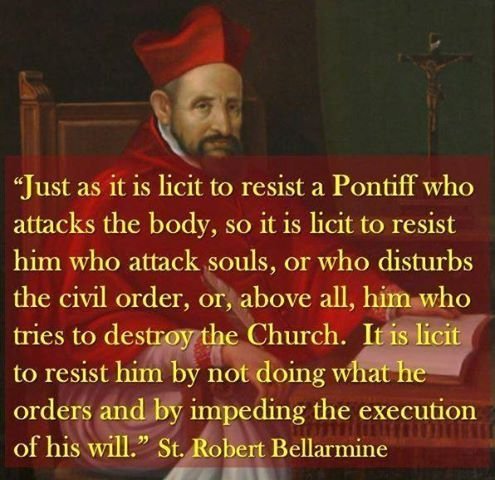
Saint Robert Bellarmine, Bishop, Confessor, Doctor of the Church
Commemoration of the Imprinting of the Holy Stigmata on the Body of St. Francis (Traditional)
Even with his newfound wealth, the forgiven servant says to his fellow servant, “Pay what you owe me.” In doing so he refuses “to have pity on [his] fellow servant”. However, “he who exacts vengeance will experience the vengeance of the LORD, who keeps strict account of sin.” The logic of mercy is very simple: “Forgive your neighbour the hurt he does you, and when you pray, your sins will be forgiven.” Thus, we do not live for ourselves rather, “we live for the LORD” and by the Lord. The “LORD both of the dead and of the living” will endow us with the power to forgive others as He Himself does. The desire to forgive others—even when painful wounds remain with us—is already the indication that God’s mercy is present in our hearts. United to Jesus, we dare to “demand compassion from the LORD.”
TRADITIONAL:
All the faithful in the Catholic Church, assisted by the Grace of God, which they humbly implore, should always seek the perfection of their souls.
That Christ Our LORD, may dwell by faith in our hearts, that to Him, be glory, and to the Father and the Holy Ghost, in the Church unto all generations, is the theme of the Epistle. [Ephesians 3:13–21].
Jesus heals a man with dropsy. Short parable showing that God exalts whosoever humbles himself [Luke 14:1–11].
SAINT ROBERT BELLARMINE, BISHOP, CONFESSOR, DOCTOR OF THE CHURCH
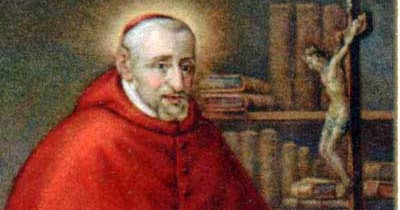
Born 4 October 1542 at Montepulciano, Tuscany, Italy Roberto Francesco Romulo was the third of ten children of Vincenzo Bellarmine and Cinzia Cervini, a family of impoverished nobles. His mother, a niece of Pope Marcellus II, was dedicated to almsgiving, prayer, meditation, fasting, and mortification. Robert suffered assorted health problems all his life. Educated by Jesuits as a boy, he joined the Jesuits on 20 September 1560 over the opposition of his father who wanted Robert to enter politics. He studied at the Collegio Romano from 1560 to 1563, Jesuit centres in Florence, Italy in 1563, then in Mondovi, Piedmont, the University of Padua in 1567 and 1568, and the University of Louvain, Flanders in 1569. He was ordained a priest on Palm Sunday, 1570 in Ghent, Belgium.
He began his ministry as a professor of theology at the University of Louvain from 1570 to 1576. At the request of Pope Gregory XIII, he taught polemical theology at the Collegio Romano from 1576 to 1587. While there he wrote Disputationes de Controversiis Christianae Fidei adversus hujus temporis hereticos, the most complete work of the day to defend Catholicism against Protestant attack. He became Spiritual director of the Roman College from 1588. He taught Jesuit students and other children, writing a children’s catechism, Dottrina cristiana breve. He wrote a catechism for teachers, Dichiarazione piu copiosa della dottrina cristiana. He was confessor of Saint Aloysius Gonzaga until the saint’s death, then worked for the youth’s canonization. In 1590 he worked in France to defend the interests of the Church during a period of turmoil and conflict. Appointed as a member of the commission for the 1592 revision of the Vulgate Bible, he served as rector of the Collegio Romano from 1592 to 1594. He served as Jesuit provincial in Naples, Italy from 1594 to 1597. He served as theologian to Pope Clement VIII from 1597 to 1599. He was appointed examiner of bishops and consultor of the Supreme Sacred Congregation of the Roman and Universal Inquisition in 1597. He was strongly concerned with discipline among the bishops. Created Cardinal-priest on 3 March 1598 by Pope Clement VIII, he lived an austere life in Rome, giving most of his money to the poor. At one point he used the tapestries in his living quarters to clothe the poor, saying that “the walls won’t catch cold.”
He defended the Apostolic See against anti-clericals in Venice, Italy, and the political tenets of King James I of England. He wrote exhaustive works against heresies of the day. He took a fundamentally democratic position—authority originates with God, is vested in the people, who entrust it to fit rulers—a concept which brought him trouble with the kings of both England and France. He helped Saint Francis de Sales obtain formal approval of the Visitation Order. As a noted preacher, he became Archbishop of Capua, Italy in 1602. He participated in the two conclaves of 1605. He was involved in disputes between the Republic of Venice and the Vatican in 1606 and 1607 concerning clerical discipline and Vatican authority. He was also involved in the controversy between King James I and the Vatican in 1607 and 1609 concerning control of the Church in England. He authored the Tractatus de potestate Summi Pontificis in rebus temporalibus adversus Gulielmum Barclaeum, in opposition to Gallicanism. He opposed action against Galileo Galilei in 1615, and established a friendly correspondence with him, but was forced to deliver the order for the scientist to submit to the Church. Part of the conclave of 1621, he was considered for Pope. As a theological advisor to Pope Paul V, he was also head of the Vatican library, prefect of the Sacred Congregation of the Rites and prefect of the Sacred Congregation of the Index. He was proclaimed a Doctor of the Church on 17 September 1931.
COMMEMORATION OF THE IMPRINTING OF THE HOLY STIGMATA ON THE BODY OF ST. FRANCIS
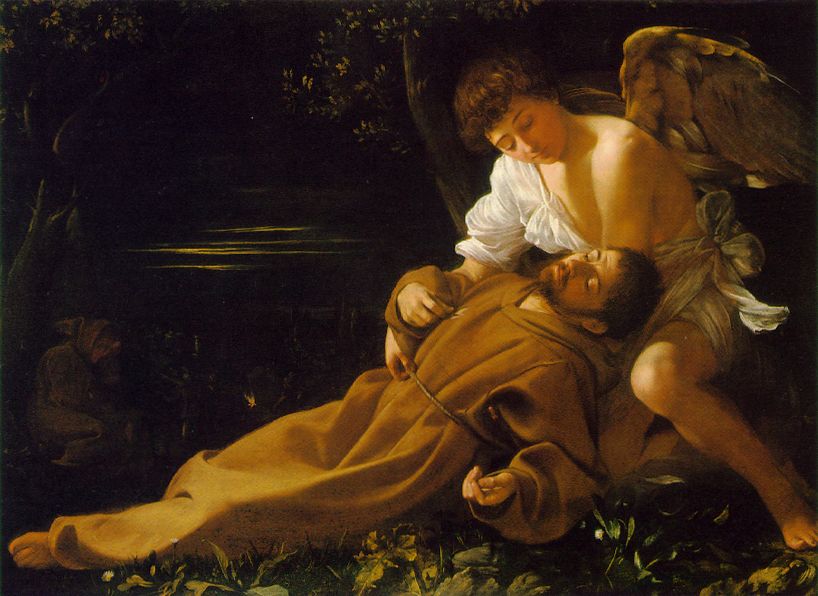
Two years before his death, while at prayer on Mount Alvernia, the seraphic Patriarch Saint Francis of Assisi, was rapt in contemplation, and received in his own body the impression of the sacred Wounds of Christ. Pope Benedict XI ordered the feast of the Stigmata of Saint Francis to be observed on September 17. Pope Paul V extended it to the whole Catholic world.
From a treatise On the Ascent of the Mind to God by Saint Robert Bellarmine, Bishop and Doctor of the Church
(Grad. 1: Opera omnia 6, edit. 1862, 214)
Incline my heart to Your Decrees
Sweet LORD, You are meek and merciful. Who would not give himself wholeheartedly to Your service, if he began to taste even a little of Your fatherly rule? What command, LORD, do You give Your servants? Take My yoke upon you, you say. And what is this yoke of Yours like? My yoke, You say, is easy and My burden light. Who would not be glad to bear a yoke that does not press hard but caresses? Who would not be glad for a burden that does not weigh heavy but refreshes? And so you were right to add: And you will find rest for your souls. And what is this yoke of Yours that does not weary, but gives rest? It is, of course, that first and greatest commandment: You shall love the LORD your God with all your heart. What is easier, sweeter, more pleasant, than to love Goodness, Beauty and Love, the fullness of which You are, O LORD, my God?
Is it not true that You promise those who keep Your Commandments a reward more desirable than great wealth and sweeter than honey? You promise a most abundant reward, for as Your apostle James says: The LORD has prepared a crown of life for those who love Him. What is this crown of life? It is surely a greater good than we can conceive of or desire, as Saint Paul says, quoting Isaiah: Eye has not seen, ear has not heard, nor has it so much as dawned on man what God has prepared for those who love Him.
Truly then the recompense is great for those who keep Your Commandments. That First and greatest Commandment helps the man who obeys, not the God who commands. In addition, the other Commandments of God perfect the man who obeys them. They provide him with what he needs. They instruct and enlighten him and make him good and blessed. If you are wise, then, know that you have been created for the glory of God and your own Eternal Salvation. This is your goal; this is the centre of your life; this is the treasure of your heart. If you reach this goal, you will find happiness. If you fail to reach it, you will find misery.
May you consider truly good whatever leads to your goal and truly evil whatever makes you fall away from it. Prosperity and adversity, wealth and poverty, health and sickness, honours and humiliations, life and death, in the mind of the wise man, are not to be sought for their own sake, nor avoided for their own sake. But if they contribute to the glory of God and your Eternal happiness, then they are good and should be sought. If they detract from this, they are evil and must be avoided.
DAILY MEDITATION
“He that humbleth himself shall be exalted“ [ Gospel]. The humble shall be filled with “all the fulness of God” [Epistle]. If our growth in grace has not flourished, it is because we laid no foundation in Humility. This fact the Liturgy wishes to teach us through today’s Gospel. Jesus is invited to the house of a respectable Pharisee, where he meets a man who is suffering from dropsy. Jesus touches him and heals him, and then turns to the Pharisees who are at table with Him. He noticed how “they chose the first seat at the table.“ “ When thou art invited to a wedding, sit not down in the first place, lest perhaps one more honourable than thou be invited by him….. Sit down in the lowest place, that when he who inviteth thee cometh, he may say to thee: Friend, go up higher. Then shalt, thou have glory before them that sit at table with thee.“ This was the sin of the Pharisees: they wished to be honoured and highly esteemed. This is also our sickness, our dropsy: we are proud, we esteem ourselves better than others. As long as we maintain this attitude, the life of Faith and Charity cannot strike deep roots in our souls, the LORD cannot impart His life to us in its fullness. We are filled only with ourselves, “For God resisteth the proud“ [1Peter 5:5]. “Everyone that exalteth himself shall be humbled, and he that humbleth himself shall be exalted “[Gospel].
True progress and growth in the life of grace depends on humility and our willingness to be among the least. Only the humble can understand “the breath, and the length and height and depth” of the mystery of our life in Christ. Only the humble comprehend “the charity of Christ which surpasseth all knowledge.“ only the humble have room to be filled with “all the fulness of God” and with the divine life of grace. Only the power of Christ “is able to do all things more abundantly than we desire or understand,” and Christ thus acts only in the humble. Only the humble know their own unworthiness and helplessness, and come to the LORD‘s supper, the Holy Eucharist, in this spirit, where Christ touches these who are sick and heals them.
Dom Benedict Baur (d. 1963) – German Benedictine, respected theologian, and archabbot of Saint Martin’s Abby in Bueron.
The Importance—and Power—of Forgiveness
In Saint Matthew we read: And forgive us our debts, as we have forgiven those who are in debt to us; and in Saint Luke: forgive us our sins, for we ourselves forgive each one who is in debt to us. It is the good news of the remission of sins. What a marvel! A movement of our hearts (not easy, it is true, the most difficult perhaps for human nature) suffices for the Father in Heaven to pardon the disappointments and wounds we have inflicted on His love. He has pledged it; in His name the Son has promised it to us. It is a fundamental law of the divine economy taught us by the Gospel. How God loves that we love one another! “It suffices that we pardon to have the assurance of divine pardon” (Servant of God Marie-Joseph Lagrange, o.p.). If I truly pardon there is no doubt that I shall be, that I am already, pardoned….
We are here at the heart of the Gospel…. There is no other commentary on the fifth petition [of the Our Father] than the Gospel itself. Immediately after transmitting to us the LORD’s Prayer, Saint Matthew’s Gospel continues: Yes, if you forgive others their failings, your heavenly Father will forgive you yours; but if you do not forgive others, your Father will not forgive your failings either.. The parallel passage is given in Mark in another place, on the occasion of the parable of the barren fig tree: when you stand in prayer, forgive whatever you have against anybody, so that your Father in Heaven may forgive your failings too…. It is said in Proverbs in a text taken up by Saint Paul: If your enemy is hungry, give him something to eat; if thirsty, something to drink. By this you heap red-hot coals on his head (Pr 25:21-22; Rm 12:20). Mysterious coals—not of anger certainly, otherwise how could Proverbs add: and the LORD will reward you, and Saint Paul: Resist evil and conquer it with good. In doing good to our enemies we entrust them to God, we call down on their heads the fire of the divine initiatives and attentions…. If they let themselves be won by grace and mend their ways and repent of their sins before God, they will receive the effect of the flames of mercy, in accordance with our wish, and the sins they have committed against us will be forgiven. In forgiving those who have offended us we work in a certain (preparatory) manner that in them evil be overcome by good and that they receive God’s pardon; we contribute, to the extent that it is in us, to increase the sum of good on earth and to cause the work of the Prince of Peace to be accomplished there.
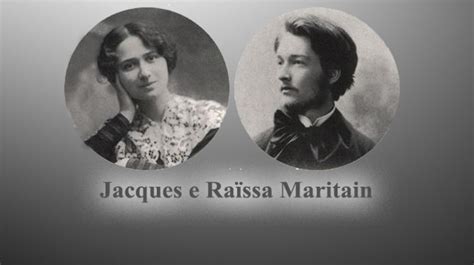
Raïssa Maritain
Raïssa Maritain († 1960) was born in Russia and spent her life in France. She was a convert to Catholicism and the wife of philosopher Jacques Maritain. [From Prayer and Intelligence & Selected Essays. ©]
Malachias 2:7; Titus 1:7, 9
For the lips of the priest shall keep knowledge, and they shall seek the law at his mouth,
– because he is the Angel of the LORD of hosts.
For a bishop must be without crime, as the steward of God,
that he may be able to exhort in sound doctrine.
– because he is the Angel of the LORD of hosts.
“The refusal to take sides on great moral issues is itself a decision. It is a silent acquiescence to evil. The tragedy of our time is that those who still believe in honesty lack fire and conviction, while those who believe in dishonesty are full of passionate conviction.” – Ven. Archbishop Fulton Sheen
 Daily Reflections
Leave a comment