Ezechiel 3:17; 2:6, 8; 3:8
Son of man, I have made thee a Watchman to the house of Israel.
and thou shalt hear the Word out of My mouth, and shall tell it to them from Me.
– Neither be thou afraid of their words
neither be thou dismayed at their looks.
Behold I have made Thy face stronger than their
faces: and thy forehead harder than their foreheads .
– Neither be thou afraid of their words
neither be thou dismayed at their looks.
Monday of the Twenty-Fourth Week in Ordinary Time
Saint Joseph of Cupertino, Confessor (Traditional)
Saint Paul asks that “there should be prayers offered for everyone—petitions, intercessions, and thanksgiving” (1 Timothy 2:1-8). All prayer, in effect, mirrors the actions of the elders who “pleaded earnestly with Him” to come (Luke 7:1-10). Even though the centurion is never face to face with Jesus, he grows from faith to greater faith. LORD Jesus, say the word. Heal my wounds so that my soul can be truly healed.
ST. JOSEPH OF CUPERTINO, CONFESSOR
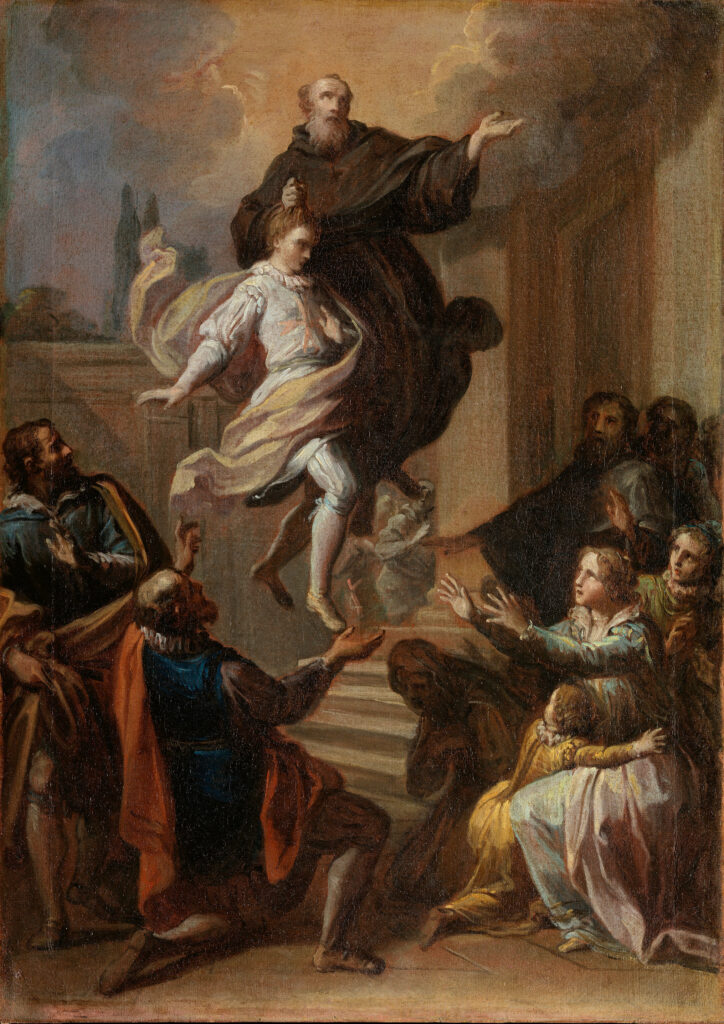
Saint Joseph, born June 17, 1603, a humble Franciscan friar of Cupertino in Italy, who could acquire but little of book knowledge and needed divine help to qualify for the priesthood, was favoured by his Crucified God, with a marvellous grace of contemplation, and with the remarkable power of miracles. The feast of this glorious Son of the Seraph of Assisi was made universal throughout the Church by a Pope of the same Order, Clement X1V. He is famous for his evangelical simplicity and for his ecstasies. The whole of the Mass assigned to him brings out the mystical side of his sanctity. He worked many miracles and died a happy death at Orsino on September 18, 1663.
From a sermon On Pastors by Saint Augustine, Bishop and Doctor of the Church
(Sermo 46, 3-4: CCL 41, 530-531)
The shepherds who feed themselves
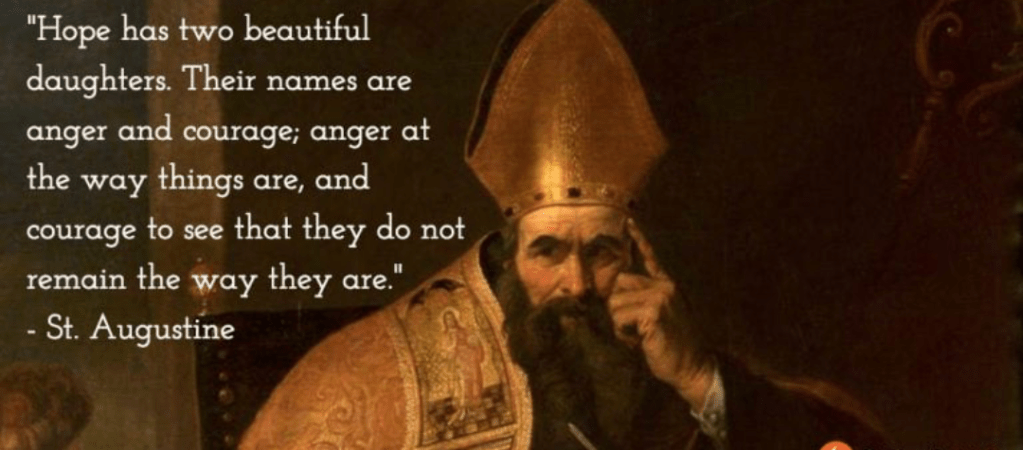
Let us consider the unflattering words of God which Scripture addresses to shepherds who feed themselves and not the sheep. You consume their milk and cover yourselves with their wool; you kill the fatlings, but My sheep you do not pasture. You have failed to strengthen what was weak, to heal what was sick, and to bind up what was injured. You did not call back what went astray, nor seek out what was lost. What was strong you have destroyed, and My sheep have been scattered because there is no shepherd.
This is spoken to the shepherds who feed themselves and not the sheep; it speaks of their concern and their neglect. What is their concern? You consume their milk and cover yourselves with their wool. And so the Apostle asks: Who plants a vineyard and does not eat from its fruit? Who pastures a flock and does not drink from the milk of the flock? Thus we learn that the milk of the flock is whatever temporal support and sustenance God’s people give to those who are placed over them. It is of this that the Apostle was speaking in the passage just quoted.
Although he chose to support himself by the labour of his own hands and not to ask for milk from the sheep, the Apostle did say that he had the right to receive the milk, for the LORD had established that they who preach the Gospel should live from the Gospel. Paul also says that other of his fellow apostles made use of this right, a right granted them, and not unlawfully usurped. But Paul went further by not taking what was rightfully his. He forgave the debt, whereas the others did not demand what was not due them. Therefore Paul went further. Perhaps his action was foreshadowed by the Good Samaritan who, when he brought the sick man to the inn, said: If you spend any more, I will repay you on my way back.
What more can I say concerning those shepherds who do not need the milk of the flock? They are more merciful; or rather, they carry out a more abundant ministry of mercy. They are able to do so, and they do it. Let them receive praise, but do not condemn the others. The Apostle himself did not seek what was given. However, he wanted the sheep to be fruitful, not sterile and unable to give milk.
DAILY MEDITATION
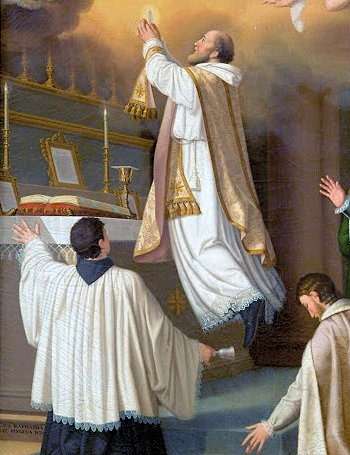
The saint (St. Joseph Cupertino), on his way to Rome, experienced a return of those heavenly consolations, which has been withdrawn from him. At the name of God, of Jesus, or of Mary, he was, as it were, out of himself. He would often cry out: “Vouchsafe, O my God, to fill and possess all my heart. O that my soul was freed from the chains of the body, and united to Jesus Christ! Jesus, Jesus, draw me to Yourself; I am not able to live any longer on the earth.“ He was often heard to excite others to the love of God, and to say to them: “Love God; he in whom this love reigns is rich, although he does not perceive it.“ His raptures were as frequent as extraordinary. He had many, even in public, to which a great number of persons of the first quality were eyewitnesses, and the truth of which they afterward declared upon oath. Among those, John Frederick, Duke of Brunswick and Hanover, was one. This prince, who was a Lutheran, was so struck with what he had seen, that he abjured his former tenets, and embraced the Catholic Faith. Joseph had also a single talent for converting the most obdurate sinners, and quieting the minds of such as laboured under any trouble. He used to say to some scrupulous persons who came to consult him: “I neither like scruples nor melancholy; let your intentions be right, and fear not.“ He explained the most profound mysteries of our Faith with the greatest clearness; and this sublime knowledge he owed to the intimate communication he had with God in prayer.
… He was heard often to repeat those aspirations of the heart inflamed with the love of God: “Oh! That my soul was freed from the shackles of my body, to be reunited to Jesus Christ! Praise and thanksgiving be to God! The Will of God be done. Jesus Crucified, receive my heart, and kindle in it the fire of Your holy Love.” He died 18th September, 1663, at the age of 60 years and three months.
Father Alban Buttler (d. 1773] – English mission priest, scholar, and hagiographer, best known for his monumental, Lives of the Saints.
Faith in Christ’s Authority
When we pray for healing, how can we do so with great faith? A common mistake is to try to work up faith, to do mental gymnastics to force ourselves to believe that a healing is going to occur. But this turns faith into a human work. People who think this way are sometimes shocked and disillusioned when the healing they prayed for does not happen. But in reality, faith is a gift of God to which we yield. It is a relationship of trust and surrender to the Father, Son, and Holy Spirit. It cannot be conjured up. Rather, faith grows as we come to understand more deeply who God is and who we are in Him….
We are heirs of the Kingdom. The LORD has given us a share in His own kingly rule. Each one of us has a part in Christ’s mission to dismantle the kingdom of darkness and make the Kingdom of God present wherever we are. We do that in many ways: by serving humbly, by laying down our lives for others, by sharing God’s word at every opportunity, by living a holy life in close communion with the LORD so that we emanate the fragrance of Christ, and by doing battle against sickness and every form of oppression through faith and prayer.
The centurion who begged Jesus to heal his servant understood the secret. He said to Jesus, I am under authority myself, and have soldiers under me; and I say to one man: Go, and he goes; to another: Come here, and he comes; to my servant: Do this, and he does it. It is the only occasion in the Gospels where Jesus is said to marvel at what someone says to Him. This faithful military officer understood that his authority to command came from his being under authority himself. His soldiers respected his authority because he himself respected authority; he knew what it was to obey…. So Jesus Himself lived His whole life under the Father’s authority. I can do nothing by Myself…. My aim is to do not My own will, but the will of Him who sent Me (Jn 5:30). His unlimited power over demons, diseases, and death flowed from His total surrender to the Father’s Will. So too for us, our authority over sickness comes from surrender to the will of the Father in union with Jesus, carrying out His will to heal and deliver His children.
Faith is a way of knowing. The more we know who Christ is—His absolute Lordship over the whole universe, His victory over sin and death won on the Cross, His unconditional love for every human being—the more faith we have. That faith is what enables us to pray against sickness and infirmity with confident authority.
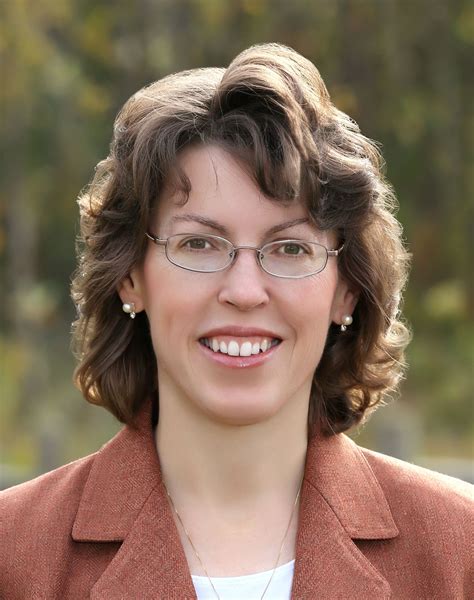
Mary Healy
Mary Healy is a professor of Sacred Scripture and a member of the Pontifical Biblical Commission. She teaches at Sacred Heart Major Seminary in Detroit, Michigan. [From Healing: Bringing the Gift of God’s Mercy to the World.]©
Ezechiel 34:15-16
I will feed My sheep:
and I will cause them to lie down, saith the LORD God.
– I will seek that which was lost: and that which was driven away, I will bring again.
I will bind up that which was broken, and I will strengthen that which was weak,
– I will seek that which was lost: and that which was driven away, I will bring again.
“The refusal to take sides on great moral issues is itself a decision. It is a silent acquiescence to evil. The tragedy of our time is that those who still believe in honesty lack fire and conviction, while those who believe in dishonesty are full of passionate conviction.” – Ven. Archbishop Fulton Sheen
 Daily Reflections
Leave a comment