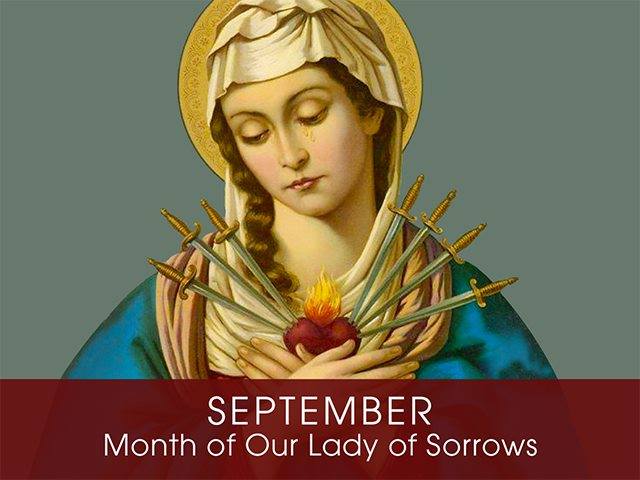
2 Peter 1:21; Proverbs 2:6
For prophecy came not by the will of man at any time.
– The holy men of God spoke, inspired by the Holy Ghost.
Because the LORD giveth wisdom: and out of his mouth cometh prudence and knowledge.
– The men who spoke the word of God were inspired by the Holy Spirit.
Feast of Saint Matthew
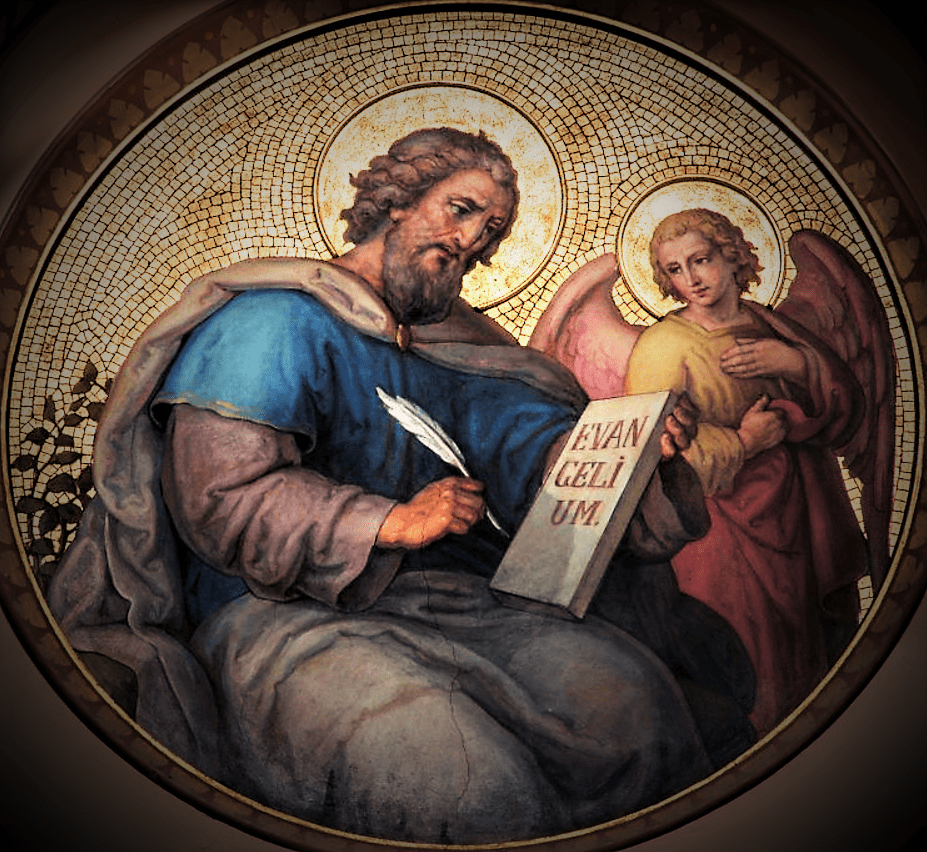
SAINT MATTHEW, APOSTLE, EVANGELIST

Matthew, or Levi, son of Alphaeus, lived at Capharnaum on Lake Genesareth. He was a a despised tax collector who converted from his sinful life when Christ addressed him at Capharnaum. The publicans, on account of their many acts of injustice and extortion, were looked upon as the greatest sinners by the Jews. At his Master’s invitation, he promptly joined Him and is credited with the authorship of the first Gospel.
There is a long-standing tradition that he first wrote the Gospel in Aramaic. Matthew begins his Gospel with Jesus’ genealogy, revealing Him as a descendant of David, and he takes pains to show how the teachings of the Law and the Prophets have culminated in Christ. Matthew’s Gospel is given pride of place in the canon of the New Testament, and was written to convince Jewish readers that their anticipated Messias had come in the person of Jesus. He preached among the Jews for 15 years. Matthew himself by his humble confession, gratefully acknowledged the gracious condensation of the LORD to sinners.
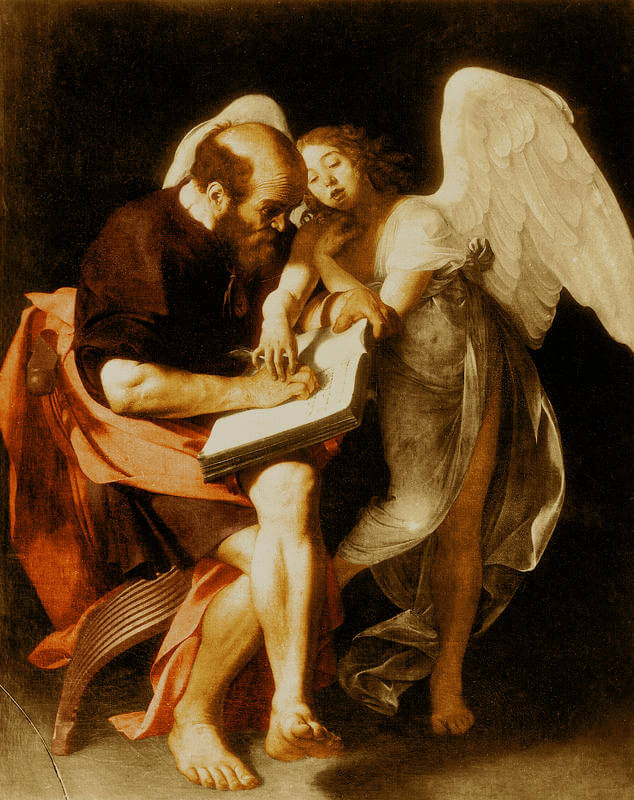
Tradition assigns Matthew the symbol of the winged man, one of the four mystical creatures from the Book of the Apocalypse. Jesus’ contemporaries were surprised to see the Christ with a traitor, but Jesus explained that he had come “not to call the just, but sinners” (Mt. 9:13). He preached the Good News in Palestine, and in Ethiopia where he was attacked and killed while celebrating Mass in 60 A.D.
From a homily by Saint Bede the Venerable, Priest
(Hom, 21: CCL 122, 149-151)
Jesus saw him through the eyes of mercy and chose him
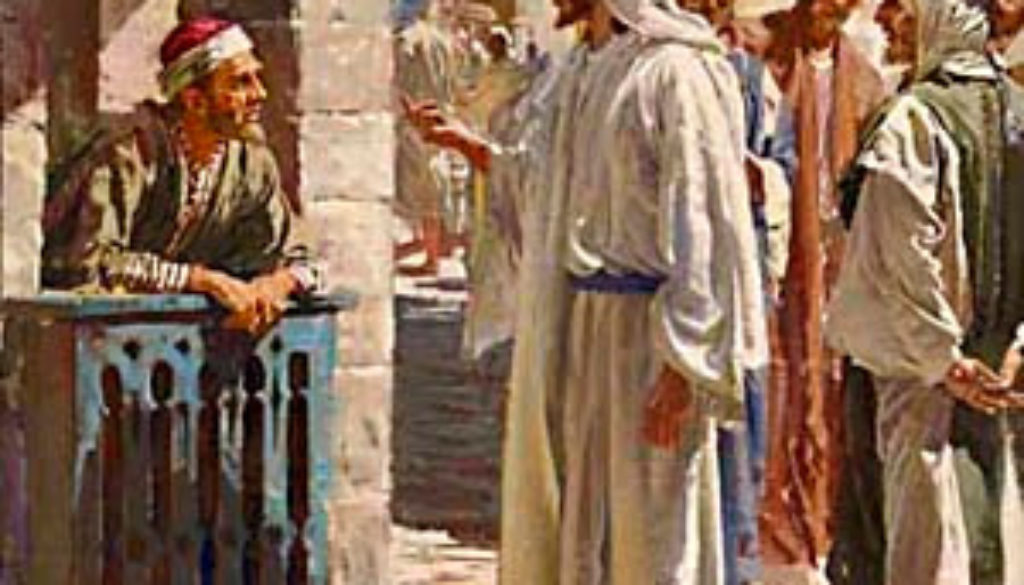
Jesus saw a man called Matthew sitting at the tax office, and He said to him: Follow Me. Jesus saw Matthew, not merely in the usual sense, but more significantly with His merciful understanding of men.
He saw the tax collector and, because He saw him through the eyes of mercy and chose him, He said to him: Follow Me. This following meant imitating the pattern of His life—not just walking after Him. Saint John tells us: Whoever says he abides in Christ ought to walk in the same way in which He walked.
And he rose and followed Him. There is no reason for surprise that the tax collector abandoned earthly wealth as soon as the LORD commanded him. Nor should one be amazed that neglecting his wealth, he joined a band of men whose leader had, on Matthew’s assessment, no riches at all. Our LORD summoned Matthew by speaking to him in words. By an invisible, interior impulse flooding his mind with the Light of Grace, He instructed him to walk in His footsteps. In this way Matthew could understand that Christ, who was summoning him away from earthly possessions, had incorruptible treasures of Heaven in His gift.
As He sat at table in the house, behold many tax collectors and sinners came and sat down with Jesus and His disciples. This conversion of one tax collector gave many men, those from his own profession and other sinners, an example of repentance and pardon. Notice also the happy and true anticipation of his future status as apostle and teacher of the nations. No sooner was he converted than Matthew drew after him a whole crowd of sinners along the same road to salvation. He took up his appointed duties while still taking his first steps in the Faith, and from that hour he fulfilled his obligation and thus grew in merit.
To see a deeper understanding of the great celebration Matthew held at his house, we must realize that he not only gave a banquet for the LORD at his earthly residence, but far more pleasing was the banquet set in his own heart which he provided through faith and love. Our Saviour attests to this: Behold I stand at the door and knock; if anyone hears My Voice and opens the door, I will come in to him and eat with him, and he with Me.
On hearing Christ’s voice, we open the door to receive Him, as it were, when we freely assent to His promptings and when we give ourselves over to doing what must be done. Christ, since He dwells in the hearts of His chosen ones through the grace of His love, enters so that He might eat with us and we with Him. He ever refreshes us by the Light of His Presence insofar as we progress in our devotion to and longing for the things of Heaven. He Himself is delighted by such a pleasing banquet.
DAILY MEDITATION
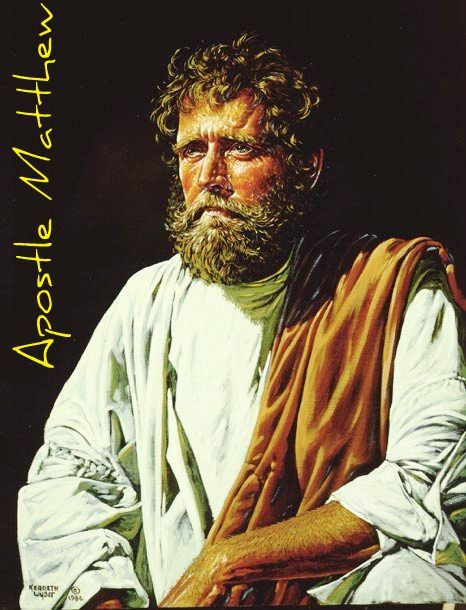
Christ, the Saviour, looked with His mild eyes at St. Matthew in his customhouse, and called him. Matthew obeyed, instantly arose, and followed Christ, becoming thus, from a publican, an Apostle of the LORD, a great saint. How comforting an example of divine mercy, even toward the greatest sinner! How wholesome a lesson! The same kind, merciful Saviour, who gazed, so mildly upon Matthew, and called him, turns His loving eyes on you also, even if you live in mortal sin. He calls you to repentance; He calls you to follow Him. Obey Him as Saint Matthew did, without putting it off. Let neither the greatness, nor the number of your sins detain you. Your Saviour is ready to forgive them, to receive you into His favour, and to make you a saint. “If you are a publican, or a sinner,” says St. Chrysostom, “you may still become an evangelist. If you are a blasphemer, you may still become an apostle.”
This means that you may obtain pardon and gain salvation, as Saint Matthew and Saint Paul did, the former, of whom was a publican, a sinner; and the other, according to his own testimony, a blasphemer. St. Augustine says the same in the following words: “Perhaps some may think that the sin they have committed is so great that he cannot obtain pardon from God. Oh! may such thoughts be far from us. Why, O man, regard only the number of thy sins, and not the Omnipotence of the heavenly Physician? As God is merciful, because He is gracious, and as He can be merciful, because He is Omnipotent, he who believes that God will not or cannot forgive him, closes the door of the divine mercy on himself, by denying that God is gracious or Omnipotent. Hence let no one doubt the mercy of God, even if he has committed a hundred, nay a thousand crimes. But this belief should incite him to reconcile himself immediately to the Almighty.”
Fr. Francis Xavier Weninger [died 1888] – Austrian priest, Professor, and also; joined the Jesuits as missionary preacher to the United States.
“The refusal to take sides on great moral issues is itself a decision. It is a silent acquiescence to evil. The tragedy of our time is that those who still believe in honesty lack fire and conviction, while those who believe in dishonesty are full of passionate conviction.” – Ven. Archbishop Fulton Sheen
 Daily Reflections
Leave a comment