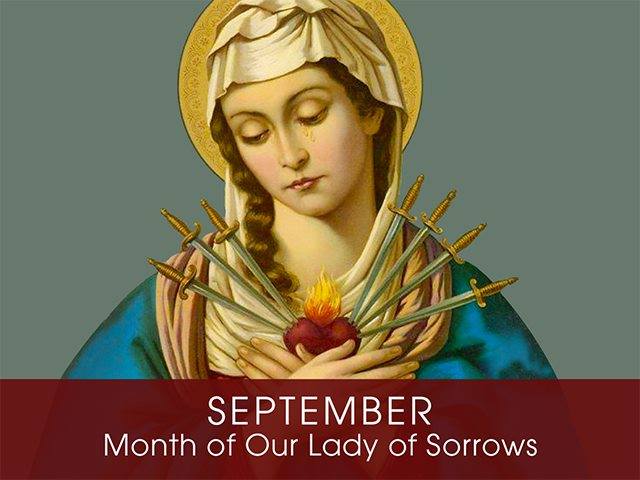
Friday of the Most Sacred Heart of Jesus
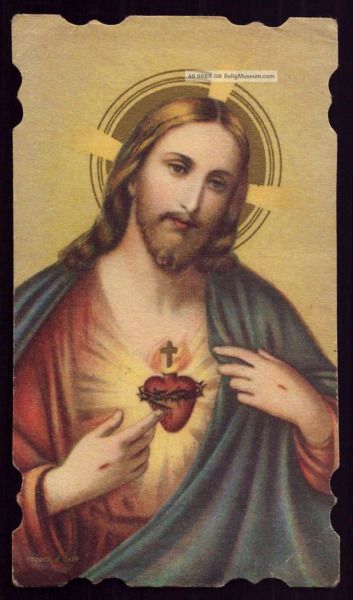
Litany of the Sacred Heart of Jesus, click on link: https://www.tfp.org/litany-of-the-sacred-heart-of-jesus/
Isaiah 54:6, 8; Ezechiel 16:60
For the LORD hath called thee as a woman forsaken;
In a moment of indignation have I hid my face a little while from thee,
– but with everlasting kindness have I had mercy on thee, said the LORD thy Redeemer.
And I will remember My covenant with thee
in the days of thy youth:
and I will establish with thee an everlasting covenant.
– but with everlasting kindness have I had mercy on thee, said the LORD thy Redeemer.
Friday of the Twenty-Fourth Week in Ordinary Time
Ember Friday in September (Traditional)
Friday of the Most Sacred Heart of Jesus
St. Thomas of Villanova, Bishop, Confessor (Traditional)
Jesus was accompanied on His journeys by the Twelve “as well as certain women who had been cured of evil spirits and ailments” (Luke 8:1-3). This presence of “many witnesses” revealed the glorious transformation that happens when we “aim to be saintly and religious, filled with faith and love, patient and gentle”. As we look at their communion with Christ, we become convinced that we too can win for ourselves “the Eternal Life” (1 Timothy 6: 2-12) to which we are called.
EMBER FRIDAY IN SEPTEMBER
The Station on Ember Friday is regularly at the Church of the Twelve Holy Apostles in Rome. This arose from the founding of this Church at the same time when the Friday Liturgy became common. An ancient Roman custom are fasting strictly three days in the week was relaxed somewhat under Pope Callixtus and limited to the three periods of the harvest, the vintage, and the drawing off of the new wine.
The Introit bids us seek the LORD; the search after God is in the ancient rule of Saint Benedict the one condition by which the vocation of aspirants to the religious life is to be judged. In the prayer, we ask that to bodily abstinence we may add mental observances. The Postcommunion of today is used in many feasts of saints; we ask for greater benefits which can be none other than the grace of union with Jesus in Heaven.
ST. THOMAS OF VILLANOVA, BISHOP, CONFESSOR
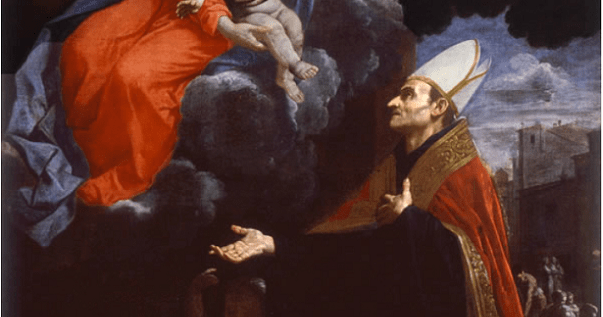
Saint Thomas, born in Spain, religious of the Order of Hermits of Saint Augustine, Archbishop of Valencia, died having given away to the poor all he possessed in 1555.
From a sermon On Pastors by Saint Augustine, Bishop
(Sermo 46, 10-11: CCL 41, 536-538)
Prepare your soul for temptation
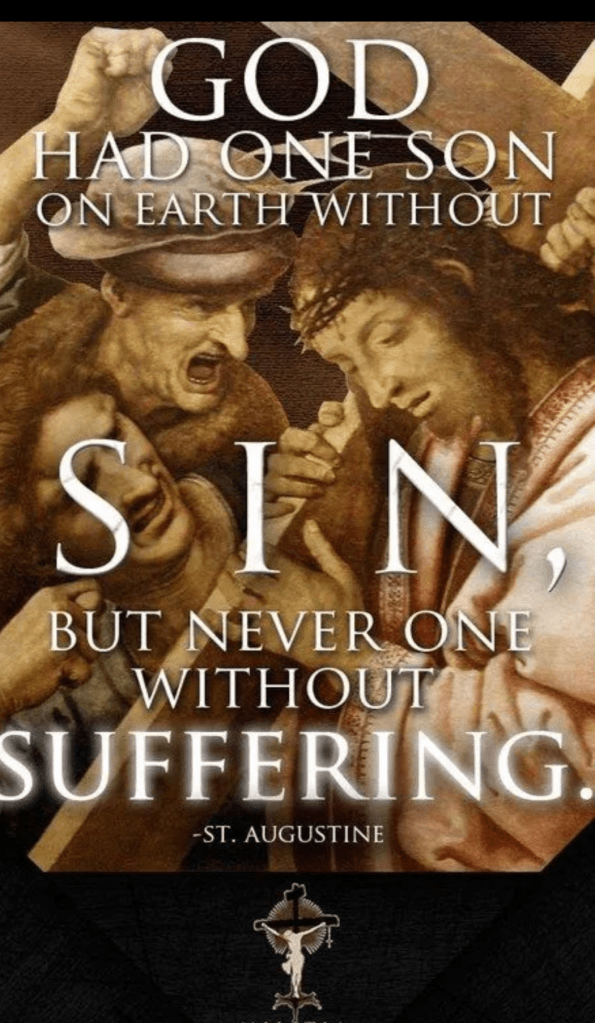
You have already been told about the wicked things shepherds desire. Let us now consider what they neglect. You have failed to strengthen what was weak, to heal what was sick, and to bind up what was injured, that is, what was broken. You did not call back the straying sheep, nor seek out the lost. What was strong you have destroyed. Yes, you have cut it down and killed it. The sheep is weak, that is to say, its heart is weak, and so, incautious and unprepared, it may give in to temptations.
The negligent shepherd fails to say to the believer: My son, come to the service of God, stand fast in fear and in righteousness, and prepare your soul for temptation. A shepherd who does say this strengthens the one who is weak and makes him strong. Such a believer will then not hope for the prosperity of this world. For if he has been taught to hope for worldly gain, he will be corrupted by prosperity. When adversity comes, he will be wounded or perhaps destroyed.
The builder who builds in such manner is not building the believer on a rock but upon sand. But the rock was Christ. Christians must imitate Christ’s sufferings, not set their hearts on pleasures. He who is weak will be strengthened when told: “Yes, expect the temptations of this world, but the LORD will deliver you from them all if your heart has not abandoned Him. For it was to strengthen your heart that He came to suffer and die, came to be spit upon and crowned with thorns, came to be accused of shameful things, yes, came to be fastened to the wood of the Cross. All these things He did for you, and you did nothing. He did them not for Himself, but for you.”
But what sort of shepherds are they who for fear of giving offence not only fail to prepare the sheep for the temptations that threaten, but even promise them worldly happiness? God Himself made no such promise to this world. On the contrary, God foretold hardship upon hardship in this world until the end of time. And you want the Christian to be exempt from these troubles? Precisely because he is a Christian, he is destined to suffer more in this world.
For the Apostle says, All who desire to live a holy life in Christ will suffer persecution. But you, shepherd, seek what is yours and not what is Christ’s, you disregard what the Apostle says: All who want to live a holy life in Christ will suffer persecution. You say instead: “If you live a holy life in Christ, all good things will be yours in abundance. If you do not have children, you will embrace and nourish all men, and none of them shall die.” Is this the way you build up the believer? Take note of what you are doing and where you are placing him. You have built him on sand. The rains will come, the river will overflow and rush in, the winds will blow, and the elements will dash against that house of yours. It will fall, and its ruin will be great. Lift him up from the sand and put him on the rock.
Let him be in Christ, if you wish him to be a Christian. Let him turn his thoughts to sufferings, however unworthy they may be in comparison to Christ’s. Let him centre his attention on Christ, who was without sin, and yet made restitution for what he had not done. Let him consider Scripture, which says to him: He chastises every son whom He acknowledges. Let him prepare to be chastised, or else not seek to be acknowledged as a son.
DAILY MEDITATION
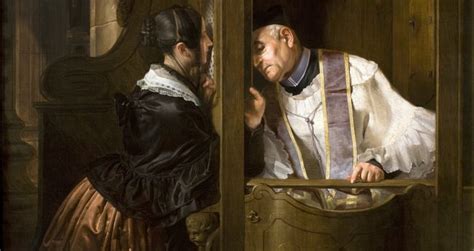
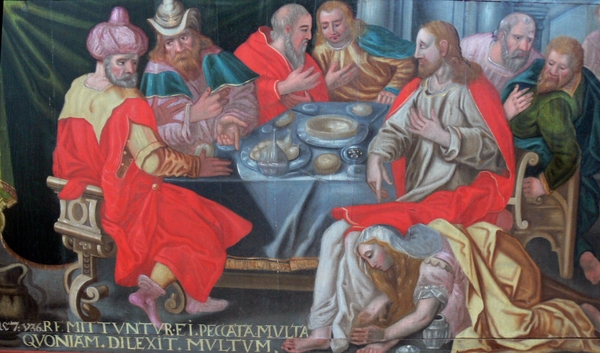
“I will heal their breaches, I will love them freely; for My wrath is turned away from them. I will be is the dew; Israel shall spring as the lily, and his root shall shoot forth as Libanus. His branches shall spread, and His glory shall be as the olive tree, and His smell as that of Libanus…. They shall live upon wheat [the Eucharist], and they shall blossom as a vine“ [Epistle]. With great tenderness and charity, the LORD accepts the contrite, penitent soul, as is clear from His reception of the sinner Magdalen….
We give expression to our repentance when we fast on Ember days. We sanctify our fast through the celebration of the Eucharistic Sacrifice. At this sacrifice, we unite our fasting and penance to the suffering and death of the LORD, and we beseech God that He may be pleased with the sacrifice of our fast, and make us worthy of His grace which we expect from the Mass. This grace will lead us to the promises of Eternal Life [Secrets].
A special fruit of repentance is the reception of the Holy Eucharist. “Remove from Me reproach and contempt” [Communion]. How else may I hope to participate worthily in the Holy Sacrifice of Thy Body and Blood? At Holy Communion, we receive the power to seek “out Thy Commandments, O, LORD for Thy testimonies are my meditation“ [Communion]. The final fruits of penitence are “ Blessings yet more excellent” [Postcommunion]; that is, our union with the LORD in Heaven, where He will take us up to share His Joy, His Light, His Glorified Life, forever.
Today we willingly undertake to do penance and propose for ourselves a life of self-denial so that we may participate in the fruits of penitence. With Magdalen, we forsake a life of sin for one of friendship with the LORD; as friends, we are changed into saints and become heirs of the Joy of the LORD.
Dom Benedict Bauer [died 1963] – German Benedictine, respected theologian, and archabbot of Saint Martin’s Abbey in Bueron.
The Holy Women Who Loved Jesus
Out of compassion for a mother who is a widow, Jesus raises her only son from the dead (Lk 7:11-17). Out of compassion for two sisters who are among His best friends, He calls forth their brother, four days dead in the tomb (Jn 11:1-44). One of the most revolutionary things He ever did happened in Samaria when His disciples found Him talking to a woman. Not only was He talking to her, but He had also accepted a drink of water at her hand. And not only that, but He finally disclosed His identity to her. And the first one to whom He Himself said that He was the Messias was this sinful stranger (Jn 4:4-42)…. No rabbi would have defiled himself in talking to a woman taken in adultery (Jn 8:1-11). No rabbi would have allowed a sinful woman to touch His feet, to anoint His head (Lk 7:37-50). The poor, elderly lady who had spent all her fortune on doctors but couldn’t be helped, must have heard about His great kindness to women, because she said to herself, If I can only touch His cloak I shall be well again…. Therefore, we cannot be the least bit astonished when we see how women all over the country responded to the Master. A number of them even got together and, in a little club, followed Him around wherever He went. Not only that, but they took care of His disciples and the disciples’ needs….
They also must have received a special vocation, because Our LORD said once, No one can come to Me unless he is drawn by the Father who sent Me, and another time, You did not choose Me, no, I chose you. That was true of the women as well as of the men in the company. All they wanted was to be allowed to love Him and to show their love by providing for Him. What they did was quite unusual. Their contemporaries surely couldn’t have understood it. They were obviously from different walks of life. Some were noble ladies who would have left everything behind and would follow in His footsteps. This is the first real feminine movement. Up and down throughout Galilee they followed Him and at the end they would be under the Cross. They would help to bury Him, and they would want to mourn at His grave. Little wonder it is, therefore, that after the Resurrection, Our LORD appears to the women: first, tradition tells us, to His Mother, and then to Mary Magdalene. Against the dark background of the position of women in ancient and modern paganism, Christ stands out as a figure of light…. Mary Magdalene proclaims this in the name of all her sisters throughout the centuries: So Mary of Magdala went and told the disciples that she had seen the LORD and that HQSe had said these things to her (Jn 20:18).
Maria von Trapp
Maria von Trapp († 1987), with her children and stepchildren, the Trapp Family Singers, inspired the musical and film The Sound of Music. [From Let Me Tell You about My Saviour: Yesterday, Today, and Forever, When the King Was Carpenter. ©
1 Thessalonians 2:4, 3
But as we were approved by God that the Gospel should be committed to us: even so we speak,
– not as pleasing men, but God, who proveth our hearts.
For our exhortation was not of error, nor of uncleaness, nor in deceit. – not as pleasing men, but God, who proveth our hearts.
“The refusal to take sides on great moral issues is itself a decision. It is a silent acquiescence to evil. The tragedy of our time is that those who still believe in honesty lack fire and conviction, while those who believe in dishonesty are full of passionate conviction.” – Ven. Archbishop Fulton Sheen
 Daily Reflections
Leave a comment