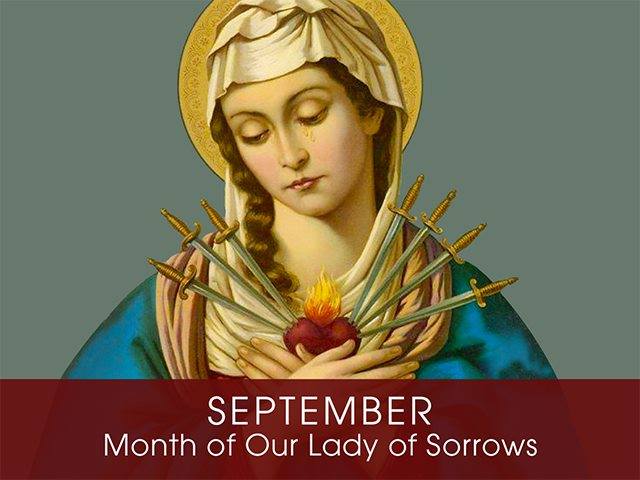
Ezechiel 24:24; Joel 2:13
And Ezechiel shall be unto you for a sign of things to come:
according to all that he hath done, so shall you do,
– and you shall know that I am the LORD God.
Rend your hearts, not your garments,
and then turn to the LORD your God.
– And you shall know that I am the LORD God.
Twenty-Fifth Sunday in Ordinary Time
Seventeenth Sunday after Pentecost (Traditional)
Our Lady of Ransom (Traditional)
What is most striking about the landowner is the relentless way he himself goes out to find labourers, his constant willingness to hire the ones who are still standing there, and his desire to pay them a full day’s wage (Matthew 20:1-16). Jesus tells us that the Kingdom of Heaven is like this landowner. God takes the initiative in seeking us out. God chooses us despite our utter unworthiness. And God is lavish in His self-gift to us. To love the Kingdom of Heaven is to love this Landowner and the way He acts. The temptation is for us to measure our life by what we imagine we deserve. But in truth, God is always giving us far more than we deserve, even in calling us to labour in His Kingdom! Let us “seek the LORD while He is still to be found, call to Him while He is still near”, because, for us, life “is Christ”.
TRADITIONAL MASS READINGS:
The Liturgy reminds us today of the great Commandment of Charity towards God and our neighbour. “The precept is twofold,” declares St. Augustine, “but charity is one.” Of course we love God above all, and our neighbour for His sake.
Epistle: Ephesians 4:1-6
The unity of our Faith, like the unity of the persons of the Most Holy Trinity, imposes on us, the duty of being united in the bonds of charity.
Gospel: Matthew 22:34-46
Precepts of charity towards God and towards our neighbour, given by Our LORD Jesus Christ.
OUR LADY OF RANSOM
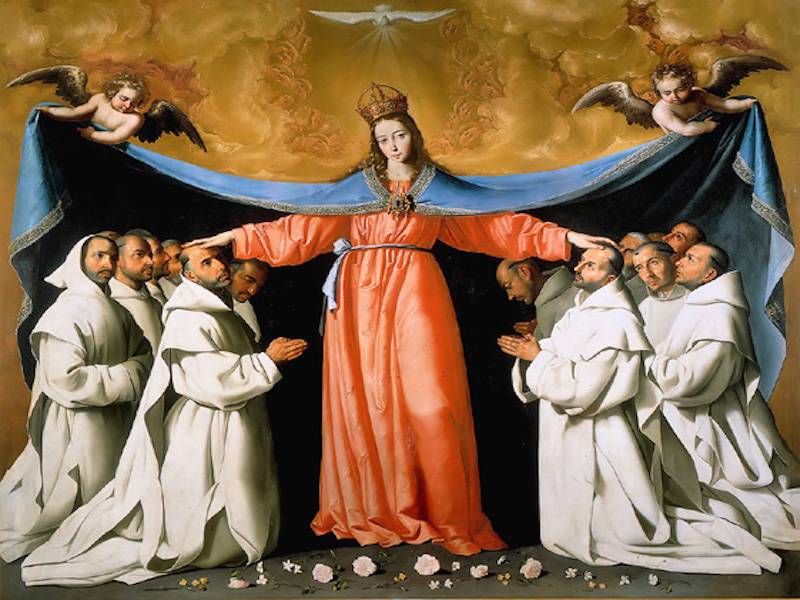
The Blessed Virgin Mary, by repeated visions, inspired St. Peter Nolasco, and St. Raymond of Penyafort, to found with the aid of King James of Aragon, the Order of Our Lady of Ransom, for the redemption of Christian captives from the infidels. The Church commemorates today this incomparable work of charity.
From a sermon On Pastors by Saint Augustine, Bishop and Doctor of the Church
(Sermo 46,13: CCL 41, 539-540)
On weak Christians
You have failed to strengthen the weak, says the LORD. He is speaking to wicked shepherds, false shepherds, shepherds who seek their own concerns and not those of Christ. They enjoy the bounty of milk and wool, but they take no care at all of the sheep, and they make no effort to heal those who are ill. I think there is a difference between one who is weak (that is, not strong) and one who is ill, although we often say that the weak are also suffering from illness.
My brothers, when I try to make that distinction, perhaps I could do it better and with greater precision, or perhaps someone with more experience and insight could do so. But when it comes to the words of Scripture, I say what I think so that in the meantime you will not be deprived of all profit. In the case of the weak sheep, it is to be feared that the temptation, when it comes, may break him. The sick person, however, is already ill by reason of some illicit desire or other, and this is keeping him from entering God’s path and submitting to Christ’s yoke.
There are men who want to live a good life and have already decided to do so, but are not capable of bearing sufferings even though they are ready to do good. Now it is a part of the Christian’s strength not only to do good works but also to endure evil. Weak men are those who appear to be zealous in doing good works but are unwilling or unable to endure the sufferings that threaten. Lovers of the world, however, who are kept from good works by some evil desire, lie sick and listless, and it is this sickness that deprives them of any strength to accomplish good works.
The paralytic was like that. When his bearers could not bring him in to the LORD, they opened the roof and lowered him down to the feet of Christ. Perhaps you wish to do this in spirit: to open the roof and to lower a paralytic soul down to the LORD. All its limbs are lifeless, it is empty of every good work, burdened with its sins, and weak from the illness brought on by its evil desires. Since all its limbs are helpless, and the paralysis is interior, you cannot come to the physician. But perhaps the physician is Himself concealed within; for the true understanding of Scripture is hidden. Reveal therefore what is hidden, and thus you will open the roof and lower the paralytic to the feet of Christ.
As for those who fail to do this and those who are negligent, you have heard what was said to them: You have failed to heal the sick; you have failed to bind up what was broken. Of this we have already spoken. Man was broken by terrible temptations. But there is at hand a consolation that will bind what was broken: God is faithful. He does not allow you to be tempted beyond your strength, but with the temptation He will also provide the way of escape, that you may be able to endure it.
DAILY MEDITATION

Imagine that you see the infinitely lovely and lovable Saviour, standing in the midst of the Jews whose object is to tempt Him with their crafty questions – behold Him, an innocent Lamb surrounded by ravening wolves – and listen to the answer which, with Heavenly Wisdom and divine patience, He makes to their attacks. “Thou shalt love the LORD thy God, with thy whole heart, and with thy whole soul, and with thy whole mind” [Matthew 22:37]. That is the first and greatest Commandment of the New Covenant, it is a summary of the whole moral code of the Christian.
The love of God does not consist in mere sentiments, affections, fine phrases: it demands deeds, sacrifices, entire and complete self- surrender. He loves God perfectly who consecrate himself to his service with all his powers of body and soul, so that he may present his body in chastity and continence, as “a living sacrifice, holy, pleasing unto God“ [Romans 12:1], and all the powers of his soul will ever be turned toward God, as flowers turned toward the sun; the understanding thinking of Him, the affections delighting in Him, the will conforming itself to His Will. “God,“ says Saint Augustine, “desires to have thee wholly and entirely. But do not grieve, as thou wouldst retain nothing wherein to find enjoyment. To love God will be thy truest gain, and if thou dost not love God, Who made thee, thou hast but little love for thyself.” Ask yourself how it is with you in regard to the love of God, and lay to heart this beautiful passage from the Imitation: “Whatsoever things, I love, of these I willingly speak, and hear, and carry home with me the images of them. But blessed is the man, O LORD, who for Thee gives all things created leave to depart; who does violence to his nature, and, through fervour of spirit, crucifies the lusts of the flesh; that so he may be worthy to be among the choirs of angels, all earthly things being shut out, whether external or internal.“ He is indeed blessed who loves, but one, and that one God; who loves Him with his whole heart, with his whole soul, and with his whole mind.
Father Augustin Maria Ilg [died 1881] – Capuchin Priest, author and redactor of one of the classic German works of daily meditation
The Bounty of the Landowner
The apparent arbitrariness of the landowner (“since I am the boss, can I not do whatever I want?”) is only a worldly decoy containing the mystery of God’s freedom, which is the very opposite of arbitrariness. God must give [the one and same wage] to all because the one thing He has to give is His Son—single, whole, undivided, all-sufficient…. Since God did not spare His own Son, but gave Him up to benefit us all, we may be certain, after such a gift, that He will not refuse anything He can give. (Rm 8:32)…. [The point] is precisely that infinitely bountiful mercy of Christ, impossible for any of us to merit, that puts itself lovingly in the place of the sinner in order to justify him before the holiness of God and make him worthy of participating in God’s own holy life. This is the fulfilment of all righteousness because God’s justice, even while condemning sin, has always tended in the direction of justifying the sinner and raising him to fullness of life. But this unheard-of event could not happen before the Incarnation of the Word made possible God’s humiliation in Christ, before the Crucified Jesus Himself became the first of those whose abundant love makes them thirst unto death for the fulfilment of righteousness. It is this purely divine and redemptive conception of righteousness that Jesus is teaching in this parable, which is therefore a revelation of the depths of His own superabundant love, sheer madness to the logic of the world. Jesus pays our wages in His own Blood—enough to nourish us throughout Eternity—before He has received anything from us.
The whole exhausting process of hiring at different times during the day, the accomplishment of the work itself, and then the climax at sunset at the moment of paying out the wages—all of this has been a drama set up by the landowner/LORD in order to provoke a conversion of heart in us all through an illumination of the true nature of the Kingdom. The parable is a catechesis meant to transform the natural man and his pagan values and mentality into a Christian with the generous mind and redeeming heart of Christ, that is, into a being capable of bearing the full joy and glory of a kingdom where every breath is an act of love.
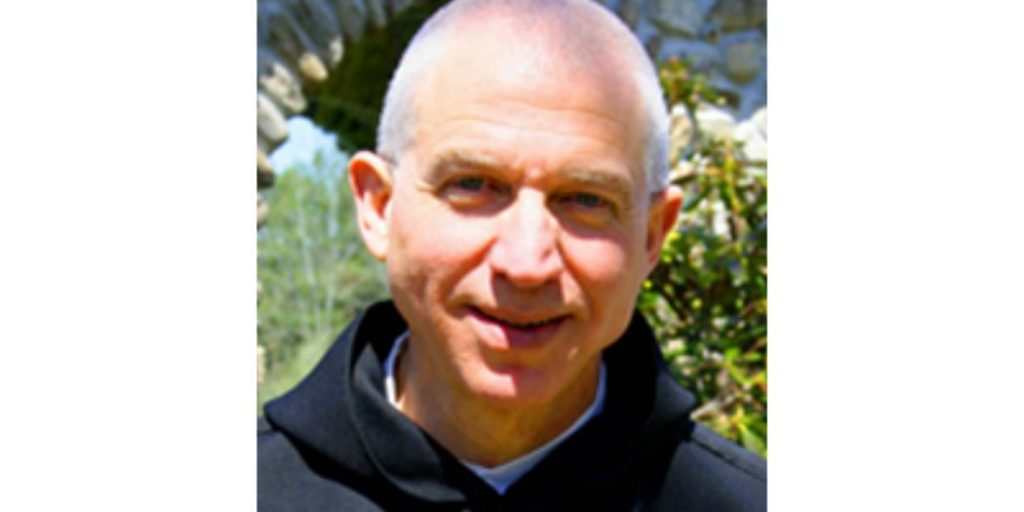
Erasmo Leiva-Merikakis
Erasmo Leiva-Merikakis, now known as Father Simeon, is a Trappist monk. He is the author of Fire of Mercy, Heart of the Word, a four-volume commentary on Matthew’s Gospel. [From Fire of Mercy, Heart of the Word: Meditations on the Gospel According to Saint Matthew, Vol. Three (Chapters 19-25). ©
“The refusal to take sides on great moral issues is itself a decision. It is a silent acquiescence to evil. The tragedy of our time is that those who still believe in honesty lack fire and conviction, while those who believe in dishonesty are full of passionate conviction.” – Ven. Archbishop Fulton Sheen
 Daily Reflections
Leave a comment