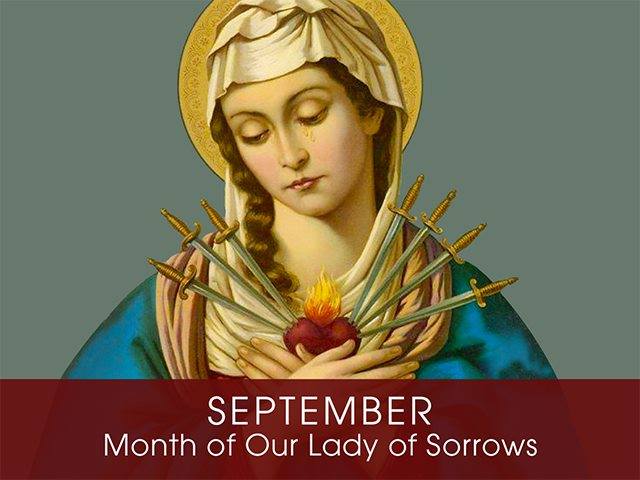
FRIDAY OF THE SACRED HEART OF JESUS

Apocalypse 12:7, 10; 19:1
And there was a great battle in Heaven, Michael and his angels fought with the dragon.
– Then I heard a loud voice crying out:
Salvation, and glory, and power is to our God
Now is come salvation and strength, and the Kingdom of our God, and the power of His Christ. – Then I heard a loud voice crying out:
Salvation, and glory, and power is to our God;
Feast of Saints Michael, Gabriel, and Raphael
Dedication of Saint Michael the Archangel (Traditional)
SAINT MICHAEL THE ARCHANGEL
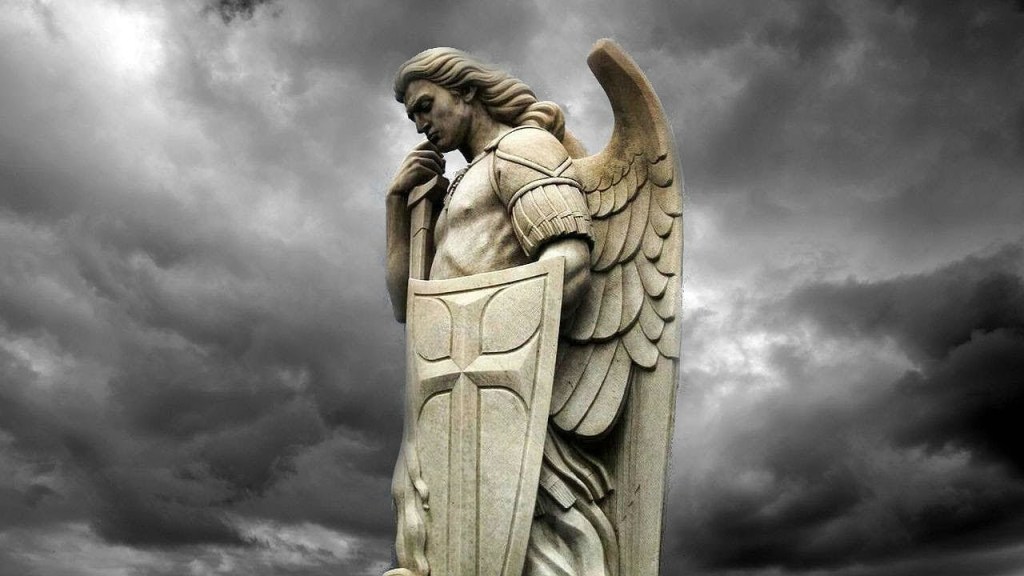
This is the original feast of the leader of the heavenly armies, Saint Michael. The captain of the heavenly armies, the angel named in the Canon of the Mass, held, from early times, the first place in the Liturgy among the other angels. Where, for, many churches, dedicated to Saint Michael in the Middle Ages, were simply known as churches “of the holy angel.“ Saint Michael, whose name signifies “who is like unto God“ cast the evil spirit out of Heaven, and overcame Satan in the struggle for possession of the body of Moses. God has entrusted our defense, in the combat with the devil, to the Angels. The reason for this is easily understood. The devil is a spirit who has lost none of the powers inherent to his nature. In order, therefore, that the struggle should not be unequal, God has placed at our side defenders of the same nature as Lucifer, that is to say pure spirits, who are, however, greater and more powerful than he is.
PRAY THE CHAPLET OF ST. MICHAEL, SEE LINK … https://traditionalcatholicprayers.com/2019/09/28/chaplet-st-michael/
STS. MICHAEL, GABRIEL AND RAPHAEL, ARCHANGELS
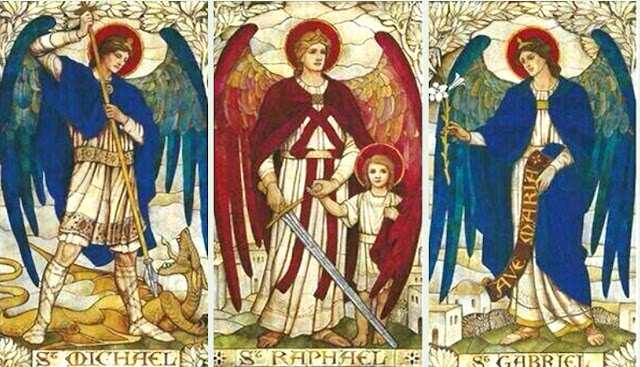
On this date the Church remembers the three archangels mentioned in Scripture by name: Michael, Gabriel, and Raphael. Michael’s name literally means “Who can compare to God?” He manifests God’s power and might by battling Satan, the huge dragon and ancient Serpent (cf. Apoc 12:9), and casting him from Heaven. Michael guards the people of God (cf. Dn 12:1), defends the souls of the just, and bears them to their final judgement. In 1886, Pope Leo XIII composed the Prayer to Saint Michael, which was said at the end of Mass for many years.
Editor’s Note: In the Traditional form the Michael’s Prayer is still prayed at the end of Low Mass after the Last Gospel (John 1:1-14).
Angels—messengers from God—appear frequently in Scripture, but only MICHAEL, GABRIEL, and RAPHAEL are named.
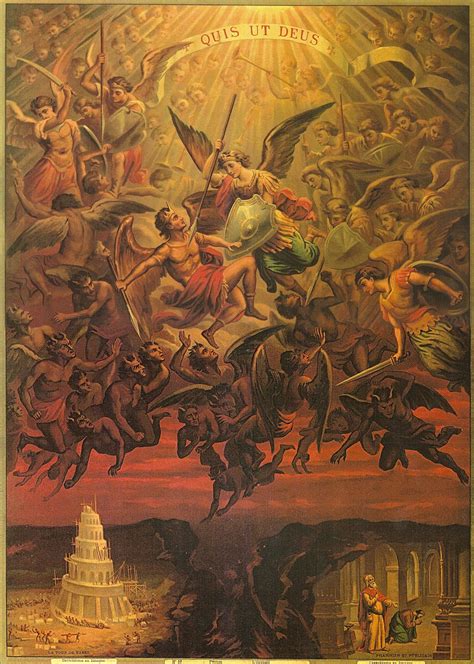
Michael [“Who is like God?”] appears in Daniel’s vision as “the great prince” who defends Israel against its enemies; in the Book of Apocalypse, he leads God’s armies to final victory over the forces of evil. Devotion to Michael is the oldest angelic devotion, rising in the East in the fourth century. The Church in the West began to observe a feast honouring Michael and the angels in the fifth century.
Gabriel [“God is my Strength”] also makes an appearance in Daniel’s visions, announcing Michael’s role in God’s Plan. His best-known appearance is an encounter with a young Jewish girl named Mary, who consents to bear the Messias.
Raphael’s [“Healing of God”] activity is related in the Book of Tobit. There he appears to guide Tobit’s son Tobias through a series of fantastic adventures which lead to a threefold happy ending: Tobias’ marriage to Sarah, the healing of Tobit’s blindness and the restoration of the family fortune.
From a homily on the Gospels by Saint Gregory the Great, Pope
(Hom. 34, 8-9: PL 76, 1250-1251)
The word “angel” denotes a function rather than a nature
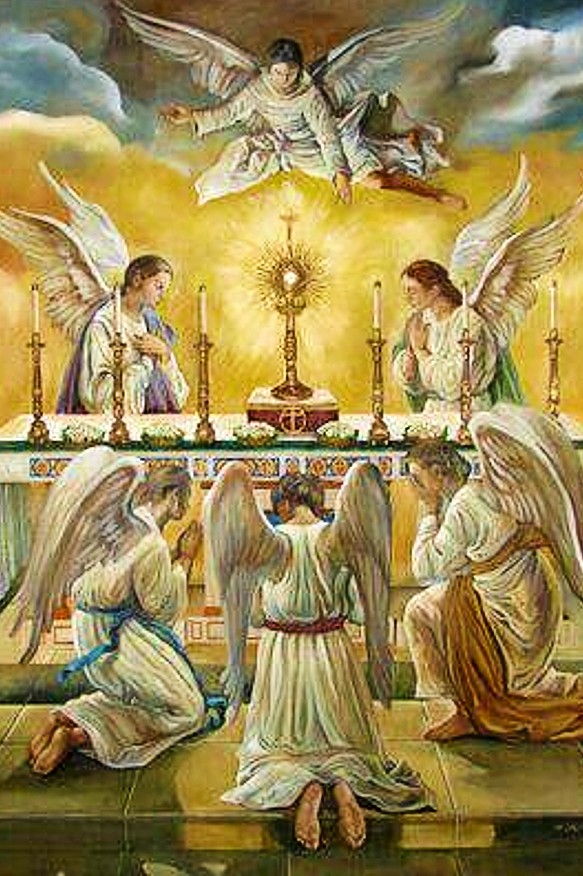
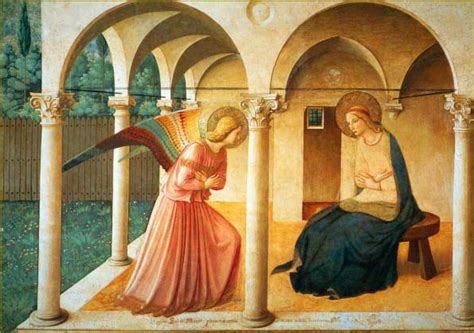
You should be aware that the word “angel” denotes a function rather than a nature. Those holy spirits of Heaven have indeed always been spirits. They can only be called angels when they deliver some message. Moreover, those who deliver messages of lesser importance are called angels; and those who proclaim messages of supreme importance are called archangels.
And so it was that not merely an angel but the archangel Gabriel was sent to the Virgin Mary. It was only fitting that the highest angel should come to announce the greatest of all messages.
Some angels are given proper names to denote the service they are empowered to perform. In that holy city, where perfect knowledge flows from the vision of Almighty God, those who have no names may easily be known. But personal names are assigned to some, not because they could not be known without them, but rather to denote their ministry when they came among us. Thus, Michael means “Who is like God”; Gabriel is “The Strength of God”; and Raphael is “God’s Remedy.”
Whenever some act of wondrous power must be performed, Michael is sent, so that his action and his name may make it clear that no one can do what God does by his superior power. So also our ancient foe desired in his pride to be like God, saying: I will ascend into heaven; I will exalt my throne above the stars of heaven; I will be like the Most High. He will be allowed to remain in power until the end of the world when he will be destroyed in the Final Punishment. Then, he will fight with the archangel Michael, as we are told by John: A battle was fought with Michael the archangel.
So too Gabriel, who is called God’s strength, was sent to Mary. He came to announce the One who appeared as a humble man to quell the cosmic powers. Thus God’s strength announced the coming of the LORD of the heavenly powers, mighty in battle.
Raphael means, as I have said, God’s remedy, for when he touched Tobit’s eyes in order to cure him, he banished the darkness of his blindness. Thus, since he is to heal, he is rightly called God’s remedy.
DAILY MEDITATION
Lucifer has placed his stamp upon the present age. Open and secret revolt against God and His Church, the spirit of criticism, unbelief, and immortality are rampant. The haughty and insolent boast of Lucifer, “I will be like the Most High“ [Isaias 14:14], is reechoed today throughout the world. Puffed up with their discoveries and their progress in material science, men are loudly proclaiming their self – sufficiency and denying the existence of a Supreme Being. Governments and secret societies, plotting against God, and striving to blot out from homes and schools, from offices and factories, all traces of Christianity, shows clearly under whose standard they are assembled.
Never before in the history of the world were the rights of God so blasphemously mocked and denied, or the rights of man so arrogantly asserted, as they are today. As a remedy against these frightful evils, we are urged to invoke the aid of that glorious prince of heaven who rendered all glory to God, by conquering Lucifer and casting him into the abyss. “In our times,” writes Cardinal Mermillod, “when the very foundation of society is shaken in consequence of having denied the rights of God, it is necessary that we revive the veneration of Saint Michael, and, with him, raise the victorious cry: ‘Who is like unto God?”
Three centuries ago, Saint Francis de Sales, wrote: “Veneration of Saint Michael is the great remedy against despising the rights of God, against insubordination, skepticism, and infidelity“ – vices which are perhaps more prevalent now than in any previous period of history. Surely, as Saint Paul warned the early Christians, it is now time for us to “rise from sleep“ [Romans 13:11], and to offer vigorous resistance to the enemies of our salvation. The weapons which we must use in this conflict are not the arms of civil warfare, but the spiritual weapons of prayer and penance, increased fidelity to the Commandments of God, and frequent reception of the Sacraments. And surely it is meet that we choose for our leader in this conflict the same powerful captain who led the faithful angels to victory. Saint Michael is ever ready to champion the cause of righteousness. He is, moreover, a powerful helper in every need.
Let us, then, with confident trust, invoke the aid and the protection of this mighty archangel whose shield bears the inscription: “MI-CHA-EL – Quis ut Deus – Who is like unto God?“
Benedictine Sisters of Perpetual Adoration,’Neath St. Michael’s Shield [1954].
The Glorious Angels
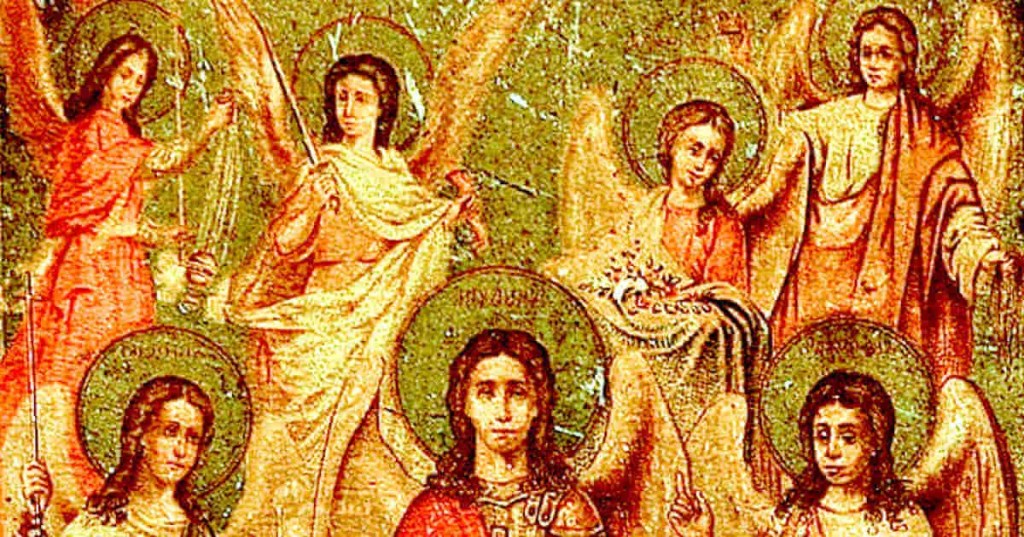
Today the Church celebrates the feast of Saint Michael the Archangel together with all those holy angels that are designated in Scripture by the gold cherubim in the Holy of Holies of the divine tabernacle and the Temple of Solomon. The Holy of Holies, where the throne of divine majesty and glory was located, symbolises Paradise itself, which has been placed above all the heavens as a fitting dwelling place for all God’s elect. There are many other symbols for angels found in Scripture. Zecharias speaks of them as a single stone with seven eyes, as well as seven golden lamps on a gold lampstand. In Revelation, the angels are symbolised in the seven stars in the right hand of God, the seven torches that burn before God, and the seven eyes and seven horns of the Lamb, which are the seven Spirits God has sent out all over the world. So also the angel Raphael said to Tobit: I am Raphael, one of the seven angels who stand ever ready to enter the Presence of the glory of the LORD (Tb 12:15)….
Moses proclaims that all things were created simply by God’s command, as the Psalmist also teaches: By His word the heavens were made, by the breath of His mouth all the stars. He spoke; and it came to be. He commanded; it sprang into being (Ps 32:6, 9). God, accordingly, created the angels like the rest of the world by His Almighty Power, and He created them at the same time that He created the heavens and the earth.
The angels too were made in the image and likeness of God. This is the teaching of Dionysius, who writes: “An angel is the image of God, a manifestation of a hidden light, a clear, bright, immaculate, uncontaminated, unsullied reflection of God, capable of receiving, as is fitting, the total beauty and goodness and form of God Himself.” According to this opinion, Dionysius describes an angel with a threefold manner of existence—namely, of nature, grace, and glory. Relative to its nature, he says that an angel is the image of God and a manifestation of a hidden light, i.e., an intellectual illumination it receives from God, as the moon receives light from the sun, for the purpose of purifying, enlightening, and perfecting. With regard to grace, an angel is a most splendid and clear reflection of God, i.e., without any blemish of sin whatever, but resplendent with the clarity and brilliance of divine light, like a mirror facing the sun. And finally as to its being in glory, an angel is capable of receiving the total beauty and goodness and form of God Himself, for the angels in Heaven enjoy the total glory of God.
Saint Lawrence of Brindisi
Saint Lawrence of Brindisi († 1619) was a Minister General of the Capuchin Franciscans and preached throughout Europe. He is a Doctor of the Church. [From Feastday Sermons, Vernon Wagner, o.f.m. cap., Tr., pp. 147, 148, 149-150. ©
Apocalypse 8:3, 4; Daniel 7:10
An angel stood before the altar, having a golden censer;
Much incense was given to him,
– and the smoke of the incense of the prayers of the saints ascended up before God from the hand of the angel.
?? Thousands upon thousands waited on him,
and myriads upon myriads stood before him.
– and the smoke of the incense of the prayers of the saints ascended up before God from the hand of the angel.
“The refusal to take sides on great moral issues is itself a decision. It is a silent acquiescence to evil. The tragedy of our time is that those who still believe in honesty lack fire and conviction, while those who believe in dishonesty are full of passionate conviction.” – Ven. Archbishop Fulton Sheen
 Daily Reflections
Leave a comment