Philippians 3:8,10; Romans 6:8
For whom I have suffered the loss of all things and count them but as dung, that I may gain Christ. – That I may know Him and the power of His Resurrection and the fellowship of His sufferings
Now, if we be dead with Christ, we believe that we shall live also together with Christ.– That I may know Him and the power of His Resurrection and the fellowship of His sufferings
Thursday of the Twenty-Sixth Week in Ordinary Time
Saint Faustina Kowalska, Religious
Saints Placidus and Companions, Martyrs (Traditional)
ST. FAUSTINA KOWALSKA, RELIGIOUS
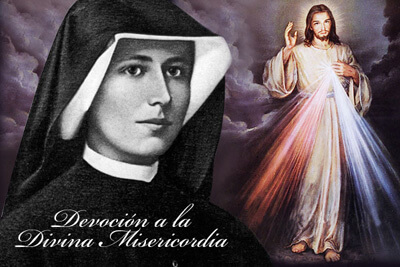
Born in the village of Głogowiec, near Łódź, in Poland in 1905, Helena Kowalska went at nineteen to the Congregation of the Sisters of Our Lady of Mercy, where she became Mary Faustina. Saint Faustina spent her short life amongst the Sisters of Our Lady of Mercy, generously conforming herself to the vocation she received from God and developing an intense spiritual life, rich in spiritual gifts and in faithful harmony with them. After an initial time of spiritual purification, she received regular visions of Our LORD, who asked her to share His message of “divine mercy”. “When sinners repent,” He told her, “My Mercy is limitless…. The greatest sinners could become the greatest saints if they trusted in My Mercy.” Faustina insisted that Jesus wanted a devotional image of Himself to be painted, which provoked her fellow nuns. She folded the humiliations into her prayer and offered to God her many sufferings.
In the Diary of her soul, the sanctuary of her encounter with the LORD Jesus, she herself recounts what the LORD worked in her for the benefit of all: listening to Him who is Love and Mercy she understood that no human wretchedness could measure itself against the mercy which ceaselessly pours from the heart of Christ. Thus she became the inspiration for a movement dedicated to proclaiming and imploring Divine Mercy throughout the whole world. Canonized in the year 2000 by Saint John Paul II, the name of Faustina quickly became known around the world, thereby promoting in all the parts of the People of God, Pastors and lay faithful alike, the invocation of Divine Mercy and its credible witness in the conduct of the lives of believers. She died of tuberculosis at the age of thirty-three in 1938.
ST. PLACIDUS AND COMPANIONS, MARTYRS
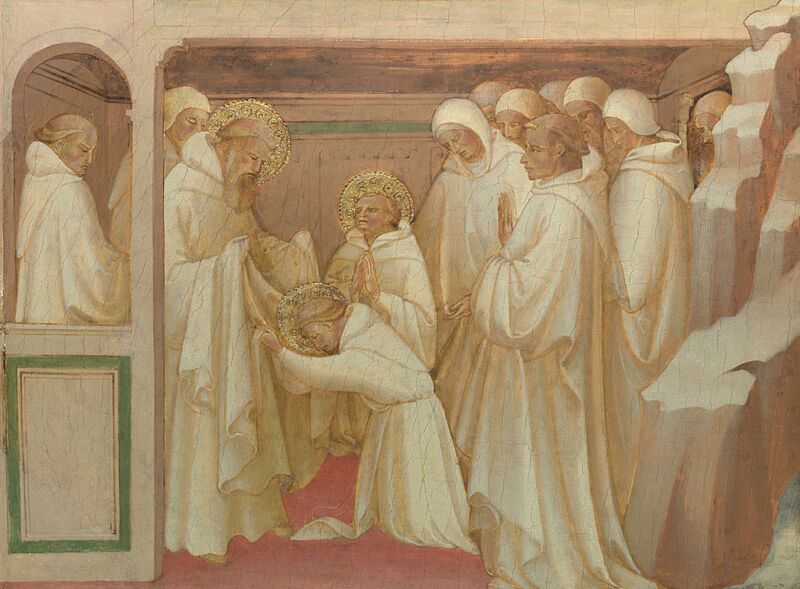
St. Placidus, together with Saint Maurus were committed by their father Tertullus to the care of Saint Benedict when both were very young. The parents were friendly to the holy patriarch, who, like them belonged to the nobility. Seemed Benedict had a great love for these two early companions. On one occasion, while drawing water from the lake of Subiaco, as St. Gregory relates, Placidus fell in and the waves carried him far from the shore. At the command of Benedict, Maurus hastened to the rescue, and only after he had safely brought the young Placidus to the shore did he note that he had walked upon the waters. Little is known of the life of Saint Placidus. Out of hatred for the Faith, he was murdered with his monks, by heathen pirates in 541.
Since the tenth century, he has been venerated as a saint in the Benedictine order.
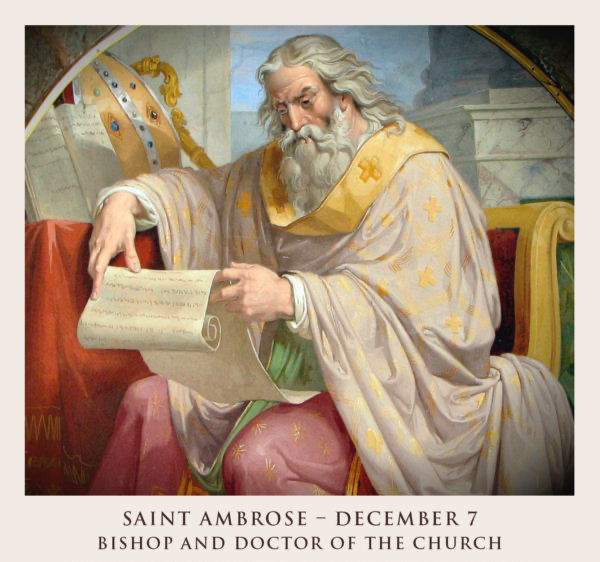
From a treatise on Cain and Abel by Saint Ambrose, Bishop
(Lib. 1, 9, 34, 38-39: CSEL 32, 369, 371-372)
Pray especially for the whole Body of the Church
Offer God a sacrifice of praise and fulfill your vows to the Most High. If you praise God you offer your vow and fulfill the promise you have made. So the Samaritan leper, healed by the LORD’s word of command, gained greater credit than the other nine; he alone returned to Christ, praising God and giving thanks. Jesus said of him: There was no one to come back and thank God except this foreigner. He tells him: Stand up and go on your way, for your faith has made you whole.
The LORD Jesus, in His divine Wisdom, taught you about the goodness of the Father, Who knows how to give good things, so that you might ask for the things that are good from Goodness itself. He urges you to pray earnestly and frequently, not offering long and wearisome prayers, but praying often, and with perseverance. Lengthy prayers are usually filled with empty words, while neglect of prayer results in indifference to prayer.
Again, Christ urges you, when you ask forgiveness for yourself, to be especially generous to others, so that your actions may commend your prayer. The Apostle, too, teaches you how to pray; you must avoid anger and contentiousness, so that your prayer may be serene and wholesome. He tells you also that every place is a place of prayer, though Our Saviour says: Go into your room.
But by “room” you must understand, not a room enclosed by walls that imprison your body, but the room that is within you, the room where you hide your thoughts, where you keep your affections. This room of prayer is always with you, wherever you are, and it is always a secret room, where only God can see you.
You are told to pray especially for the people, that is, for the whole Body, for all its members, the family of your Mother the Church; the badge of membership in this Body is love for each other. If you pray only for yourself, you pray for yourself alone. If each one prays for himself, he received less from God’s goodness than the one who prays on behalf of others. But as it is, because each prays for all, all are in fact praying for each one.
To conclude, if you pray only for yourself, you will be praying, as we said, for yourself alone. But if you pray for all, all will pray for you, for you are included in all. In this way there is a great recompense; through the prayers of each individual, the intercession of the whole people is gained for each individual. There is here no pride, but an increase of humility and a richer harvest from prayer.
DAILY MEDITATION
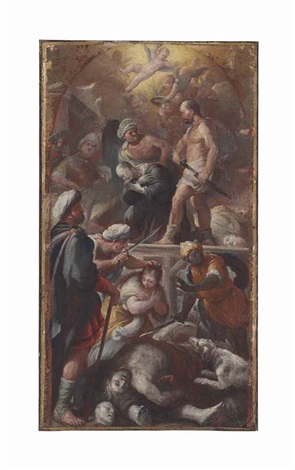
Saint Placidus was born in Rome, in the year, 515, of a patrician family, and at seven years of age was taken by his father to the monastery of Subiaco. At thirteen years of age, he followed Saint Benedict to the new foundation at Monte Casino, where he grew up in the practice of a wonderful austerity and innocence of life. He had scarcely completed his twenty-first year, when he was selected to establish a monastery in Sicily, upon some estates, which had been given by his father to Saint Benedict. He spent four years in building his monastery, and the fifth had not elapsed before an inroad of barbarians burned everything to the ground, and put to a lingering death not only St. Placidus and thirty monks who had joined him, but also his two brothers, Eutychius and Victorinus, and his holy sister Flavia, who had come to visit him. The monastery was rebuilt, and still stands under his invocation.
Reflection: Adversity is the touchstone of the soul, because it discovers the character of the virtue which it possesses. One act of thanksgiving when matters go wrong with us is worth a thousand thanks when things are agreeable to our inclinations.
John Gilmary Shea [d.1892] – American author and celebrated historian, regarded as the father of American Catholic history
Carrying Nothing but the Peace of Christ
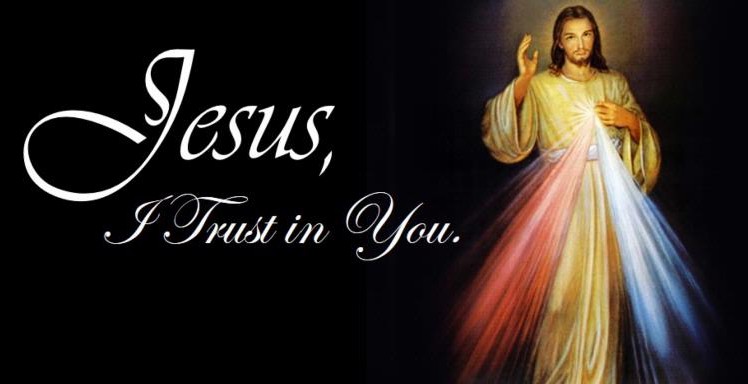
Physical weakness was for me a school of patience. Only Jesus knows how many efforts of the will I had to make to fulfil my duty. In order to purify a soul, Jesus uses whatever instruments He likes…. The grace of God pursued me at every step, and God spoke to me when I least expected it….
I have experienced an increasing devotion to the Mother of God. She has taught me how to love God interiorly and also how to carry out His holy Will in all things. O Mary, you are joy, because through you God descended to earth and into my heart….
I often felt the Passion of the LORD Jesus in my body, although this was imperceptible to others, and I rejoiced in it because Jesus wanted it so. But this lasted for only a short time. These sufferings set my soul afire with love for God and for immortal souls. Love endures everything, love is stronger than death, love fears nothing….
Suffering is a great grace; through suffering the soul becomes like the Saviour; in suffering love becomes crystallised; the greater the suffering, the purer the love….
O life so monotonous, how many treasures you contain! When I look at everything with the eyes of Faith, no two hours are alike, and the dullness and monotony disappear.
Saint Maria Faustina Kowalska
Saint Maria Faustina Kowalska († 1938), was a Polish Sister of Our Lady of Mercy whose mystical visions of Jesus inspired the Divine Mercy devotion. She was canonised in 2000. [From Diary of Saint Maria Faustina Kowalska: Divine Mercy in My Soul. ©
Psalm 60/61:2-3, 6
Hear, O God, my supplication: be attentive to my prayer. – To Thee have I cried from the ends of the earth
For Thou, my God, hast heard my prayer: Thou hast given an inheritance to them that fear Thy name. – To Thee have I cried from the ends of the earth.
“The refusal to take sides on great moral issues is itself a decision. It is a silent acquiescence to evil. The tragedy of our time is that those who still believe in honesty lack fire and conviction, while those who believe in dishonesty are full of passionate conviction.” – Ven. Archbishop Fulton Sheen
 Daily Reflections
Leave a comment