PRAYER FOR THE MONTH OF OCTOBER
Hasten, O most powerful destroyer of heresy, hasten the hour of mercy, seeing that the hour of judgement is dearly challenged by innumerable offenses…. Enable me to live, a just life on earth, and reign with the just in Heaven, whilst with the faithful throughout the world, O Queen of the Most Holy Rosary, I salute thee and cry out: Queen of the Most Holy Rosary, pray for us! Amen.
1 Timothy 1:14, 15; Romans 3:23
Now the grace of Our LORD hath abounded exceedingly with faith and love.
– A faithful saying, and worthy of all acceptation, that Christ Jesus came into the world to save sinners.
For all have sinned and do need the glory of God.
– A faithful saying, and worthy of all acceptation, that Christ Jesus came into the world to save sinners.
Twenty-Seventh Sunday in Ordinary Time
Nineteenth Sunday After Pentecost (Traditional)
There is no reason for the tenants in the vineyard to feel threatened by or envious of the son and heir; they already have a stake in the landowner’s property (Mt. 21:33-43). He has equipped them with all that is necessary to make a good profit; they simply have to be content that it is not theirs by right, but on loan to them by the landowner. Saint Paul pleads, “Keep doing all the things that you learnt from me and have been taught by me and have heard or seen that I do.” Converted to what is true, honourable, just, pure, and gracious, our own life is the vineyard leased to us and which bears fruit when we welcome the Son. We have “no need to worry” (Philippians 4:6-9). Like Isaiah, let us call the vineyard owner our friend, for in truth He is.
TRADITIONAL:
The Holy Mass of this Sunday reminds us that all men are called to heavenly reward and happiness.
The Apostle exhorts us to put on the new man, to be renewed in the spirit (Ephesians 4:24-28).
Parable of the marriage guests (Mt 22:1-14). All men are called to the heavenly beatific union, but few are chosen: those who wear the nuptial robe of Baptism, and of the state of grace.
From the Pastoral Guide by Saint Gregory the Great, Pope
(Lib. 2, 4: PL 77, 30-31)
Let the pastor be discreetly silent, and to the point when he speaks

A spiritual guide should be silent when discretion requires and speak when words are of service. Otherwise he may say what he should not or be silent when he should speak. Indiscreet speech may lead men into error and an imprudent silence may leave in error those who could have been taught. Pastors who lack foresight hesitate to say openly what is right because they fear losing the favour of men. As the voice of Truth tells us, such leaders are not zealous pastors who protect their flocks, rather they are like mercenaries who flee by taking refuge in silence when the wolf appears.
The LORD reproaches them through the prophet: They are dumb dogs that cannot bark. On another occasion He complains: You did not advance against the foe or set up a wall in front of the house of Israel, so that you might stand fast in battle on the day of the LORD. To advance against the foe involves a bold resistance to the powers of this world in defence of the flock. To stand fast in battle on the day of the LORD means to oppose the wicked enemy out of love for what is right.
When a pastor has been afraid to assert what is right, has he not turned his back and fled by remaining silent? Whereas if he intervenes on behalf of the flock, he sets up a wall against the enemy in front of the house of Israel. Therefore, the LORD again says to His unfaithful people: Your prophets saw false and foolish visions and did not point out your wickedness, that you might repent of your sins. The name of prophet is sometimes given in the sacred writings to teachers who both declare the present to be fleeting and reveal what is to come. The word of God accuses them of seeing false visions because they are afraid to reproach men for their faults and thereby lull the evildoer with an empty promise of safety. Because they fear reproach, they keep silent and fail to point out the sinner’s wrongdoing.
The word of reproach is a key that unlocks a door, because reproach reveals a fault of which the evildoer is himself often unaware. That is why Paul says of the Bishop: He must be able to encourage men in sound doctrine and refute those who oppose it. For the same reason God tells us through Malachias: The lips of the priest are to preserve knowledge, and men shall look to him for the law, for he is the messenger of the LORD of hosts. Finally, that is also the reason why the LORD warns us through Isaias: Cry out and be not still; raise your voice in a trumpet call.
Anyone ordained a Priest undertakes the task of preaching, so that with a loud cry he may go on ahead of the terrible judge who follows. If, then, a priest does not know how to preach, what kind of cry can such a dumb herald utter? It was to bring this home that the Holy Ghost descended in the form of tongues on the first pastors, for He causes those whom He has filled, to speak out spontaneously.
DAILY MEDITATION
In the Gospel of the day (Mt. 22:1-14)…. Under the figure of the chastisement inflicted upon the man invited to the wedding who had not on the wedding garment, are represented to us the torments of hell reserved for the sinner, who has soiled the robe of his innocence, and who has not bleached it by penance.
We shall find in this thought a remedy against sin, and an efficacious help to form the soul to virtue…. this remedy has the triple effect of making us expiate our past sins, correct our actual sins, and prevent those to which the future may expose us.
First, we must expiate our past sins. Filled with the thought that we have deserved hell, and that God has pardoned us only on the condition that we offer Him compensation by penance, there is no penance which seems too hard, and the soul need rather to be restrained than excited, as in the case of the hermits of Egypt who, because of a single fault, condemned themselves during their whole life to austerities at which our effeminacy would tremble.
Second, the thought of hell corrects actual faults. Seriously meditating upon this thought makes it impossible to remain a single day in a state of sin, even when it is doubtful. it is folly to risk our eternity and not to take the sure means of escaping a misfortune which is, at the same time, terrible and eternal.
Third, This thought prevents sins to which the future might expose us. When we say, like Saint Teresa, “Always, never; always suffer, never an end to our sufferings, never a moment of freedom from them,“ it is impossible to expose ourselves voluntarily to the danger of sin; not to watch over ourselves, our actions, our words, our thoughts; not to fly from everything that would expose our salvation to danger, even occasions and appearances of sin, dissipation, idleness, dangerous society, books, or conversations into which too great freedom enters; it is impossible, lastly, not to pray with our whole heart, and not to take every precaution to avoid sin.
Fr. André Jean M. Hamon [d. in 1874] – French Sulpician professor of dogmatics and author of several spiritual and historical works.
Remembering the Landowner and His Goodness
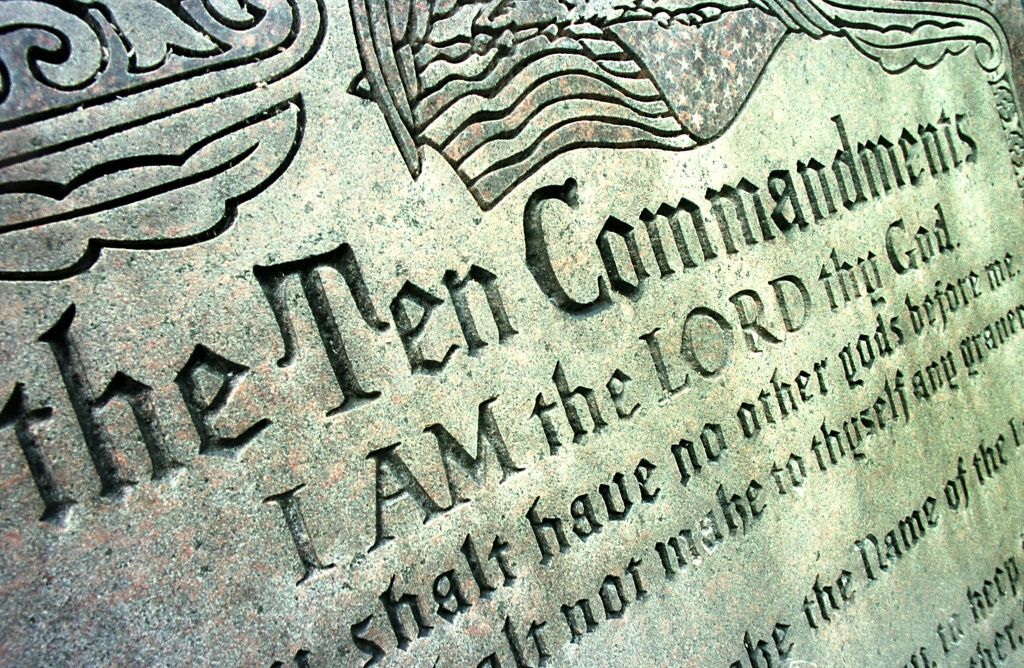
Scripture is full of the commands remember and do not forget. The Ten Commandments likewise begin not with a commandment but with a reminder: I am the LORD your God. After all, if we forget that Truth then we should not hope to keep the Commandments.
The parable of the wicked tenants presents Israel’s tragic failure to remember. The parable’s landowner represents God, and the vineyard He built is Jerusalem, or Israel in general. The tenants—Israel’s leaders—failed to remember that He was the One who made their vineyard. They had, as Isaias warned, forgotten the God of their salvation…. We face the same danger as the wicked tenants. When forgetfulness creeps in—when we forget that it is He who made us and redeemed us—we begin to view ourselves as independent from Him. We fall into a false sense of self-sufficiency. We grow to resent His commands as inconveniences, intrusions, and violations of our autonomy. His messengers become annoying to us, and we dismiss them….
The Church constantly guards us against this forgetfulness. As a good Mother she forever reminds us of the LORD, His works, and His law…. She persistently says, in effect, take care you do not forget the LORD (Dt 6:12). Through Her priests and bishops she puts our LORD’s teachings before us always. She points to what He has already accomplished, reminding us that it was He who established us as His vineyard. At the same time She looks to the future and makes us “remember” that moment when He will come again and gather His harvest.
Mother Church fulfils this apostolate to the memory most especially in the Liturgy. In the cycle of the Liturgical year she walks us through the life of Christ. Year after year she causes us to remember His Incarnation, birth, life, Passion, Death, and Resurrection. We revisit His words and deeds over and over again. Furthermore, in the Mass she actually makes present Our LORD’s greatest work—His sacrifice on the Cross. She does not just recall or recollect His sacrifice. Rather, She makes His sacrifice truly present so that we can conform our lives to it. And She does this in obedience to His own command: Do this in remembrance of Me.
Father Paul Scalia
Father Scalia is a priest of the diocese of Arlington, Virginia. He is the son of Justice Antonin Scalia († 2016), who served on the United States Supreme Court for thirty years. [From That Nothing May Be Lost: Reflections on Catholic Doctrine and Devotion ©].
“The refusal to take sides on great moral issues is itself a decision. It is a silent acquiescence to evil. The tragedy of our time is that those who still believe in honesty lack fire and conviction, while those who believe in dishonesty are full of passionate conviction.” – Ven. Archbishop Fulton Sheen
 Daily Reflections
Leave a comment