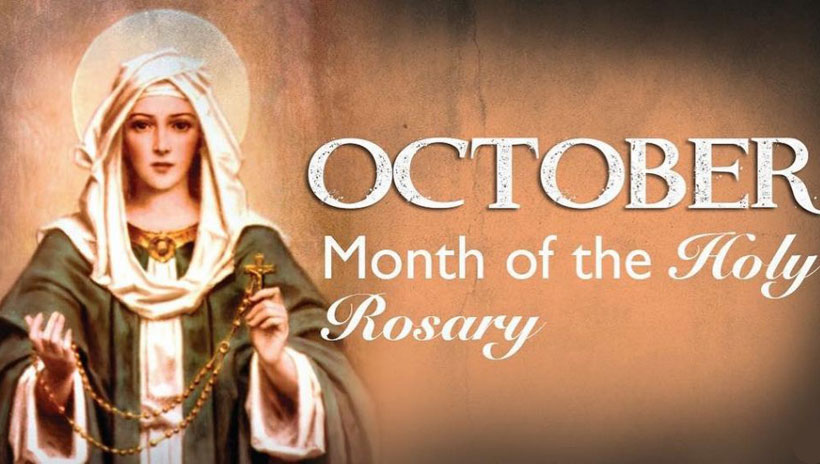
PRAYER FOR THE MONTH OF OCTOBER
Hasten, O most powerful destroyer of heresy, hasten the hour of mercy, seeing that the hour of judgement is dearly challenged by innumerable offenses…. Enable me to live, a just life on earth, and reign with the just in Heaven, whilst with the faithful throughout the world, O Queen of the Most Holy Rosary, I salute thee and cry out: Queen of the Most Holy Rosary, pray for us! Amen.
1 Timothy 2:5-6; Hebrews 2:17
For there is One God
and One mediator of God and men,
the man Christ Jesus.
– Who gave Himself a redemption for all.
Wherefore, it behoved Him in all things to be made like unto His brethren, that He might become a merciful and faithful high priest before God, that He might be a propitiation for the sins of the people. – Who gave Himself a redemption for all.
Twenty-Seventh Week in Ordinary Time
Saint John Henry Newman, Bishop (Ireland, England and Wales)
Saint John Leonardi, Confessor
St. Dionysius, Rusticus, Priest & Eleutherius, Deacon, Martyrs (Traditional)
ST. JOHN HENRY NEWMAN, BISHOP
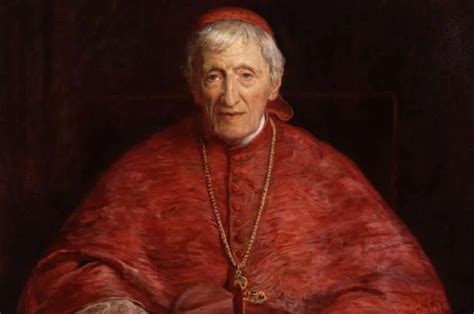
Born in London in 1801, John Henry Newman was for over twenty years an Anglican clergyman and Fellow of Oriel College, Oxford. His studies of the early Church led him progressively towards Catholicism, and in 1845 he embraced “the One True Fold of the Redeemer”. In 1847 he was ordained priest and went on to found the Oratory of Saint Philip Neri in England. He was a prolific and influential writer on a variety of subjects. In 1879 he was created Cardinal by Pope Leo XIII. Praised for his humility, unstinting care of souls and contributions to the intellectual life of the Church, he died in Birmingham on 11 August 1890. He was canonised in Rome on 13 October 2019, the first English Saint to be canonised since 1970.
ST. JOHN LEONARDI, CONFESSOR
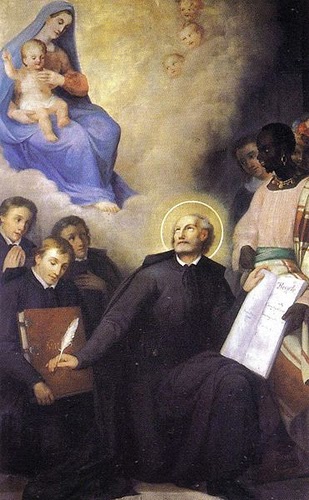
John Leonardi was born at Diecimo, Italy. He became a pharmacist’s assistant at Lucca, studied for the priesthood, and was ordained in 1572. He gathered a group of laymen about him to work in hospitals and prisons, became interested in the reforms proposed by the Council of Trent, and proposed a new congregation of secular priests. Great opposition to his proposal developed, but in 1583, his association—formally designated Clerks Regular of the Mother of God in 1621—was recognized by the bishop of Lucca with the approval of Pope Gregory XIII. John was aided by Saint Philip Neri and Saint Joseph Calasanctius, and in 1595, the congregation was confirmed by Pope Clement VIII, who appointed John to reform the monks of Vallombrosa and Monte Vergine. He died in Rome on 9 October of plague contracted while he was ministering to the stricken. He was venerated for his miracles and religious fervour and is considered one of the founders of the College for the Propagation of the Faith. He was canonized in 1938 by Pope Pius XI.
SAINT DIONYSIUS, BISHOP AND COMPANIONS, MARTYRS
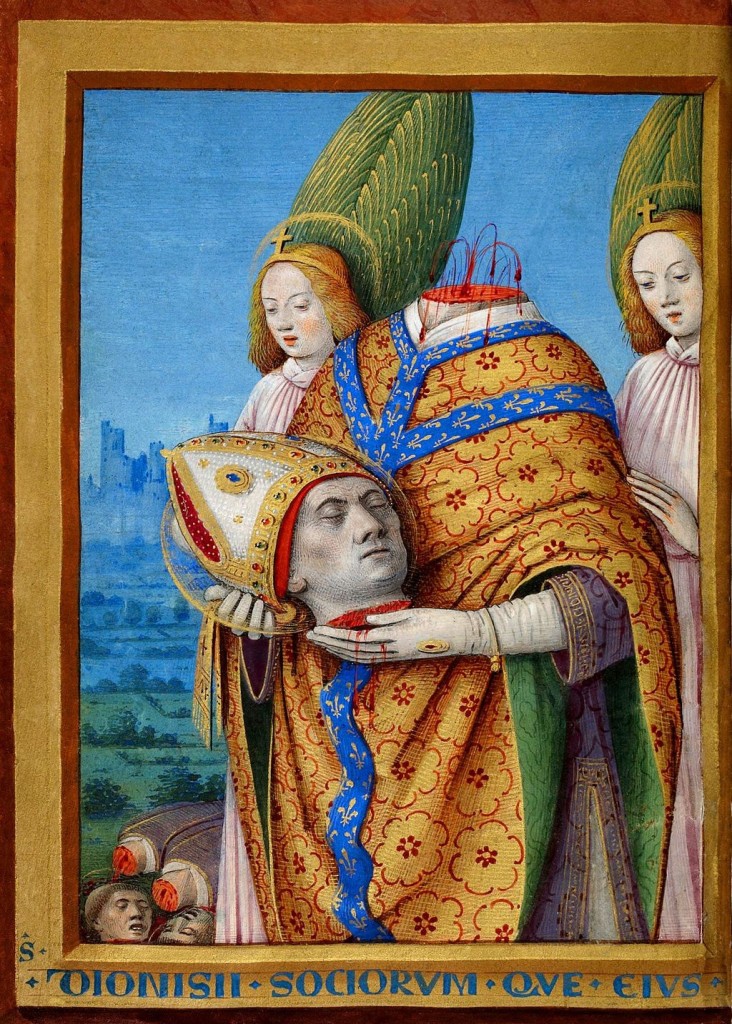
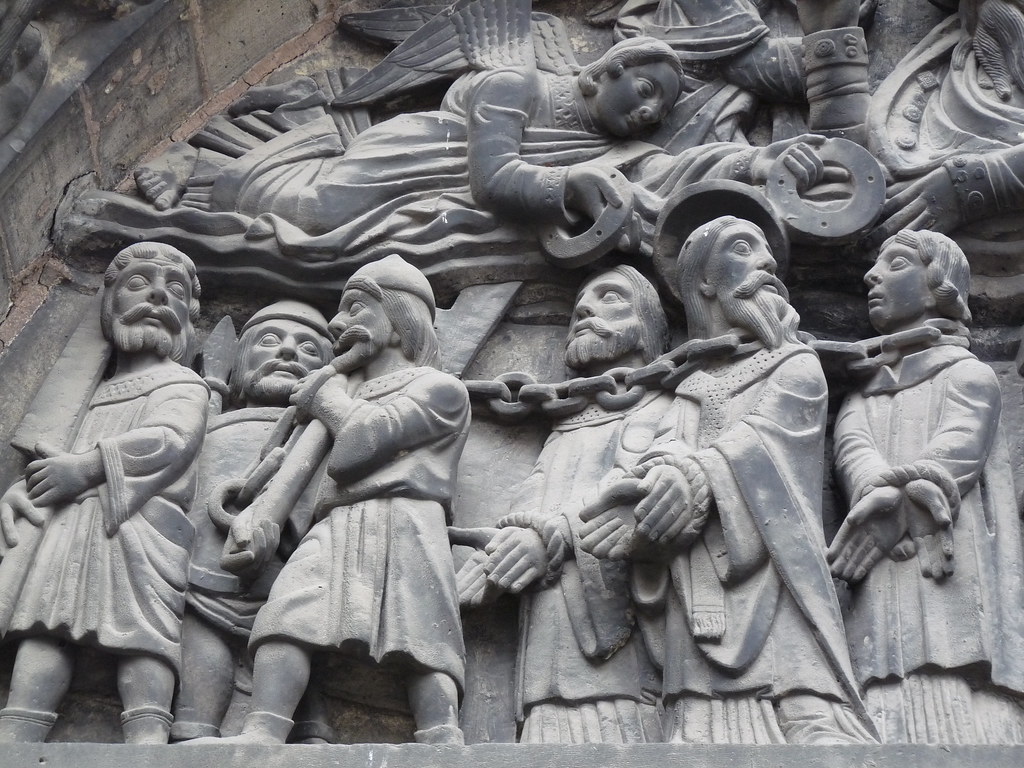
St. Dionysius seems to have suffered in the persecution of Valerian in 272, though some moderns defer his death to the beginning of the reign of Maximian Hereuleus, who resided chiefly in Gaul from the year 286 to 292. Ado calls the judge by whom he was condemned, Fescenius. The Acts of his Martyrdom, Saint Gregory of Tours, Fortunatus, and the western Martyrologists inform us, that after a long and cruel imprisonment he was beheaded for the Faith, together with Rusticus, a priest, and Eleutherius, a deacon. The Acts add that the bodies of the martyrs were thrown into the river Seine, but taken up and honourably interred by a Christian lady, named Catalla, not far from the place where they had been beheaded. The Christians soon after built a chapel over their tomb. In 469, through the pious exhortations of Saint Genevieve, a church was raised upon the ruins of this chapel that was a place of great devotion, much resorted to by pilgrims, as appears from the works of Saint Gregory of Tours in many places, by which it is clear that this church stood without the walls of the city, though very near them. By a donation of Clotaire II, it appears that here was then a religious community governed by an abbot, Degobert, who died in 638, founded the great abbey in this place in which he was interred, and which has been, for many ages the usual burial place of the French kings. Pepin and his son, Charlemagne were principal benefactors to this monastery, which was magnificently rebuilt by Abbot Suger. The relics of Saints Dionysius, Rusticus, and Eleutherius are kept here in three silver shrines. The miraculous cure of Pope Stephen II in this church has been already related. Saint Dionysius of France is commonly called Saint Denis, from the French Denys. A portion of his relics is said to be possessed by the abbey of Saint Emmeran, at Ratisbon.
Those apostolic pastors who converted so many nations to Christ were men filled with his Spirit, who regarded nothing but his glory, and acted and lived for him alone. Christ on earth never entertained any regard but for the glory of His Father, to whom He offered Himself and His kingdom. Whoever becomes His minister, must, in like manner, have no aim, no intention but to advance the divine honour: for this he must be dead to the world, and have bid adieu to it, that is, to all desires of honours, applause, pleasures, riches, or any earthly goods whatever. Such a one sees nothing in this world which he hopes or desires, nothing that he much fear; he seeks no composition with it while he is engaged in the cause of his Master; no threats or apprehensions of terror from its persecution can damp his courage in defending the honour of God, or cool his zeal for the salvation of souls.
From a treatise on Cain and Abel by Saint Ambrose, Bishop
(Lib. 1, 9, 34, 38-39: CSEL 32, 369, 371-372)
Pray especially for the whole Body of the Church
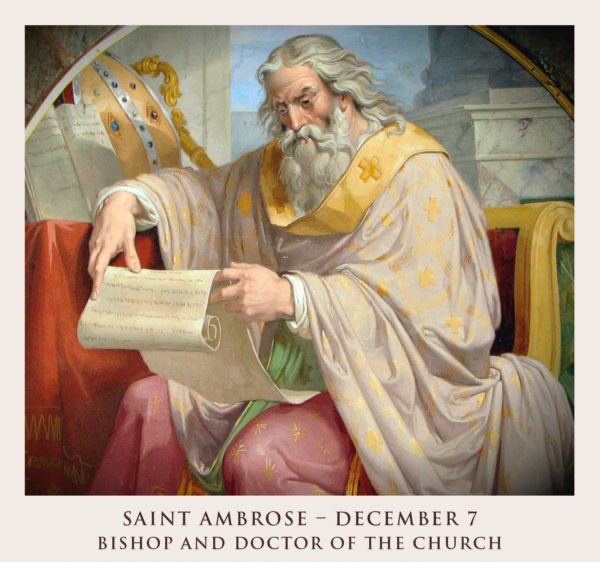
Offer God a sacrifice of praise and fulfill your vows to the Most High. If you praise God you offer your vow and fulfill the promise you have made. So the Samaritan leper, healed by the LORD’s word of command, gained greater credit than the other nine; he alone returned to Christ, praising God and giving thanks. Jesus said of him: There was no one to come back and thank God except this foreigner. He tells him: Stand up and go on your way, for your faith has made you whole.
The LORD Jesus, in His divine Wisdom, taught you about the goodness of the Father, who knows how to give good things, so that you might ask for the things that are good from Goodness itself. He urges you to pray earnestly and frequently, not offering long and wearisome prayers, but praying often, and with perseverance. Lengthy prayers are usually filled with empty words, while neglect of prayer results in indifference to prayer.
Again, Christ urges you, when you ask forgiveness for yourself, to be especially generous to others, so that your actions may commend your prayer. The Apostle, too, teaches you how to pray; you must avoid anger and contentiousness, so that your prayer may be serene and wholesome. He tells you also that every place is a place of prayer, though our Saviour says: Go into your room.
But by “room” you must understand, not a room enclosed by walls that imprison your body, but the room that is within you, the room where you hide your thoughts, where you keep your affections. This room of prayer is always with you, wherever you are, and it is always a secret room, where only God can see you.
You are told to pray especially for the people, that is, for the whole Body, for all its members, the family of your mother the Church; the badge of membership in this Body is love for each other. If you pray only for yourself, you pray for yourself alone. If each one prays for himself, he received less from God’s goodness than the one who prays on behalf of others. But as it is, because each prays for all, all are in fact praying for each one.
To conclude, if you pray only for yourself, you will be praying, as we said, for yourself alone. But if you pray for all, all will pray for you, for you are included in all. In this way there is a great recompense; through the prayers of each individual, the intercession of the whole people is gained for each individual. There is here no pride, but an increase of humility and a richer harvest from prayer.
“What must I do to inherit Eternal Life?”
Faith at most makes us a hero. Love makes a saint. Faith can put us above the world, but love brings us under God’s Throne. Faith can make us sober, but love makes us happy. It is possible for a man to have the clearest, calmest, most exact view of the realities of Heaven, may most firmly realize and act upon the Truths of the Gospel, may have that full confidence in God’s Word as to be able to do miracles, may have such simple, absolute faith as to give up his property to feed the poor, may so scorn the world and with so royal a heart trample upon it as even to give his body to be burned by a glorious martyrdom, and yet it is abstractedly possible that not one of these proper acts of faith in itself necessarily implies love. The Apostle says that though a person be all that has been said, yet unless he be also something besides—unless he have love—it profits him nothing (1 Co 13:1-3).
O fearful lesson to all those who are tempted to pride themselves in their labours or sufferings or sacrifices or works! We are Christ’s, not by Faith merely, nor by works merely, but by love. Not by hating the world, nor by hating sin, nor by venturing for the world to come, nor by calmness, nor by magnanimity—though we must do and be all this. We are saved, not by any of these things, but by that heavenly flame within us, which, while it consumes what is seen aspires to what is unseen. Love is the gentle, tranquil, satisfied acquiescence and adherence of the soul in the contemplation of God. Not only a preference of God before all things, but a delight in him because he is God. Not any violent emotion or transport, but, as Saint Paul describes it, long-suffering, kind, modest, unassuming, innocent, simple, orderly, disinterested, meek, pure-hearted, sweet-tempered, patient, enduring (1 Co 13:4-7). Faith without Charity is dry, harsh, and sapless; it has nothing sweet, engaging, winning, soothing. It was Charity which brought Christ down. Charity is but another name for the Comforter. It is eternal Charity which is the bond of all things in Heaven and earth. It is Charity wherein the Father and the Son are One in the unity of the Spirit, by which the angels in Heaven are One, by which all saints are One with God, by which the Church is One upon earth.
Saint John Henry Newman
Saint John Henry Newman († 1890) established the English Oratory in Birmingham, was a preacher of great eloquence, and a highly influential figure during the Catholic Revival in England. His feast day is 9 October. [From The Tears of Christ: Meditations for Lent. ©
DAILY MEDITATION

As the prospect of an abundant harvest soothes the labours and cheers the heart of the husbandman – so, in like manner, hope and reward ought to support us and relieve our fatigues. The harvest will be ours, for “in due time we shall reap“ [Galatians 6:9]. We cannot cherish a doubt of this, without questioning the fidelity of the LORD our God.
The labourer, notwithstanding his wise precautions, his defatigable care, his well-founded hopes, may, in a single night, find his fields torn and spoiled by a mighty storm or by some other accident. But the just man has nothing to fear. Let him but persevere in the practice of good works, and nothing in the world can hinder him the fruit: “And in doing good let us not fail; for, in due time, we shall reap, not feeling” [Ibid.] Some commentators explain those words of the apostle in another way. It is right, say they, that we should sow without respite; since, in Heaven, the harvest will be eternal: “We shall reap, not failing.“ This is the opinion of St. Augustine.
Do not relax your efforts, says the holy Doctor, and God will not fail to reward you. But if you tire of your work, or flag in your efforts, the judgement of the LORD, says a prophet, will overwhelm you, like those bitter weeds that grow in the midst of the wheat. The words of the apostle signify that we should not cease from preparing for the harvest: “We shall reap, not failing.“
Fr. Paolo Segneri [d.1694] – Italian Jesuit missionary preacher, ascetical writer, and one of Italy’s greatest orators.
“The refusal to take sides on great moral issues is itself a decision. It is a silent acquiescence to evil. The tragedy of our time is that those who still believe in honesty lack fire and conviction, while those who believe in dishonesty are full of passionate conviction.” – Ven. Archbishop Fulton Sheen
 Daily Reflections
Leave a comment