First Friday Devotion
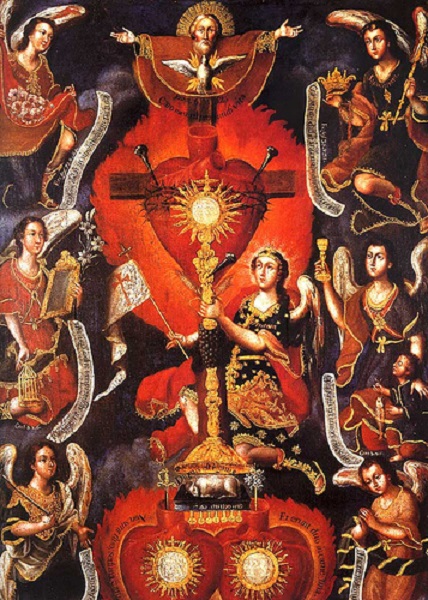
Making Reparation to the Sacred Heart of Jesus
In the Nine First Fridays Devotion
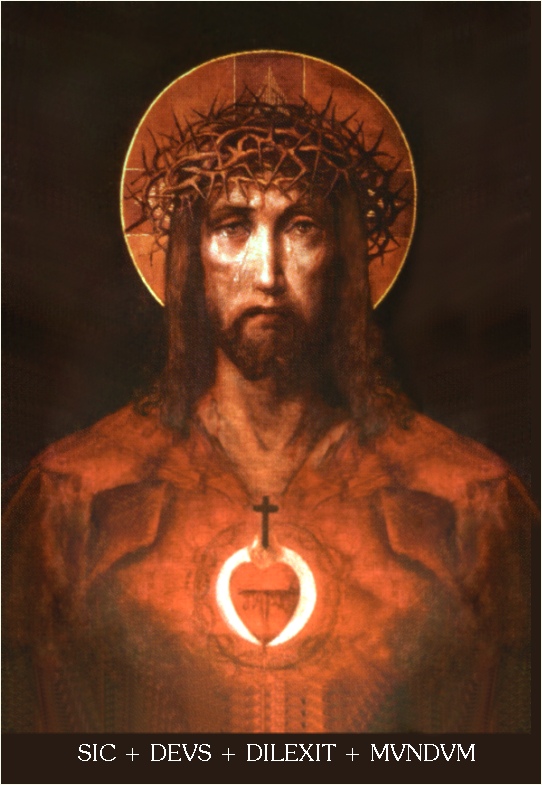
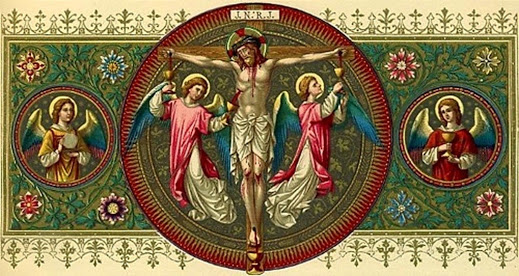
“Behold this Heart which has so loved men that it has spared nothing, even to exhausting and consuming itself in order to testify to its love! And in return, I receive from the greater part only ingratitude, by their irreverence and sacrilege, and by the coldness and contempt they have for Me in this Sacrament of Love. …
“I feel this more than all that I suffered during My Passion. If only they would make Me some return for My Love, I should think but little of all I have done for them and would wish, were it possible, to suffer still more. But the sole return they make for all My eagerness to do them good is to reject Me and treat Me with coldness. Do you at least console Me by supplying for their ingratitude, as far as you are able.”
(Revelations of the Sacred Heart of Jesus to St. Margaret Mary Alacoque)
Our LORD longs to find special expressions of our love for Him on the First Friday of each month. Your fervent Holy Communion, as a special act of reparation and love to the Sacred Heart of Jesus, will greatly console Our LORD for the ingratitude and outrages that He endures for our sake in the Blessed Sacrament!
First Friday of the Month
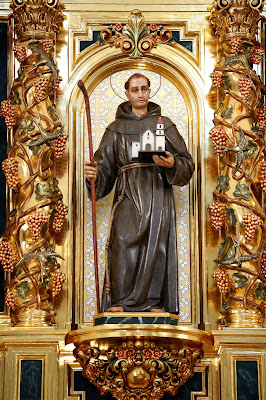
Saints Cyril and Methodius, Bishops (Traditional)
A mere word from Our LORD as He “was walking on” (Mt 9:9-13) energised Matthew to break free of the paralysing effects of sin and to begin a new existence. The love that Rebecca has when she sees Isaac “walking through the fields to meet us” (Genesis 24:62-67) prefigures the love we show Our LORD, who has sought us out and espoused us to Himself in the Incarnation. The Promise made to Abraham that God would “give this country to My descendants” (Genesis 24:7)is fulfilled in the preaching of the Apostles, who carry the Gospel to the ends of the earth.
SAINTS CYRIL AND METHODIUS, BISHOPS
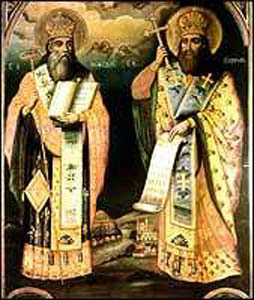
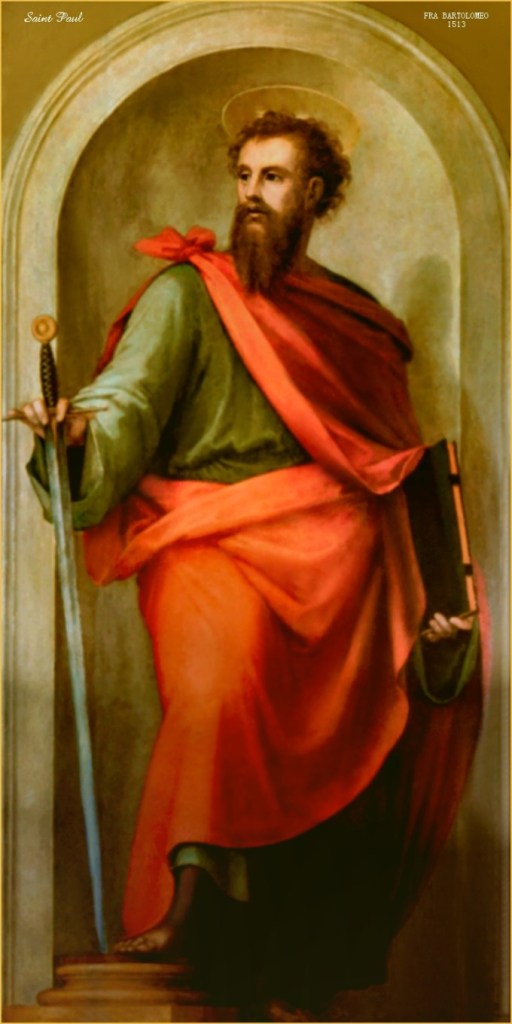
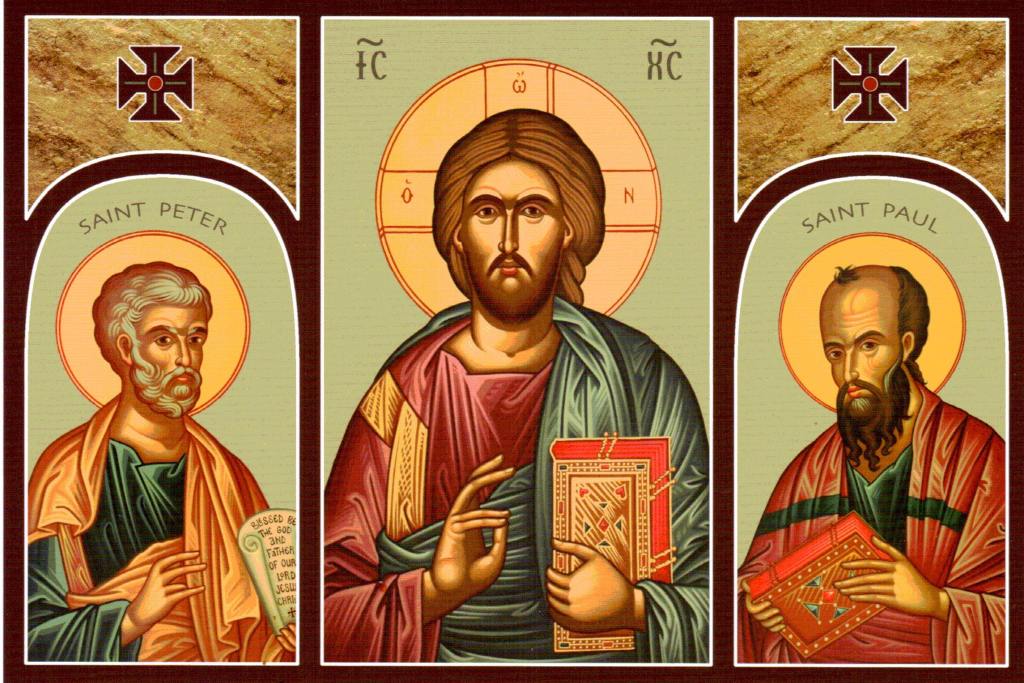
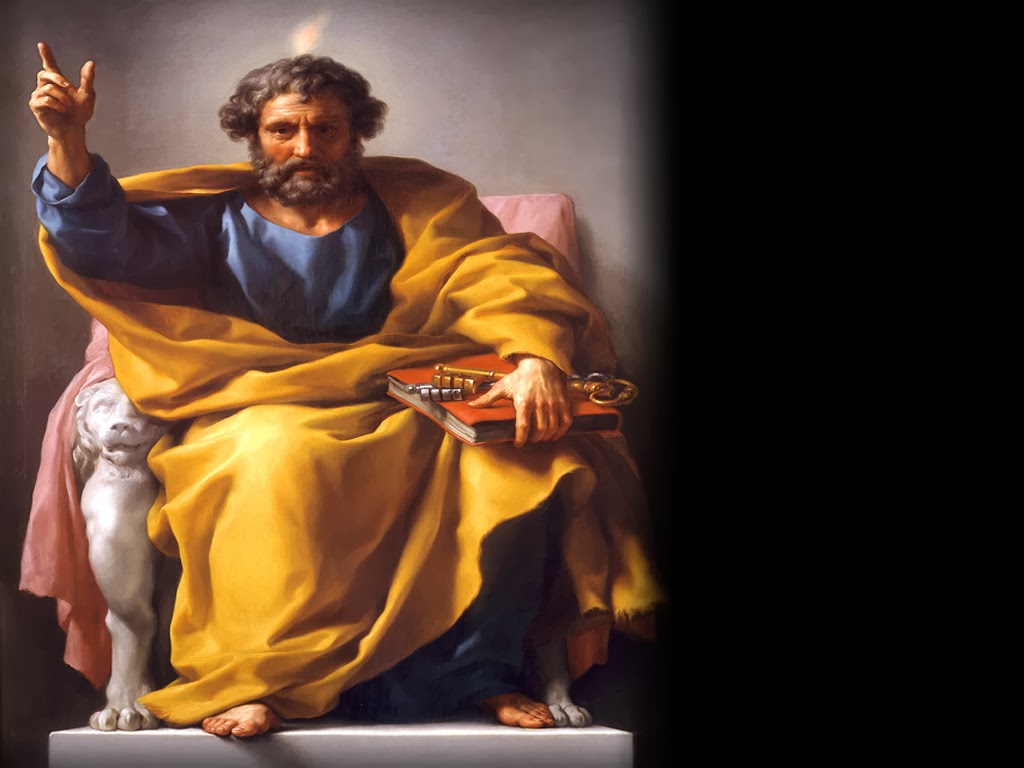
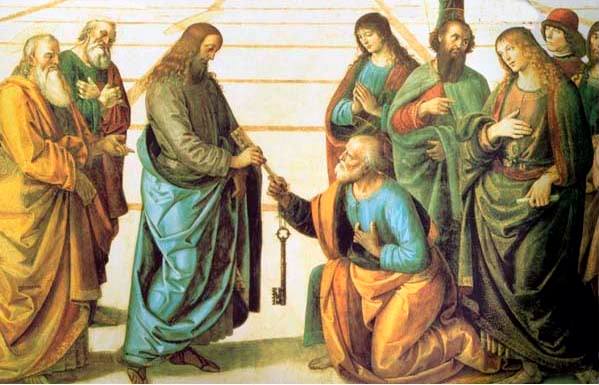
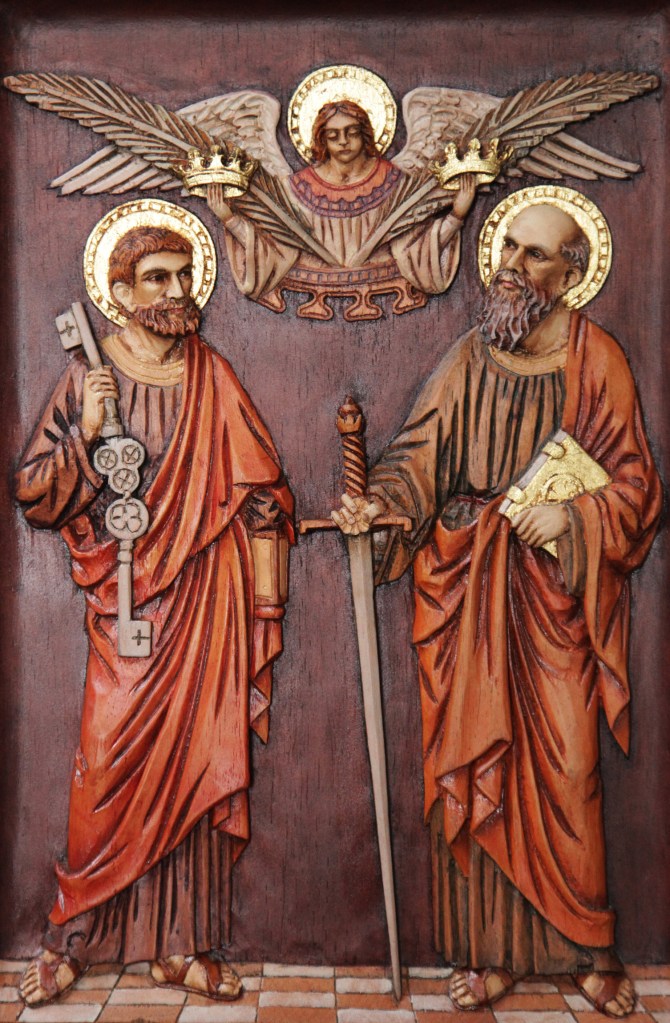
These two celebrated apostles of the East are found by more than one tie to the history of Papal Rome. The Slav nations are indebted to Saint Cyril and Methodius, for their civilization, their Faith, and their original communion with the See of Peter. To this day, the Slav pilgrim who visits Rome and kneels at the Sepulchre of the Prince of the Apostles, sees upon that tomb a painting representing the Saviour between Saint Peter and Saint Paul. That venerated icon, on which is traced and inscription in the Slavonic tongue, is said to have been placed there by Saint Cyril and Methodius, as a mark of their homage and devotion to the Apostolic See.
They were consecrated. Bishops, by Pope Adrian 11. They invented a writing for the language of the Slav; translated the Scriptures and made use of this language in the Liturgy. Cyril, worn out by the mission, returned to Rome and prepared a tomb for himself in the shadow of Saint Clement’s. He died in 869 A.D. at the age of 42 Methodius died in 885 A.D.
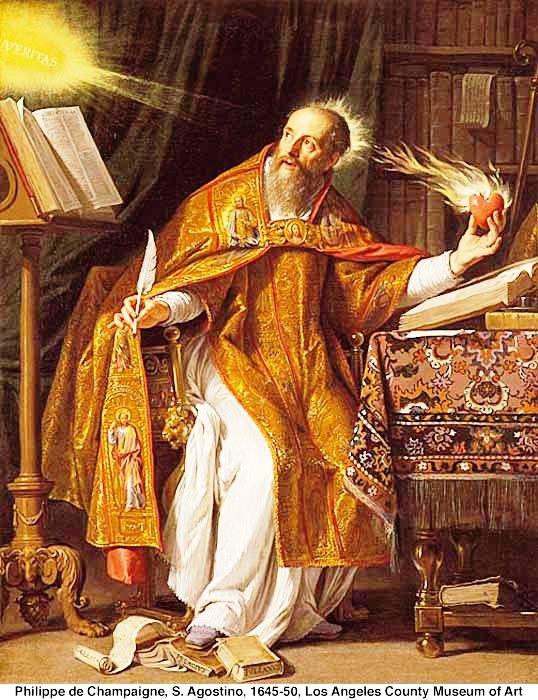
From a book on the Predestination of the Saints by Saint Augustine, Bishop and Doctor of the Church
(Cap. 15, 30-31: PL 44, 981-983)
In His human nature Jesus Christ is descended from the line of David
The greatest glory of predestination and grace is the Saviour Himself, the Mediator between God and men, the man Christ Jesus. What, I ask you, did His human nature do in the way of good works or of Faith to merit beforehand this Glory? Give me an answer to this question: How did His humanity merit to be taken up by the Word, Co-eternal with the Father, into unity with His person and so to be the Only-begotten Son of God? What goodness, of whatever kind, did He possess beforehand? What had He done, what Faith had He shown, what request had He made, that He should attain to that point of preeminence, beyond all human power of description? Was it not through the action of the Word in taking this humanity to Himself that, from the moment when He came into existence, this human being came into existence as the only Son of God?
We must keep before our eyes the very Source of Grace, taking its origin in Christ, our Head, and flowing through all His members according to the capacity of each. The Grace which makes any man a Christian from the first moment of his coming to believe is the same Grace which made this man the Christ from His coming to be as man. The Spirit through whom men are reborn is the same Spirit through whom Christ was born. The Spirit by whom we receive forgiveness of sins is the same Spirit who brought it about that Christ knew no sin. Clearly, God knew that He would do all this. The predestination of the saints is the same predestination that reached its greatest glory in the Saint above all other saints. Who can deny this among those who understand correctly the utterances of Truth? For we have been taught that inasmuch as the Son of God became man, the LORD of Glory Himself was the object of predestination.
Jesus then was predestined. He who was to be the son of David in His human nature was to be the Son of God in power through the action of the Spirit of Holiness, for He was born of the Holy Ghost and of the Virgin Mary. This unique taking to Himself of a human nature by God the Word came about in such a way, too mysterious for our understanding, that with truth and accuracy the Word could be called at one and the same time the Son of God and the son of man: son of man because of the human nature that was taken, and Son of God because it was the Only-begotten God who took that human nature. We are not to believe in God as a quaternity but as a Trinity.
Human nature was in this case predestined to so marvellous, so sublime, so perfect a dignity that it could not be raised higher; just as the Divine nature itself could not demean itself any lower than by taking human nature with all its weakness, even to dying on a Cross. Just as One Christ was predestined to be our Head, so we, the many, were predestined to be His members. Let there be no mention here of human merits; they were lost through Adam. Let God’s Grace reign Supreme, as it does through Jesus Christ, Our LORD, the Only Son of God, the One LORD. If anyone can find in Christ, our Head, any merits preceding His unique birth, he may look also for merits in ourselves preceding our rebirth as His many members.
Called to Holiness by God’s Initiative
What is “holiness”? The question is crucial. Holiness is not something I can acquire [for myself]. In the Scriptures God is “Holy” and this term was used in an effort to express His transcendence, His inmost being, His own world utterly separate from the world of men. It means God’s own, Unutterable Existence. A human being is holy insofar as he has come into contact with Divine holiness. For this, the Divine holiness must have drawn near and touched him, for man, of himself, cannot enter the Divine ambience. God’s Life is inaccessible to him. To be holy in the absolute sense means that a human being has been taken right into this ambience, that he lives with God, in God’s own sphere.
The writers of the New Testament speak of Christians as God’s holy people; they are the saints, the holy ones. This means that they are so in calling; the whole meaning of their vocation as Christians is to be drawn into the inmost Heart of God. They are drawn in Jesus who has made them His own. It is He, of humankind, who is the Holy One absolutely, for He belongs completely to God; besides being on our side He is also fully on God’s side. By our union with Jesus we too can enter, and do enter into God’s holy world. Holy in principle we have to become so in reality, we have to allow God to come close to us and by His closeness make us like Him and able to live wholly in His Sphere, His Eternal Life. The Divine initiative cannot be overstressed. Too easily we think of holiness as something we acquire…. No effort of ours can achieve it. It is hHe Himself who must snatch us away from ourselves.
Sister Ruth Burrows, o.c.d.
Sister Ruth is a Carmelite nun at Quidenham in Norfolk, England. She is the author of a number of bestselling books. [From To Believe in Jesus. Copyright © 2010 by Ruth Burrows. Published by Hidden Spring, an imprint of Paulist Press, Inc., New York/Mahwah, New Jersey. Reprinted with permission of Paulist Press.
Galatians 4:4-5; Ephesians 2:4; Romans 8:3
When at last the appointed time had come,
God sent His Son into the world,
born of a virgin, subject to the Law,
– to redeem those who were subject to the Law.
Because of His great love for us,
God sent His Son in the likeness of our sinful human nature.
– To redeem those who were subject to the Law.
“The refusal to take sides on great moral issues is itself a decision. It is a silent acquiescence to evil. The tragedy of our time is that those who still believe in honesty lack fire and conviction, while those who believe in dishonesty are full of passionate conviction.” – Ven. Archbishop Fulton Sheen



 Daily Reflections