For prophecy came not by the will of man at any time. – The holy men of God spoke, inspired by the Holy Ghost.
Because the LORD giveth wisdom: and out of his mouth cometh prudence and knowledge. – The men who spoke the word of God were inspired by the Holy Spirit.
Feast of Saint Matthew
SAINT MATTHEW, APOSTLE, EVANGELIST
Matthew, or Levi, son of Alphaeus, lived at Capharnaum on Lake Genesareth. He was a a despised tax collector who converted from his sinful life when Christ addressed him at Capharnaum. The publicans, on account of their many acts of injustice and extortion, were looked upon as the greatest sinners by the Jews. At his Master’s invitation, he promptly joined Him and is credited with the authorship of the first Gospel.
There is a long-standing tradition that he first wrote the Gospel in Aramaic. Matthew begins his Gospel with Jesus’ genealogy, revealing Him as a descendant of David, and he takes pains to show how the teachings of the Law and the Prophets have culminated in Christ. Matthew’s Gospel is given pride of place in the canon of the New Testament, and was written to convince Jewish readers that their anticipated Messias had come in the person of Jesus. He preached among the Jews for 15 years. Matthew himself by his humble confession, gratefully acknowledged the gracious condensation of the LORD to sinners.
Tradition assigns Matthew the symbol of the winged man, one of the four mystical creatures from the Book of the Apocalypse. Jesus’ contemporaries were surprised to see the Christ with a traitor, but Jesus explained that he had come “not to call the just, but sinners” (Mt. 9:13). He preached the Good News in Palestine, and in Ethiopia where he was attacked and killed while celebrating Mass in 60 A.D.
From a homily by Saint Bede the Venerable, Priest (Hom, 21: CCL 122, 149-151)
Jesus saw him through the eyes of mercy and chose him
Jesus saw a man called Matthew sitting at the tax office, and He said to him: Follow Me. Jesus saw Matthew, not merely in the usual sense, but more significantly with His merciful understanding of men.
He saw the tax collector and, because He saw him through the eyes of mercy and chose him, He said to him: Follow Me. This following meant imitating the pattern of His life—not just walking after Him. Saint John tells us: Whoever says he abides in Christ ought to walk in the same way in which He walked.
And he rose and followed Him. There is no reason for surprise that the tax collector abandoned earthly wealth as soon as the LORD commanded him. Nor should one be amazed that neglecting his wealth, he joined a band of men whose leader had, on Matthew’s assessment, no riches at all. Our LORD summoned Matthew by speaking to him in words. By an invisible, interior impulse flooding his mind with the Light of Grace, He instructed him to walk in His footsteps. In this way Matthew could understand that Christ, who was summoning him away from earthly possessions, had incorruptible treasures of Heaven in His gift.
As He sat at table in the house, behold many tax collectors and sinners came and sat down with Jesus and His disciples. This conversion of one tax collector gave many men, those from his own profession and other sinners, an example of repentance and pardon. Notice also the happy and true anticipation of his future status as apostle and teacher of the nations. No sooner was he converted than Matthew drew after him a whole crowd of sinners along the same road to salvation. He took up his appointed duties while still taking his first steps in the Faith, and from that hour he fulfilled his obligation and thus grew in merit.
To see a deeper understanding of the great celebration Matthew held at his house, we must realize that he not only gave a banquet for the LORD at his earthly residence, but far more pleasing was the banquet set in his own heart which he provided through faith and love. Our Saviour attests to this: Behold I stand at the door and knock; if anyone hears My Voice and opens the door, I will come in to him and eat with him, and he with Me.
On hearing Christ’s voice, we open the door to receive Him, as it were, when we freely assent to His promptings and when we give ourselves over to doing what must be done. Christ, since He dwells in the hearts of His chosen ones through the grace of His love, enters so that He might eat with us and we with Him. He ever refreshes us by the Light of His Presence insofar as we progress in our devotion to and longing for the things of Heaven. He Himself is delighted by such a pleasing banquet.
DAILY MEDITATION
Christ, the Saviour, looked with His mild eyes at St. Matthew in his customhouse, and called him. Matthew obeyed, instantly arose, and followed Christ, becoming thus, from a publican, an Apostle of the LORD, a great saint. How comforting an example of divine mercy, even toward the greatest sinner! How wholesome a lesson! The same kind, merciful Saviour, who gazed, so mildly upon Matthew, and called him, turns His loving eyes on you also, even if you live in mortal sin. He calls you to repentance; He calls you to follow Him. Obey Him as Saint Matthew did, without putting it off. Let neither the greatness, nor the number of your sins detain you. Your Saviour is ready to forgive them, to receive you into His favour, and to make you a saint. “If you are a publican, or a sinner,” says St. Chrysostom, “you may still become an evangelist. If you are a blasphemer, you may still become an apostle.”
This means that you may obtain pardon and gain salvation, as Saint Matthew and Saint Paul did, the former, of whom was a publican, a sinner; and the other, according to his own testimony, a blasphemer. St. Augustine says the same in the following words: “Perhaps some may think that the sin they have committed is so great that he cannot obtain pardon from God. Oh! may such thoughts be far from us. Why, O man, regard only the number of thy sins, and not the Omnipotence of the heavenly Physician? As God is merciful, because He is gracious, and as He can be merciful, because He is Omnipotent, he who believes that God will not or cannot forgive him, closes the door of the divine mercy on himself, by denying that God is gracious or Omnipotent. Hence let no one doubt the mercy of God, even if he has committed a hundred, nay a thousand crimes. But this belief should incite him to reconcile himself immediately to the Almighty.”
Fr. Francis Xavier Weninger [died 1888] – Austrian priest, Professor, and also; joined the Jesuits as missionary preacher to the United States.
“The refusal to take sides on great moral issues is itself a decision. It is a silent acquiescence to evil. The tragedy of our time is that those who still believe in honesty lack fire and conviction, while those who believe in dishonesty are full of passionate conviction.” – Ven. Archbishop Fulton Sheen
These are the martyrs who bore witness to Christ. Praising the LORD, they feared no evil. – The blood of martyrs is the seed of the Church.
They are as unknown, yet well known, as dying, yet living still, as having nothing, yet possessing all things. – The blood of martyrs is the seed of Church.
Wednesday of the Twenty-Fourth Week in Ordinary TimeEmber Wednesday in September (Traditional) Saints Andrew Kim Tae-gŏn, Priest, Paul Chŏng Ha-sang, and companions, MartyrsSaint Eustace and Companions, Martyrs (Traditional)
ST. ANDREW KIM TAE-GÔN, PRIEST, PAUL CHŌNG HA-SANG, AND COMPANIONS, MARTYRS
Unique among the national churches, the Church in Korea arose not through the efforts of outside missionaries but rather through the determination of Korean laypersons. Yi Seung-hun was the first to be baptised when he received the Sacrament in 1784, in Beijing. Returning to Korea with rosaries, statues, and catechisms, he evangelised his brethren. The martyrs remembered today were among the second and third generation of Catholics. Greatly desiring the sacraments, Paul Chŏng Ha-sang repeatedly risked his life to smuggle missionaries into the country.
Andrew Kim Tae-gŏn, the first native Korean priest was the son of Korean converts. His father, Ignatius Kim, was martyred during the persecution of 1839 and was beatified in 1925. After Baptism at the age of 15, Andrew traveled 1,300 miles to the seminary in Macao, China. After six years he managed to return to his country through Manchuria. That same year he crossed the Yellow Sea to Shanghai and was ordained a priest. Home again, he was assigned to arrange for more missionaries to enter by a water route that would elude the border patrol. He was arrested, tortured and finally beheaded at the Han River near Seoul, the capital.“My Eternal life is beginning now”, he proclaimed in his last sermon, just before he was beheaded. Paul Chong Hasang was a seminarian, aged 45. One hundred and three martyrs are revered as the Martyrs of Korea.
Christianity came to Korea during the Japanese invasion in 1592 when some Koreans were baptized, probably by Christian Japanese soldiers. Evangelization was difficult because Korea refused all contact with the outside world except for bringing taxes to Beijing annually. On one of these occasions, around 1777, Christian literature obtained from Jesuits in China led educated Korean Christians to study. A home Church began. When a Chinese priest managed to enter secretly a dozen years later, he found 4,000 Catholics, none of whom had ever seen a priest. Seven years later there were 10,000 Catholics. Religious freedom came in 1883.
SAINT EUSTACE AND HIS COMPANIONS, MARTYRS
Eustace was commander-in-chief in the army of the Emperor Trajan. Having refused to thank the gods for a triumph, he was burned to death with his wife and two children, after undergoing many cruel tortures in 120 A.D.
From the final exhortation of Saint Andrew Kim Taegŏn, Priest and Martyr (Pro Corea Documenta, ed. Mission Catholique Séoul, Séoul/Paris, 1938, vol. 1, 74-75)
Love and perseverance are the crown of Faith
My brothers and sisters, my dearest friends, think again and again on this: God has ruled over all things in Heaven and on earth from the beginning of time: then reflect on why and for what purpose He chose each one of us to be created in His own image and likeness.
In this world of perils and hardship, if we did not recognize the LORD as our Creator, there would be no benefit either in being born or in our continued existence. We have come into this world by God’s grace; by that same grace we have received Baptism, entrance into the Church and the honour of being called Christians. Yet what good will this do us if we are Christians in name alone and not in fact? We would have come into the world for nothing, we would have entered the Church for nothing, and we would have betrayed even God and His grace. It would be better never to have been born than to receive the grace of God and then to sin against Him.
Look at the farmer who cultivates his rice fields. In season he plows, then fertilizes the earth; never counting the cost, he labours under the sun to nurture the seed he has planted. When harvest time comes and the rice crop is abundant, forgetting his labour and sweat, he rejoices with an exultant heart. But if the crop is sparse and there is nothing but straw and husks, the farmer broods over his toil and sweat and turns his back on that field with a disgust that is all the greater the harder he has toiled.
The LORD is like a farmer and we are the field of rice that He fertilizes with His grace and by the Mystery of the Incarnation and the Redemption irrigates with His Blood, in order that we will grow and reach maturity. When harvest time comes, the Day of Judgment, those who have grown to maturity in the grace of God will find the Joy of adopted children in the Kingdom of Heaven; those who have not grown to maturity will become God’s enemies, and, even though they were once His children, they will be punished according to their deeds for all Eternity.
Dearest brothers and sisters: when He was in the world, the LORD Jesus bore countless sorrows and by His own Passion and Death founded the Church; now Ie gives it increase through the sufferings of the faithful. No matter how fiercely the powers of this world oppress and oppose the Church, they will never bring it down. Ever since His Ascension (into Heaven) and from the time of the apostles to the present, the LORD Jesus has made His Church grow even in the midst of tribulation.
For the last fifty or sixty years, ever since the coming of the Church to our own land of Korea, the faithful have suffered persecution over and over again. Persecution still rages and as a result many who are friends in the household of the Faith, myself among them, have been thrown into prison and like you are experiencing severe distress. Because we have become the One Body, should not our hearts be grieved for the members who are suffering? Because of the human ties that bind us, should we not feel deeply the pain of our separation?
But, as the Scriptures say, God numbers the very hairs on our head and in His All-embracing Providence He has care over us all. Persecution, therefore, can only be regarded as the command of the LORD or as a prize He gives or as a punishment He permits.
Hold fast, then, to the Will of God and with all your heart fight the good fight under the leadership of Jesus; conquer again the diabolical power of this world that Christ has already vanquished.
I beg you not to fail in your love for one another, but to support one another and to stand fast until the LORD mercifully delivers us from our trials.
There are twenty of us in this place and by God’s grace we are so far all well. If any of us is executed, I ask you not to forget our families. I have many things to say, yet how can pen and paper capture what I feel? I end this letter. As we are all near the final ordeal, I urge you to remain steadfast in Faith, so that at last we will all reach Heaven and there rejoice together. I embrace you all in love.
The Wisdom of the Korean Martyrs
These Korean martyrs are true sons and daughters of your nation, and they are joined by a number of missionaries from other lands. They are your ancestors according to the flesh, language, and culture. At the same time they are your fathers and mothers in the Faith, a faith to which they bore witness by the shedding of their blood. From the thirteen-year-old Peter Yu to the seventy-two-year-old Mark Chong, men and women, clergy and laity, rich and poor, ordinary people and nobles, many of them descendants of earlier unsung martyrs—they all gladly died for the sake of Christ.
Listen to the last words of Teresa Kwon, one of the early Martyrs: “Since the LORD of Heaven is the Father of all mankind and the LORD of all creation, how can you ask me to betray Him? Even in this world anyone who betrays his own father or mother will not be forgiven. All the more may I never betray Him who is the Father of us all.” A generation later, Peter Yu’s father, Augustine, firmly declares: “Once having known God, I cannot possibly betray Him.” Peter Cho goes even further and says: “Even supposing that one’s own father committed a crime, still one cannot disown him as no longer being one’s father. How then can I say that I do not know the Heavenly LORD Father Who is so good?” And what did the seventeen-year-old Agatha Yi say when she and her younger brother were falsely told that their parents had betrayed the Faith? “Whether my parents betrayed or not is their affair. As for us, we cannot betray the LORD of Heaven whom we have always served.” Hearing this, six other adult Christians freely delivered themselves to the magistrate to be martyred. In addition, there are countless other unknown, humble martyrs who no less faithfully and bravely served the LORD. The Korean Martyrs have borne witness to the Crucified and Risen Christ. Through the sacrifice of their own lives they have become like Christ in a very special way. The words of Saint Paul the Apostle could truly have been spoken by them: always, wherever we may be, we carry with us in our body the Death of Jesus, so that the Life of Jesus, too, may always be seen in our body…. we are consigned to our death every day, for the sake of Jesus, so that in our mortal flesh the Life of Jesus, too, may be openly shown.
Saint John Paul II
Saint John Paul II († 2005) was Pope from 1978 until 2005. The above words are from his homily during the Mass for the canonisation of the Korean Martyrs in 1984. [From Homily, Mass for the canonisation of the Korean Martyrs, 6 May, 1984, Youido Place, Seoul
DAILY MEDITATION – EMBER DAYS
Ember days [corruption from Latin Quatuor Tempora, four times] are the days at the beginning of the seasons ordered by the Church as days of fast and abstinence. They were definitely arranged and prescribed for the entire Church by Pope Gregory VII [1073–1085] for the Wednesday, Friday, and Saturday after 13 December [S. Lucia], after Ash Wednesday, after WhitSunday, and after 14 September [Exaltation of the Cross]. The purpose of their introduction, besides the general one intended by all prayer and fasting, was to thank God for the gifts of nature, to teach men to make use of them in moderation, and to assist the needy. The immediate occasion was the practice of the heathens of Rome. The Romans were originally given to agriculture, and their native gods belonged to the same class. At the beginning of the time for seeding and harvesting, religious ceremonies were performed to implore the help of their deities: in June for a bountiful harvest, in September for a rich vintage, and in December for the seeding; hence the feriæ sementivæ, feriæ messis, and feri vindimiales.
The Church, when converting heathen nations, has always tried to sanctify any practices which could be utilized for a good purpose. At first, the Church in Rome had fasts in June, September, and December; the exact days were not fixed, but were announced by the priests. The Liber Pontificalis ascribes to Pope Callistus [217–222), a law ordering the fast, but probably it is older. Leo the Great.[440–461] considers it an apostolic institution. When the fourth season was added, cannot be ascertained, but Gelasius [492–496] speaks of all four. This Pope also permitted the conferring of priesthood and deaconship on the Saturdays of Ember week – these were formally given only at Easter. Before Gelasius, the Ember days were known only in Rome, and after his time their observance spread.
They were brought into England by Saint Augustine; into Gaul and Germany by the Carlovingians. Spain adopted them with the Roman Liturgy in the eleventh century. They were introduced by Saint Charles Borromeo into Milan. The Eastern Church does not know them. The present Roman Missal, in the formulary for the Ember days, retains in part the old practice of Lessons from Scripture, in addition to the ordinary two; for the Wednesdays three, for the Saturdays six, and seven for the Saturday in December. Some of these lessons contain promises of a bountiful harvest for those that serve God.
Catholic Encyclopedia [1912] – classic multi – volume reference on “the constitution, doctrine, discipline, and history of the Catholic Church.”
“The refusal to take sides on great moral issues is itself a decision. It is a silent acquiescence to evil. The tragedy of our time is that those who still believe in honesty lack fire and conviction, while those who believe in dishonesty are full of passionate conviction.” – Ven. Archbishop Fulton Sheen
When therefore you shall see the “abomination of desolation”, standing in the holy place, For there shall be then great tribulation, And unless those days had been shortened, no flesh should be saved, – but for the sake of the elect those days shall be shortened.
Hurt not the earth, nor the sea, nor the trees, till we sign the servants of our God in their foreheads. – but for the sake of the elect those days shall be shortened.
Tuesday of the Twenty-Fourth Week in Ordinary Time
Saint Januarius, Bishop, Martyr and his Companions, Martyrs
Saint Theodore of Canterbury, (England)
ST. JANUARIUS, BISHOP, MARTYR, AND HIS COMPANIONS, MARTYRS
St. Januarius visited in prison by Proculus and Socius, deacons
St. Januarius, Bishop of Beneventum, received word that two deacons and two laymen were imprisoned under the brutal emperor Diocletian. Januarius was preparing to visit the men in prison when the Romans arrested him and his companions on their way to perform this work of mercy. The imprisoned men, including Januarius and his companions, Acutius, Eutychius, Desiderius, Festus, Proculus, and Socius, were all sentenced to death and exposed to wild beasts at Puteoli. When the beasts refused to attack them, the men were beheaded in 305.
In the great church at Naples are preserved some of the blood of St. Januarius in two glass phials, and also his head. The blood is congealed, but every year up to the present it liquefies when placed near the martyr’s head. This miracle has been verified both by scientists, and by many pious and learned persons. Cardinal Schuster, Archbishop of Milan, was able to observe it closely and, like others who have studied it, was obliged to confess that there seems to be no possible natural explanation of this event. It may be that in this manner, God is pleased to show to the people of Naples that the blood of their great Patron is still active and powerful, in the sight of the LORD, for with God there is no past, but all is present and living in His sight. He is remembered in New York City at the yearly festival of San Gennaro. Januarius is the patron saint of the City of Naples.
SAINT THEODORE OF CANTERBURY, BISHOP
Archbishop of Canterbury, England, and a memorable figure in the English Church. A native of Tarsus, Turkey, he was a Greek by descent. After studying in Tarsus and Athens, Greece, he went to Rome, where he became so respected that Pope St. Vitalian (r. 657-672) appointed him to succeed to the See of Canterbury in 667. After receiving consecration on March 26, 668, he set out for England in the company of Sts. Dominic Biscop and Hadrian the African, both of whom were to provide assistance and helped guarantee that Theodore’s administration remained entirely orthodox. They arrived at Canterbury in May 669 and Theodore moved immediately to consolidate his position as Primate of England and the metropolitan status of the See of Canterbury. To promote further unity, he convened two synods, at Hereford in 673 and at Hatfield in 680. Such was the success of his programs that the Venerable Bede wrote that Theodore was “the first Archbishop obeyed by all the English Church.”
From a Sermon by Saint Augustine, Bishop and Doctor of the Church (Sermo 340,1: PL 38, 1483-1484)
For you I am a Bishop; with you I am a Christian
The day I became a Bishop, a burden was laid on my shoulders for which it will be no easy task to render an account. The honours I receive are for me an ever present cause of uneasiness. Indeed, it terrifies me to think that I could take more pleasure in the honour attached to my Office, which is where its danger lies, than in your salvation, which ought to be its fruit. This is why being set above you fills me with alarm, whereas being with you gives me comfort. Danger lies in the first; salvation in the second.
To be honest with you, my obligations involve me in so much turmoil that I feel as though I were tossed by storms on a great ocean. When I remember by Whose Blood I have been redeemed, this thought brings me peace, as though I were entering the safety of a harbour; and I am consoled, as I carry out the arduous duties of my own particular office, by the blessings which we all have in common. By finding my chief joy therefore in the redemption, which I share with you, and not in my office, which has placed me over you, I shall the more truly be your servant; and so not only fulfill the LORD’s command, but also show myself not ungrateful to Him for making me your fellow servant. For my Redeemer has a claim upon my love, and I do not forget how He questioned Peter, and asked: Do you love Me, Peter? Then feed My sheep. He asked this once, then again and then a third time. He inquired about his love, and then He gave him work to do; for the greater one’s love is, the easier is the work.
How shall I repay the LORD for all the blessings He has given me? I could say perhaps that I repay Him by feeding His sheep, but even though I do this, it is not really I who do it, but the Grace of God within me. So when all that I do is the gift of God’s Grace, how can I possibly repay Him? As a matter of fact, I hope to be repaid myself, and this for the very reason that I love Him freely and feed His sheep. But, you may ask, if I feed His sheep because I love Him freely, how can I demand payment for feeding them? It is indeed unthinkable to ask for a recompense for love freely given unless that recompense is the loved one Himself.
But even if feeding His sheep could repay Him for redeeming me, what could repay Him for having made me His shepherd? To be a good shepherd I depend entirely on His Grace, for without His help I should be a very bad one, there is so much evil in me. Pray, then, that I may not be a bad shepherd, but a good one.
And for you, my brothers, I also pray and warn you against failing to cooperate with the grace you receive from God. Make my ministry a fruitful one. You are God’s garden, and you should therefore welcome the labourer who does the visible work of planting and watering the seed, even though the growth comes from One Who works invisibly within you. Help me both by your prayers and by your obedience, for then it will be a pleasure for me, not to preside over you, but to serve you.
DAILY MEDITATION
The holy Bishop, St. Januarius, was a native of Benevento, a city in the Neapolitan territory. His parents, not less virtuous than of high lineage, gave him from his earliest youth a most pious education, and he was so earnest in his endeavours to lead a blameless life, that the clergy and laity, after the death of their bishop, desired no other successor than Januarius. He alone opposed the election and could not be persuaded to consent, until obedience to the command of the pope forced him to yield. Great, as had been the struggle it cost the holy man to accept the high dignity conferred upon him, he was equally zealous and untiring in discharging his duties when installed into his see. At that period, the tyrants Diocletian and Maximian raged against the faithful, endeavouring to destroy all Christendom. The holy Bishop, therefore, used all his powers to strengthen his flock in the true Faith to encourage them to allow neither torments nor death to make them forsake their God. The teachings the holy bishop gave to others, he exemplified in his own life, thus showing to his flock how to endure martyrdom.
… the body of the saint was first brought to Benevento, but later, to Naples, where it is held in great veneration, on account of the protection, which, by the intercession of St. Januarius, the city enjoys from the eruption of Mount Vesuvius. It has a happened several times that when the relics of the saint were carried in solemn procession, toward the burning waves of lava which was ejected by this mountain and came rolling onward to destroy the city, the eruption ceased, and Naples was saved. To this day, the blood of the Saint is preserved at Naples, in a glass vial. The blood is congealed; but when placed near the head of the saint, it melts and bubbles up. This miracle, which has continued until the present time, has been witnessed by many, both Catholics and non-Catholics, and although several of the latter have ascribed it to deceit, it is impossible for them to prove their assertion.
Father Francis Xavier Weninger [d. 1888] – Austrian priest, professor, and author, joined the Jesuits as missionary preacher to the United States.
Raised Up with Christ
Dear Mama, it is very cold this morning and not a wisp of sunlight. Yesterday, during our walk, I was able to bask a little like a lizard. Today I’m going to have to hop around. Yesterday was a gloomy day. It was the feast of the Seven Sorrows of our Lady at the foot of Calvary and I meditated on it at length. Saturday, I received your two letters with the prayers. They are very good, especially the Fiat voluntas tua [“Let it be done according to Your will”]. Put them into practice and you will see God.
Why can’t I be outside this prison? I would have so many things to do and perhaps [people] to save or at least to protect! But you see, God has decided otherwise. Once I am in Heaven, I shall pray for Veronica until her death. Do you see God’s design? He made use of me to bring a child into the world, because He wanted to call me to Himself. I am very sure her name is written in the Book of Life…. I put all my cares at the feet of the Blessed Virgin, and I am sure that she will help me so that my anguish will be turned into joy.
It is very difficult to get used to the idea. There is something terrifying about passing so swiftly from life to death…. Our sins are shown up in the Divine Light. We see them with horror, and insofar as we are guilty we absolutely cannot bear to see ourselves in God. This is why it is indispensable to be completely purified at the moment of death. Do you understand why I must suffer, and why, very often, the death of the just is accompanied with these necessary agonies? And then we should remember too that our corruptible flesh will rise on the last day, incorruptible. We will have glorious bodies and will be like the angels! May we all be able to say with Our LORD, I have finished the work You gave Me to do; My Father, glorify Your Son. Dear Mama, until tomorrow, I embrace you with all my heart.
“The refusal to take sides on great moral issues is itself a decision. It is a silent acquiescence to evil. The tragedy of our time is that those who still believe in honesty lack fire and conviction, while those who believe in dishonesty are full of passionate conviction.” – Ven. Archbishop Fulton Sheen
Son of man, I have made thee a Watchman to the house of Israel. and thou shalt hear the Word out of My mouth, and shall tell it to them from Me. – Neither be thou afraid of their words neither be thou dismayed at their looks.
Behold I have made Thy face stronger than their faces: and thy forehead harder than their foreheads . – Neither be thou afraid of their words neither be thou dismayed at their looks.
Monday of the Twenty-Fourth Week in Ordinary Time
Saint Joseph of Cupertino, Confessor (Traditional)
Saint Paul asks that “there should be prayers offered for everyone—petitions, intercessions, and thanksgiving” (1 Timothy 2:1-8). All prayer, in effect, mirrors the actions of the elders who “pleaded earnestly with Him” to come (Luke 7:1-10). Even though the centurion is never face to face with Jesus, he grows from faith to greater faith. LORD Jesus, say the word. Heal my wounds so that my soul can be truly healed.
ST. JOSEPH OF CUPERTINO, CONFESSOR
Saint Joseph, born June 17, 1603, a humble Franciscan friar of Cupertino in Italy, who could acquire but little of book knowledge and needed divine help to qualify for the priesthood, was favoured by his Crucified God, with a marvellous grace of contemplation, and with the remarkable power of miracles. The feast of this glorious Son of the Seraph of Assisi was made universal throughout the Church by a Pope of the same Order, Clement X1V. He is famous for his evangelical simplicity and for his ecstasies. The whole of the Mass assigned to him brings out the mystical side of his sanctity. He worked many miracles and died a happy death at Orsino on September 18, 1663.
From a sermon On Pastors by Saint Augustine, Bishop and Doctor of the Church (Sermo 46, 3-4: CCL 41, 530-531)
The shepherds who feed themselves
Let us consider the unflattering words of God which Scripture addresses to shepherds who feed themselves and not the sheep. You consume their milk and cover yourselves with their wool; you kill the fatlings, but My sheep you do not pasture. You have failed to strengthen what was weak, to heal what was sick, and to bind up what was injured. You did not call back what went astray, nor seek out what was lost. What was strong you have destroyed, and My sheep have been scattered because there is no shepherd.
This is spoken to the shepherds who feed themselves and not the sheep; it speaks of their concern and their neglect. What is their concern? You consume their milk and cover yourselves with their wool. And so the Apostle asks: Who plants a vineyard and does not eat from its fruit? Who pastures a flock and does not drink from the milk of the flock? Thus we learn that the milk of the flock is whatever temporal support and sustenance God’s people give to those who are placed over them. It is of this that the Apostle was speaking in the passage just quoted.
Although he chose to support himself by the labour of his own hands and not to ask for milk from the sheep, the Apostle did say that he had the right to receive the milk, for the LORD had established that they who preach the Gospel should live from the Gospel. Paul also says that other of his fellow apostles made use of this right, a right granted them, and not unlawfully usurped. But Paul went further by not taking what was rightfully his. He forgave the debt, whereas the others did not demand what was not due them. Therefore Paul went further. Perhaps his action was foreshadowed by the Good Samaritan who, when he brought the sick man to the inn, said: If you spend any more, I will repay you on my way back.
What more can I say concerning those shepherds who do not need the milk of the flock? They are more merciful; or rather, they carry out a more abundant ministry of mercy. They are able to do so, and they do it. Let them receive praise, but do not condemn the others. The Apostle himself did not seek what was given. However, he wanted the sheep to be fruitful, not sterile and unable to give milk.
DAILY MEDITATION
The saint (St. Joseph Cupertino), on his way to Rome, experienced a return of those heavenly consolations, which has been withdrawn from him. At the name of God, of Jesus, or of Mary, he was, as it were, out of himself. He would often cry out: “Vouchsafe, O my God, to fill and possess all my heart. O that my soul was freed from the chains of the body, and united to Jesus Christ! Jesus, Jesus, draw me to Yourself; I am not able to live any longer on the earth.“ He was often heard to excite others to the love of God, and to say to them: “Love God; he in whom this love reigns is rich, although he does not perceive it.“ His raptures were as frequent as extraordinary. He had many, even in public, to which a great number of persons of the first quality were eyewitnesses, and the truth of which they afterward declared upon oath. Among those, John Frederick, Duke of Brunswick and Hanover, was one. This prince, who was a Lutheran, was so struck with what he had seen, that he abjured his former tenets, and embraced the Catholic Faith. Joseph had also a single talent for converting the most obdurate sinners, and quieting the minds of such as laboured under any trouble. He used to say to some scrupulous persons who came to consult him: “I neither like scruples nor melancholy; let your intentions be right, and fear not.“ He explained the most profound mysteries of our Faith with the greatest clearness; and this sublime knowledge he owed to the intimate communication he had with God in prayer.
… He was heard often to repeat those aspirations of the heart inflamed with the love of God: “Oh! That my soul was freed from the shackles of my body, to be reunited to Jesus Christ! Praise and thanksgiving be to God! The Will of God be done. Jesus Crucified, receive my heart, and kindle in it the fire of Your holy Love.” He died 18th September, 1663, at the age of 60 years and three months.
Father Alban Buttler (d. 1773] – English mission priest, scholar, and hagiographer, best known for his monumental, Lives of the Saints.
Faith in Christ’s Authority
When we pray for healing, how can we do so with great faith? A common mistake is to try to work up faith, to do mental gymnastics to force ourselves to believe that a healing is going to occur. But this turns faith into a human work. People who think this way are sometimes shocked and disillusioned when the healing they prayed for does not happen. But in reality, faith is a gift of God to which we yield. It is a relationship of trust and surrender to the Father, Son, and Holy Spirit. It cannot be conjured up. Rather, faith grows as we come to understand more deeply who God is and who we are in Him….
We are heirs of the Kingdom. The LORD has given us a share in His own kingly rule. Each one of us has a part in Christ’s mission to dismantle the kingdom of darkness and make the Kingdom of God present wherever we are. We do that in many ways: by serving humbly, by laying down our lives for others, by sharing God’s word at every opportunity, by living a holy life in close communion with the LORD so that we emanate the fragrance of Christ, and by doing battle against sickness and every form of oppression through faith and prayer.
The centurion who begged Jesus to heal his servant understood the secret. He said to Jesus, I am under authority myself, and have soldiers under me; and I say to one man: Go, and he goes; to another: Come here, and he comes; to my servant: Do this, and he does it. It is the only occasion in the Gospels where Jesus is said to marvel at what someone says to Him. This faithful military officer understood that his authority to command came from his being under authority himself. His soldiers respected his authority because he himself respected authority; he knew what it was to obey…. So Jesus Himself lived His whole life under the Father’s authority. I can do nothing by Myself…. My aim is to do not My own will, but the will of Him who sent Me (Jn 5:30). His unlimited power over demons, diseases, and death flowed from His total surrender to the Father’s Will. So too for us, our authority over sickness comes from surrender to the will of the Father in union with Jesus, carrying out His will to heal and deliver His children.
Faith is a way of knowing. The more we know who Christ is—His absolute Lordship over the whole universe, His victory over sin and death won on the Cross, His unconditional love for every human being—the more faith we have. That faith is what enables us to pray against sickness and infirmity with confident authority.
I will feed My sheep: and I will cause them to lie down, saith the LORD God. – I will seek that which was lost: and that which was driven away, I will bring again.
I will bind up that which was broken, and I will strengthen that which was weak, – I will seek that which was lost: and that which was driven away, I will bring again.
“The refusal to take sides on great moral issues is itself a decision. It is a silent acquiescence to evil. The tragedy of our time is that those who still believe in honesty lack fire and conviction, while those who believe in dishonesty are full of passionate conviction.” – Ven. Archbishop Fulton Sheen
And above the firmament, was the likeness of a throne, and upon it was seated one as of the appearance of a man above it; and I heard behind me the voice of a great commotion, saying: – Blessed be the glory of the LORD, from His place.
To Him that sitteth on the throne, and to the Lamb, benediction, and honour, and glory and power for ever and ever. – Blessed be the glory of the LORD, from His place.
Twenty-Fourth Sunday in Ordinary Time
Sixteenth Sunday After Pentecost (Traditional)
Saint Robert Bellarmine, Bishop, Confessor, Doctor of the Church
Commemoration of the Imprinting of the Holy Stigmata on the Body of St. Francis (Traditional)
Even with his newfound wealth, the forgiven servant says to his fellow servant, “Pay what you owe me.” In doing so he refuses “to have pity on [his] fellow servant”. However, “he who exacts vengeance will experience the vengeance of the LORD, who keeps strict account of sin.” The logic of mercy is very simple: “Forgive your neighbour the hurt he does you, and when you pray, your sins will be forgiven.” Thus, we do not live for ourselves rather, “we live for the LORD” and by the Lord. The “LORD both of the dead and of the living” will endow us with the power to forgive others as He Himself does. The desire to forgive others—even when painful wounds remain with us—is already the indication that God’s mercy is present in our hearts. United to Jesus, we dare to “demand compassion from the LORD.”
TRADITIONAL:
All the faithful in the Catholic Church, assisted by the Grace of God, which they humbly implore, should always seek the perfection of their souls.
That Christ Our LORD, may dwell by faith in our hearts, that to Him, be glory, and to the Father and the Holy Ghost, in the Church unto all generations, is the theme of the Epistle. [Ephesians 3:13–21].
Jesus heals a man with dropsy. Short parable showing that God exalts whosoever humbles himself [Luke 14:1–11].
SAINT ROBERT BELLARMINE, BISHOP, CONFESSOR, DOCTOR OF THE CHURCH
Born 4 October 1542 at Montepulciano, Tuscany, Italy Roberto Francesco Romulo was the third of ten children of Vincenzo Bellarmine and Cinzia Cervini, a family of impoverished nobles. His mother, a niece of Pope Marcellus II, was dedicated to almsgiving, prayer, meditation, fasting, and mortification. Robert suffered assorted health problems all his life. Educated by Jesuits as a boy, he joined the Jesuits on 20 September 1560 over the opposition of his father who wanted Robert to enter politics. He studied at the Collegio Romano from 1560 to 1563, Jesuit centres in Florence, Italy in 1563, then in Mondovi, Piedmont, the University of Padua in 1567 and 1568, and the University of Louvain, Flanders in 1569. He was ordained a priest on Palm Sunday, 1570 in Ghent, Belgium.
He began his ministry as a professor of theology at the University of Louvain from 1570 to 1576. At the request of Pope Gregory XIII, he taught polemical theology at the Collegio Romano from 1576 to 1587. While there he wrote Disputationes de Controversiis Christianae Fidei adversus hujus temporis hereticos, the most complete work of the day to defend Catholicism against Protestant attack. He became Spiritual director of the Roman College from 1588. He taught Jesuit students and other children, writing a children’s catechism, Dottrina cristiana breve. He wrote a catechism for teachers, Dichiarazione piu copiosa della dottrina cristiana. He was confessor of Saint Aloysius Gonzaga until the saint’s death, then worked for the youth’s canonization. In 1590 he worked in France to defend the interests of the Church during a period of turmoil and conflict. Appointed as a member of the commission for the 1592 revision of the Vulgate Bible, he served as rector of the Collegio Romano from 1592 to 1594. He served as Jesuit provincial in Naples, Italy from 1594 to 1597. He served as theologian to Pope Clement VIII from 1597 to 1599. He was appointed examiner of bishops and consultor of the Supreme Sacred Congregation of the Roman and Universal Inquisition in 1597. He was strongly concerned with discipline among the bishops. Created Cardinal-priest on 3 March 1598 by Pope Clement VIII, he lived an austere life in Rome, giving most of his money to the poor. At one point he used the tapestries in his living quarters to clothe the poor, saying that “the walls won’t catch cold.”
He defended the Apostolic See against anti-clericals in Venice, Italy, and the political tenets of King James I of England. He wrote exhaustive works against heresies of the day. He took a fundamentally democratic position—authority originates with God, is vested in the people, who entrust it to fit rulers—a concept which brought him trouble with the kings of both England and France. He helped Saint Francis de Sales obtain formal approval of the Visitation Order. As a noted preacher, he became Archbishop of Capua, Italy in 1602. He participated in the two conclaves of 1605. He was involved in disputes between the Republic of Venice and the Vatican in 1606 and 1607 concerning clerical discipline and Vatican authority. He was also involved in the controversy between King James I and the Vatican in 1607 and 1609 concerning control of the Church in England. He authored the Tractatus de potestate Summi Pontificis in rebus temporalibus adversus Gulielmum Barclaeum, in opposition to Gallicanism. He opposed action against Galileo Galilei in 1615, and established a friendly correspondence with him, but was forced to deliver the order for the scientist to submit to the Church. Part of the conclave of 1621, he was considered for Pope. As a theological advisor to Pope Paul V, he was also head of the Vatican library, prefect of the Sacred Congregation of the Rites and prefect of the Sacred Congregation of the Index. He was proclaimed a Doctor of the Church on 17 September 1931.
COMMEMORATION OF THE IMPRINTING OF THE HOLY STIGMATA ON THE BODY OF ST. FRANCIS
Two years before his death, while at prayer on Mount Alvernia, the seraphic Patriarch Saint Francis of Assisi, was rapt in contemplation, and received in his own body the impression of the sacred Wounds of Christ. Pope Benedict XI ordered the feast of the Stigmata of Saint Francis to be observed on September 17. Pope Paul V extended it to the whole Catholic world.
From a treatise On the Ascent of the Mind to God by Saint Robert Bellarmine, Bishop and Doctor of the Church (Grad. 1: Opera omnia 6, edit. 1862, 214)
Incline my heart to Your Decrees
Sweet LORD, You are meek and merciful. Who would not give himself wholeheartedly to Your service, if he began to taste even a little of Your fatherly rule? What command, LORD, do You give Your servants? Take My yoke upon you, you say. And what is this yoke of Yours like? My yoke, You say, is easy and My burden light. Who would not be glad to bear a yoke that does not press hard but caresses? Who would not be glad for a burden that does not weigh heavy but refreshes? And so you were right to add: And you will find rest for your souls. And what is this yoke of Yours that does not weary, but gives rest? It is, of course, that first and greatest commandment: You shall love the LORD your God with all your heart. What is easier, sweeter, more pleasant, than to love Goodness, Beauty and Love, the fullness of which You are, O LORD, my God?
Is it not true that You promise those who keep Your Commandments a reward more desirable than great wealth and sweeter than honey? You promise a most abundant reward, for as Your apostle James says: The LORD has prepared a crown of life for those who love Him. What is this crown of life? It is surely a greater good than we can conceive of or desire, as Saint Paul says, quoting Isaiah: Eye has not seen, ear has not heard, nor has it so much as dawned on man what God has prepared for those who love Him.
Truly then the recompense is great for those who keep Your Commandments. That First and greatest Commandment helps the man who obeys, not the God who commands. In addition, the other Commandments of God perfect the man who obeys them. They provide him with what he needs. They instruct and enlighten him and make him good and blessed. If you are wise, then, know that you have been created for the glory of God and your own Eternal Salvation. This is your goal; this is the centre of your life; this is the treasure of your heart. If you reach this goal, you will find happiness. If you fail to reach it, you will find misery.
May you consider truly good whatever leads to your goal and truly evil whatever makes you fall away from it. Prosperity and adversity, wealth and poverty, health and sickness, honours and humiliations, life and death, in the mind of the wise man, are not to be sought for their own sake, nor avoided for their own sake. But if they contribute to the glory of God and your Eternal happiness, then they are good and should be sought. If they detract from this, they are evil and must be avoided.
DAILY MEDITATION
“He that humbleth himself shall be exalted“ [ Gospel]. The humble shall be filled with “all the fulness of God” [Epistle]. If our growth in grace has not flourished, it is because we laid no foundation in Humility. This fact the Liturgy wishes to teach us through today’s Gospel. Jesus is invited to the house of a respectable Pharisee, where he meets a man who is suffering from dropsy. Jesus touches him and heals him, and then turns to the Pharisees who are at table with Him. He noticed how “they chose the first seat at the table.“ “ When thou art invited to a wedding, sit not down in the first place, lest perhaps one more honourable than thou be invited by him….. Sit down in the lowest place, that when he who inviteth thee cometh, he may say to thee: Friend, go up higher. Then shalt, thou have glory before them that sit at table with thee.“ This was the sin of the Pharisees: they wished to be honoured and highly esteemed. This is also our sickness, our dropsy: we are proud, we esteem ourselves better than others. As long as we maintain this attitude, the life of Faith and Charity cannot strike deep roots in our souls, the LORD cannot impart His life to us in its fullness. We are filled only with ourselves, “For God resisteth the proud“ [1Peter 5:5]. “Everyone that exalteth himself shall be humbled, and he that humbleth himself shall be exalted “[Gospel].
True progress and growth in the life of grace depends on humility and our willingness to be among the least. Only the humble can understand “the breath, and the length and height and depth” of the mystery of our life in Christ. Only the humble comprehend “the charity of Christ which surpasseth all knowledge.“ only the humble have room to be filled with “all the fulness of God” and with the divine life of grace. Only the power of Christ “is able to do all things more abundantly than we desire or understand,” and Christ thus acts only in the humble. Only the humble know their own unworthiness and helplessness, and come to the LORD‘s supper, the Holy Eucharist, in this spirit, where Christ touches these who are sick and heals them.
Dom Benedict Baur (d. 1963) – German Benedictine, respected theologian, and archabbot of Saint Martin’s Abby in Bueron.
The Importance—and Power—of Forgiveness
In Saint Matthew we read: And forgive us our debts, as we have forgiven those who are in debt to us; and in Saint Luke: forgive us our sins, for we ourselves forgive each one who is in debt to us. It is the good news of the remission of sins. What a marvel! A movement of our hearts (not easy, it is true, the most difficult perhaps for human nature) suffices for the Father in Heaven to pardon the disappointments and wounds we have inflicted on His love. He has pledged it; in His name the Son has promised it to us. It is a fundamental law of the divine economy taught us by the Gospel. How God loves that we love one another! “It suffices that we pardon to have the assurance of divine pardon” (Servant of God Marie-Joseph Lagrange, o.p.). If I truly pardon there is no doubt that I shall be, that I am already, pardoned….
We are here at the heart of the Gospel…. There is no other commentary on the fifth petition [of the Our Father] than the Gospel itself. Immediately after transmitting to us the LORD’s Prayer, Saint Matthew’s Gospel continues: Yes, if you forgive others their failings, your heavenly Father will forgive you yours; but if you do not forgive others, your Father will not forgive your failings either.. The parallel passage is given in Mark in another place, on the occasion of the parable of the barren fig tree: when you stand in prayer, forgive whatever you have against anybody, so that your Father in Heaven may forgive your failings too…. It is said in Proverbs in a text taken up by Saint Paul: If your enemy is hungry, give him something to eat; if thirsty, something to drink. By this you heap red-hot coals on his head (Pr 25:21-22; Rm 12:20). Mysterious coals—not of anger certainly, otherwise how could Proverbs add: and the LORD will reward you, and Saint Paul: Resist evil and conquer it with good. In doing good to our enemies we entrust them to God, we call down on their heads the fire of the divine initiatives and attentions…. If they let themselves be won by grace and mend their ways and repent of their sins before God, they will receive the effect of the flames of mercy, in accordance with our wish, and the sins they have committed against us will be forgiven. In forgiving those who have offended us we work in a certain (preparatory) manner that in them evil be overcome by good and that they receive God’s pardon; we contribute, to the extent that it is in us, to increase the sum of good on earth and to cause the work of the Prince of Peace to be accomplished there.
For the lips of the priest shall keep knowledge, and they shall seek the law at his mouth, – because he is the Angel of the LORD of hosts.
For a bishop must be without crime, as the steward of God, that he may be able to exhort in sound doctrine. – because he is the Angel of the LORD of hosts.
“The refusal to take sides on great moral issues is itself a decision. It is a silent acquiescence to evil. The tragedy of our time is that those who still believe in honesty lack fire and conviction, while those who believe in dishonesty are full of passionate conviction.” – Ven. Archbishop Fulton Sheen
Come ye, and let us go up to the mountain of the LORD, and see if there be any sorrow like unto my sorrow. Our Lady of Sorrows, pray for us!
Our Lady of Sorrows
The Seven Sorrows of the Blessed Virgin Mary (Traditional)
The Blessed Virgin was born to be the Mother of God. From the moment of her conception, Our Lady has led us to her Son. From the Cross, Christ commands, “This is your mother.” We need the maternal closeness of the Sorrowful Mother to sustain us when we are overcome by the terrifying trials of life. We receive the courage to face life’s sufferings, certain in the secure embrace of Divine Providence, through Mary’s compassionate presence at the Cross and her presence to us throughout our lives. Whenever Mary loves us, she gives us Jesus. By obeying the LORD in our devout beholding of the Mother of God, we give Mary the chance to speak her fiat to the “Annunciation” uttered from the Cross: “This is your son.”
What words can never describe the unspeakable anguish that rent the Sacred Heart of Mary as she looked upon her Divine Son hanging on the Cross! Every wound in Jesus’ Body was also a wound in the heart of Mary: every fibre, every nerve throbbing in agony, every pang He suffered re-echoed in her heart. She endured by her compassion a share in all of the anguish of His Passion. Why did Mary suffer all of this? That she might be our Mother, the Mother of mankind. She brought forth her Divine Son without a pang, suffered many a piercing pang when from the Cross her dying Son commended to her the sinful sons of men. It was indeed a Motherhood of sorrow that she suffered for our sins: for mine.
For a while there were two feasts in honour of the Sorrowful Mother: one going back to the 15th century, the other to the 17th century. For a while both were celebrated by the universal Church: one on the Friday before Palm Sunday, the other in September.
The principal biblical references to Mary’s sorrows are in Luke 2:35 and John 19:26-27. The Lucan passage is Simeon’s prediction about a sword piercing Mary’s heart; the Johannine passage relates Jesus’ words to Mary and to the beloved disciple.
Many early Church writers interpret the sword as Mary’s sorrows, especially as she saw Jesus die on the Cross. Thus, the two passages are brought together as prediction and fulfillment.
From a sermon by Saint Bernard, Abbot (Sermo in dom. infra oct. Assumptionis, 14-15: Opera omnia, Edit. Cisterc. [1968], 273-274
His Mother stood by the Cross
The martyrdom of the Virgin is set forth both in the prophecy of Simeon and in the actual story of Our LORD’s Passion. The holy old man said of the infant Jesus: He has been established as a sign which will be contradicted. He went on to say to Mary: And your own heart will be pierced by a sword.
Truly, O blessed Mother, a sword has pierced your heart. For only by passing through your heart could the sword enter the flesh of Your Son. Indeed, after Your Jesus—who belongs to everyone, but is especially yours—gave up His life, the cruel spear, which was not withheld from His lifeless body, tore open His side. Clearly it did not touch His soul and could not harm Him, but it did pierce your heart. For surely His soul was no longer there, but yours could not be torn away. Thus the violence of sorrow has cut through your heart, and we rightly call you more than martyr, since the effect of compassion in you has gone beyond the endurance of physical suffering.
Or were those words, Woman, behold your Son, not more than a word to you, truly piercing your heart, cutting through to the division between soul and spirit? What an exchange! John is given to you in place of Jesus, the servant in place of the LORD, the disciple in place of the Master; the son of Zebedee replaces the Son of God, a mere man replaces God Himself. How could these words not pierce your most loving heart, when the mere remembrance of them breaks ours, hearts of iron and stone though they are!
Do not be surprised, brothers, that Mary is said to be a martyr in spirit. Let him be surprised who does not remember the words of Paul, that one of the greatest crimes of the Gentiles was that they were without love. That was far from the heart of Mary; let it be far from her servants.
Perhaps someone will say: “Had she not known before that He would not die?” Undoubtedly. “Did she not expect Him to rise again at once?” Surely. “And still she grieved over her crucified Son?” Intensely. Who are you and what is the source of your wisdom that you are more surprised at the compassion of Mary than at the Passion of Mary’s Son? For if He could die in body, could she not die with Him in spirit? He died in body through a love greater than anyone had known. She died in spirit through a love unlike any other since His.
Our Lady of Sorrows
The Gospel tells us nothing about the childhood of Mary. It seems that God willed jealously to hide this diamond of greatest beauty. And Mary, all her life, kept her love of reticence, of self-effacement, of the hidden life, under the veil of simplicity, like a marvellous treasure. Think of her at Nazareth, the wife of a carpenter, keeping the household…she, the Queen of Heaven. She appears later as if lost in the midst of the holy women, having nothing to distinguish her. I do not see Mary fainting in the arms of Saint John or Mary Magdalene, but standing—stabat Mater—in immense sorrow and in divine peace at the foot of the Cross. After laying Jesus in the tomb, Saint John brought Mary back to his own home, where she was to live, until the Assumption, the same life she had led at Nazareth. I picture to myself Mary during the discourse of Saint Peter on the morning of Pentecost. No one in the crowd of hearers had any idea that the Mother of this Resurrected Jesus—of whom Saint Peter told them, the Mother of God, the Spouse of the Holy Spirit who inflamed their hearts—was there, silent, in their midst….
Jesus told Saint Margaret Mary, “From the first moment of My Incarnation, the Cross was planted in My heart.” We might well think that at the same moment it was also planted in the heart of Mary. She knew the Scriptures too well not to know that her Son would be the man of sorrows of Isaiah, that she would see Him one day without beauty, without majesty…no looks to attract our eyes; a thing despised and rejected by men…pierced through for our faults, crushed for our sins. She very soon received confirmation from Simeon’s announcement: a sword will pierce your own soul too. What must she not have felt at the time of the massacre of the Innocent One whom she carried in her arms and pressed to her heart?…
The Gospel does not speak of it, but we can picture to ourselves the first departure of Jesus from Nazareth. She had the certainty of His coming death. Finished were the long conversations with her Son, the unspeakable sweetness of the exchanges between two hearts so marvellously exquisite, sensitive, delicate, radiant with tenderness, as were the Heart of Jesus and the Heart of Mary. Then there was the separation of Calvary, when she witnessed with her eyes, with her broken heart, the full reality. She saw the soldiers strip Him of His clothes, tear to shreds the adorable flesh she had given Him, pound nails into the hands she had so often held in her own and kissed with adoration…. But Mary said, without hesitation, in her spirit, in her will, in her heart, Fiat, magnificat. She knew that all these crosses were, in the Divine Plan, necessary for the salvation of men and the greatest proof of love Jesus could give her.
Devotion to the sorrows of Our Blessed Lady dates from Calvary. The apostolic Church clung round her, whom Jesus had given to be its Mother, and ever remembered that it was amid the pains, the blood, and the agonies of the Passion that it had become the child of Mary – literally “the Child of her sorrows“. the chief characteristic, then, of the Church’s, first love to Our Lady was a deep, tender, loving, and childlike devotion, to her sorrows, and the apostolic age bequeathed this exquisite feeling to succeeding times. But it was reserved for the thirteenth century, in many respects the grandest period In the history of religion, to develop this intuitive affection, by giving it, as it were, a form, and uniting those most attached to this devotion, in a confraternity, strongly recommended by the Church, and richly endowed with indulgences, and other favours by the Supreme Pontiffs.
It was in the year 1234 that seven holy men of Florence, retiring from that city into the cloister, founded a religious order, under the name of the Servites, or Servants of Mary, whose especial object was to honour the sorrows of the Blessed Virgin; nor was it long before Heaven miraculously proved that Our Blessed LORD, the Man of Sorrows, was well pleased with this affectionate devotion to her who had the most nearly and bitterly shared in His Passion.
This tender sympathy, and the consequent graces richly bestowed by Jesus and Mary, were however not to be confined to the cloister. A lay affiliation of the Servites of Mary was soon established; the habit, or scapular of Our Lady of Sorrows, enriched with numerous indulgences, was eagerly sought after by thousands of all ranks. The Crown or Rosary of the “Sorrows“ began to emulate the Dominican Rosary; in short, the confraternity of the “Sorrows,“ like the great society of Mount Carmel, spread through Christendom, was in like manner, encouraged by holy Popes, and in like manner drew down the favours of God, and the blessings of Mary, on untold thousands of rich and poor.
… We confidently believe Mary will show us a grateful love, and, with her own most marvellous blessing, will bless those who, by compassionating her sorrows, show themselves the most truly to be her children, and give the sweetest consolation to her afflicted Heart.
Anonymous, Manual of Devotions, in honour of Our Lady of Sorrows [1868]
RESPONSORY
When they came to a place called Calvary, they crucified Jesus there. – His mother stood beside the Cross.
A sword of sorrows pierced her blameless heart. – His mother stood beside the Cross.
“The refusal to take sides on great moral issues is itself a decision. It is a silent acquiescence to evil. The tragedy of our time is that those who still believe in honesty lack fire and conviction, while those who believe in dishonesty are full of passionate conviction.” – Ven. Archbishop Fulton Sheen
We adore Thee O Christ and we bless Thee, because by Thy Holy Cross, Thou hast redeemed the world.
Antiphon: Behold, the Cross of the LORD! Fly, ye ranks of the adversary! The Lion of the tribe of Judah, the Root of David, hath prevailed. Alleluia.
Galatians 6:14; Hebrews 2:9
But God forbid that I should glory, save in the Cross of Our LORD Jesus Christ; by Whom the world is crucified to me and I to the world. – that, through the grace of God, He might taste death for all.
for the suffering of death, crowned with glory and honour. – that, through the grace of God, He might taste death for all.
Feast of the Exaltation of the Holy Cross
The Exaltation of the Cross proclaims that “the event of the Cross and Resurrection abides and draws everything towards life” (CCC 1085). We exalt Christ’s Cross whenever we freely take up our own cross, filled with the certainty that the ultimate meaning and fulfillment we crave in life comes to us through the Cross. “With the Cross we are freed from the restraint of the enemy, and we clutch on to the strength of salvation” (Saint Theodore the Studite). For salvation means that death itself has died and that we have been freed from sin. “We cannot produce or give any other fruit”, writes Saint Catherine of Siena, “but the fruit we have taken from the Tree of Life.” No wonder that “the Sign of the Cross makes kings of all those reborn in Christ” (Saint Leo the Great).
In ancient times, under the name of “the Exaltation,“ the finding of the Holy Cross was celebrated on September 14th in the West, as is still done in the East. But when, in the eighth century, the feast of May 4 was instituted, that of September 14 was retained as one of Thanksgiving for the recovery, a hundred years earlier (629 A.D.), by the great Emperor Heraclius, of the inestimable relic, from the infidel Chosroes, King of Persia, who had possessed himself of the holy relic, when pillaging the city and churches of Jerusalem. In the East, the finding of the Holy Cross by Helena, the mother of Constantine, was celebrated with great splendour. Particles of the true Cross, were, in time, brought from Jerusalem, to many other churches in the East and in the West. These churches sought to imitate the solemn ceremonies in use at Jerusalem, in order to do homage to the Holy Cross, the triumphant standard of our salvation.
From a discourse by Saint Andrew of Crete, Bishop (Oratio 10 in Exaltatione sanctae crucis: PG 97, 1018-1019, 1022-1023)
The Cross is Christ’s Glory and Triumph
We are celebrating the feast of the Cross which drove away darkness and brought in the light. As we keep this feast, we are lifted up with the crucified Christ, leaving behind us earth and sin so that we may gain the things above. So great and outstanding a possession is the Cross that he who wins it has won a treasure. Rightly could I call this treasure the fairest of all fair things and the costliest, in fact as well as in name, for on it and through it and for its sake the riches of salvation that had been lost were restored to us.
Had there been no Cross, Christ could not have been crucified. Had there been no Cross, Life itself could not have been nailed to the tree. And if life had not been nailed to it, there would be no streams of Immortality pouring from Christ’s side, Blood and Water for the world’s cleansing. The legal bond of our sin would not be canceled, we should not have attained our freedom, we should not have enjoyed the fruit of the Tree of Life and the Gates of Paradise would not stand open. Had there been no Cross, death would not have been trodden underfoot, nor hell despoiled.
Therefore, the Cross is something wonderfully great and honourable. It is great because through the Cross the many noble acts of Christ found their consummation—very many indeed, for both His miracles and His sufferings were fully rewarded with victory. The Cross is honourable because it is both the sign of God’s suffering and the trophy of His victory. It stands for His suffering because on it He freely suffered unto death. But it is also His trophy because it was the means by which the devil was wounded and death conquered; the barred gates of hell were smashed, and the Cross became the one common salvation of the whole world.
The Cross is called Christ’s glory; it is saluted as His triumph. We recognize it as the Cup He longed to drink and the climax of the sufferings He endured for our sake. As to the Cross being Christ’s glory, listen to His words: Now is the Son of Man glorified, and in Him God is glorified, and God will glorify Him at once. And again: Father, glorify Me with the glory I had with You before the world came to be. And once more: Father, glorify Your name. Then a Voice came from heaven: I have glorified it and I will glorify it again. Here He speaks of the Glory that would accrue to Him through the Cross. And if you would understand that the Cross is Christ’s triumph, hear what He Himself also said: When I am lifted up, then I will draw all men to Myself. Now you can see that the Cross is Christ’s Glory and Triumph.
The Inheritance of the Cross
In the Prætorium, Jesus Christ embraced the Cross; on the road to Calvary, He carried it lovingly upon His shoulders; on the sacred summit, He espoused it in an Eternal and Indissoluble manner. Sweet nails which fastened the Beloved for ever upon His Cross! Neither anything nor anyone will ever separate that which eternal love has joined together. Ever since the bloody and fruitful nuptials of Calvary, one who seeks love must be nailed upon the cross; one who loves suffering must unite himself with Christ; and one who desires spiritual fruitfulness must be transformed lovingly into Jesus and offer himself with Jesus for immense suffering. Jesus Christ Crucified is love enthroned, suffering that darts victorious to Heaven, fruitfulness which, by attracting all souls upward, pours into them the Life of Heaven.
Everything is consummated on Calvary: the Truth to which Jesus came to give testimony, the Fire which He came to bring to the earth, the Life for which souls await hopefully. Who could guess that light would shine in the shadows of pain, that life would rise from death, and that the fire of love would burn among the ashes of sorrow and in the ice of death? Rightly did Saint Paul say that he wanted to know nothing else than Jesus Christ and Him Crucified. Is there, in fact, anything worthy of knowledge and love outside of Christ? Can one attain proficiency in this science and art without climbing to the top of Calvary?…
[When] Mary holds the lifeless body in her arms, in her heart she keeps the immense sorrow of her Son, which He left her as a precious bequest. The chain of love and suffering which formed His mortal life will continue upon earth. The final link of His soul will intertwine itself mysteriously with that first link which is the Immaculate Heart of Mary. Upon leaving her as a bequest to John, He left her the sorrow of His soul. At the foot of the blood-stained, solitary Cross, around the Sacred, despoiled body that Mary holds in her maternal arms, while the faithful few contemplate the Holy Victim, the cross-bearers are born. They will be perpetuated in the world by preserving the divine inheritance of suffering and of love.
Lactantius related that some Christian servants were attending their masters at a pagan sacrifice made the Sign of the Cross and thus chased off the demons so that the soothsaying could not take place. When the pagan priests understood what it happened, they caused the masters to become angry with the Christian religion and to cause countless injuries to the Church. Lactantius concluded his account with this argument against paganism: “The pagans said that their gods did not flee from the Cross because of fear, but because of hatred. Yes,” replied Lactantius, “as if someone can hate another for any reason other than that the other can hurt him. If these gods had any majesty at all, they would torment and afflict those they hated rather than flee them. Yet as they cannot approach those on whom they see the heavenly mark, nor injure those whom the immortal standard guards like in unassailable rampart, they are troubled and make their attack by means of the hands of others. Since they confess the truth of this fact, we are indeed victors.“…
The Cross has great power against the enemy for two reasons: the one is that it represents the death of the Saviour Who abased and subjugated him, which this proud being hates and fears in the extreme; the other is that the Cross is a brief and powerful invocation of the Redeemer which can be employed in every occasion suitable for prayer.
St. Francis de Sales [+1622] – The great French bishop of Geneva and Apostle to the Calvinists, declared a Doctor of the Church in 1877.
“The refusal to take sides on great moral issues is itself a decision. It is a silent acquiescence to evil. The tragedy of our time is that those who still believe in honesty lack fire and conviction, while those who believe in dishonesty are full of passionate conviction.” – Ven. Archbishop Fulton Sheen
Our Lady of Sorrows, Mirror of patience,pray for us!
Romans 2:12; 3:23; 11:32
Sinners who were not under the law, will also perish outside of the law; sinners subject to the law will be judged in accordance with it. – All have sinned and are deprived of God’s glory.
God has imprisoned all in their disobedience, that he might show mercy to all. – All have sinned and are deprived of God’s glory.
Wednesday of the Twenty-Third Week in Ordinary Time
Saint John Chrysostom, Bishop, Confessor, Doctor of the Church
ST JOHN CHRYSOSTOM, BISHOP, CONFESSOR, DOCTOR OF THE CHURCH
John was born in 344 at Antioch in Asia Minor. His father died when he was young, and he was raised by a very pious mother. He was well-educated, having studied rhetoric under Libanius, one of the most famous orators of his day. He then spent some time in uninterrupted contemplation of the Word of God as a hermit. He became a monk, then a preacher and priest for a dozen years in Syria. While there he developed a stomach ailment that troubled him the rest of his life.
He eventually found his true calling as a priest in Antioch. It was for his sermons that John earned the title Chrysostom [“golden mouthed”]. They were always on point, explaining the Scriptures with clarity, and sometimes went on for hours. Reluctantly he was made Bishop of Constantinople in 398, a move that involved him in imperial politics. He criticized the rich for not sharing their wealth, fought to reform the clergy, prevented the sale of ecclesiastical offices, called for fidelity in marriage, and encouraged practices of justice and charity. Archbishop and Patriarch of Constantinople, he revised the Greek Liturgy. Because John’s sermons advocated a change in their lives, some nobles and bishops worked to remove him from his diocese. He was twice exiled from his diocese. Banished to Pythius, after suffering bitter persecution by the empress Eudoxia, and her courtiers. According to Pope Benedict XVI, John’s “perfectly pastoral theology” addressed everyday problems with doctrinal depth and clarity. His homilies on marriage and family life spoke to perennial issues faced by husbands and wives. “There is nothing which so welds our life together as the love of man and wife”, he wrote.
St. John Chrysostom died in 407. Greek Father of the Church, proclaimed Doctor of the Church in 451.
From a homily by Saint John Chrysostom, Bishop, Doctor of the Church (Ante exsilium, nn. 1-3; PG 52, 427*-430)
Life to me means Christ, and death is gain
The waters have risen and severe storms are upon us, but we do not fear drowning, for we stand firmly upon a Rock. Let the sea rage, it cannot break the Rock. Let the waves rise, they cannot sink the boat of Jesus. What are we to fear? Death? Life to me means Christ, and death is gain. Exile? The earth and its fullness belong to the LORD. The confiscation of goods? We brought nothing into this world, and we shall surely take nothing from it. I have only contempt for the world’s threats, I find its blessings laughable. I have no fear of poverty, no desire for wealth. I am not afraid of death nor do I long to live, except for your good. I concentrate therefore on the present situation, and I urge you, my friends, to have confidence.
Do you not hear the LORD saying: Where two or three are gathered in My name, there am I in their midst? Will He be absent, then, when so many people united in love are gathered together? I have His Promise; I am surely not going to rely on my own strength! I have what He has written; that is my Staff, my Security, my peaceful harbour. Let the world be in upheaval. I hold to His Promise and read His message; that is my protecting wall and garrison. What message? Know that I am with you always, until the end of the world!
If Christ is with me, whom shall I fear? Though the waves and the sea and the anger of princes are roused against me, they are less to me than a spider’s web. Indeed, unless you, my brothers, had detained me, I would have left this very day. For I always say: LORD, Your Will be done; not what this fellow or that would have me do, but what You want me to do. That is my strong Tower, my immovable Rock, my Staff that never gives way. If God wants something, let it be done! If He wants me to stay here, I am grateful. But wherever He wants me to be, I am no less grateful.
Yet where I am, there you are too, and where you are, I am. For we are a single body, and the body cannot be separated from the head nor the head from the body. Distance separates us, but love unites us, and death itself cannot divide us. For though my body die, my soul will live and be mindful of my people.
You are my fellow citizens, my fathers, my brothers, my sons, my limbs, my body. You are my light, sweeter to me than the visible light. For what can the rays of the sun bestow on me that is comparable to your love? The sun’s light is useful in my earthly life, but your love is fashioning a crown for me in the Life to come.
DAILY MEDITATION
One day, a word, an incident, or a light from God, reveals the truth to us, and then our conversion takes place. The first action of the gift of Knowledge is to reveal in a profoundly intuitive manner, and with irresistible conviction, the vanity of things. after this vision, we turn earnestly to God, and begin to walk the road of Christian perfection.
Spiritual writers speak at times of the second conversion, in addition to that first one by which we leave sin, and enter upon the way of grace. In the second conversion, when the soul takes a new route in the spiritual life, when God calls it to a higher perfection, the gift of knowledge produces an even deeper and more perfect conviction that the things of the earth are vain. At times, this effect is bitter, painful, even terrible. Virtue is not always sweet; sometimes it seems cruel. There are virtues, that tear the heart to pieces, that disconcert us, that disillusion us; but that is the way the gift of knowledge fills us with complete scorn for the things of earth. Here is the “night of the senses” of which St. John of the Cross speaks – the long and tremendous purification to which God subjects a soul when He wishes to lift it up to great heights.
To such a soul, all creatures have suddenly lost their charm; their former allure is gone. No longer does the soul find rest in the old delights. It is night, a dark night in which shines not a single star – a blessed night, for the soul has been preserved from the charm of creatures, to find itself on the straight and sure Way that leads to God.
… The created thing is vain because it is deficient, because it is limited, because it will never be able to fill our heart. But there is also in every creature, from the highest of the seraphim to the lowest atom of matter, a flash of divinity. In a magnificent poetic figure already quoted, St. John of the Cross describes God as He passes through the universe, showering graces and covering all created things with His Light as His divine Countenance is reflected in them.
Archbishop Luis M. Martinez [died 1956] – Mexican seminary dean, author, poet, and respected Archbishop, named the first honorary Primate of Mexico in 1951.
Awaiting “that day”
In a theatre of this world at midday, the stage is set and many actors enter, playing parts, wearing masks on their faces, retelling some old story, narrating the events. One becomes a philosopher, though he is not a philosopher. Another becomes a king, though he is not a king, but has the appearance of a king for the story. Another becomes a physician without knowing how to handle even a piece of wood, but wearing the garments of a physician. Another becomes a slave, though he is free; another a teacher, though he does not even know his letters. They appear something other than what they really are, and they do not appear what they really are….
As long as the audience remain in their seats, the masks are valid; but when evening overtakes them, and the play is ended, and everyone goes out, the masks are cast aside. He who is king inside the theatre is found to be a coppersmith outside. The masks are removed, the deceit departs, the truth is revealed. He who is a free man inside the theatre is found to be a slave outside; for as I said the deceit is inside, but the truth is outside. Evening overtakes them, the play is ended, the truth appears.
So it is also in life and its end. The present world is a theatre, the conditions of men are roles: wealth and poverty, ruler and ruled, and so forth. When this day is cast aside, and that terrible night comes, or rather day—night indeed for sinners, but day for the righteous—when the play is ended, when the masks are removed, when each person is judged with his works, not each person with his wealth, not each person with his office, not each person with his authority, not each person with his power, but each person with his works, whether he is a ruler or a king, a woman or a man, when He requires an account of our life and our good deeds, not the weight of our reputation…when the masks are removed, then the truly rich and the truly poor are revealed.
Wherein I labour even unto bands, as an evildoer; but the Word of God is not bound. – Therefore I endure all things for the sake of the elect, that they also may obtain the salvation.
The LORD is my light and my salvation; whom shall I fear? – Therefore I endure all things for the sake of the elect, that they also may obtain the salvation.
“The refusal to take sides on great moral issues is itself a decision. It is a silent acquiescence to evil. The tragedy of our time is that those who still believe in honesty lack fire and conviction, while those who believe in dishonesty are full of passionate conviction.” – Ven. Archbishop Fulton Sheen
O Mary, blessed art thou that didst believe! For there shall be a performance of those things which were told thee from the LORD. Alleluia.
MEANS TO OBTAIN TRUE
DEVOTION TO OUR LADY
To make mental prayer on the mysteries of her life, and in her relationship to us.
To read books written in her praise, and to spread them among others, or to distribute her images or beads.
To recite her Little Office, Rosary, or any chaplets in her honour.
To invoke her daily at the Angelus, and by frequent ejaculations, but especially by the Hail Mary.
To wear one or more of her scapulars, or an image or medal of her.
To visit her altar, and to pay special reverence to her images.
To offer Holy Mass or Communion in her honour, or to give alms for a Mass to be said for the same purpose.
To keep with great devotion her principle feasts, their novenas and octaves.
To gain indulgences for the souls in purgatory most devoted to her in life.
To practice some mortification in her honour, especially on Saturday.
Above all, to imitate her virtues, without which true devotion to her is impossible.
Fr. Francis Xavier Lasance
Reprinted from the September 2023 Issue of Benedictus, the Traditional Catholic Companion.
Hebrews 10:37-38, 39
For yet a little and a very little while, and He that is to come, will come, and will not delay. – But my just man liveth by faith;
But we are not the children of withdrawing unto perdition, but of faith to the saving of the soul. – But my just man liveth by faith.
Tuesday of the Twenty-Third Week in Ordinary Time
The Most Holy Name of Mary
Saint Ailbe, Bishop (Ireland)
THE MOST HOLY NAME OF MARY
The feast of the Most Holy Name of Mary celebrates the great privileges given to Mary and all the graces we receive through her intercession. To say her name is to utter a word of Hope. This word of Hope proclaims our salvation, for Mary was created to be the Mother of our Saviour. She invites us to call upon her name frequently and persistently, for she delights to hear and answer our prayers. This feast was added to the calendar by Blessed Innocent XI in thanksgiving for the deliverance of Vienna from the Ottoman siege on 12 September 1683. The victorious Christian commander at Vienna, Polish King Jan Sobieski, had previously entrusted his army to Mary’s protection before the image of Our Lady of Częstochowa.
The great victory which the king gained against the Turks under the walls of Vienna, caused the Pope to make this feast obligatory throughout the whole Western Church, for the yearly act of Thanksgiving for the deliverance of Christian Europe.
SAINT AILBE, BISHOP
Bishop and preacher, one of the saints whose life has been woven into the myths and legends of Ireland. He was a known disciple of St. Patrick, and is called Albeus in some records. What is known about Ailbhe is that he was a missionary in Ireland, perhaps sponsored by King Aengus of Munster. He was also the first Bishop of Emily in Munster, Ireland. Legends and traditions abound about his life. One claims that he was left in the woods as an infant and suckled by a wolf. This legend is prompted in part by Ailbhe’s later life. An old she-wolf came to Ailbhe for protection from a hunting party, resting her head upon his breast. He is supposed to have been baptized by a priest in Northern Ireland, possibly in a British settlement. The so called Acts of Ailbhe are filled with traditions that are not reliable. Ailbhe was noted for his charity and kindness, as well as his eloquent sermons. He is beloved in Ireland. Patron of wolves, he died in 528 A.D.
From a treatise on John by Saint Augustine, Bishop and Doctor of the Church (Tract. 65, 1-3: CCL 36, 490-492)
The New Commandment
A new commandment I give you, that you love one another. This commandment that He is giving them is a new one, the LORD Jesus tells His disciples. Yet was it not contained in the Old Law, where it is written: You shall love your neighbour as yourself? Why does the LORD call it new when it is clearly so old? Or is the commandment new because it divests us of our former selves and clothes us with the new man? Love does indeed renew the man who hears, or rather obeys its command; but only that love which Jesus distinguished from a natural love by the qualification: As I have loved you.
This is the kind of love that renews us. When we love as He loved us we become new men, heirs of the New Covenant and singers of the new song. My brothers, this was the love that even in bygone days renewed the holy men, the patriarchs and prophets of old. In later times it renewed the blessed apostles, and now it is the turn of the Gentiles. From the entire human race throughout the world this love gathers together into one body a new people, to be the bride of God’s only Son. She is the bride of whom it is asked in the Song of Songs: Who is this who comes clothed in white? White indeed are her garments, for she has been made new; and the source of her renewal is none other than this new commandment.
And so all her members make each other’s welfare their common care. When one member suffers, all the members suffer with him, and if one member is glorified all the rest rejoice. They hear and obey the Lord’s words: A new commandment I give you, that you love one another; not as men love one another for their own selfish ends, nor merely on account of their common humanity, but because they are all gods and sons of the Most High. They love one another as God loves them so that they may be brothers of His Only Son. He will lead them to the goal that alone will satisfy them, where all their desires will be fulfilled. For when God is all in all, there will be nothing left to desire.
This love is the gift of the LORD who said: As I have loved you, you also must love one another. His object in loving us, then, was to enable us to love each other. By loving us Himself, our Mighty Head has linked us all together as members of His own Body, bound to one another by the tender bond of love.
DAILY MEDITATION
Mary, a name that has been blessed by all generations, has been uttered countless millions of times in prayer. New day passes that the devout and faithful children of the Blessed Virgin do not cry out their innumerable petitions to her. If only we had the reverence of an angel, the fervour of a saint, or the zeal of persevering attention, when we address her! A prayer from the heart is quick to reach her Heart. At all times, then, let us devoutly say the following prayer:
Remember, O most gracious Virgin Mary, that never was it known, that anyone who fled to thy protection, implored thy help, and sought thy intercession, was left unaided. Inspired by this confidence, I fly unto thee, O Virgin of virgins, my Mother! To thee do I come; before thee I stand, sinful and sorrowful. O Mother of the Word Incarnate! Despise not my petitions, but in thy mercy, hear and answer me. Amen.
Resolution: To have a deep respect for all holy names.
Father James McElbone [d. 1963] – American Holy Cross priest, seminary professor, author and editor of several theological and devotional Works.
The Powerful Prayers of the Woman Named Mary
The happiness of the blessed in Heaven would not be complete if they did not know what happens on earth to the extent to which it concerns them by reason of their office, their role, or their relations with men. Such knowledge is the object of a legitimate desire which must find its satisfaction in beatitude, and with all the more reason when the knowledge they desire is of men’s spiritual needs and is therefore desired in Charity: it is in charity that the saints desire men’s salvation so that they may glorify God with them for all Eternity and share thus in their happiness. Fathers and mothers, for example, know from Heaven the needs of their children, especially those which bear on their salvation. The same may be said of the founders of religious institutes. With all the more reason may the same be said of our Lady, who has the highest degree of glory after her Son: as Mother of all men she must know everything which bears directly or indirectly on the supernatural life which she has been commissioned to give us and to nourish in us. This universal knowledge, certain and detailed, of all that concerns our destiny—our thoughts, desires, the dangers in which we are, the graces we need, temporal affairs which have some connection with our salvation—is a prerogative which belongs to Mary because of her Motherhood of God and her spiritual motherhood of men.
Knowing our spiritual needs and even the temporal needs which are connected with our salvation Mary is obviously impelled by her great charity to intercede for us. If a mother but suspects that her child needs her help she flies to its side….
Bossuet brings out the underlying principles very well in his sermon on the Compassion of Our Lady, when he recalls the two texts: God loved the world so much that He gave His only Son (Jn 3:16) and Since God did not spare His own Son, but gave Him up to benefit us all, we may be certain, after such a gift, that He will not refuse anything He can give (Rm 8:32). Mary in her turn has loved God and souls to the extent of delivering up her Son, Jesus, on Calvary. She is in consequence all-powerful with God the Father and with Jesus to obtain all that is necessary for the salvation of those who turn to her mediation. One paragraph of the sermon deserves to be quoted: “Intercede for us, O Blessed Virgin Mary: you have in your hands, if I may so speak, the key that opens the treasury of the divine blessings. That key is your Son: He closes and no one can open: He opens and no one can close: it is His innocent blood which makes us to be inundated with heavenly graces. And to whom will He give the right to that Blood, if not to her from whom He drew all His blood…. For the rest, you live in such perfect union of love with Him that it is impossible that your prayer should not be heard.”
God has given us this Commandment: – whoever loves God must also love his brother, alleluia.
On these two Commandments rest the whole law and the prophets, – Whoever loves God must also love his brother, alleluia.
“The refusal to take sides on great moral issues is itself a decision. It is a silent acquiescence to evil. The tragedy of our time is that those who still believe in honesty lack fire and conviction, while those who believe in dishonesty are full of passionate conviction.”– Ven. Archbishop Fulton Sheen
Pray thou for us to the LORD Thy God and for all this remnant, – for we are left but a few of many, as thy eyes do behold us.
We are become orphans without a father: our mothers are as widows. – for we are left but a few of many, as thy eyes do behold us.
Monday of the Twenty-Third Week in Ordinary Time
Feria after Pentecost (Traditional)
Saints Protus and Hyacinth, Martyrs (Traditional)
Saint Deiniol, Bishop (Wales)
Jesus says to each one of us, the spiritually withered: “Stand up! Come out into the middle” (Luke 6:6-11). Faith emboldens us to do so because in Jesus “all the jewels of wisdom and knowledge are hidden” (Colossians 1:24-2:3). Christ’s words in our ears are our “hope of glory”. When we stretch out before Him all our defects, Jesus restores us and makes us whole. His power is working within us when we pour out our hearts before Him, bringing to completion His Word of salvation.
STS. PROTUS AND HYACINTH, MARTYRS
These holy martyrs, scourged and beheaded, during the persecution of the third century, were commemorated by Pope Damasus with the following inscription: “The Kingdom of Heaven holds thee, O Protus, and thither dost thou follow him, O valiant Hyacinth, robed in the purple of thy blood. They were brothers and were unconquered in spirit. Protus first won the crown, but Hyacinth equally deserved the palm.“
SAINT DEINIOL, BISHOP
Saint Deiniol (died 572) was traditionally the first Bishop of Bangor in the Kingdom of Gwynedd, Wales. The present Bangor Cathedral, dedicated to Deiniol, is said to be on the site where his monastery stood. He is venerated in Brittany as Saint Denoual. In English and Latin his name is sometimes rendered as Daniel.
Deiniol embraced the religious life and is said to have studied under Cadoc of Llancarfan. Sir David Trevor describes Deiniol as one of the seven blessed cousins who had spent part of his early life as a hermit “on the arm of Pembrokeshire” but was called to be a Bishop despite deficiencies in his formal education. Deiniol soon left Powys for Gwynedd where he founded the monastery of Bangor, Gwyneddunder the patronage of Maelgwn Gwynedd who endowed it with lands and privileges, later raising it to the rank of the official seat of a Bishop, sharing a common boundary with the principality of Gwynedd. Deiniol is said to have been consecrated to that See by St. Dubricius in the year 516. Deiniol spent the remainder of his days there as Abbot and Bishop.
From a sermon on the Beatitudes by Saint Leo the Great, Pope (Sermo 95, 8-9: PL 54, 465-466)
Those who love Your Law shall have abundant peace
The blessedness of seeing God is justly promised to the pure of heart. For the eye that is unclean would not be able to see the brightness of the True Light, and what would be happiness to clear minds would be a torment to those that are defiled. Therefore, let the mists of worldly vanities be dispelled, and the inner eye be cleansed of all the filth of wickedness, so that the soul’s gaze may feast serenely upon the great vision of God.
It is to the attainment of this goal that the next words refer: Blessed are the peacemakers, for they shall be called sons of God. This blessedness, dearly beloved, does not derive from any casual agreement or from any and every kind of harmony, but it pertains to what the Apostle says: Be at peace before the LORD, and to the words of the prophet: Those who love Your Law shall enjoy abundant Peace; for them it is no stumbling block.
Even the most intimate bonds of friendship and the closest affinity of minds cannot truly lay claim to this Peace if they are not in agreement with the Will of God. Alliances based on evil desires, covenants of crime and pacts of vice—all lie outside the scope of this Peace. Love of the world cannot be reconciled with love of God, and the man who does not separate himself from the children of this generation cannot join the company of the sons of God. But those who keep God ever in their hearts, and are anxious to preserve the unity of the Spirit in the bond of Peace, never dissent from the Eternal Law as they speak the prayer of Faith. Your Will be done on earth as It is in Heaven.
These then are the peacemakers; they are bound together in holy harmony and are rightly given the heavenly title of sons of God, co-heirs with Christ. And this is the reward they will receive for their love of God and neighbour: when their struggle with all temptation is finally over, there will be no further adversities to suffer or scandal to fear; but they will rest in the Peace of God undisturbed, through Our LORD who lives and reigns with the Father and the Holy Ghost for ever and ever. Amen.
DAILY MEDITATION
The saints whose victory the Church commemorates on this day are honoured among the most illustrious martyrs that ennobled Rome with their blood, when the emperors of the world attempted, with the whole weight of their power, to crush the little flock of Christ. Their epitaph, among the works of Pope Damasus, calls them brothers, and informs us that Hyacinthus sustained the first conflict, but that Protus obtained his crown before him. They are said, in the Acts of Saint Eugenia, to have been eunuchs and retainers to that virtuous lady and martyr, who is honoured on the 25th December.
What words can we find sufficiently to extol the heroic virtue and invincible fortitude of the martyrs! They stood out against the fury of those tyrants whose arms had subdued the most distant nations; to whose yoke almost the whole known world was subject, and whose power both kings and people revered. They, standing alone, without any preparation of war, appeared undaunted in the presence of those proud conquerors, who seemed to think that the very earth ought to bend under their feet. Armed with virtue and divine grace, they were an overmatch for all the powers of the world and hell; they fought with wild beasts, fires, and swords; with intrepidity and wonderful cheerfulness they braved the most cruel torments, and by humility, patience, meekness, and constancy, baffled, all enemies, and triumphed over men and devils. How glorious was the victory of such an invincible virtue! Having before our eyes, the examples of so many holy saints, are we yet so dastardly as to shrink under temptations, or to lose patience under the most ordinary trials?
Fr. Alban Butler [d. 1773] – English mission priest, scholar, and hagiographer, best known for his monumental Lives of the Saints.
Stretching Out Our Hands in Prayer and Praise
Merciful Father, God in Heaven, draw my soul flowingly and untroubled to You, and flow towards me, O LORD, with all the joy that is Yours. Draw me by the power of your Holy Trinity into the sweet stream of love, so that in praising You I may turn to good account all Your merciful gifts. I ask nothing of You, LORD, that would not lead me to Your praise.
For all your faithfulness, Father of all good, I, a poor sinner, thank You with my suffering body, my outcast soul, my sinful heart, my sorrowful senses, and with my whole being. All these were untainted before the fall, and when they return they shall be reinstated to the highest. I praise You with these this day, for You have shown true protection to my poor body and outcast soul. I thank You for all the merciful gifts you have been pleased to give me. With all creatures I would praise You in and for all things that have flowed unspotted from Your generous Heart. With all these I pray that You will glorify Yourself by a conversion of those sinners who today lie in mortal sin. I pray to You for all the suffering souls who through our sins have gone to Purgatory. May we carefully guard ourselves from such sins. I pray to You for the salvation, protection, and perfection of Your Holy Ghost in all those who have helped me to bear the misery of my body and soul. I pray to You through Your Son Jesus that You will change the suffering of my spiritual poverty and turn the bitter drink to honey in the palate of my soul. I pray to You, for the eternal honour of the Christian Faith, that you protect us from all false ways with Your divine Wisdom. Strengthen our spirits, O LORD, so we may rest in Your Holy Trinity.
I pray that all those who persecute Christians may yet come to know You openly before all people. I pray that You, Eternal Consoler, would comfort all sorrowing souls who must this day part from their bodies, and that You, their Preserver, would keep them safe and give them Everlasting Life. I pray for spiritual clarity, constancy, and strength in upholding Divine Truth in all things. I pray You will give me true thankfulness at all times, for all Your gifts that help those who through love for You carry heavy burdens. I ask You, holy God, for a compassionate view of my useless life, for union with You in my soul, for the Sacrament of your Holy Body to help me on my way, that at the end it may be the last food of soul and body. I also pray that you would bend Yourself towards me in the painful parting of my soul from my sinful body and that I, according to Your sweet Will and desire, may see You without ceasing; that my soul’s eyes may rest on Your Godhead, and that Your sweet love may sweep through my soul.
I beseech Thee, O LORD, remember how I have walked before Thee in Truth and with a perfect heart, – He that saith he abideth in Him, ought himself also to walk, even as He walked.
For this is the Charity of God, that we keep His Commandments.
– He that saith he abideth in Him, ought himself also to walk, even as He walked.
“The refusal to take sides on great moral issues is itself a decision. It is a silent acquiescence to evil. The tragedy of our time is that those who still believe in honesty lack fire and conviction, while those who believe in dishonesty are full of passionate conviction.”– Ven. Archbishop Fulton Sheen
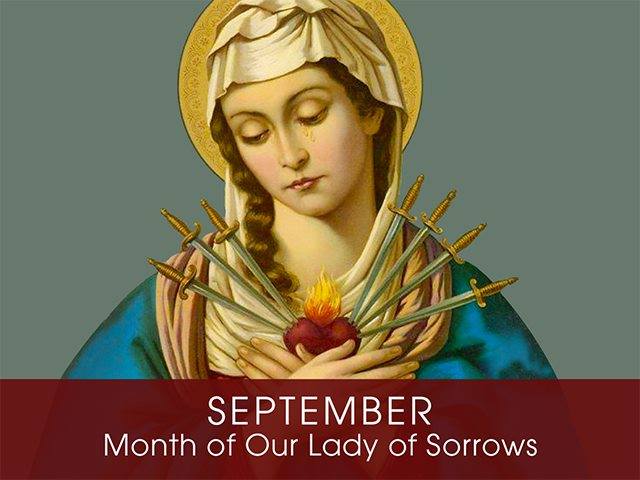
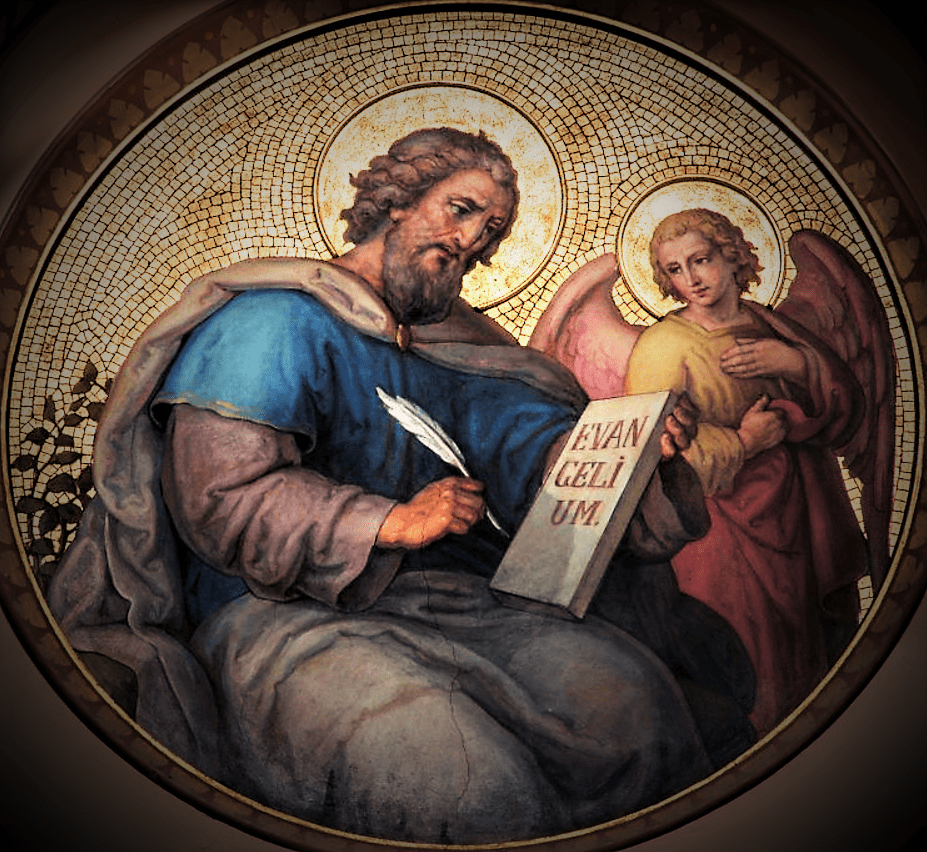
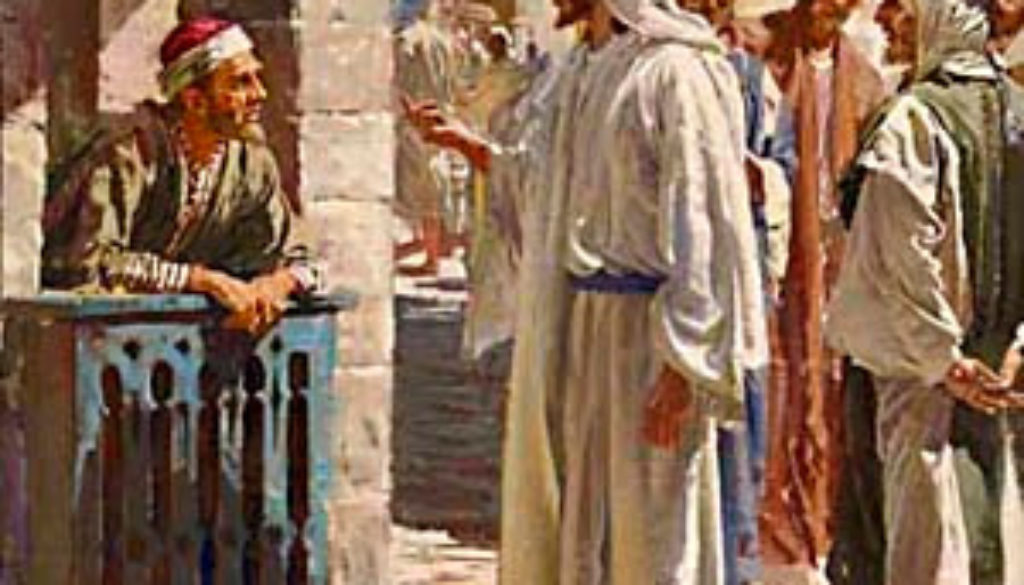
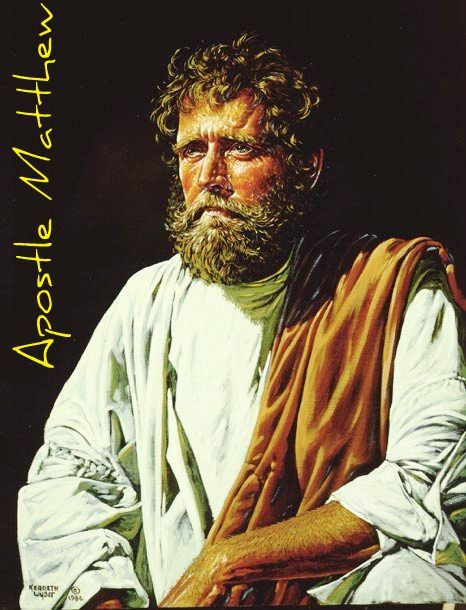
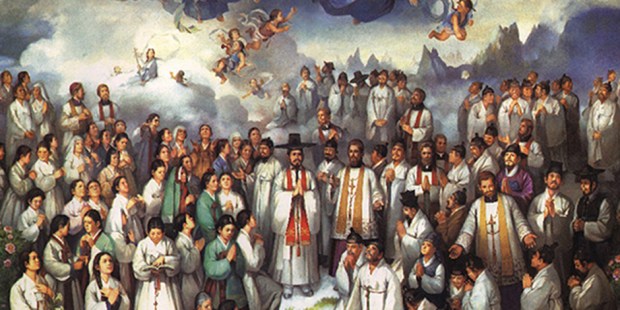
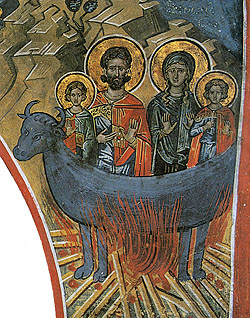
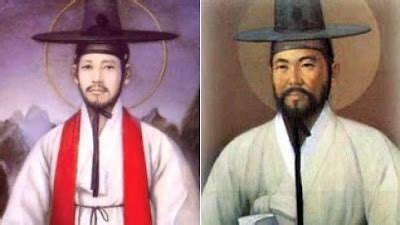
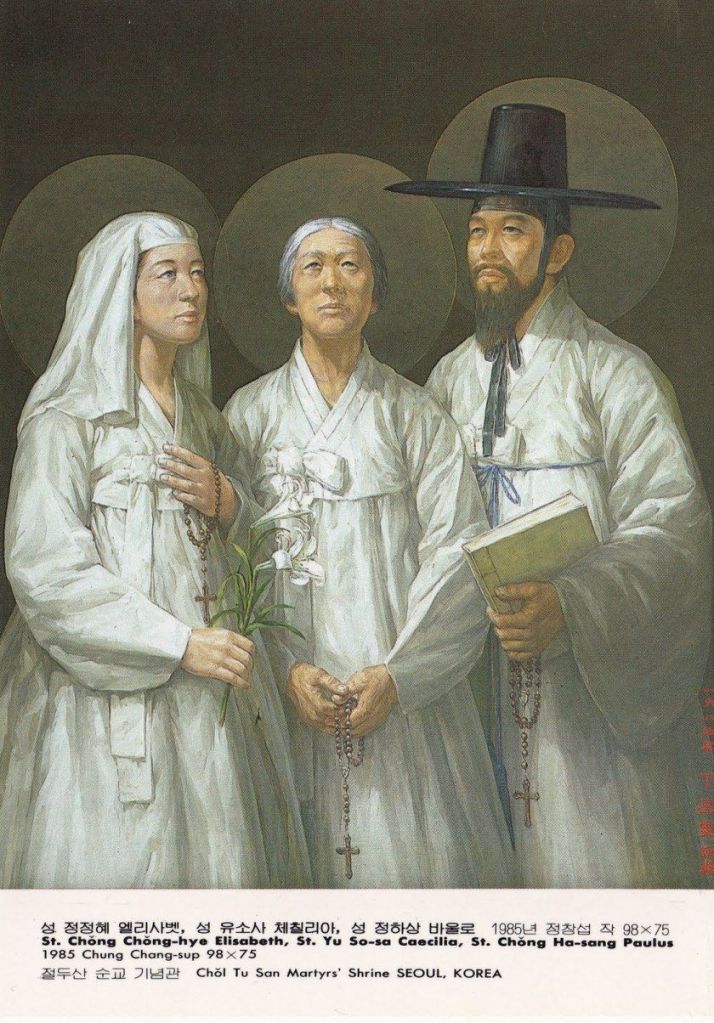
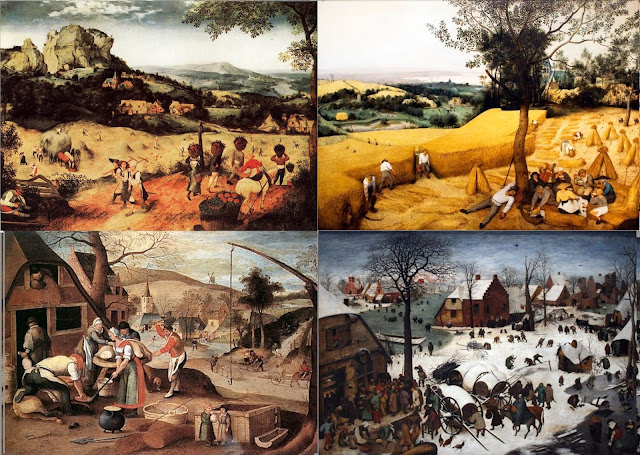
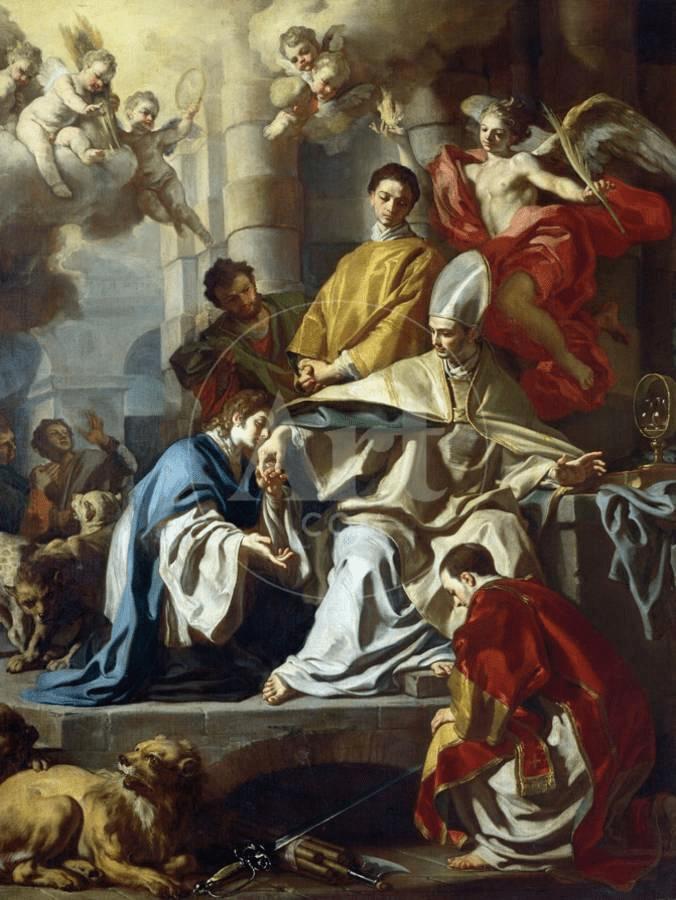
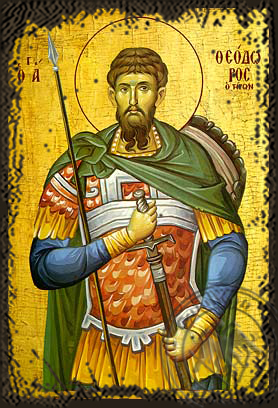
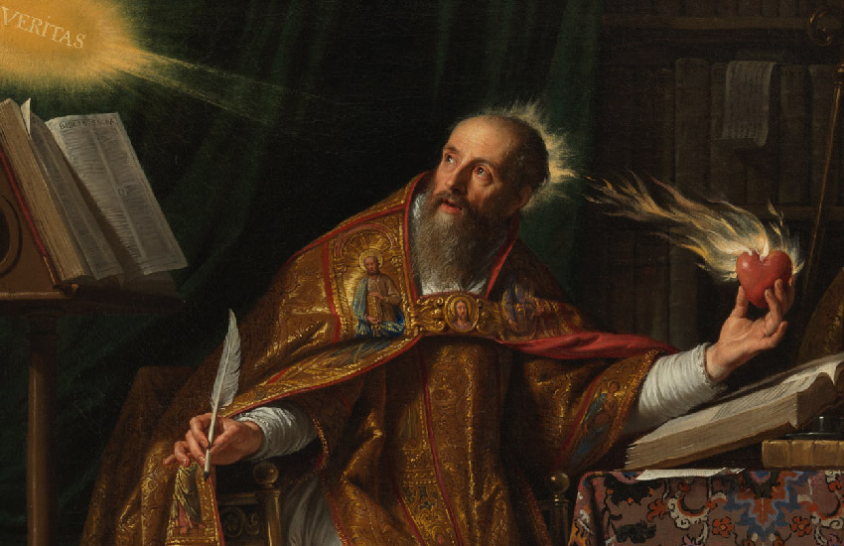
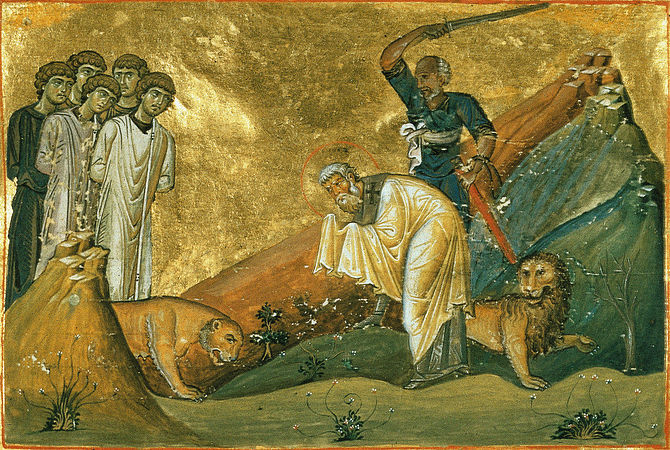
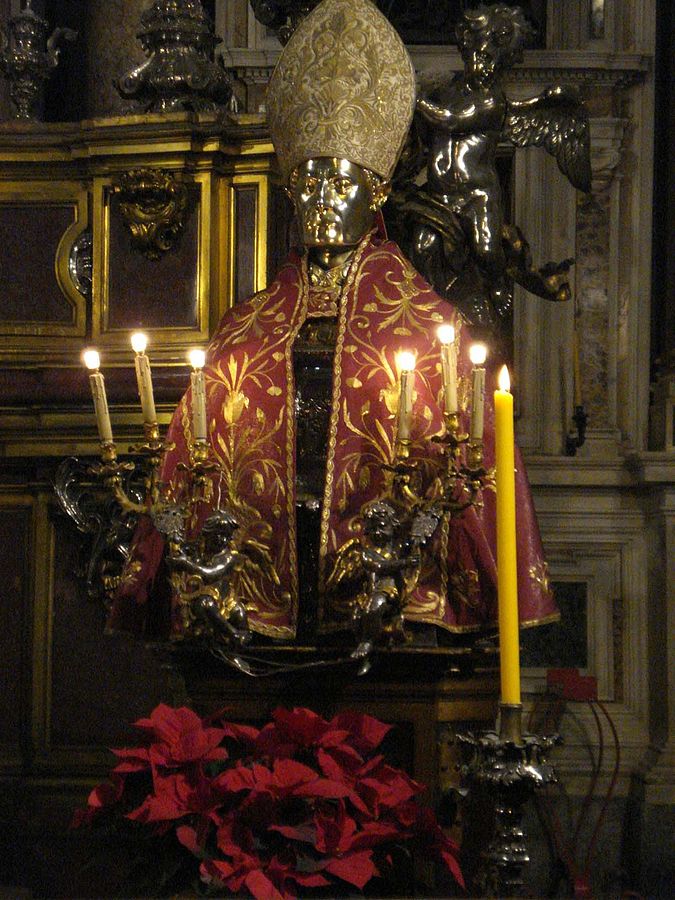
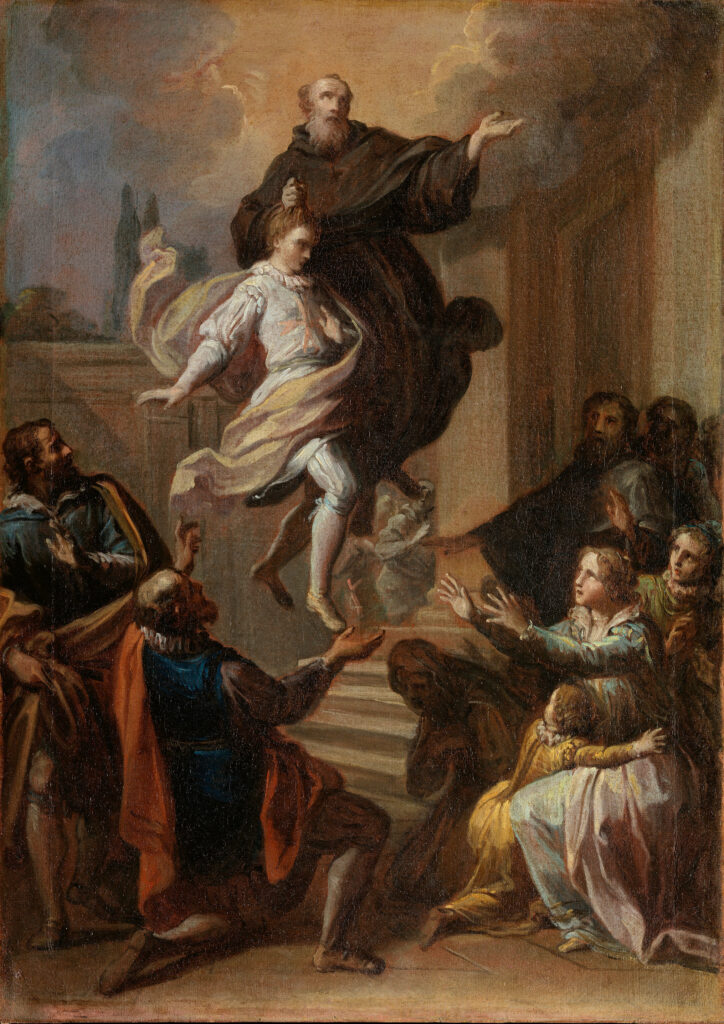
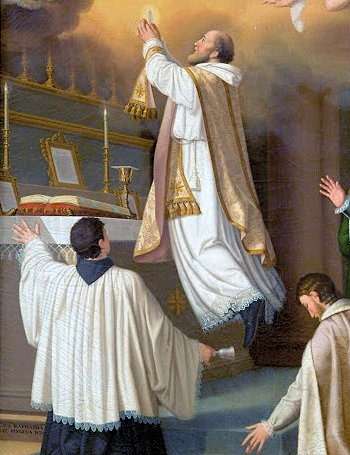

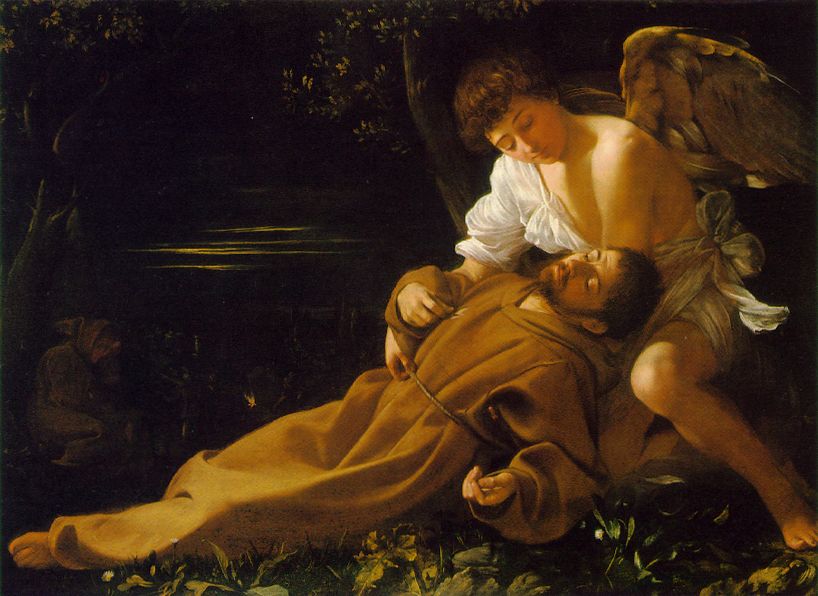
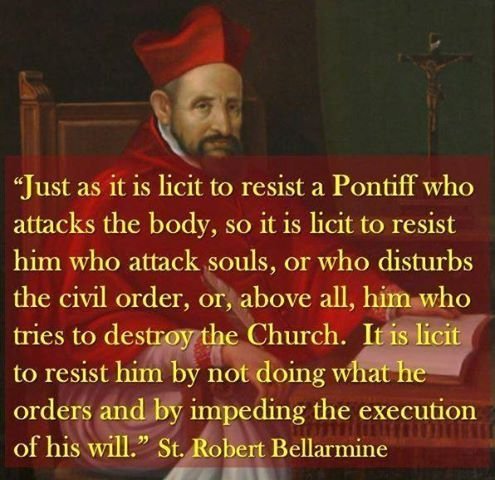
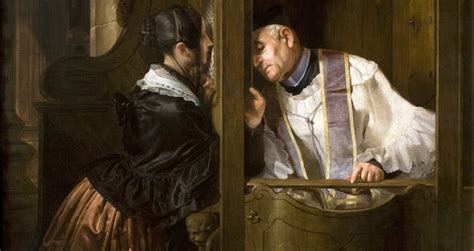
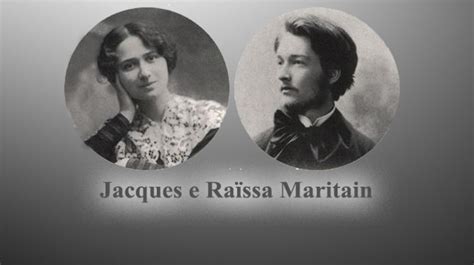
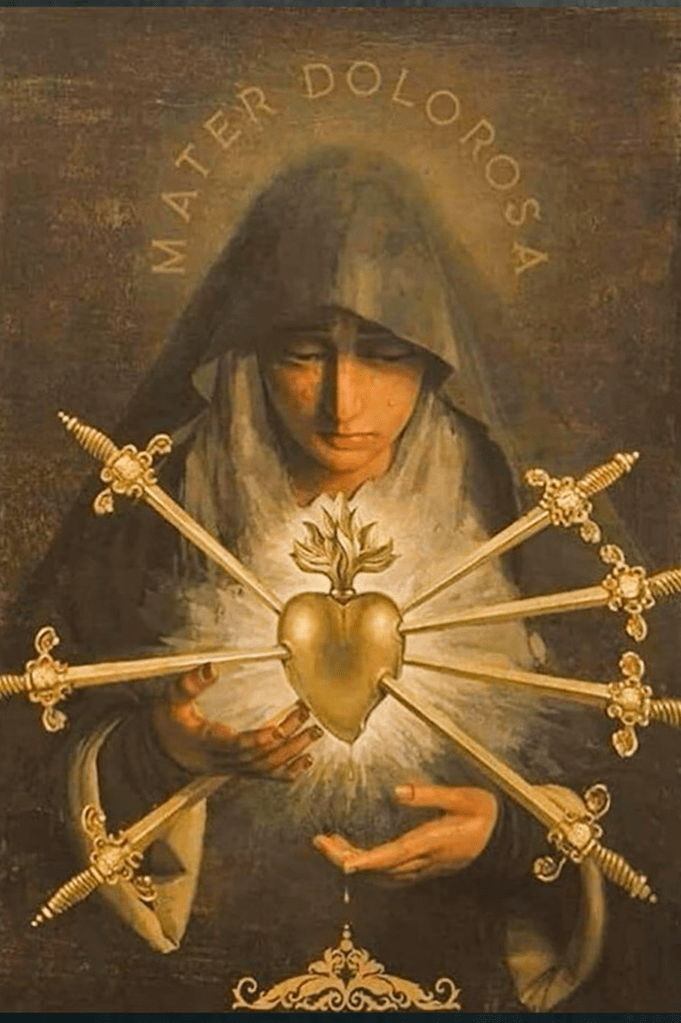
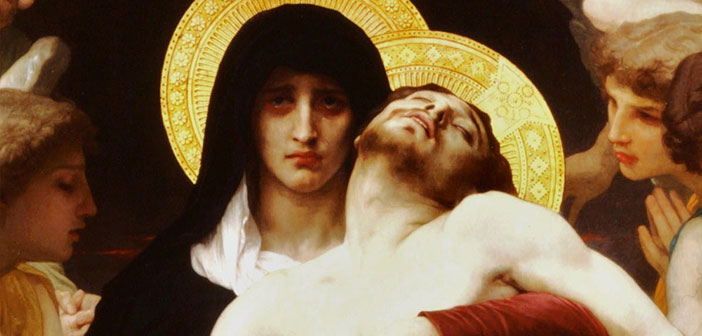
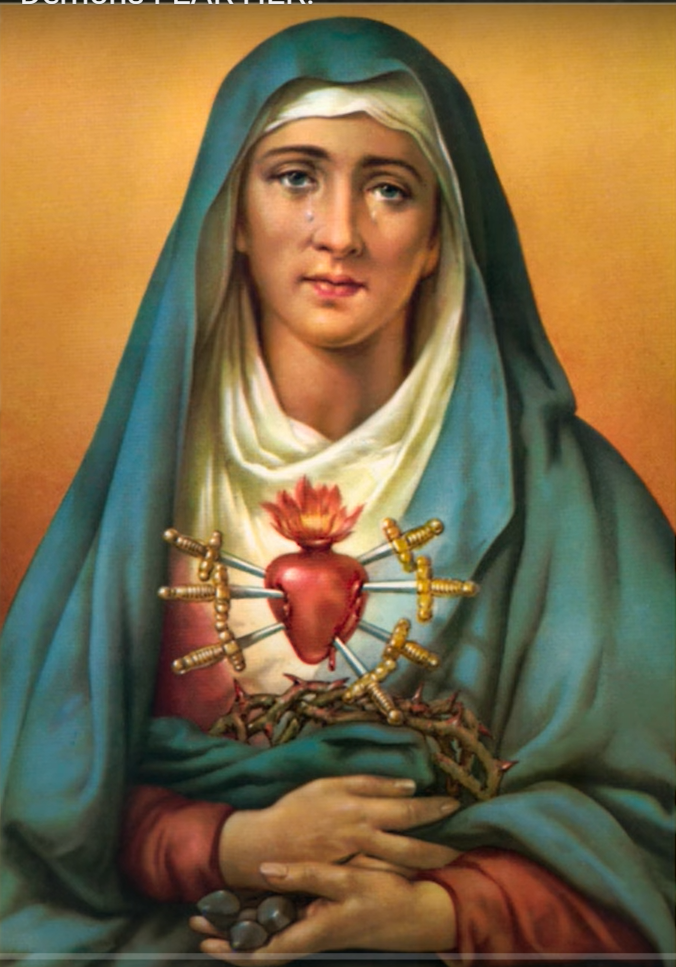
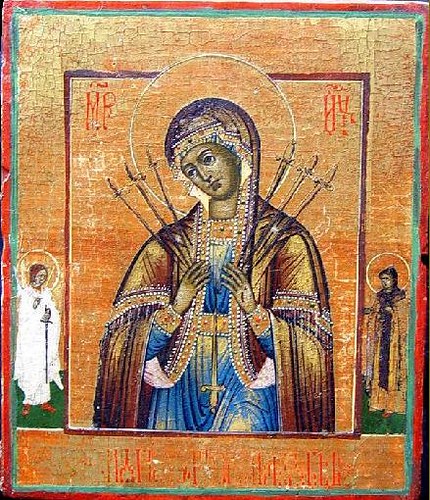

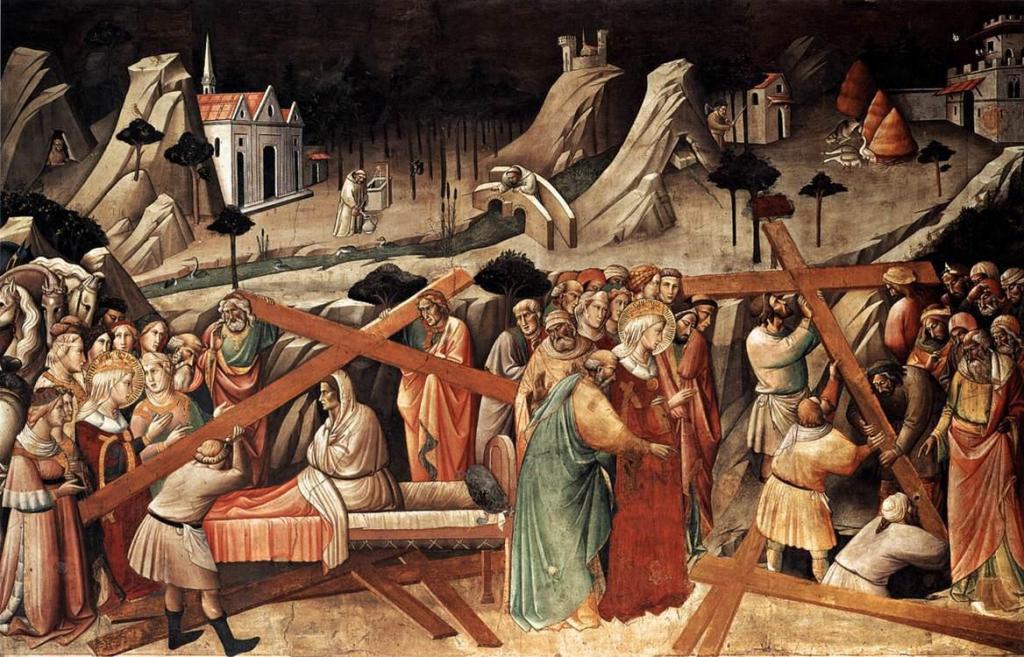
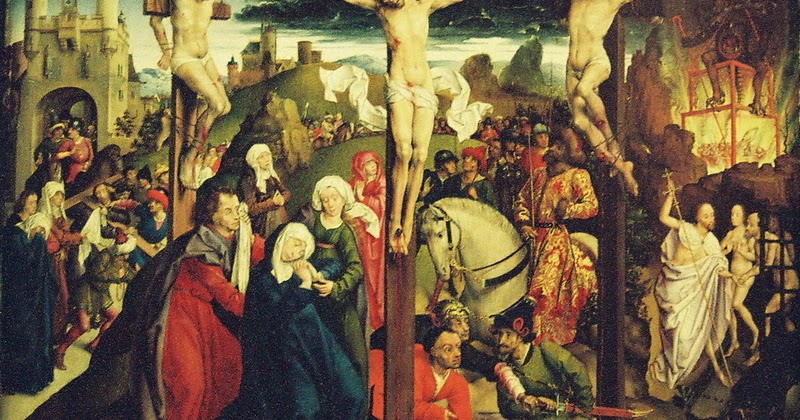
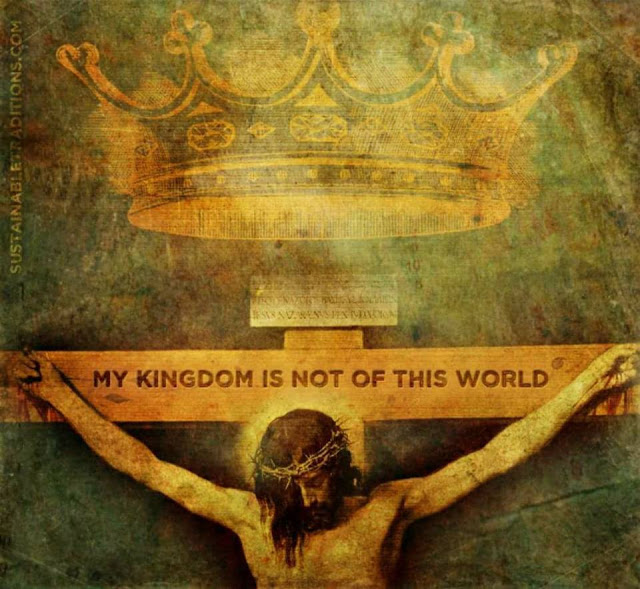
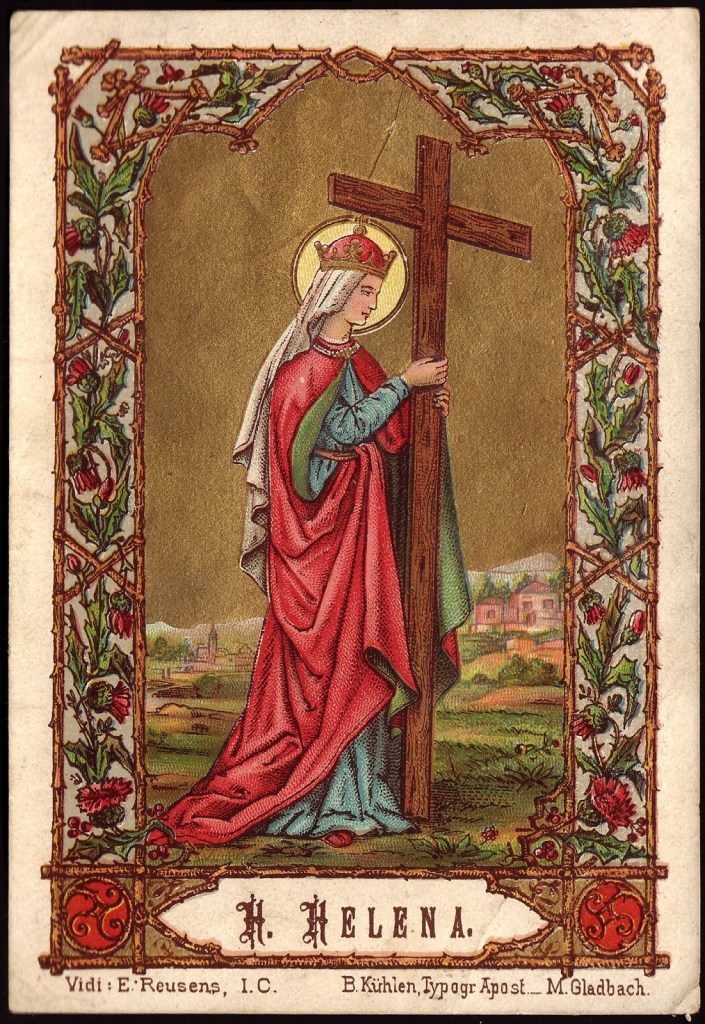
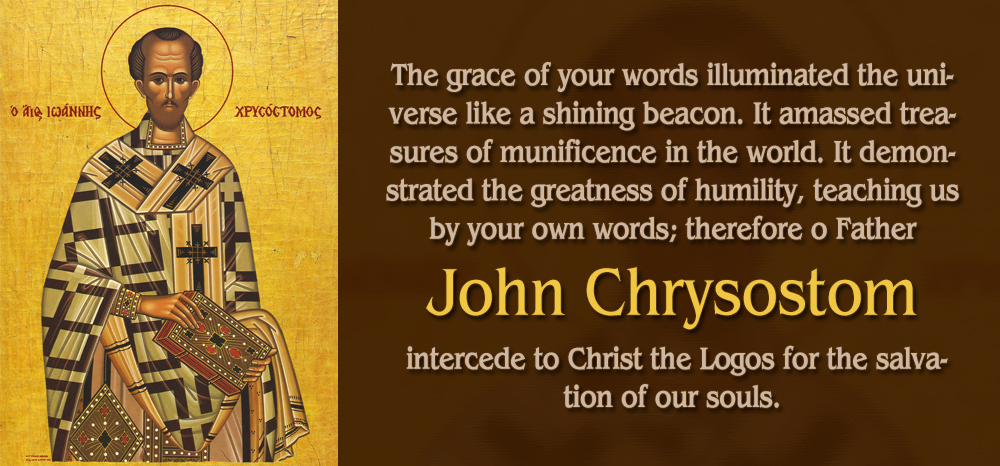
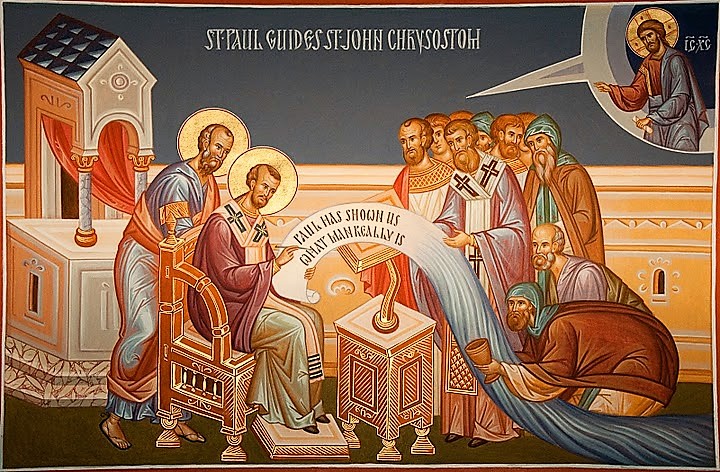
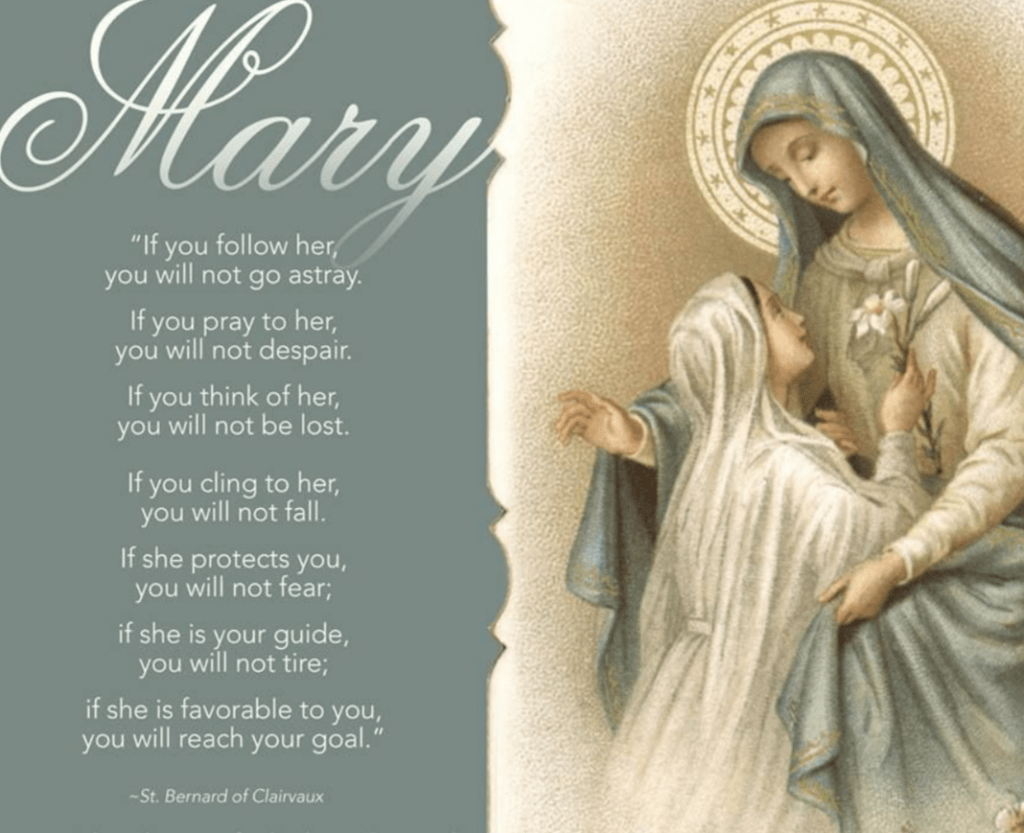

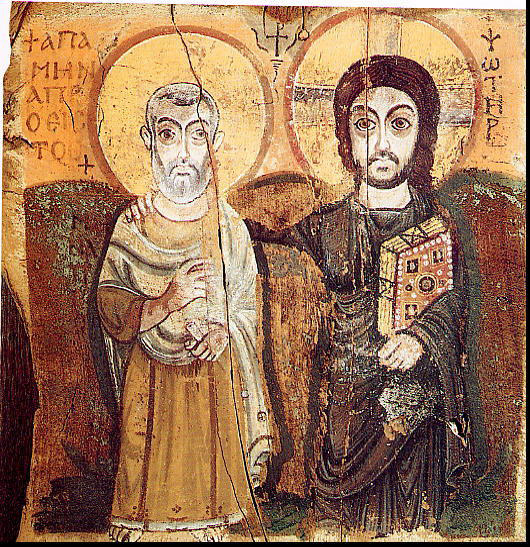
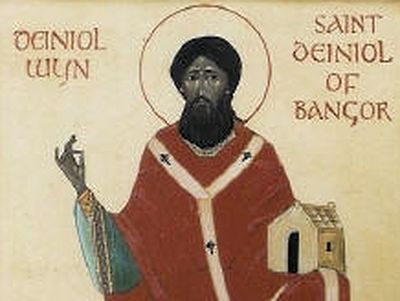
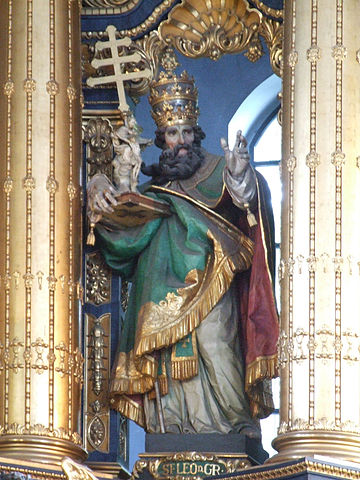
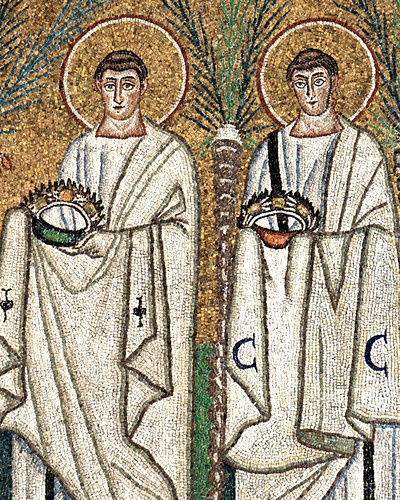
 Daily Reflections