Amos 3:7, 8; 7:15
The LORD does nothing
without revealing His plan to His servants, the prophets.
– The LORD has spoken;
who will not prophesy?
The LORD took me as I was following the flock,
and said to me:
Go, prophesy to My people.
– The LORD has spoken;
who will not prophesy?
Tuesday of the Eighteenth Week in Ordinary Time
Saint Dominic, Confessor
Saint John Mary Vianney, Confessor (Traditional)
Sts. Cyriacus, Largus, Smaragdus, Martyrs (Traditional)
Solemnity of Saint Mary of the Cross, Religious (Australia)
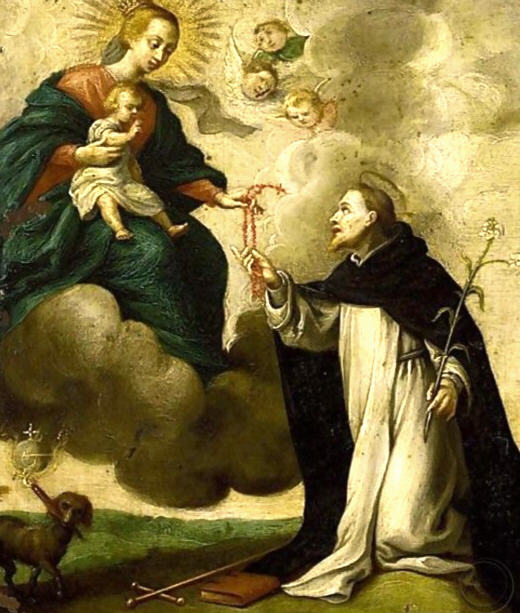
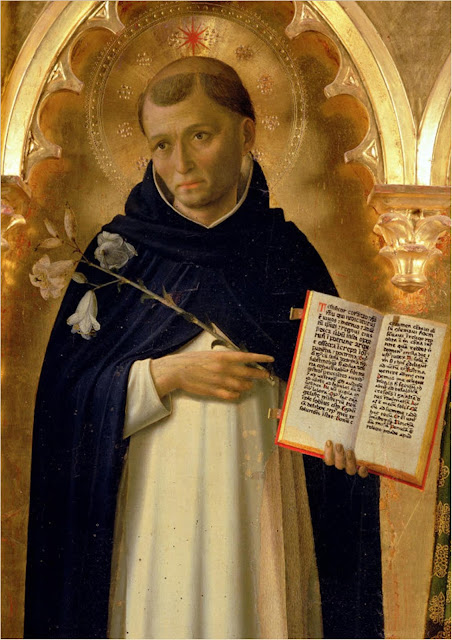
SAINT DOMINIC, CONFESSOR
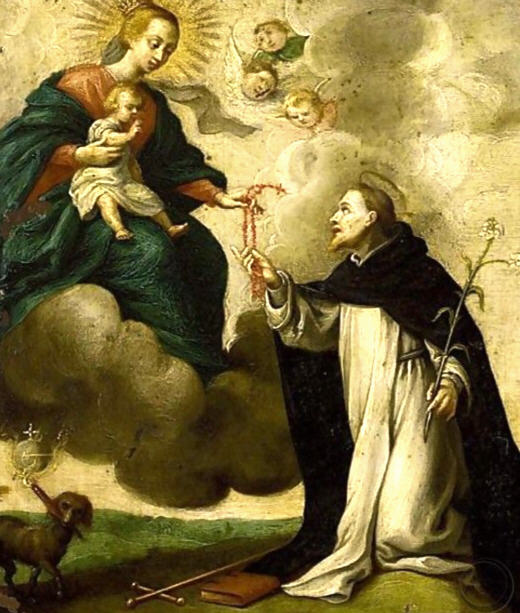
Dominic was born in 1170 in Calaruega, Spain, and joined the Augustinian Canons. While preaching against the Albigensian heresy in France, he saw the need for solid preachers of the Gospel who would be fortified by study, strengthened by prayer, and confirmed in poverty. The men who followed Dominic in this new form of religious life became known as the Order of Preachers, or the Dominicans. Pope Honorious III, in his 1216 bull approving the order, looked to Dominic’s brethren as “the future champions of the Faith and the true lights of the world”. Dominic died in 1221 surrounded by his friars.
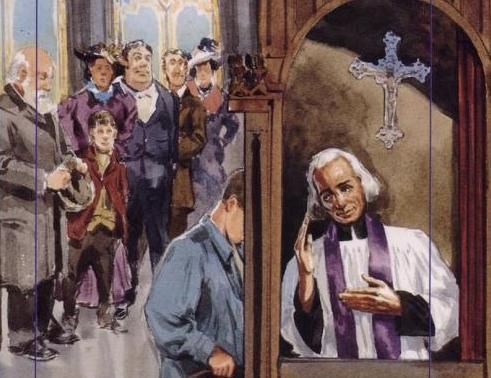
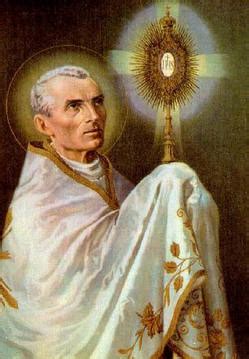
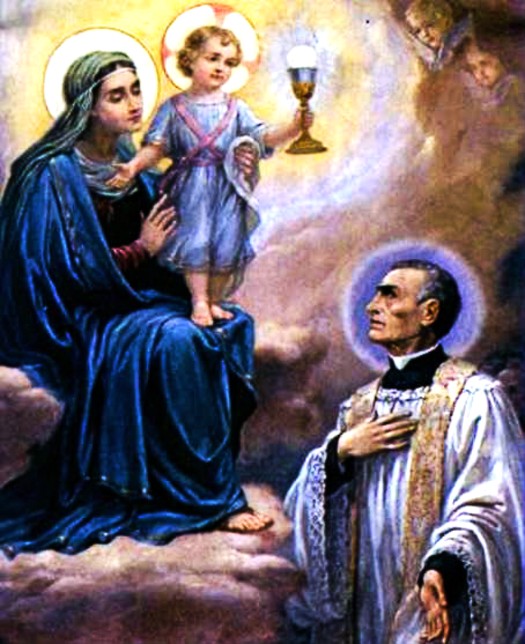
SAINT JOHN MARY VIANNEY, CONFESSOR
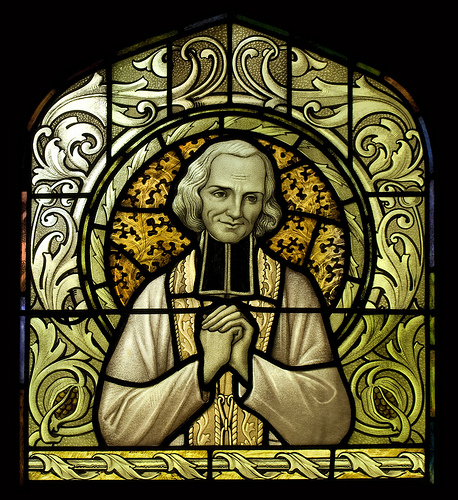
(See Friday 4th August blog for details)
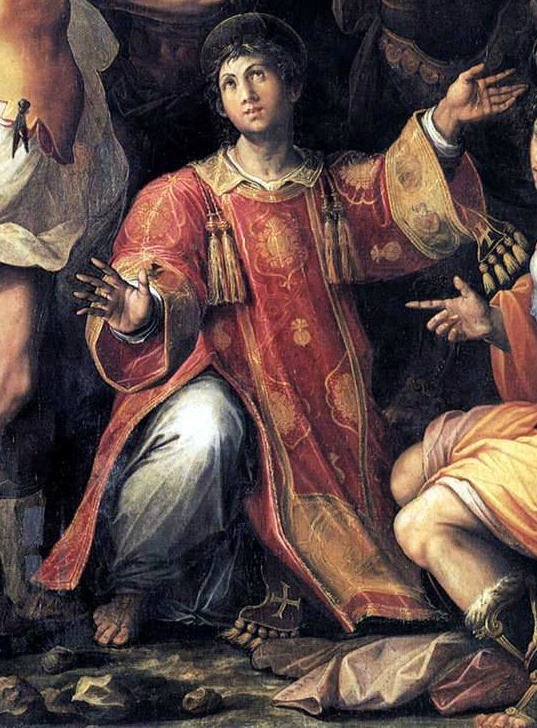
STS. CYRIACUS, LARGUS, SMARAGDUS, MARTYRS
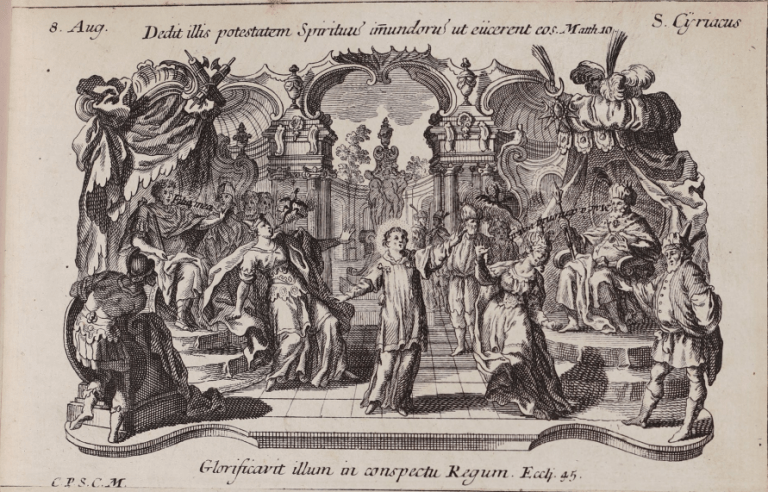
St. Cyriacus was a holy deacon of Rome under Popes Marcellinus and Marcellus. With Largus, Smaragdus, and about twenty others he crowned with martyrdom in 303, in the persecution Diocletian. The occasion of the translation of their remains many years later to a church dedicated to them led to the institution of a festival in their memory. St. Cyriacus is invoked for diseases of the eye, and against diabolical possessions.
SAINT MARY OF THE CROSS, RELIGIOUS
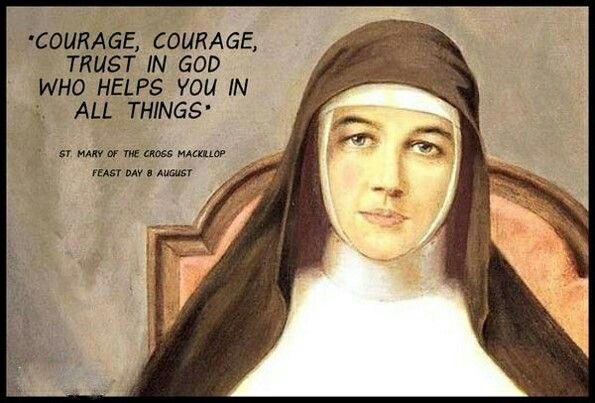
St. Mary MacKillop, also known as St. Mary of the Cross, was an Australian nun declared a saint by the Catholic Church. She was born in Melbourne, on January 15, 1842, as the eldest of their eight children.
MacKillop was educated in private schools and at home by her father. She received her First Holy Communion at the age of nine.
Growing up, MacKillop and her family struggled financially. The family farm never had much success. During most times, the family had to survive on the small wages the children were able to bring home.
When she was 14, MacKillop started working as a clerk in Melbourne. To provide for her needy family, she took a job as governess at her aunt and uncle, Alexander and Margaret Cameron’s property at Penola, South Australia in 1860. While there, Mary MacKillop was tasked with looking after their children and teaching them. MacKillop, determined to help the poor, included the other farm children on the Cameron estate in her care.
Her work as a governess and with the children brought her into contact with Father Woods, the parish priest in the south east.
MacKillop stayed with the Cameron’s for two years before accepting a job teaching the children of Portland, Victoria in 1862. Two years later, MacKillop opened her own boarding school called, Bay View House Seminary for Young Ladies, now known as Bayview College and was joined by the rest of her family.
Father Woods, concerned about the lack of Catholic education in South Australia, invited MacKillop and her sisters to open a Catholic school in Penola. Together, they successfully opened the school in a stable. Woods was appointed director of education and he and MacKillop were named founders of the school. Following renovations completed by their brother, the MacKillops started teaching more than 50 children. At this time, MacKillop formally declared her dedication to God and began wearing black.
In November 1866, Mary MacKillop and her sisters were joined by several other women. MacKillop, who now took on the religious name “Sister Mary of the Cross,” began wearing simple religious habits. The group of women began calling themselves the Sisters of St. Joseph of the Sacred Heart and moved to a new house in Adelaide.
In 1925, the Mother Superior of the Sisters of St Joseph, Mother Laurence, began the process to have MacKillop declared a saint. After several years of hearings, close examination of MacKillop’s writings and a 23-year delay, the initial phase of investigations was completed in 1973. After further investigations, MacKillop’s “heroic virtue” was declared in 1992.
That same year, the church endorsed the belief that Veronica Hopson, apparently dying of leukemia in 1961, was cured by praying for MacKillop’s intercession; MacKillop was beatified on January 19, 1995 by Pope John Paul II and she was canonized on October 17, 2010 by Pope Benedict XVI, making her the first Australian saint.
From various writings on the history of the Order of Preachers
(Libellus de principiis O.P: Acta canonizationis sancti Dominici: Monumenta O.P. Mist. 16, Romae 1935, pp. 30 ss, 146-147)
He spoke with God or about God
Dominic possessed such great integrity and was so strongly motivated by divine love, that without a doubt he proved to be a bearer of honour and grace. He was a man of great equanimity, except when moved to compassion and mercy. And since a joyful heart animates the face, he displayed the peaceful composure of a spiritual man in the kindness he manifested outwardly and by the cheerfulness of his countenance.
Wherever he went he showed himself in word and deed to be a man of the Gospel. During the day no one was more community-minded or pleasant toward his brothers and associates. During the night hours no one was more persistent in every kind of vigil and supplication. He seldom spoke unless it was with God, that is, in prayer, or about God, and in this matter he instructed his brothers.
Frequently he made a special personal petition that God would deign to grant him a genuine Charity, effective in caring for and obtaining the salvation of men. For he believed that only then would he be truly a member of Christ, when he had given himself totally for the salvation of men, just as the LORD Jesus, the Saviour of all, had offered Himself completely for our salvation. So, for this work, after a lengthy period of careful and provident planning, he founded the Order of Friars Preachers.
In his conversations and letters he often urged the brothers of the Order to study constantly the Old and New Testaments. He always carried with him the Gospel according to Matthew and the Epistles of Paul, and so well did he study them that he almost knew them from memory.
Two or three times he was chosen Bishop, but he always refused, preferring to live with his brothers in poverty. Throughout his life, he preserved the honour of his virginity. He desired to be scourged and cut to pieces, and so die for the Faith of Christ. Of him Pope Gregory IX declared: “I knew him as a steadfast follower of the apostolic way of life. There is no doubt that he is in Heaven, sharing in the glory of the Apostles themselves.
DAILY MEDITATION

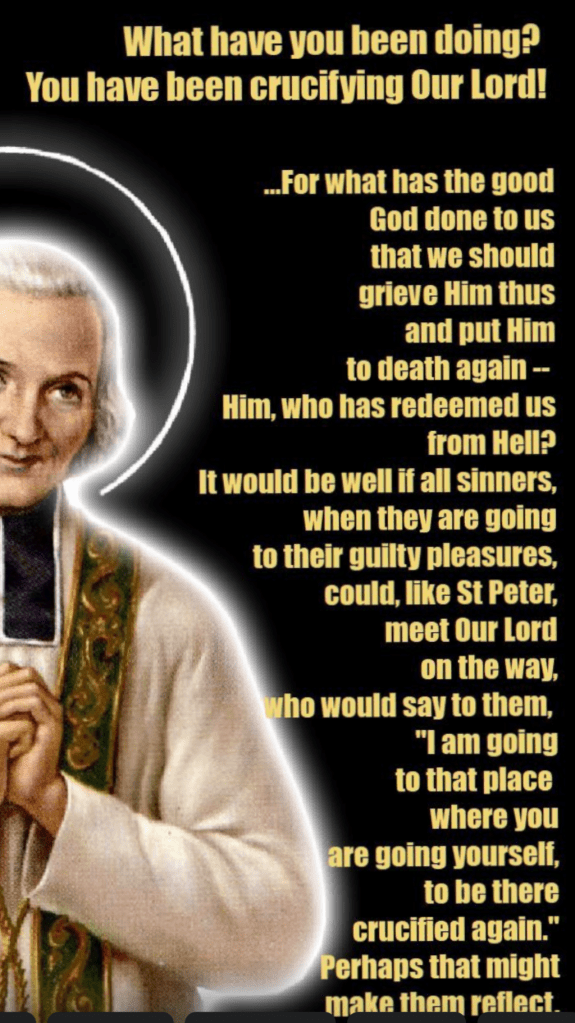
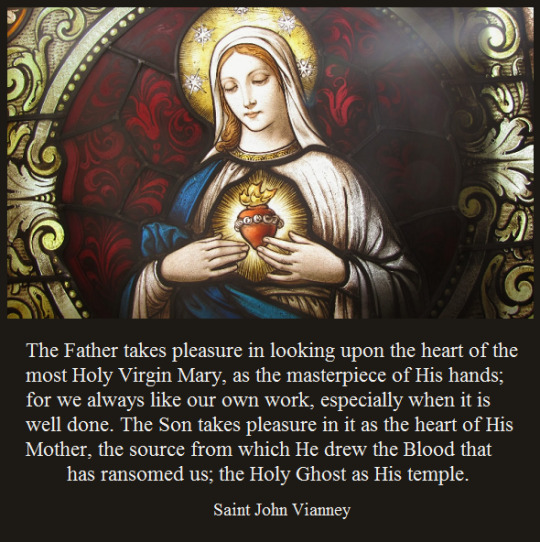
All our good works united would not equal one Sacrifice of the Mass, because they are the work of men, while the Mass is the work of God. Martyrdom is nothing in comparison to the Mass, martyrdom being the sacrifice which man makes of his life to God, and the Mass the sacrifice which God makes of His own Body and Blood to man. When before the Blessed Sacrament, instead of looking around us, let us close our eyes and open our heart; it is then the good God will open His. We will go to Him, He will come to us; to ask and to receive will be as a breath from one to the other.
Our LORD has said, “Whatsoever ye ask the Father in My name, He will give it to you” [See John 16:23]. Never should we have thought of asking God for His own Son. But what man could never imagine, God has done; what man could never express nor conceive, and what he had never presumed to desire, God, in His love, has expressed, conceived, and executed. Could we ever have dared tell God to put His Son to death for us, to give us His Son’s Flesh to eat, and His Blood to drink? Were it otherwise, man would then have been able to imagine things that God could not do; he would have outstripped God in the inventions of love! Ah! no, this were impossible.
The good God, wishing to give Himself to us in the Sacrament of His love, has implanted in us a desire, grand and vast, that He alone can satisfy. Beside this beautiful Sacrament, we are like a person dying of thirst on the river shore: he needs, but bend his head to quench his thirst! Or like one who remains poor while a treasure is within reach which he has only to stretch forth his hand and take!… From this Heart flows a stream of tenderness and mercy to wash away the sins of the world…. When we come from the altar, were someone to say to us, “What do you bear away with you?” You could answer truthfully, “I bear Heaven within me.“
St. John Vianney [d. 1859] – French Catholic priest and model of pastoral zeal, known as the Curé of Ars and patron saint of parish priests.
Pure-Hearted Guides
Who “Listen and Understand”
The saints have done their utmost to love God with a love identical to His. God’s love is a love that is essentially active and effective, a love that acts and creates. The saints were not content with a simple emotional satisfaction, with a wonderful admiration, or with a superficial enthusiasm. They understood the saying of Jesus: It is not those who say to me, “LORD, LORD”, who will enter the Kingdom of Heaven, but the person who does the Will of My Father in Heaven. The saints were consumed with a thirst for justice and the Kingdom of God…. God had stooped down towards us, in the excess of His Love, abasing Himself even to our level; He had descended quite lower than we, even to the point of taking upon Himself the gravest humiliations. The saints understood that they, in their turn, should humble themselves before God, because God had reversed His role. They wanted to descend from the throne of their own self-love and to seek the last place and that obligation of service God had chosen for Himself on earth….
Who can tell us what the object of love was for Saint Dominic in those nights of penance and prayer passed in tears at the foot of the altar? It was God, preferred above all, loved more than all, with undivided heart, yet with no exclusions—for this love embraced, elevated, and intensified all legitimate affections. In the fire of Charity, these affections became an ardent and consuming thirst for the salvation of souls. Finally, as God offered Himself for us on the Cross, so the saints offered themselves to God, even to the point of martyrdom, so that His Will might be accomplished, that His Kingdom might be established in souls, and that He might be glorified. And when, as in the case of Saint Dominic, they were unable to obtain martyrdom though ardently desiring it, they still experienced a daily death, though no less heroic, of labours, pains, and continual tribulations. As God gave Himself to them as Food, in the same way, they responded to His love and let themselves be consumed body and soul by Him, making themselves “food” of God.
Saint Dominic, Saint Catherine, Saint Peter Martyr, Saint Rose of Lima, Saint Catherine of Ricci, Saint Pius V, Saint Louis Bertrand, and all the saints tell us the same thing through their lives, namely, that the ardent Charity that burned in their hearts consumed them little by little, for this is the law of love. Love, which is as strong as death, makes us die to ourselves that we may be born to another life. Such is the response of the saints to God’s love.
Father Reginald Garrigou-Lagrange, o.p.
Father Garrigou-Lagrange († 1964) was a prolific Dominican theologian and spiritual writer. He was the theology doctoral advisor of the future Saint John Paul II. [From Knowing the Love of God: Lessons from a Spiritual Master.Raymond Smith, o.p., and Rod Gorton, Trs. ©
“The refusal to take sides on great moral issues is itself a decision. It is a silent acquiescence to evil. The tragedy of our time is that those who still believe in honesty lack fire and conviction, while those who believe in dishonesty are full of passionate conviction.” – Ven. Archbishop Fulton Sheen






 Daily Reflections