Jesus, meek and humble of Heart, make my heart like unto Thine
Job 31:3; Proverbs 15:3; Job 31:4
Does not calamity befall the wicked
and disaster the evildoers?
– The eyes of the LORD are everywhere observing the evil and the good.Does He not see my way,
and count all my steps?
– The eyes of the LORD are everywhere observing the evil and the good.
Tuesday of the Ninth Week in Ordinary Time
Saint Norbert, Bishop, Confessor
Saint Jarlath, Bishop (Ireland)
SAINT NORBERT, BISHOP, CONFESSOR
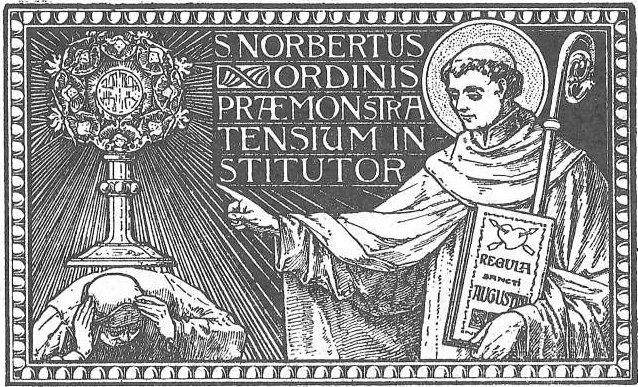
St. Norbert, pray for us!
SAINT NORBERT was born at Xanten near Köln (Cologne) about the year 1080. Like many of his 12th-century counterparts, the highborn Norbert entered the diaconate in order to obtain a position at court. As a young cleric he resided at the court of the Archbishop of Köln and then at that of the emperor where he allowed himself to be influenced by the spirit of the world. He was riding his horse one day when a sudden lightning strike caused the horse to throw him. Knocked unconscious, Norbert heard the Voice of Christ: “Turn away from evil, and do good. Seek peace, and pursue it.” Norbert made up his mind to take his clerical obligations seriously and retired to a monastery for three years, and then was ordained a priest. After ordination to the priesthood he devoted himself to itinerant preaching.
In 1120, on the advice of the Bishop of Leon, he settled in the forest of Voix, not far from Soissons at a place called Premontre, France, (the Norbertines), in order to found a community of Canons Regular or Premonstratensians, as they were called, which spread quickly under his direction. The doctrine of the Real Presence having been questioned by Tanchelin of Antwerp, Norbert, who was distinguished for his devotion to the Blessed Sacrament, reclaimed many who had fallen away, and rekindled the love of Our LORD in the Blessed Eucharist. In 1126 he was sent to what was then one of the outposts of Christendom for he was appointed Archbishop of Magdeburg, in North Germany. He died in 1134 A.D., worn out with toil.
ST. JARLATH, BISHOP (Ireland)
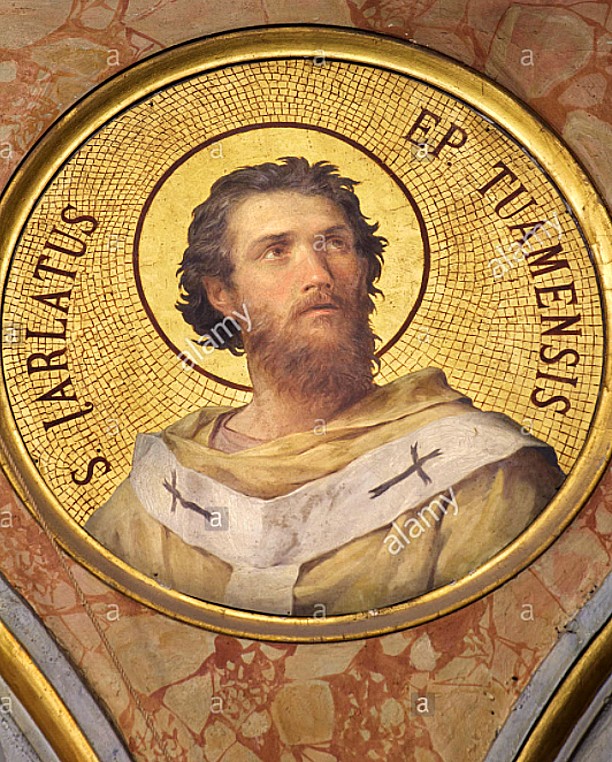
St. Jarlath, Bishop Jarlath is regarded as the founder and principle patron of the Archdiocese of Tuam in Galway, Ireland. He belonged to the Conmaicne family, perhaps the most important and powerful family in Galway during that period. Jarlath was trained by a holy man and ordained a priest along with his cousin. He then founded the monastery of Cluain Fois, just outside Tuam, and presided over that monastery as abbot-bishop. Later, Jarlath opened a school attached to the monastery, one which soon became known as a great center of learning. St. Brendan of Clonfert and St. Colman of Cloyne were among his pupils at the school. Jarlath died around 550 A.D.
From the life of Saint Norbert, Bishop
(The words in quotation marks below have been taken from the biography of Saint Norbert, written by a Premonstratensian canon who was a contemporary of the saint: PL 170, 1262, 1269, 1294, 1295. Pope Innocent’s Apostolic Letter was issued under leaden seal to Saint Norbert on June 5, 1133: Acta Sanctorum, 21, in Appendice p.50.)
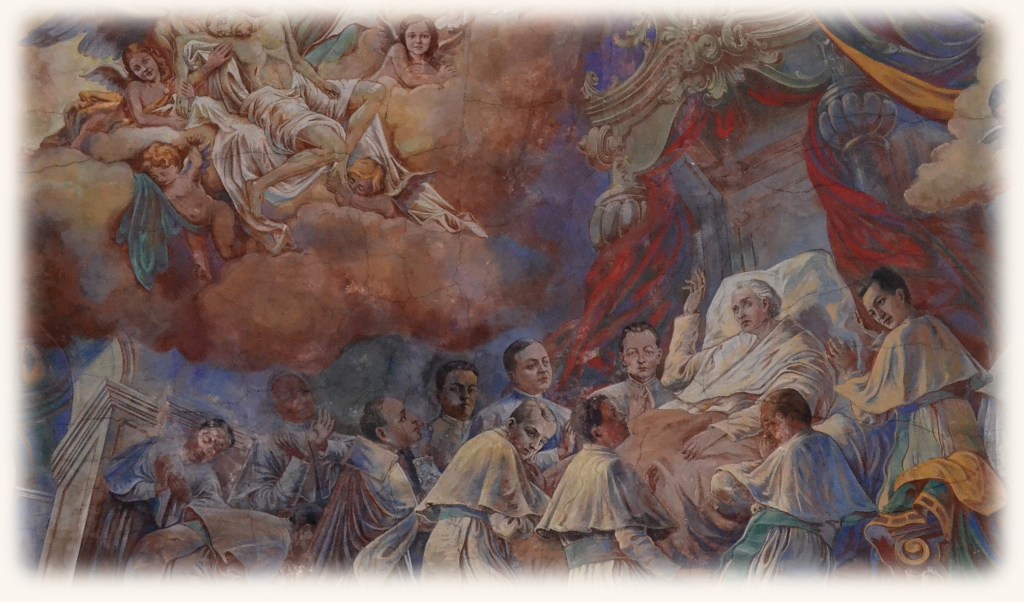
At ease in the company of the humble and great
Norbert is deservedly numbered by historians among those who made an effective contribution to the reform movement under Pope Gregory VII. He established a clergy dedicated to the ideals of the Gospel and the apostolic Church. They were chaste and poor. They wore “the clothing and the symbols of the new man; that is to say, they wore the religious habit and exhibited the dignity proper to the Priesthood.” Norbert asked them “to live according to the norms of the Scriptures with Christ as their model.” They were “to be clean in all matters pertaining to the Altar and Divine worship, to correct their faults and failings in their chapter meeting, and to care for and give shelter to the poor.”
The priests lived in community, where they continued the work of the Apostles. Inspired by the practice of the early Church, Norbert exhorted the faithful to join the monastic life in some capacity. So many men and women responded to the invitation that many asserted that no man since the Apostles themselves had inspired so many to embrace the monastic life.
When Norbert was appointed an Archbishop, he urged his brothers to carry the Faith to the lands of the Wends. In his own diocese he tried unsuccessfully to convince the clergy of the need for reform and was confronted with noisy protests both in the street and in the church.
One of the principal goals of Norbert’s life was to foster harmony between the Apostolic See and the German empire. At the same time he wanted to maintain Rome’s freedom in the matter of Ecclesiastical appointments. Apparently his efforts were so successful that Pope Innocent II thanked him profusely in a letter in which he called him a “devoted son,” and Lothair made him Chancellor of the realm.
Norbert did all these things with a steadfast Faith: “Faith was the outstanding virtue of Norbert’s life, as charity had been the hallmark of Bernard of Clairvaux’.” Affable and charming, amiable to one and all, “he was at ease in the company of the humble and the great alike.” Finally, he was a most eloquent preacher; after long meditation “he would preach the Word of God” and with his fiery eloquence purged vices, refined virtues and filled souls of good will with the warmth of wisdom.” He spent many hours in contemplation of the Divine mysteries and fearlessly spread the spiritual insights which were the fruit of his meditation.
A Man Who Rendered His Life to God
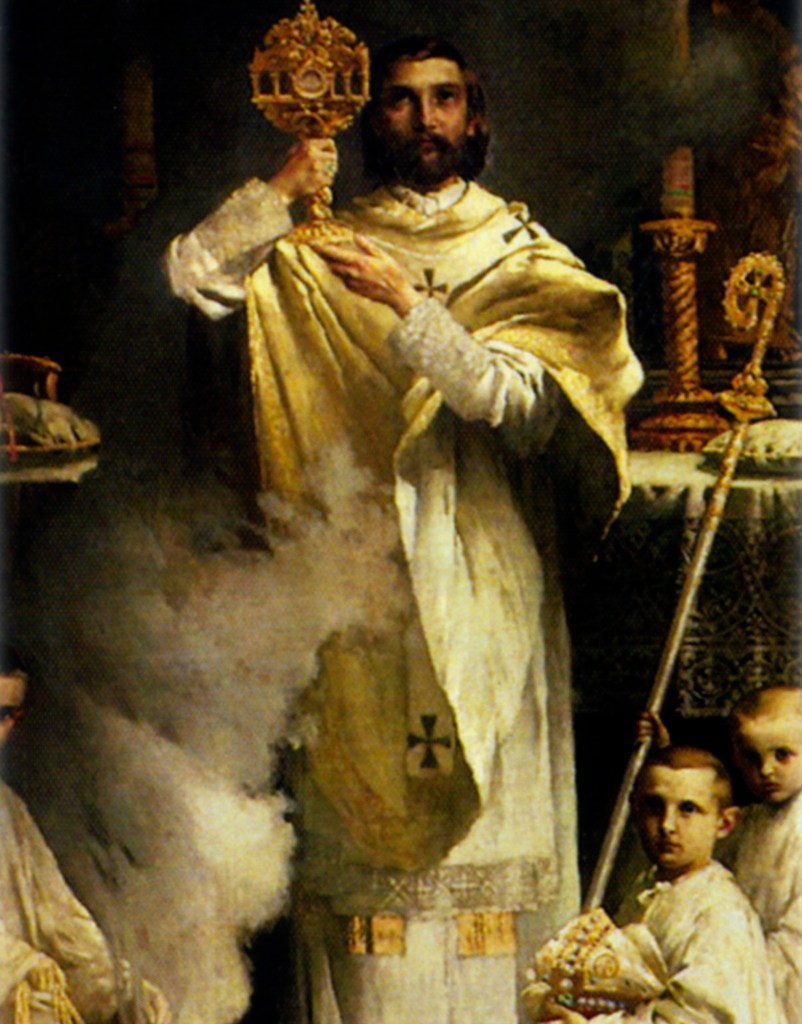
Blessed is Norbert, first father of this order. I rejoice that you foster his merits. Surely blessed, he spurned worldly heights and, subject to the yoke of Christ, dutifully sowed the seed that all around has borne a marvellous fruit, fruit through which the cloister rule saves many, fruit joyfully filling the heavenly storehouses. An astounding spirit, a Divine fire, marked him out and made him known for learning. He burned with heavenly light. He was a peer of the great doctors.
Crowned with merit, he bears an imperishable name. He constantly loved true poverty. With courageous Faith he put Satan to flight. Vessel of the Eternal Word, minister of peace, he secured peace, reconciling discord. Advanced to Episcopal office he was outstanding, a cross for the wicked, an example for the good. In all affairs of the Church he was a shining star.
Blessed is he who could stand secure before swords. Conscious of no wrong in himself, he does not grow pale with guilt or hesitate to die, but is bound to the love of Christ. Blessed is he who, when the LORD comes, will have troops whom the Good Judge will choose from our order. May Grace protect us at this time of trial. Amen.
From a 12th-century account of the life of Saint Norbert
[From Norbert and Early Norbertine Spirituality. © 2007, Daylesford Abbey and Carol Neel
2 Timothy 4:2,5; Acts 20:28
Proclaim the message, in season and out of season;
refute falsehood, correct error, call to obedience;
– endure all hardships and spread the Gospel.Keep watch over the whole flock
which the Holy Ghost
has given you to rule and guide,
as a shepherd of the Church of God.
– Endure all hardships and spread the Gospel.
“The refusal to take sides on great moral issues is itself a decision. It is a silent acquiescence to evil. The Tragedy of our time is that those who still believe in honesty lack fire and conviction, while those who believe in dishonesty are full of passionate conviction.” – Ven. Archbishop Fulton Sheen


Leave a Reply